19 Delicious Thanksgiving Soup Recipes to Try

I used to think soup was just something you made when the weather turned cold.
Then Thanksgiving came around, and I realized a warm bowl of soup can be the coziest part of the whole meal!
From creamy classics to hearty soups packed with fall flavors, there are so many tasty options to try.
These Thanksgiving soup recipes are easy to make, full of comfort, and perfect for sharing with family and friends.
So grab your favorite pot, gather your ingredients, and let’s get started!
1. Classic Creamy Pumpkin Soup
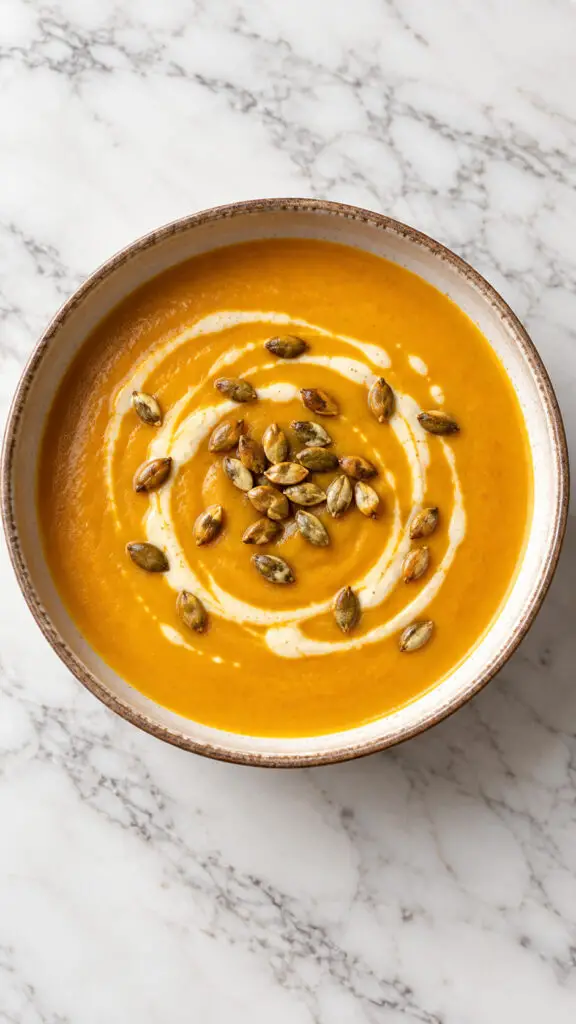
Pumpkin soup is practically Thanksgiving in a bowl.
Roast the pumpkin first for deeper flavor, then simmer it with onion, garlic, vegetable or chicken broth, and a touch of cream.
A pinch of nutmeg or cinnamon adds warmth without making it taste like dessert.
Finish with toasted pumpkin seeds and a swirl of cream.
It is silky, cozy, and easy to prepare ahead, which is exactly what you want when the turkey is already demanding your attention.
Ingredients
- 2 tablespoons olive oil
- 1 medium yellow onion, chopped
- 2 cloves garlic, minced
- 1 medium carrot, peeled and chopped
- 4 cups pumpkin, peeled, seeded, and cut into chunks
- 3 cups vegetable or chicken broth
- ½ teaspoon salt
- ¼ teaspoon black pepper
- ½ teaspoon ground cinnamon
- ¼ teaspoon ground nutmeg
- ½ cup heavy cream
- 1 tablespoon maple syrup, optional
- Toasted pumpkin seeds, for garnish
- Extra cream, for the swirl
Instructions
1. Sauté the onion and garlic
Heat the olive oil in a large pot over medium heat. Add the chopped onion and cook for 4–5 minutes until softened and translucent. Add the garlic and cook for another 30 seconds, just until fragrant.
2. Add the pumpkin and carrot
Add the pumpkin and chopped carrot to the pot. Stir everything together so the vegetables are lightly coated with the oil and aromatics.
3. Season the soup
Add the salt, black pepper, cinnamon, and nutmeg. Stir well to distribute the spices evenly and allow them to cook briefly with the vegetables for a deeper, warmer flavor.
4. Simmer the vegetables
Pour in the vegetable or chicken broth and bring the mixture to a gentle boil. Reduce the heat, cover, and simmer for 20–25 minutes, or until the pumpkin and carrot are completely tender.
5. Blend the soup until smooth
Use an immersion blender to blend the soup directly in the pot until completely smooth and velvety. Alternatively, carefully transfer the soup to a countertop blender in batches and blend until silky.
6. Add the cream
Stir the heavy cream into the blended soup and return it to low heat. Warm gently for 2–3 minutes without allowing it to boil. Add the maple syrup if you want a subtle sweetness to complement the pumpkin.
7. Adjust the consistency
Taste the soup and adjust the salt and pepper as needed. If the soup is thicker than you prefer, add a little extra broth or cream until it reaches a smooth, pourable consistency.
8. Garnish the soup
Ladle the hot soup into bowls. Drizzle a small amount of cream over the surface in a loose spiral, then scatter toasted pumpkin seeds over the top for a delicate crunch.
9. Serve the soup
Serve the pumpkin soup immediately while it is warm and glossy. The creamy golden-orange color, pale cream swirl, and toasted pumpkin seeds make it especially suited to a Thanksgiving table.
Tip
For an exceptionally silky soup, strain the blended mixture through a fine-mesh sieve before adding the cream. Toast the pumpkin seeds in a dry skillet for 2–4 minutes until lightly golden for extra flavor and crunch.
2. Butternut Squash Soup

Butternut squash makes a naturally creamy soup without requiring much dairy, making it a reliable crowd-pleaser.
Roast the squash with onions and garlic until caramelized, then blend everything with broth until velvety smooth.
Fresh sage, thyme, or rosemary brings out its savory side.
For entertaining, serve it in small cups as a first course, or ladle generous bowls for a relaxed family dinner.
A little crispy bacon on top never hurts either.
Ingredients
- 1 large butternut squash, about 2½–3 pounds, peeled, seeded, and cut into 1-inch cubes
- 2 tablespoons olive oil
- 1 medium yellow onion, diced
- 3 cloves garlic, minced
- 4 cups vegetable or chicken broth
- ½ teaspoon ground cinnamon
- ¼ teaspoon ground nutmeg
- ½ teaspoon dried thyme
- 1 teaspoon salt
- ½ teaspoon freshly ground black pepper
- ½ cup heavy cream, plus extra for garnish
- 1 tablespoon maple syrup, optional
- 1 tablespoon fresh sage, finely chopped
- 1 tablespoon fresh thyme leaves
Instructions
1. Roast the butternut squash
Preheat the oven to 425°F (220°C). Toss the cubed butternut squash with 1 tablespoon of olive oil, half of the salt, and the black pepper. Spread the squash in a single layer on a baking sheet and roast for 30–35 minutes, turning halfway through, until tender and caramelized around the edges.
2. Sauté the onion and garlic
Heat the remaining tablespoon of olive oil in a large pot over medium heat. Add the diced onion and cook for 5–7 minutes until softened and translucent. Add the minced garlic, cinnamon, nutmeg, and dried thyme, then cook for another minute until fragrant.
3. Add the roasted squash and broth
Transfer the roasted butternut squash to the pot and pour in the broth. Stir well, bring the mixture to a gentle simmer, and cook for 10 minutes so the flavors can blend together.
4. Blend the soup until smooth
Remove the pot from the heat and carefully blend the soup with an immersion blender until completely smooth and velvety. Alternatively, blend it in batches in a countertop blender, taking care when handling the hot liquid.
5. Stir in the cream
Return the soup to low heat and stir in the heavy cream. Add the maple syrup if you want a subtle sweetness that complements the roasted squash. Taste and adjust the salt, pepper, or spices as needed. Avoid boiling the soup after adding the cream.
6. Prepare the fresh herb garnish
Finely chop the fresh sage and thyme. Reserve a small amount of whole thyme leaves and finely chopped sage for finishing the soup. The fresh herbs add a bright contrast to the rich, creamy base.
7. Finish the soup with cream and herbs
Ladle the hot soup into wide ceramic bowls. Drizzle a small amount of heavy cream over the surface in a loose spiral, then sprinkle the finely chopped sage and fresh thyme lightly over the center.
8. Serve the soup
Serve the soup immediately while it is warm and creamy. For a Thanksgiving meal, serve it as an elegant first course alongside crusty bread or as part of a larger festive dinner.
Tip
For the deepest roasted flavor, let the squash develop a few dark golden-brown edges in the oven without letting it burn. You can also prepare the soup a day ahead—the flavors become even more developed after resting overnight. Reheat it gently and add a small splash of broth or cream if it becomes too thick.
3. Creamy Wild Mushroom Soup
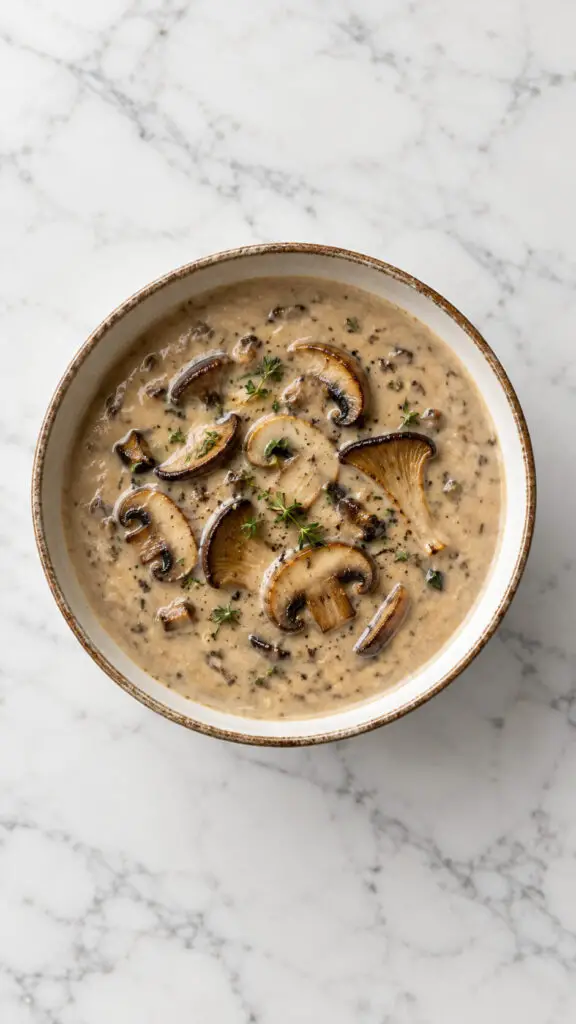
For a Thanksgiving table that leans savory and earthy, wild mushroom soup is a beautiful choice.
Sauté a mixture of mushrooms with shallots, garlic, and thyme, then simmer them gently with broth before adding cream.
Keep some mushrooms sliced rather than blending everything so each spoonful has texture.
A splash of dry sherry can add lovely depth.
Serve with crusty bread and watch guests suddenly become very interested in having “just one more bowl.”
Ingredients
- 2 tablespoons unsalted butter
- 1 tablespoon olive oil
- 1 medium yellow onion, finely diced
- 3 cloves garlic, minced
- 1 pound (450 g) mixed wild mushrooms, cleaned and sliced
- 2 tablespoons all-purpose flour
- 4 cups (960 ml) chicken or vegetable broth
- 1 cup (240 ml) heavy cream
- 1 teaspoon fresh thyme leaves, plus extra for garnish
- ½ teaspoon salt, plus more to taste
- ¼ teaspoon freshly ground black pepper
- ¼ teaspoon dried thyme
- 1 tablespoon fresh parsley, finely chopped
- 1 teaspoon lemon juice
- ¼ cup (60 ml) dry white wine, optional
Instructions
1. Sauté the mushrooms
Heat the butter and olive oil in a large pot over medium-high heat. Add the sliced mushrooms and cook for 6–8 minutes, stirring occasionally, until they are deeply golden and most of their moisture has evaporated. Reserve a small handful of the prettiest mushroom slices for garnish.
2. Cook the onion and garlic
Reduce the heat to medium and add the diced onion to the pot. Cook for 4–5 minutes until softened and translucent. Add the garlic and cook for another 30–60 seconds, just until fragrant.
3. Add the flour
Sprinkle the flour over the mushroom mixture and stir continuously for about 1 minute. Coating the mushrooms with flour helps create a lightly thickened soup without making it overly heavy.
4. Build the soup
Gradually pour in the broth while stirring constantly to prevent lumps from forming. Add the fresh thyme, dried thyme, salt, pepper, and white wine if using. Bring the soup to a gentle simmer and cook for 10–12 minutes.
5. Blend the soup
Use an immersion blender to blend the soup until creamy while leaving a little texture from the mushrooms. Alternatively, carefully transfer the soup to a blender in batches and blend until smooth. Avoid overfilling the blender with hot liquid.
6. Add the cream
Lower the heat and stir in the heavy cream. Warm the soup gently for 3–4 minutes without allowing it to boil. Stir in the lemon juice and taste, adjusting the salt and pepper as needed.
7. Prepare the mushroom garnish
While the soup warms, quickly sauté the reserved mushroom slices in a small skillet with a little butter or olive oil. Cook until glossy and golden around the edges. These mushrooms will give the finished soup an attractive, rustic appearance.
8. Serve the soup
Ladle the hot soup into warm bowls and arrange the sautéed mushroom slices naturally across the surface. Finish with a few fresh thyme leaves, a small drizzle of cream, and a light sprinkle of freshly ground black pepper.
Tip
For the richest mushroom flavor, use a mixture of wild mushrooms such as cremini, shiitake, oyster, and chanterelles. Browning the mushrooms well before adding the broth is especially important—it concentrates their earthy flavor and gives the soup a deeper, more Thanksgiving-worthy character.
4. Turkey and Wild Rice Soup
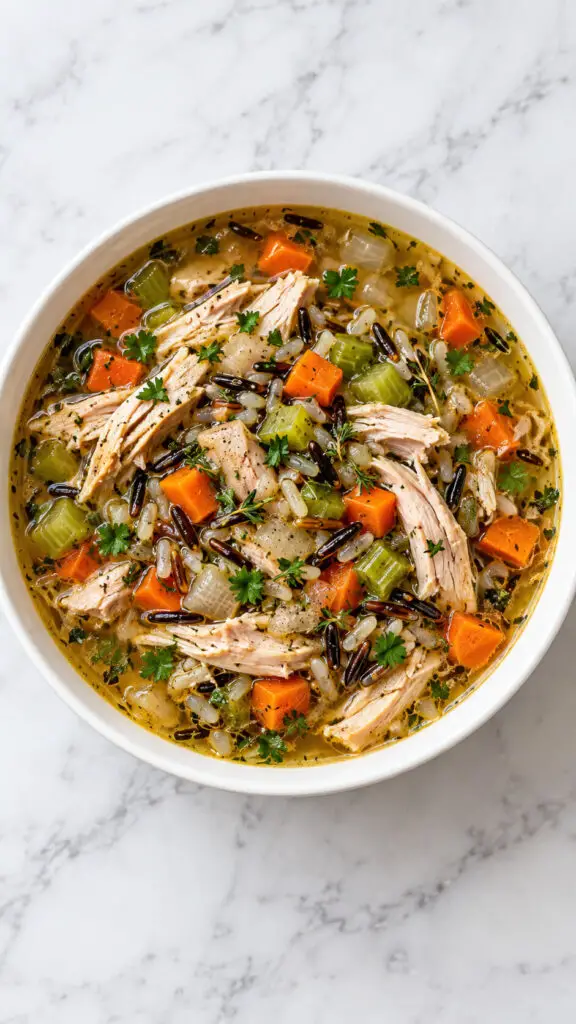
If you have leftover turkey after the big meal, this soup is your post-Thanksgiving secret weapon.
Combine tender turkey with wild rice, carrots, celery, onion, and herbs in a flavorful broth.
The rice makes it hearty enough for dinner while the vegetables keep it from feeling too heavy.
I especially love adding fresh thyme and a squeeze of lemon at the end. It is comforting, practical, and an excellent way to make that leftover turkey disappear.
Ingredients
- 2 tablespoons olive oil
- 1 medium yellow onion, diced
- 3 medium carrots, peeled and diced
- 3 celery stalks, diced
- 3 cloves garlic, minced
- 6 cups chicken broth or turkey broth
- 2 cups cooked turkey, shredded or cut into bite-size pieces
- ¾ cup uncooked wild rice
- 1 teaspoon dried thyme
- ½ teaspoon dried sage
- ½ teaspoon salt, plus more to taste
- ¼ teaspoon black pepper
- 1 bay leaf
- 2 tablespoons fresh parsley, chopped
- 1 tablespoon fresh lemon juice
Instructions
1. Sauté the vegetables
Heat the olive oil in a large heavy-bottomed soup pot over medium heat. Add the diced onion, carrots, and celery and cook for 6–8 minutes, stirring occasionally, until the vegetables begin to soften. Add the minced garlic and cook for another 30–60 seconds, just until fragrant.
2. Add the broth and seasonings
Pour the chicken or turkey broth into the pot and stir in the dried thyme, dried sage, salt, black pepper, and bay leaf. Scrape the bottom of the pot with a wooden spoon to loosen any flavorful bits from the sautéed vegetables.
3. Cook the wild rice
Add the uncooked wild rice to the simmering broth. Bring the soup to a gentle boil, then reduce the heat to low or medium-low. Cover the pot partially and simmer for about 35–45 minutes, or until the wild rice is tender and beginning to split open.
4. Add the turkey
Stir the cooked shredded turkey into the soup once the wild rice is tender. Let everything simmer gently for 5–8 minutes, allowing the turkey to warm through and absorb some of the savory broth. Avoid boiling the soup vigorously because the turkey is already cooked and can become dry.
5. Adjust the consistency
Check the soup and add a little more broth if it has become thicker than you prefer. Wild rice continues absorbing liquid as it sits, so a slightly generous amount of broth is helpful if you are preparing the soup ahead of time.
6. Add the fresh finishing touches
Remove the bay leaf and stir in the chopped fresh parsley and lemon juice. Taste the soup and adjust the salt and black pepper as needed. The small amount of lemon juice adds brightness and helps balance the rich turkey and earthy wild rice.
7. Serve the soup
Ladle the hot turkey and wild rice soup into bowls and garnish with additional fresh parsley if desired. Serve immediately with warm crusty bread, dinner rolls, or leftover Thanksgiving rolls for dipping. It makes an especially satisfying meal the day after Thanksgiving.
Tip
For the best flavor, use leftover roasted Thanksgiving turkey, including a mixture of light and dark meat. If making the soup ahead, keep a little extra broth nearby when reheating because the wild rice will continue absorbing liquid as it rests.
5. Sweet Potato Soup

Sweet potatoes bring beautiful color and gentle sweetness to a Thanksgiving soup without overwhelming the meal.
Simmer roasted or peeled sweet potatoes with onion, garlic, broth, and a little ginger, then blend until smooth.
A spoonful of Greek yogurt or cream makes the texture extra luxurious.
For contrast, scatter toasted pecans over each serving.
This is one of those soups that feels elegant enough for guests but is simple enough to make while wearing your kitchen’s unofficial Thanksgiving uniform: an apron and slightly floury socks.
Ingredients
- 4 large sweet potatoes, peeled and cut into 1-inch cubes
- 2 tablespoons olive oil
- 1 medium yellow onion, chopped
- 3 garlic cloves, minced
- 1 tablespoon fresh ginger, finely grated
- 4 cups vegetable or chicken broth
- ½ teaspoon salt
- ¼ teaspoon black pepper
- ¼ teaspoon ground cinnamon
- ⅛ teaspoon ground nutmeg
- ½ cup heavy cream
- ½ cup toasted pecans, roughly chopped
- 2 tablespoons plain Greek yogurt or additional cream, for garnish
- 1 tablespoon fresh thyme leaves, for garnish
Instructions
1. Roast the sweet potatoes
Preheat the oven to 425°F (220°C). Place the cubed sweet potatoes on a large baking sheet and toss them with the olive oil, salt, and black pepper. Spread them into a single layer and roast for 25–30 minutes, turning halfway through, until they are tender and lightly caramelized around the edges.
2. Sauté the onion
Heat a large pot over medium heat and add a small drizzle of olive oil. Add the chopped onion and cook for 5–7 minutes, stirring occasionally, until soft and translucent. Cooking the onion slowly gives the soup a naturally sweet, savory foundation.
3. Add the garlic and ginger
Stir the minced garlic and grated fresh ginger into the softened onion. Cook for about 1 minute, stirring constantly, until fragrant. Be careful not to let the garlic brown, as it can develop a bitter flavor.
4. Add the roasted sweet potatoes
Transfer the roasted sweet potatoes to the pot and stir them together with the onion, garlic, and ginger. Cook for another minute so the roasted vegetables absorb the aromatic flavors before adding the broth.
5. Add the broth and spices
Pour the vegetable or chicken broth into the pot. Add the cinnamon, nutmeg, remaining salt, and black pepper, then stir well. Bring the mixture to a gentle simmer and allow it to cook for 10–15 minutes so the flavors can meld together.
6. Blend the soup until smooth
Use an immersion blender to purée the soup directly in the pot until completely smooth and velvety. If using a countertop blender, blend the soup in small batches and carefully vent the lid to allow steam to escape. Blend until no large pieces of sweet potato remain.
7. Stir in the cream
Reduce the heat to low and stir in the heavy cream. Warm the soup gently for 2–3 minutes without bringing it to a vigorous boil. Taste the soup and adjust the salt, pepper, cinnamon, or nutmeg according to your preference.
8. Adjust the consistency
Check the thickness of the soup before serving. If it seems too thick, gradually add a little more broth until it reaches a smooth, spoonable consistency. If you prefer an especially rich soup, you can add another splash of cream.
9. Add the festive toppings
Ladle the hot soup into serving bowls and add a small spoonful of Greek yogurt or a delicate drizzle of cream to each serving. Sprinkle the toasted chopped pecans over the top and finish with a few fresh thyme leaves. The creamy soup, crunchy pecans, and fresh herbs create a lovely contrast.
10. Serve the soup
Serve the sweet potato soup hot as a Thanksgiving appetizer or light first course. For a holiday dinner, keep the soup warm in the pot and add the garnishes immediately before serving. The soup pairs especially well with crusty artisan bread or a simple green salad.
Tip
For extra depth of flavor, roast the sweet potatoes until their edges are noticeably golden brown rather than merely tender. Those caramelized edges add a subtle sweetness and nuttiness that makes the finished soup taste much more complex. You can also prepare the soup a day ahead, refrigerate it, and gently reheat it before Thanksgiving dinner.
6. Creamy Corn Chowder

Corn chowder brings a cheerful golden color to the Thanksgiving table and works particularly well when the weather is chilly.
Simmer sweet corn with potatoes, onion, celery, and broth, then finish with milk or cream.
Bacon adds smoky richness, although you can easily leave it out.
Fresh chives or parsley brighten the bowl just before serving.
If using frozen corn, don’t worry—it still makes a wonderfully comforting soup and saves you from wrestling with corn cobs on an already busy cooking day.
Ingredients
- 6 cups fresh or frozen sweet corn kernels
- 4 slices bacon, finely chopped
- 1 medium yellow onion, finely diced
- 2 celery stalks, finely diced
- 2 medium russet potatoes, peeled and cut into ½-inch cubes
- 3 garlic cloves, minced
- 4 cups chicken or vegetable broth
- 1 cup whole milk
- 1 cup heavy cream
- 1 teaspoon salt, plus more to taste
- ½ teaspoon black pepper
- ½ teaspoon dried thyme
- ¼ teaspoon smoked paprika
- 2 tablespoons fresh chives, finely chopped
- 2 tablespoons fresh parsley, finely chopped
Instructions
1. Cook the bacon
Place the chopped bacon in a large heavy-bottomed pot or Dutch oven over medium heat. Cook for 5–7 minutes, stirring occasionally, until the bacon is crisp and has released its fat. Transfer about half of the cooked bacon to a paper towel-lined plate, leaving the remaining bacon and rendered fat in the pot for the soup base.
2. Sauté the vegetables
Add the diced onion and celery to the pot with the bacon and cook for 5–6 minutes, stirring occasionally, until the vegetables soften. Add the minced garlic and cook for another 30 seconds, just until fragrant. The softened vegetables create a flavorful foundation for the creamy chowder.
3. Add the potatoes and corn
Stir the diced potatoes and 5 cups of the corn into the pot, reserving 1 cup of corn for later. Toss everything together for about 1 minute so the vegetables become coated with the savory bacon and onion mixture.
4. Add the broth and seasonings
Pour the chicken or vegetable broth into the pot and add the salt, black pepper, dried thyme, and smoked paprika. Stir well, scraping the bottom of the pot to loosen any flavorful browned bits. Bring the mixture to a gentle boil, then reduce the heat to medium-low.
5. Simmer the chowder
Cover the pot partially and simmer the chowder for 15–20 minutes, stirring occasionally, until the potatoes are completely tender. Avoid boiling too aggressively because a gentle simmer allows the vegetables to cook evenly while keeping the broth from reducing too quickly.
6. Blend part of the soup
Use an immersion blender to blend about one-third of the chowder directly in the pot, leaving plenty of corn, potatoes, and vegetables whole. This creates the thick, creamy consistency of a classic chowder while preserving plenty of texture in every spoonful.
7. Add the remaining corn
Stir the reserved cup of corn into the partially blended soup. Cook for another 3–4 minutes, just until the corn is tender and heated through. Keeping some of the kernels whole gives the finished chowder a pleasant bite and makes the dish look especially inviting.
8. Stir in the milk and cream
Reduce the heat to low and stir in the whole milk and heavy cream. Warm the chowder gently for 4–5 minutes, stirring occasionally, until it is hot and creamy. Do not let it come to a vigorous boil after adding the dairy, as excessive heat can cause the cream to separate.
9. Finish with fresh herbs
Stir in half of the chopped chives and parsley, reserving the rest for garnish. Taste the chowder and adjust the salt and black pepper as needed. If you prefer a slightly thinner soup, add a splash of warm broth or milk until it reaches your preferred consistency.
10. Garnish and serve
Ladle the hot corn chowder into bowls and top each serving with the reserved crispy bacon, fresh chives, and parsley. Serve immediately while the soup is hot and creamy. For Thanksgiving, this chowder makes a particularly comforting starter and pairs beautifully with warm crusty bread.
Tip
For extra Thanksgiving flavor, roast the corn before adding it to the chowder. Toss the kernels with a little olive oil and roast them at 425°F (220°C) for about 15–20 minutes until lightly caramelized. The roasted corn adds a subtle sweetness and smoky depth that makes this already cozy chowder taste even more special.
7. Carrot Ginger Soup

Bright, smooth, and pleasantly warming, carrot ginger soup gives the Thanksgiving menu a lighter option among all those rich dishes.
Cook carrots with onion, garlic, fresh ginger, and broth until tender, then blend until completely smooth.
A little orange zest or juice adds a fresh note that makes the flavors pop.
Serve it with a drizzle of olive oil or coconut milk.
It is particularly good as a starter because it wakes up the appetite without filling everyone before the main feast.
Ingredients
- 2 pounds carrots, peeled and sliced
- 1 medium yellow onion, chopped
- 3 garlic cloves, minced
- 1½ tablespoons fresh ginger, peeled and finely grated
- 2 tablespoons olive oil
- 4 cups vegetable or chicken broth
- ½ teaspoon salt
- ¼ teaspoon black pepper
- ½ teaspoon ground cumin
- ½ cup heavy cream or coconut milk
- 1 tablespoon fresh lemon juice
- 2 tablespoons chopped fresh parsley or cilantro, for garnish
- 2 tablespoons cream or coconut milk, for drizzling
Instructions
1. Prepare the carrots
Wash, peel, and slice the carrots into evenly sized pieces. Cutting them into similar sizes helps them cook at the same rate, which is especially useful when you’re aiming for a perfectly smooth soup.
2. Sauté the aromatics
Heat the olive oil in a large heavy-bottomed pot over medium heat. Add the chopped onion and cook for 5–7 minutes, stirring occasionally, until softened and translucent. Add the minced garlic and grated fresh ginger, then cook for another 30–60 seconds until fragrant.
3. Add the carrots and seasoning
Add the sliced carrots, salt, black pepper, and ground cumin to the pot. Stir everything together for about 1–2 minutes so the carrots become coated with the aromatic mixture and the spices have a chance to bloom.
4. Pour in the broth
Add the vegetable or chicken broth and stir to combine. Increase the heat slightly and bring the mixture to a gentle boil, then reduce the heat to low. The broth should cover the carrots, allowing them to soften evenly without making the finished soup unnecessarily watery.
5. Simmer until tender
Cover the pot partially and simmer for 20–25 minutes, or until the carrots are completely tender. Test one with a fork; it should break apart easily without resistance. Don’t rush this stage, because thoroughly softened carrots will produce a much smoother soup.
6. Blend the soup
Use an immersion blender to blend the soup directly in the pot until silky and smooth. Alternatively, carefully transfer the soup to a blender in batches and purée until completely creamy. If using a countertop blender, allow steam to escape safely while blending hot soup.
7. Add the cream
Stir the heavy cream or coconut milk into the blended soup. Warm it gently over low heat for 2–3 minutes, but avoid bringing it to a vigorous boil. The cream adds richness while coconut milk gives the soup a slightly tropical note that pairs beautifully with fresh ginger.
8. Balance the flavor
Stir in the fresh lemon juice and taste the soup. Adjust the salt and black pepper if necessary. The lemon should provide just enough acidity to brighten the sweet carrots and warm ginger without making the soup taste noticeably sour.
9. Adjust the consistency
Check the thickness before serving. If the soup is too thick, gradually stir in a little extra broth until it reaches your preferred consistency. If it is thinner than you would like, simmer it uncovered for a few additional minutes over low heat, stirring occasionally.
10. Garnish and serve
Ladle the hot carrot ginger soup into bowls and drizzle a small amount of cream or coconut milk over the surface. Finish with fresh parsley or cilantro and, if desired, a tiny sprinkle of freshly grated ginger. Serve immediately as a light and elegant Thanksgiving first course.
Tip
For an especially flavorful version, roast the carrots at 425°F (220°C) for about 25–30 minutes before adding them to the soup. The caramelized edges bring out the carrots’ natural sweetness and give the finished soup a deeper, more complex flavor.
8. French Onion Soup
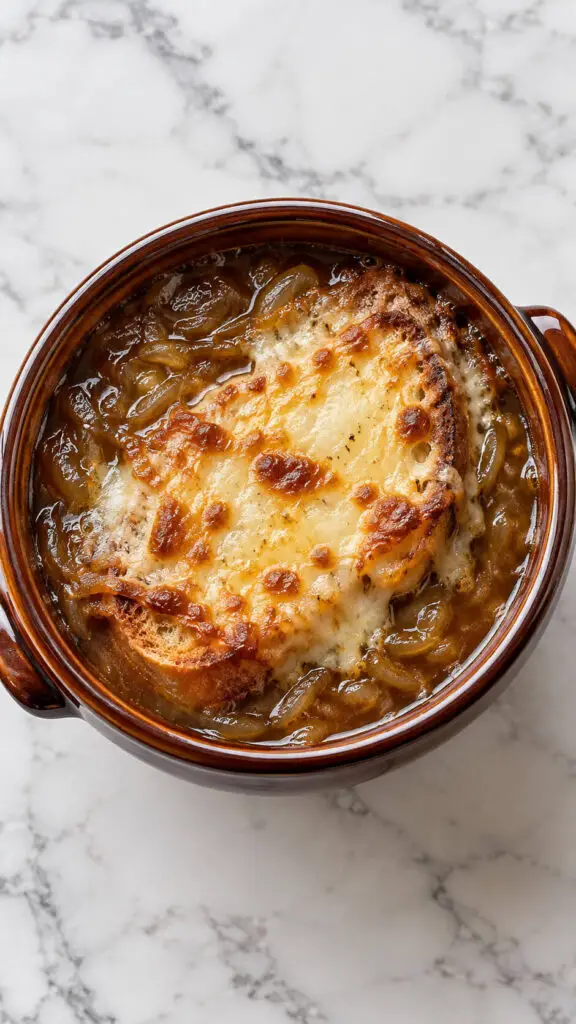
French onion soup may not be the first recipe you associate with Thanksgiving, but it absolutely earns a place at the table.
Slowly caramelized onions create the deep, sweet-savory foundation, while beef broth and thyme give the soup plenty of character.
Top individual bowls with toasted baguette and melted Gruyère cheese for that glorious bubbling finish.
If you’re hosting, assemble the bowls shortly before serving so the cheese arrives at the table beautifully golden and wonderfully gooey.
Ingredients
- 4 large yellow onions, thinly sliced
- 3 tablespoons unsalted butter
- 1 tablespoon olive oil
- 2 garlic cloves, minced
- 1 teaspoon granulated sugar
- ½ teaspoon salt, plus more to taste
- ½ teaspoon freshly ground black pepper
- 1 tablespoon all-purpose flour
- ½ cup dry white wine
- 6 cups beef broth
- 2 sprigs fresh thyme
- 1 bay leaf
- 1 tablespoon Worcestershire sauce
- 1 French baguette, sliced into ½-inch pieces
- 1½ cups grated Gruyère cheese
- ¼ cup grated Parmesan cheese
- Fresh thyme leaves, for garnish
Instructions
1. Slice the onions thinly
Peel the onions and slice them into thin, even strips from root to stem. Try to keep the slices relatively uniform so they cook at the same rate. Thin slices will gradually soften and caramelize into the sweet, deeply flavored base that gives French onion soup its signature taste.
2. Melt the butter and oil
Place a large heavy-bottomed pot or Dutch oven over medium heat. Add the butter and olive oil and let the butter melt completely. The combination of butter and oil provides rich flavor while helping prevent the butter from browning too quickly during the long onion-cooking process.
3. Cook the onions until softened
Add the sliced onions and sprinkle them with the salt and sugar. Stir well so every onion slice is coated in the buttery mixture. Cook for 10–15 minutes, stirring occasionally, until the onions become soft and translucent. Don’t rush this stage; properly softened onions are the foundation of a flavorful soup.
4. Caramelize the onions slowly
Reduce the heat to medium-low and continue cooking the onions for another 30–40 minutes, stirring every few minutes. They will gradually turn deep golden brown and become jammy and sweet. If brown bits begin sticking to the bottom of the pot, add a small splash of water and scrape them up with a wooden spoon.
5. Add the garlic and flour
Once the onions are deeply caramelized, stir in the minced garlic and cook for about 30 seconds until fragrant. Sprinkle the flour evenly over the onions and stir continuously for about 1 minute. The flour helps give the finished broth a slightly fuller texture while also incorporating the flavorful caramelized onions.
6. Deglaze the pot with wine
Pour in the dry white wine and immediately scrape the bottom of the pot with a wooden spoon. Stir until all the browned bits have loosened into the liquid. Let the wine simmer for 2–3 minutes so some of the alcohol cooks away and the concentrated flavor blends into the caramelized onions.
7. Add the broth and herbs
Pour in the beef broth, then add the Worcestershire sauce, fresh thyme, and bay leaf. Stir everything together and bring the soup to a gentle simmer. Reduce the heat to low and let it cook uncovered for approximately 25–30 minutes, allowing the broth to absorb the sweetness and richness of the onions.
8. Toast the baguette slices
While the soup simmers, preheat the oven to 400°F (200°C). Arrange the baguette slices on a baking sheet and toast them for approximately 5–8 minutes, turning once if necessary, until crisp and lightly golden. The bread should be sturdy enough to sit on top of the soup without immediately falling apart.
9. Season the soup
Remove the thyme sprigs and bay leaf from the pot. Taste the broth and adjust the seasoning with additional salt and black pepper if necessary. The soup should have a deeply savory flavor with noticeable sweetness from the caramelized onions. Keep it warm over low heat while preparing the cheese topping.
10. Assemble the bowls
Ladle the hot French onion soup into oven-safe bowls, leaving enough room near the top for the bread and cheese. Place one or two toasted baguette slices over each bowl, depending on their size. Sprinkle the Gruyère and Parmesan generously over the bread so the cheese extends slightly toward the edges.
11. Melt and brown the cheese
Place the bowls on a sturdy baking sheet and carefully transfer them to the oven. Broil for 2–4 minutes, watching closely, until the cheese has completely melted and developed a beautifully golden, bubbling surface. The cheese can go from perfectly browned to burnt surprisingly quickly, so stay nearby during this part.
12. Serve the soup
Carefully remove the bowls from the oven and let them rest for a minute or two before serving. Garnish with a few fresh thyme leaves and serve while the cheese is still bubbling and stretchy. Use thick oven mitts when handling the bowls, as they will remain extremely hot long after leaving the oven.
Tip
The secret to exceptional French onion soup is patience with the onions. Don’t turn up the heat to speed things along; slow caramelization creates the deep sweetness and rich color that make the soup special. For Thanksgiving, caramelize the onions earlier in the day, then finish the broth and cheese-topped bowls shortly before serving.
9. Roasted Cauliflower Soup

Roasting cauliflower before turning it into soup completely changes its personality.
Instead of tasting simply like boiled vegetables, it develops nutty, caramelized edges that create a richer final dish.
Blend the roasted cauliflower with onion, garlic, broth, and a splash of cream or milk.
A little Parmesan adds savory depth.
For Thanksgiving, top each bowl with crispy breadcrumbs, roasted hazelnuts, or fresh herbs.
It is an understated recipe that quietly wins people over after the first spoonful.
Ingredients
- 2 large heads cauliflower, cut into florets
- 3 tablespoons olive oil, divided
- 1 medium yellow onion, chopped
- 4 garlic cloves, peeled
- 4 cups vegetable or chicken broth
- ½ teaspoon salt, plus more to taste
- ¼ teaspoon black pepper
- ½ teaspoon dried thyme
- ¼ teaspoon smoked paprika
- ½ cup heavy cream
- ½ cup Parmesan cheese, finely grated
- ½ cup breadcrumbs
- 2 tablespoons fresh parsley, finely chopped
- 1 tablespoon olive oil, for finishing
Instructions
1. Roast the cauliflower
Preheat the oven to 425°F (220°C). Arrange the cauliflower florets and garlic cloves on a large baking sheet. Drizzle with 2 tablespoons of olive oil and season with salt, black pepper, and dried thyme. Toss well to coat everything evenly, then spread the cauliflower into a single layer. Roast for 25–30 minutes, turning once halfway through, until the florets are tender and have golden-brown, caramelized edges.
2. Prepare the breadcrumbs
While the cauliflower roasts, heat 1 tablespoon of olive oil in a small skillet over medium heat. Add the breadcrumbs and cook for 3–5 minutes, stirring frequently, until they become crisp and lightly golden. Remove them from the heat and set aside. These breadcrumbs will add a delicious crunchy contrast to the creamy soup.
3. Sauté the onion
Heat a large heavy-bottomed pot over medium heat and add the remaining tablespoon of olive oil. Add the chopped onion and cook for 5–7 minutes, stirring occasionally, until soft and translucent. Add the smoked paprika and stir for about 30 seconds. This helps release the spice’s aroma and gives the soup a subtle smoky depth.
4. Add the roasted cauliflower
Transfer most of the roasted cauliflower and all of the roasted garlic to the pot with the onions. Reserve a few of the most attractive golden cauliflower florets for garnishing the finished soup. Stir everything together for about 1 minute so the roasted flavors begin to mingle.
5. Simmer the soup
Pour the broth into the pot and bring the mixture to a gentle simmer. Reduce the heat to low and cook for 10–15 minutes. This gives the roasted cauliflower time to soften further and allows the flavors of the garlic, onion, herbs, and broth to blend together.
6. Blend until creamy
Use an immersion blender to purée the soup directly in the pot until smooth and velvety. Alternatively, carefully transfer the soup to a blender in batches and blend until creamy. If the soup seems too thick, add a little more broth until it reaches your preferred consistency.
7. Stir in the cream and Parmesan
Reduce the heat to low and stir in the heavy cream and grated Parmesan cheese. Continue cooking gently for 2–3 minutes, stirring until the cheese melts completely. Taste the soup and adjust the salt and black pepper as needed. Avoid boiling the soup after adding the cream to keep the texture smooth.
8. Prepare the garnish
Cut the reserved roasted cauliflower florets into smaller bite-sized pieces if necessary. Have the toasted breadcrumbs and chopped fresh parsley ready for serving. Keeping these garnishes separate until the last moment helps preserve their texture and makes each bowl look freshly prepared.
9. Garnish each bowl
Ladle the hot roasted cauliflower soup into serving bowls. Place a few caramelized cauliflower florets in the center, then sprinkle over the toasted breadcrumbs and fresh parsley. Finish with a very small drizzle of olive oil. The combination of creamy soup, golden cauliflower, crisp breadcrumbs, and fresh herbs gives every bowl an appealing contrast.
10. Serve the soup
Serve the soup hot as a Thanksgiving appetizer or light first course. It pairs especially well with crusty bread and works beautifully before a rich turkey dinner. If you’re serving a crowd, keep the soup warm over low heat and add the crunchy garnishes only when the bowls are ready to go to the table.
Tip
For the best flavor, let the cauliflower develop plenty of golden-brown edges during roasting. Those caramelized pieces are what give the finished soup its wonderfully nutty, roasted character. You can also prepare the soup a day ahead, refrigerate it, and gently reheat it before Thanksgiving dinner. Add a splash of broth when reheating if it has thickened overnight.
10. Apple and Cheddar Soup

Apple and cheddar might sound like an unusual soup pairing, but the combination is wonderfully balanced.
Tart apples provide brightness while sharp cheddar contributes richness and a savory edge.
Cook them with onion, celery, broth, and a little mustard before blending or leaving the soup slightly chunky.
Use a good-quality sharp cheddar rather than a mild one.
This soup feels especially festive for Thanksgiving because it combines two flavors that already belong beautifully on a fall table.
Ingredients
- 4 medium tart apples, such as Granny Smith, peeled, cored, and chopped
- 2 tablespoons unsalted butter
- 1 medium yellow onion, finely chopped
- 2 celery stalks, finely chopped
- 2 garlic cloves, minced
- 4 cups chicken or vegetable broth
- 1 teaspoon Dijon mustard
- ½ teaspoon dried thyme
- ¼ teaspoon ground black pepper
- ¼ teaspoon salt, plus more to taste
- 1 cup sharp cheddar cheese, freshly grated
- ½ cup heavy cream
- 1 tablespoon fresh lemon juice
- 2 tablespoons fresh thyme leaves, for garnish
- 1 small apple, thinly sliced, for garnish
- ¼ cup finely shredded sharp cheddar, for garnish
Instructions
1. Prepare the apples
Peel, core, and chop the apples into small, evenly sized pieces. Choose tart apples for the best contrast with the rich cheddar. Keep the pieces relatively uniform so they soften at the same rate during cooking.
2. Sauté the vegetables
Melt the butter in a large heavy-bottomed pot over medium heat. Add the chopped onion and celery and cook for 5–7 minutes, stirring occasionally, until softened. Add the minced garlic and cook for another 30 seconds, just until fragrant.
3. Cook the apples
Add the chopped apples to the pot and stir them into the softened vegetables. Cook for 3–4 minutes, stirring occasionally, until the apples begin to soften slightly. This short sauté helps bring out their natural sweetness while keeping their flavor pleasantly fresh.
4. Add the broth and seasonings
Pour the chicken or vegetable broth into the pot. Stir in the Dijon mustard, dried thyme, black pepper, and salt. Bring the mixture to a gentle simmer, then reduce the heat and cook for 15–20 minutes, or until the apples and vegetables are completely tender.
5. Blend the soup
Use an immersion blender to purée the soup directly in the pot until smooth and creamy. Alternatively, carefully transfer the soup to a blender in batches and blend until silky. If you prefer a little texture, blend only until mostly smooth and leave a few tiny pieces of apple and celery intact.
6. Add the cheddar
Reduce the heat to low and gradually stir in the freshly grated cheddar, allowing each addition to melt before adding more. Stir continuously until the cheese is completely incorporated and the soup is smooth. Avoid boiling the soup at this stage, as excessive heat can cause the cheese to separate.
7. Stir in the cream
Add the heavy cream and stir gently until fully combined. Warm the soup for another 2–3 minutes over low heat without bringing it to a boil. Taste and adjust the salt and black pepper if needed. The finished soup should have a balanced combination of creamy richness, sharp cheese, and bright apple flavor.
8. Brighten the flavor
Stir in the fresh lemon juice just before serving. The small amount of acidity helps cut through the richness of the cheddar and cream while bringing out the flavor of the apples. Add the lemon gradually and taste as you go so the soup remains balanced rather than noticeably tart.
9. Garnish the soup
Ladle the hot soup into serving bowls and garnish each portion with a few very thin apple slices, a small sprinkle of freshly grated cheddar, and several fresh thyme leaves. The crisp apple provides a pleasant contrast to the creamy soup, while the thyme adds a subtle herbal note.
10. Serve the soup
Serve the apple and cheddar soup immediately while it is hot and creamy. For Thanksgiving, serve smaller portions as a first course before the turkey and traditional side dishes. A slice of crusty bread or a few toasted croutons also make an excellent accompaniment if you want to turn it into a more substantial meal.
Tip
Grate the cheddar yourself rather than using pre-shredded cheese. Freshly grated cheese melts more smoothly and gives the soup a silkier texture. For an especially flavorful Thanksgiving version, use an aged sharp cheddar and tart apples—the savory cheese and bright fruit create a delicious sweet-and-savory balance.
11. Creamy Potato Leek Soup

Potato leek soup is a classic for good reason: humble ingredients turn into something wonderfully comforting.
Slowly cook leeks with butter, then add potatoes, broth, and herbs until everything is tender.
Blend until creamy, leaving a little texture if you prefer.
Finish with cream, chives, or crispy leeks.
It is also a fantastic make-ahead option because the flavor settles nicely after resting.
Just reheat gently and avoid letting the soup boil aggressively once the dairy is added.
Ingredients
- 2 tablespoons unsalted butter
- 3 large leeks, white and light green parts only, thoroughly washed and sliced
- 2 cloves garlic, minced
- 2 pounds Yukon Gold potatoes, peeled and cut into 1-inch cubes
- 5 cups chicken or vegetable broth
- 1 teaspoon fresh thyme leaves
- ½ teaspoon salt, plus more to taste
- ¼ teaspoon black pepper
- ½ cup heavy cream
- 2 tablespoons fresh chives, finely chopped
- 1 small leek, thinly sliced, for crispy garnish
- 1 tablespoon olive oil
- Extra cream, for drizzling
Instructions
1. Clean and slice the leeks
Trim away the dark green tops and root ends from the leeks, keeping the white and light green portions. Slice them thinly and place them in a bowl of cold water, gently separating the layers to remove any hidden dirt. Drain and pat dry thoroughly before cooking.
2. Soften the leeks
Melt the butter in a large heavy-bottomed pot over medium-low heat. Add the sliced leeks and cook for 7–10 minutes, stirring occasionally, until they become very soft and tender. Keep the heat moderate so the leeks soften without developing dark brown edges.
3. Add the garlic
Stir the minced garlic into the softened leeks and cook for about 30–60 seconds, just until fragrant. Be careful not to let the garlic brown, as burnt garlic can give the soup an unpleasant bitterness.
4. Add the potatoes
Add the cubed potatoes to the pot and stir them together with the leeks and garlic. Cook for about 2 minutes, allowing the potatoes to become lightly coated with the buttery leek mixture. This quick sauté helps build a flavorful base for the soup.
5. Pour in the broth
Add the chicken or vegetable broth, followed by the fresh thyme, salt, and black pepper. Stir everything together and increase the heat until the liquid reaches a gentle boil. Make sure the potatoes are mostly submerged in the broth for even cooking.
6. Simmer until tender
Reduce the heat to low, cover the pot partially, and simmer for 18–25 minutes. Stir occasionally and cook until the potatoes are completely tender when pierced with a fork. Avoid boiling the soup too aggressively, as gentle cooking helps preserve its delicate flavor.
7. Blend the soup
Remove the pot from the heat and use an immersion blender to purée the soup until smooth and creamy. Alternatively, carefully transfer the soup to a blender in batches and blend until velvety. If you prefer some texture, blend only part of the soup and leave a few small pieces of potato and leek intact.
8. Stir in the cream
Return the soup to low heat and stir in the heavy cream. Warm it gently for 2–3 minutes without allowing the soup to boil. Taste and adjust the salt and black pepper as needed. The finished soup should be creamy, savory, and pleasantly mild.
9. Prepare the crispy leek garnish
While the soup is warming, heat the olive oil in a small skillet over medium heat. Add the thinly sliced leek and cook for several minutes, stirring frequently, until the pieces become lightly golden and crisp. Transfer them to a paper towel-lined plate to remove excess oil.
10. Garnish and serve
Ladle the hot potato leek soup into bowls and drizzle a small amount of cream over the surface. Sprinkle with chopped fresh chives and finish with a few crispy leek pieces. Serve immediately while the soup is warm and the garnish is still pleasantly crisp.
Tip
For an especially silky soup, use Yukon Gold potatoes rather than very starchy potatoes, and blend only until smooth. Over-blending potatoes can sometimes make soup slightly gluey. If you’re preparing this for Thanksgiving, make the soup earlier in the day and reheat it gently just before serving, adding a splash of broth or cream if it becomes too thick.
12. Roasted Tomato Basil Soup

A tomato soup can absolutely join the Thanksgiving party, especially when it is made with roasted tomatoes.
Roasting concentrates their sweetness and gives the soup a richer flavor than a quick stovetop version.
Add garlic, onion, broth, and plenty of fresh basil, then blend until smooth.
A small splash of cream makes it luxurious, while Parmesan croutons add crunch.
This is an excellent choice if your Thanksgiving menu needs a bright, familiar flavor among heavier autumn dishes.
Ingredients
- 2 pounds ripe Roma or plum tomatoes, halved
- 1 medium yellow onion, quartered
- 5 garlic cloves, peeled
- 2 tablespoons olive oil
- 1 teaspoon salt
- ½ teaspoon black pepper
- 1 teaspoon dried Italian seasoning
- 3 cups vegetable or chicken broth
- 1 tablespoon tomato paste
- ½ cup fresh basil leaves, plus extra for garnish
- ½ cup heavy cream
- 1 teaspoon sugar or honey, optional
- ¼ teaspoon red pepper flakes, optional
- 2 tablespoons grated Parmesan cheese, for garnish
Instructions
1. Roast the tomatoes
Preheat the oven to 425°F (220°C). Arrange the halved tomatoes, quartered onion, and peeled garlic cloves on a large baking sheet. Drizzle everything with olive oil and sprinkle with salt, black pepper, and Italian seasoning. Roast for 30–35 minutes, until the tomatoes are tender, slightly charred around the edges, and deeply concentrated in flavor.
2. Combine the roasted vegetables
Transfer the roasted tomatoes, onions, and garlic to a large heavy-bottomed pot, making sure to scrape in any flavorful juices and browned bits from the baking sheet. Add the tomato paste and stir everything together over medium heat for 1–2 minutes. This helps intensify the tomato flavor before the broth goes in.
3. Add the broth
Pour the vegetable or chicken broth into the pot and stir well. Bring the mixture to a gentle simmer over medium heat, then reduce the heat and cook for about 10 minutes. This gives the roasted vegetables time to blend their flavors with the broth and creates a richer base for the soup.
4. Add the fresh basil
Stir the fresh basil leaves into the simmering soup and cook for 2–3 minutes. Fresh basil adds a bright, aromatic flavor that balances the sweetness and richness of the roasted tomatoes. Reserve a few of the prettiest basil leaves for garnishing the finished bowls.
5. Blend the soup
Use an immersion blender to blend the soup directly in the pot until it becomes smooth and velvety. If using a countertop blender, work in small batches and allow steam to escape safely through the lid. Blend thoroughly so the roasted tomatoes, onions, garlic, and basil create a uniform creamy texture.
6. Stir in the cream
Lower the heat and slowly stir in the heavy cream. Warm the soup gently for another 2–3 minutes without bringing it to a vigorous boil. Taste the soup and add a little sugar or honey if the tomatoes are particularly acidic. Add red pepper flakes if you would like a subtle touch of heat.
7. Adjust the seasoning
Taste the soup carefully and adjust the salt and black pepper as needed. If the flavor seems too rich, add a small splash of broth. If it tastes too acidic, a tiny amount of sugar can help balance it. The finished soup should taste deeply tomato-forward, creamy, savory, and bright with fresh basil.
8. Prepare the garnish
For a pretty Thanksgiving presentation, combine a small drizzle of cream with a few drops of olive oil. Place a few fresh basil leaves in the center of each serving. A light sprinkle of finely grated Parmesan adds a salty, nutty finish and makes the soup look especially inviting without overwhelming its vibrant tomato color.
9. Serve the soup
Ladle the hot roasted tomato basil soup into individual bowls and finish each serving with the cream drizzle, fresh basil, and Parmesan. Serve immediately while the soup is warm and silky. It makes an excellent Thanksgiving first course because its bright tomato flavor provides a refreshing contrast to richer dishes such as stuffing, mashed potatoes, and gravy.
Tip
For the richest flavor, let the tomatoes develop a little caramelization in the oven without allowing them to burn. You can make the soup a day ahead and refrigerate it in a covered container. When reheating, use low to medium heat and stir frequently, adding a splash of broth if necessary to restore its silky consistency.
13. Lentil and Vegetable Soup
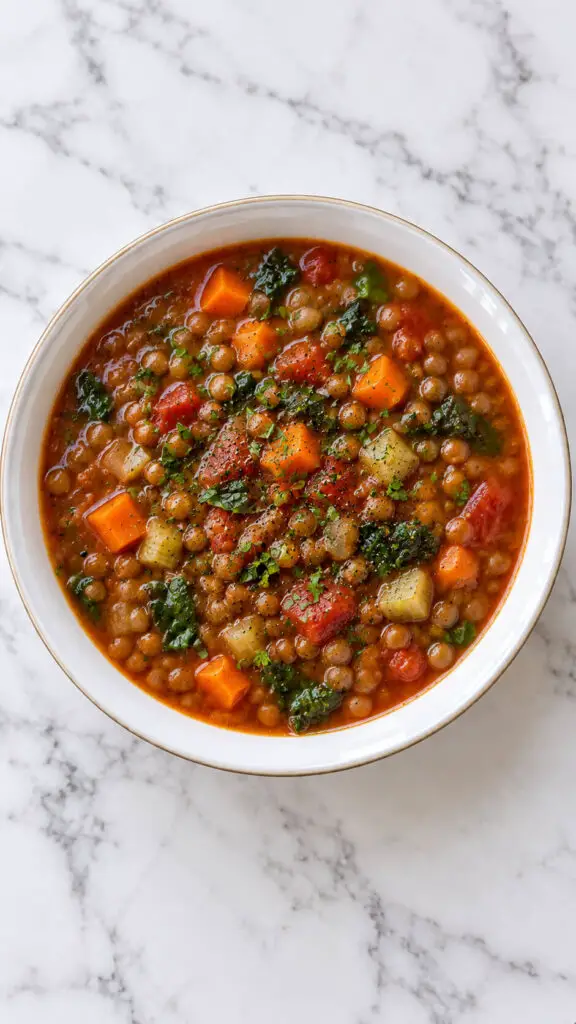
For a hearty soup that does not rely on meat, lentil and vegetable soup is wonderfully satisfying.
Simmer green or brown lentils with carrots, celery, tomatoes, onions, garlic, and herbs until tender.
A splash of lemon juice at the end keeps the soup tasting fresh rather than overly earthy.
It can easily be prepared ahead and reheated when guests arrive.
Serve it with warm bread, and you have a wholesome bowl that feels rustic, generous, and wonderfully home-cooked.
Ingredients
- 1 cup dried brown or green lentils, rinsed and drained
- 2 tablespoons olive oil
- 1 medium yellow onion, finely diced
- 2 medium carrots, peeled and diced
- 2 celery stalks, diced
- 3 cloves garlic, minced
- 1 can (14½ ounces) diced tomatoes, with juices
- 6 cups vegetable or chicken broth
- 1 teaspoon dried thyme
- ½ teaspoon dried oregano
- 1 bay leaf
- 1 teaspoon salt, plus more to taste
- ½ teaspoon freshly ground black pepper
- 2 cups chopped kale, tough stems removed
- 1 tablespoon fresh lemon juice
- 2 tablespoons chopped fresh parsley
- ¼ teaspoon red pepper flakes, optional
Instructions
1. Rinse the lentils
Rinse the lentils thoroughly under cool running water and pick out any small stones or damaged lentils. Drain them well. Rinsing removes dust and helps ensure that the finished soup has a clean, hearty flavor.
2. Sauté the vegetables
Heat the olive oil in a large heavy-bottomed soup pot or Dutch oven over medium heat. Add the diced onion, carrots, and celery, then cook for 6–8 minutes, stirring occasionally, until the vegetables begin to soften. This gentle sauté creates a flavorful foundation for the soup.
3. Add the garlic and seasonings
Stir in the minced garlic, dried thyme, oregano, black pepper, and red pepper flakes if using. Cook for about 30–60 seconds, just until the garlic becomes fragrant. Avoid browning the garlic too much, as it can develop a bitter taste.
4. Add the tomatoes and lentils
Pour in the diced tomatoes with their juices, then add the rinsed lentils. Stir everything together so the lentils and vegetables are evenly distributed. The tomatoes provide acidity and depth while the lentils give the soup its hearty, satisfying texture.
5. Pour in the broth
Add the vegetable or chicken broth and drop in the bay leaf. Increase the heat and bring the mixture to a gentle boil. Once bubbling, reduce the heat to low or medium-low so the soup maintains a steady simmer without boiling aggressively.
6. Simmer the soup
Cover the pot partially and simmer the soup for 25–35 minutes, stirring occasionally. The lentils should become tender while still holding their shape, and the carrots and celery should be soft but not mushy. If the soup becomes thicker than you prefer, add a little extra broth or water.
7. Add the kale
Stir the chopped kale into the simmering soup during the final 5–7 minutes of cooking. Allow it to soften while retaining some of its vibrant green color and slightly hearty texture. Remove the bay leaf once the soup has finished cooking.
8. Finish with lemon and parsley
Turn off the heat and stir in the fresh lemon juice and chopped parsley. Taste the soup and adjust the salt and black pepper as needed. The lemon is a small but important finishing touch because its acidity brightens the earthy lentils and vegetables.
9. Serve the soup
Ladle the lentil and vegetable soup into warm bowls and serve immediately. For a Thanksgiving meal, garnish each portion with a little fresh parsley and an optional drizzle of olive oil. Serve with crusty bread for dipping into the flavorful broth.
Tip
For an even richer Thanksgiving soup, sauté the vegetables slowly until they develop lightly golden edges before adding the broth. You can also prepare the soup a day ahead; the flavors become even more developed overnight. When reheating, add a splash of broth or water because the lentils will continue absorbing liquid as the soup rests.
14. Creamy Broccoli Cheddar Soup

Broccoli cheddar soup brings familiar comfort to Thanksgiving, especially for guests who appreciate a break from elaborate seasonal flavors.
Cook broccoli with onion, garlic, carrots, and broth, then add milk and sharp cheddar for a creamy finish.
Keep some broccoli florets whole so the soup has texture rather than becoming completely smooth.
A little mustard powder or freshly ground black pepper helps balance the richness.
Serve it with crusty bread for dipping—because soup without something to dunk is a missed opportunity.
Ingredients
- 4 cups fresh broccoli florets, cut into bite-sized pieces
- 2 tablespoons unsalted butter
- 1 medium yellow onion, finely diced
- 1 medium carrot, finely diced
- 2 cloves garlic, minced
- ¼ cup all-purpose flour
- 3 cups chicken or vegetable broth
- 2 cups whole milk
- 1 cup heavy cream
- 2 cups sharp cheddar cheese, freshly shredded
- ½ teaspoon salt
- ½ teaspoon freshly ground black pepper
- ¼ teaspoon paprika
- ¼ teaspoon dry mustard powder
- 1 tablespoon chopped fresh parsley, for garnish
Instructions
1. Prepare the broccoli and vegetables
Wash the broccoli thoroughly and cut it into small, evenly sized florets. Finely dice the onion and carrot and mince the garlic. Keeping the vegetables relatively small helps them cook evenly and makes each spoonful of soup easy to enjoy.
2. Sauté the onion and carrot
Melt the butter in a large heavy-bottomed pot over medium heat. Add the diced onion and carrot and cook for 5–7 minutes, stirring occasionally, until the vegetables begin to soften. They should become tender and fragrant without developing dark brown edges.
3. Add the garlic
Stir the minced garlic into the softened vegetables and cook for about 30–60 seconds. The garlic should become fragrant but should not brown. Cooking it briefly at this stage gives the soup a savory foundation without allowing the garlic to become bitter.
4. Make the creamy base
Sprinkle the flour evenly over the sautéed vegetables and stir continuously for about 1 minute. Gradually pour in the broth while whisking or stirring constantly to prevent lumps. Continue stirring until the mixture is smooth and the flour has been incorporated.
5. Add the milk and cream
Slowly pour in the whole milk and heavy cream, stirring as you go. Add the salt, black pepper, paprika, and dry mustard powder. Bring the mixture to a gentle simmer over medium-low heat, taking care not to let it boil rapidly.
6. Cook the broccoli
Add the broccoli florets to the creamy soup base and simmer gently for 10–15 minutes, stirring occasionally. The broccoli should become tender enough to bite easily while retaining some texture and its fresh green color.
7. Add the cheddar cheese
Reduce the heat to low and gradually stir in the freshly shredded cheddar cheese. Add it in small handfuls, stirring after each addition until completely melted before adding more. Keeping the heat low helps the cheese melt smoothly without becoming grainy.
8. Adjust the consistency
Check the soup’s texture and seasoning. If it seems too thick, stir in a little extra broth or milk until it reaches your preferred consistency. Taste and add more salt or black pepper if needed, remembering that sharp cheddar already contributes plenty of savory flavor.
9. Serve the soup
Ladle the hot broccoli cheddar soup into bowls and garnish with a small sprinkle of shredded cheddar and fresh parsley. Serve immediately with crusty bread or warm dinner rolls. For Thanksgiving, small bowls make an especially nice first course before the main meal.
Tip
For the smoothest, richest soup, shred the cheddar yourself rather than using pre-shredded cheese, which often contains anti-caking ingredients that can affect melting. If you prefer a thicker soup, mash a few of the cooked broccoli pieces against the side of the pot before adding the cheese.
15. Roasted Red Pepper Soup

Roasted red pepper soup adds vibrant color to the Thanksgiving spread and tastes wonderfully sweet and smoky.
Roast red bell peppers until softened and lightly charred, then blend them with onion, garlic, tomatoes, and broth.
A splash of cream creates a silky texture, while smoked paprika can intensify the roasted flavor.
Garnish with fresh basil, crumbled feta, or toasted seeds.
It is especially lovely served in small bowls before dinner because the bright flavor keeps things interesting without competing with the turkey.
Ingredients
- 6 large red bell peppers
- 2 tablespoons olive oil
- 1 medium yellow onion, diced
- 3 cloves garlic, minced
- 1 medium carrot, peeled and diced
- 1 can (14½ ounces) diced tomatoes, with juices
- 4 cups vegetable or chicken broth
- ½ teaspoon smoked paprika
- ½ teaspoon salt
- ¼ teaspoon freshly ground black pepper
- ¼ teaspoon dried thyme
- ½ cup heavy cream
- 1 tablespoon fresh lemon juice
- 2 tablespoons fresh basil, finely chopped
- Extra cream or olive oil, for garnish
Instructions
1. Roast the red peppers
Preheat the oven to 425°F (220°C). Cut the red peppers in half and remove the stems, seeds, and membranes. Arrange them cut-side down on a baking sheet and roast for 25–30 minutes, until the skins become blistered and visibly charred. The roasting process concentrates their natural sweetness and gives the soup its signature smoky flavor.
2. Steam the roasted peppers
Transfer the hot roasted peppers to a heatproof bowl and cover it tightly with plastic wrap or a plate. Let them sit for about 10 minutes. The trapped steam will loosen the skins, making them much easier to remove and leaving you with tender, flavorful roasted pepper flesh.
3. Peel the peppers
Once the peppers are cool enough to handle, gently peel away the charred skins and discard them. Don’t worry if a few small pieces of skin remain—they will not cause a problem. Roughly chop the peeled peppers and set them aside while you prepare the soup base.
4. Sauté the vegetables
Heat the olive oil in a large soup pot over medium heat. Add the diced onion and carrot and cook for 6–8 minutes, stirring occasionally, until they soften. Add the minced garlic and cook for another 30–60 seconds, just until fragrant.
5. Add the tomatoes and seasonings
Stir the diced tomatoes, smoked paprika, salt, black pepper, and dried thyme into the softened vegetables. Cook for 2–3 minutes, allowing the tomatoes and seasonings to mingle with the aromatics. This short cooking period helps deepen the savory flavor before the broth is added.
6. Add the roasted peppers and broth
Add the peeled roasted peppers to the pot and pour in the vegetable or chicken broth. Stir everything together and bring the mixture to a gentle simmer. Reduce the heat to medium-low and cook uncovered for about 15 minutes, giving the vegetables time to soften completely.
7. Blend the soup until smooth
Remove the pot from the heat and carefully blend the soup using an immersion blender until completely smooth. If using a countertop blender, work in small batches and vent the lid carefully to allow steam to escape. Blend until the soup has a silky, uniform consistency.
8. Add the cream
Return the blended soup to low heat and stir in the heavy cream. Warm it gently for 2–3 minutes without allowing the soup to boil. The cream will soften the roasted pepper’s intensity and give the soup a luxurious, velvety texture.
9. Brighten the flavor
Stir in the fresh lemon juice and taste the soup. Adjust the salt, pepper, or smoked paprika if necessary. The lemon juice should not make the soup taste lemony; instead, it should subtly brighten the roasted peppers and balance the richness of the cream.
10. Serve the soup
Ladle the roasted red pepper soup into warm bowls and garnish with a small swirl of cream, a drizzle of olive oil, and freshly chopped basil. Serve while hot with crusty bread or toasted baguette. For Thanksgiving, small bowls make this colorful soup an inviting first course.
Tip
For the deepest roasted flavor, let the pepper skins become genuinely blistered and charred before steaming them. Don’t skip the lemon juice at the end—it makes a noticeable difference by keeping the creamy soup from tasting too heavy. For a slightly smoky variation, add a small pinch of extra smoked paprika just before serving.
16. Chestnut Soup
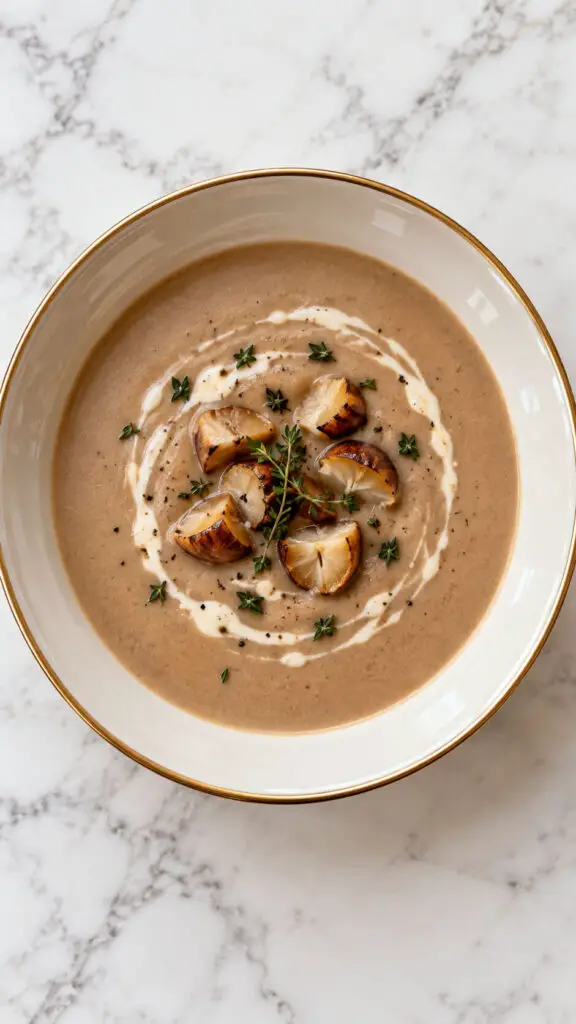
Chestnuts have a naturally sweet, nutty flavor that feels made for Thanksgiving.
Simmer cooked chestnuts with leeks, celery, onion, thyme, and broth, then blend until creamy.
A little cream or butter adds richness, while freshly cracked pepper keeps the soup from becoming too sweet.
This one feels particularly special for a holiday meal and makes an elegant first course.
If you’re entertaining, garnish with chopped roasted chestnuts and a few thyme leaves for a simple but polished presentation.
Ingredients
- 2 cups cooked and peeled chestnuts, roughly chopped
- 2 tablespoons unsalted butter
- 1 medium leek, white and light green parts only, thinly sliced
- 1 small yellow onion, finely chopped
- 1 celery stalk, finely diced
- 2 cloves garlic, minced
- 4 cups vegetable or chicken broth
- 1 cup heavy cream
- ½ teaspoon fresh thyme leaves
- ½ teaspoon salt
- ¼ teaspoon freshly ground black pepper
- ¼ teaspoon ground nutmeg
- 1 tablespoon olive oil
- 2 tablespoons chopped roasted chestnuts, for garnish
- Fresh thyme leaves, for garnish
Instructions
1. Prepare the chestnuts
If using whole cooked chestnuts, make sure they are completely peeled and remove any tough inner skins. Roughly chop the chestnuts into smaller pieces so they cook evenly and blend easily later. Reserve a couple of tablespoons of finely chopped roasted chestnuts for garnishing the finished soup.
2. Sauté the aromatics
Melt the butter in a large heavy-bottomed pot over medium heat. Add the sliced leek, chopped onion, and celery. Cook for 6–8 minutes, stirring occasionally, until the vegetables become soft and translucent. Keep the heat moderate so the vegetables soften without becoming deeply browned.
3. Add the garlic and thyme
Stir in the minced garlic and fresh thyme leaves. Cook for about 30–60 seconds, just until the garlic becomes fragrant. This short cooking time allows the garlic and herbs to release their aroma while preventing the garlic from becoming bitter.
4. Add the chestnuts
Add the chopped cooked chestnuts to the pot and stir them into the softened vegetables. Cook everything together for 2–3 minutes. The chestnuts will begin absorbing the buttery flavors from the vegetables, creating a rich, nutty foundation for the soup.
5. Pour in the broth
Add the vegetable or chicken broth and stir well, scraping the bottom of the pot to loosen any flavorful bits. Bring the mixture to a gentle boil, then reduce the heat to low. Season with salt, black pepper, and ground nutmeg.
6. Simmer the soup
Cover the pot partially and let the soup simmer gently for 20–25 minutes. The chestnuts should become very tender and the vegetables should be completely soft. Stir occasionally while the soup cooks, making sure it maintains a gentle simmer rather than a vigorous boil.
7. Blend until smooth
Remove the pot from the heat and carefully blend the soup using an immersion blender until it becomes completely smooth and velvety. If using a countertop blender, work in small batches and vent the lid carefully because hot soup produces steam. Add a little extra broth if the soup is too thick.
8. Add the cream
Return the blended soup to low heat and slowly stir in the heavy cream. Warm the soup gently for 3–5 minutes without allowing it to boil. Taste and adjust the salt, pepper, or nutmeg as needed. The finished soup should be creamy, balanced, and subtly nutty.
9. Prepare the garnish
Heat the olive oil in a small skillet over medium heat. Add the reserved chopped roasted chestnuts and cook for 2–3 minutes, stirring frequently, until lightly crisp and golden. Remove them from the heat and let them cool slightly before serving.
10. Serve the soup
Ladle the hot chestnut soup into serving bowls and sprinkle the toasted chestnut pieces over the center. Finish with a few fresh thyme leaves and, if desired, a very small drizzle of cream or olive oil. Serve immediately while the soup is warm and silky.
Tip
For the deepest flavor, use roasted chestnuts rather than simply boiled chestnuts. You can make the soup a day ahead and refrigerate it once cooled; the flavors become even more developed overnight. Reheat it gently over low heat and add a splash of broth if it has thickened too much.
17. White Bean and Kale Soup
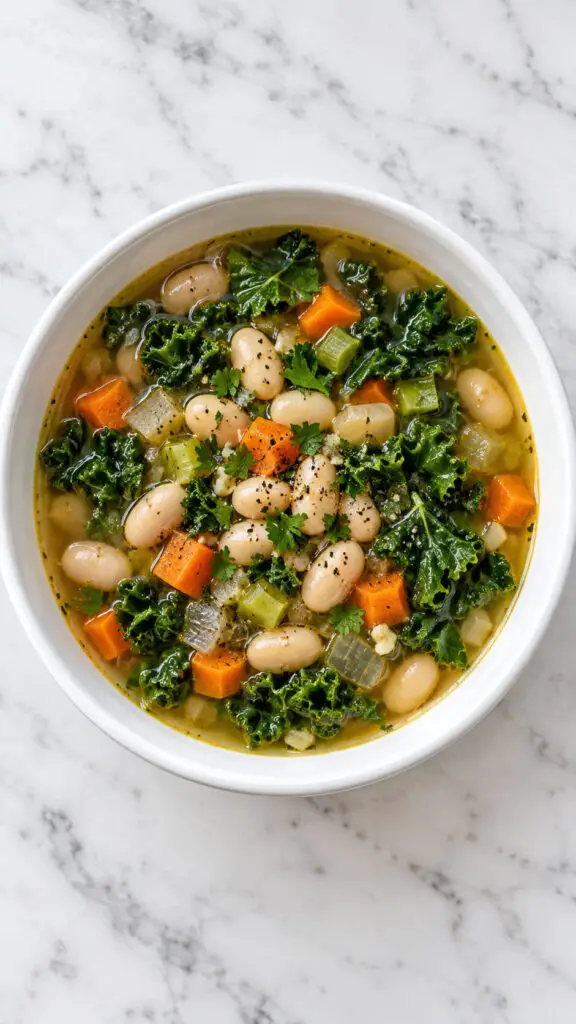
White bean and kale soup is hearty enough to satisfy hungry guests but still has a wholesome, rustic quality.
Simmer creamy white beans with onions, carrots, celery, garlic, and broth, then stir in chopped kale near the end so it stays pleasantly green.
Italian herbs and Parmesan add savory depth.
You can include Italian sausage for a meatier version or keep it vegetarian.
Serve it with toasted bread rubbed lightly with garlic, and suddenly a humble pot of soup feels like holiday comfort food.
Ingredients
- 2 tablespoons olive oil
- 1 medium yellow onion, finely diced
- 2 medium carrots, peeled and diced
- 2 celery stalks, diced
- 3 cloves garlic, minced
- 2 cans (15 ounces each) cannellini or other white beans, drained and rinsed
- 6 cups vegetable or chicken broth
- 1 teaspoon dried thyme
- ½ teaspoon dried oregano
- 1 bay leaf
- ½ teaspoon salt, plus more to taste
- ½ teaspoon freshly ground black pepper
- ¼ teaspoon red pepper flakes, optional
- 3 cups kale, stems removed and leaves roughly chopped
- 2 tablespoons fresh lemon juice
- ¼ cup freshly grated Parmesan cheese, plus more for serving
- 2 tablespoons chopped fresh parsley
Instructions
1. Prepare the vegetables
Dice the onion, carrots, and celery into small, evenly sized pieces so they cook at the same rate. Remove the tough stems from the kale and roughly chop the leaves into bite-sized pieces. Drain and rinse the white beans thoroughly under cool water.
2. Sauté the onion, carrots, and celery
Heat the olive oil in a large soup pot or Dutch oven over medium heat. Add the onion, carrots, and celery and cook for 6–8 minutes, stirring occasionally, until the vegetables soften and the onion becomes translucent. This step builds a flavorful base for the soup.
3. Add the garlic and seasonings
Stir in the minced garlic, dried thyme, oregano, black pepper, and red pepper flakes if using. Cook for about 30–60 seconds, stirring constantly, until the garlic becomes fragrant. Be careful not to let it brown, as burnt garlic can make the soup taste bitter.
4. Add the beans and broth
Add the drained white beans to the pot and pour in the broth. Stir well, then add the bay leaf. Increase the heat slightly and bring the soup to a gentle boil before reducing the heat to maintain a steady simmer.
5. Simmer the soup
Let the soup simmer uncovered for 15–20 minutes, stirring occasionally. This gives the vegetables time to become tender while allowing the beans to absorb the savory flavors of the broth and herbs. For a thicker texture, gently mash a small portion of the beans against the side of the pot.
6. Add the kale
Stir the chopped kale into the simmering soup and cook for 5–7 minutes, or until the leaves are tender but still retain their rich green color. Avoid overcooking the kale, as it can lose its fresh flavor and become dull.
7. Add the Parmesan
Remove the bay leaf and reduce the heat to low. Stir in the freshly grated Parmesan cheese until it melts into the broth. The cheese adds a subtle salty, nutty flavor that makes the soup taste especially comforting and rich.
8. Brighten the soup with lemon
Stir in the fresh lemon juice and chopped parsley just before serving. Taste the soup and adjust the salt and black pepper as needed. The lemon adds a fresh contrast to the creamy beans and hearty kale, keeping the soup from tasting too heavy.
9. Serve the soup
Ladle the hot white bean and kale soup into bowls and finish each serving with a little freshly grated Parmesan and chopped parsley. Serve with crusty bread or warm dinner rolls for dipping. It makes a wonderful Thanksgiving starter or a satisfying meal for using up leftover vegetables.
Tip
For an extra-creamy texture without adding cream, blend about 1 cup of the beans with a little broth until smooth, then stir the mixture back into the pot. If preparing the soup ahead of time, keep a little extra broth on hand because the beans will continue absorbing liquid as the soup sits.
18. Creamy Parsnip Soup
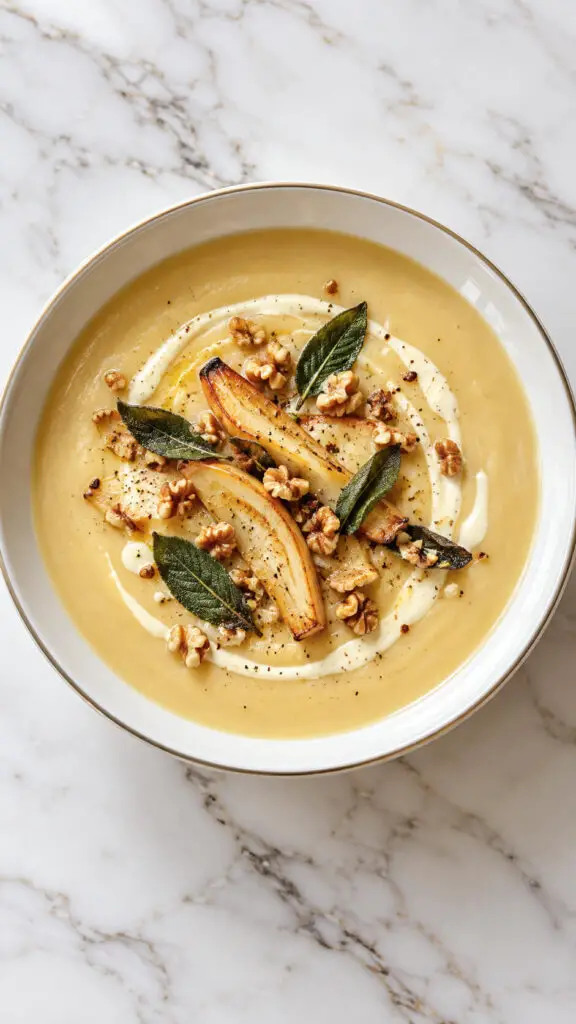
Parsnips deserve more Thanksgiving attention than they usually receive.
Their naturally sweet, slightly nutty flavor becomes especially delicious when roasted before being blended into soup.
Combine roasted parsnips with onion, garlic, broth, and a touch of cream, then season with thyme and black pepper.
For a little contrast, top each bowl with crispy bacon, toasted walnuts, or sautéed sage.
The result is elegant without being fussy, making it a lovely starter when you want something a little different from the usual pumpkin routine.
Ingredients
- 2 pounds parsnips, peeled and cut into 1-inch pieces
- 2 tablespoons olive oil
- 1 medium yellow onion, chopped
- 2 cloves garlic, minced
- 4 cups vegetable or chicken broth
- ½ teaspoon fresh thyme leaves
- ½ teaspoon salt
- ¼ teaspoon freshly ground black pepper
- ½ cup heavy cream
- 1 tablespoon unsalted butter
- 1 tablespoon fresh lemon juice
For the garnish
- ¼ cup walnuts, finely chopped
- 8–10 fresh sage leaves
- 1 teaspoon olive oil
- Fresh thyme leaves, optional
Instructions
1. Roast the parsnips
Preheat the oven to 425°F (220°C). Place the peeled and chopped parsnips on a large baking sheet and toss them with the olive oil, salt, and black pepper. Spread them in a single layer and roast for 25–30 minutes, turning once halfway through, until tender and lightly golden around the edges.
2. Prepare the onion and garlic
While the parsnips are roasting, melt the butter in a large soup pot over medium heat. Add the chopped onion and cook for 5–7 minutes, stirring occasionally, until softened and translucent. Add the minced garlic and cook for another 30–60 seconds, just until fragrant.
3. Add the roasted parsnips
Transfer the roasted parsnips to the pot with the softened onion and garlic. Stir everything together so the roasted vegetables are evenly coated in the buttery mixture. The caramelized edges of the parsnips will add a deeper, slightly nutty flavor to the finished soup.
4. Add the broth and thyme
Pour the vegetable or chicken broth into the pot and add the fresh thyme leaves. Stir well and bring the mixture to a gentle simmer over medium heat. Allow it to cook for about 10 minutes so the flavors can blend and the parsnips become exceptionally tender.
5. Blend the soup
Remove the pot from the heat and carefully blend the soup using an immersion blender until completely smooth. Alternatively, transfer the soup to a countertop blender in batches, taking care when blending the hot liquid. Continue blending until the soup has a silky, velvety consistency.
6. Add the cream
Return the blended soup to low heat and stir in the heavy cream. Warm it gently for 2–3 minutes without allowing the soup to boil. Taste and adjust the salt and black pepper as needed. The cream should make the soup rich and smooth while allowing the naturally sweet parsnip flavor to remain noticeable.
7. Prepare the sage garnish
Heat a teaspoon of olive oil in a small skillet over medium heat. Add the fresh sage leaves and cook for 1–2 minutes, carefully turning them once, until they become crisp. Transfer them to a plate lined with paper towel. The crisp sage will provide a fragrant contrast to the creamy soup.
8. Toast the walnuts
Using the same skillet, add the chopped walnuts and toast them over medium-low heat for 2–3 minutes, stirring frequently. Cook until fragrant and lightly golden, then immediately remove them from the heat. Keep a close eye on the walnuts because they can go from perfectly toasted to burnt surprisingly quickly.
9. Finish the soup
Stir the fresh lemon juice into the soup just before serving. The small amount of acidity brightens the rich cream and brings balance to the naturally sweet roasted parsnips. Taste once more and adjust the seasoning if necessary.
10. Serve the soup
Ladle the creamy parsnip soup into warm bowls and top each serving with a few crispy sage leaves, toasted walnuts, and a scattering of fresh thyme leaves. Serve immediately while the soup is warm and silky. For Thanksgiving, this makes an elegant starter that feels special without stealing attention from the main feast.
Tip
For the deepest flavor, don’t rush the roasting process. Let the parsnips develop golden-brown edges, because those caramelized surfaces add wonderful sweetness and nuttiness to the soup. If you want an extra-smooth finish, pass the blended soup through a fine-mesh strainer before adding the cream.
19. Turkey and Dumpling Soup
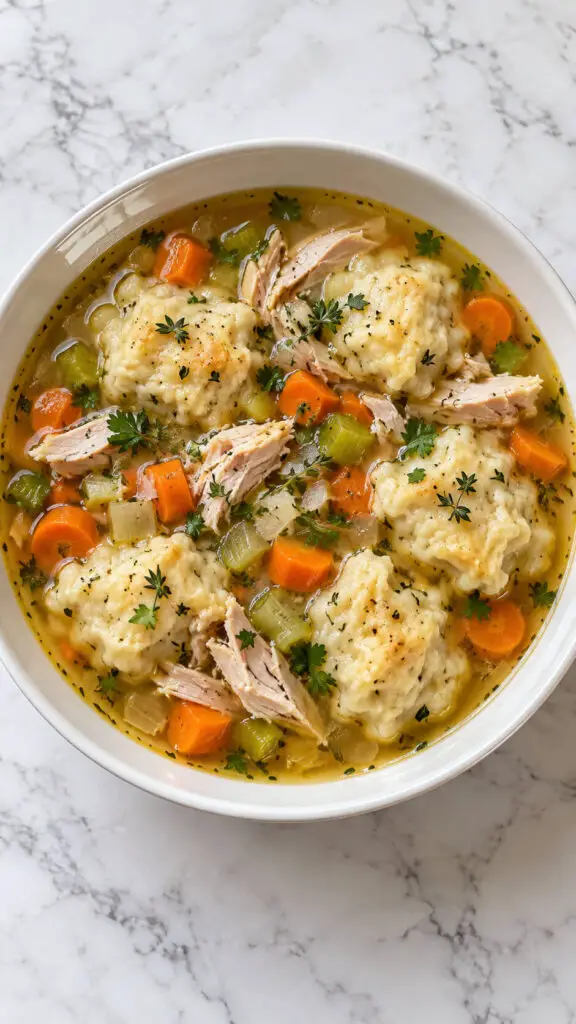
When Thanksgiving leftovers are calling your name from the refrigerator, turn them into turkey and dumpling soup.
Simmer shredded turkey with carrots, celery, onion, and herbs in a rich broth, then drop spoonfuls of soft dumpling dough over the top.
Cover the pot and let the dumplings steam until fluffy and tender.
It is cozy, filling, and wonderfully nostalgic.
Best of all, it gives leftover turkey a second act that feels less like reheating yesterday’s dinner and more like making an entirely new meal.
Ingredients
- 3 cups cooked turkey, shredded or cut into bite-sized pieces
- 2 tablespoons unsalted butter
- 1 medium yellow onion, finely diced
- 2 medium carrots, peeled and diced
- 2 celery stalks, diced
- 3 cloves garlic, minced
- 6 cups turkey or chicken broth
- 1 teaspoon dried thyme
- ½ teaspoon dried rosemary
- 1 bay leaf
- ½ teaspoon salt
- ½ teaspoon freshly ground black pepper
- ½ cup heavy cream
- 2 tablespoons fresh parsley, chopped
For the dumplings
- 1½ cups all-purpose flour
- 2 teaspoons baking powder
- ½ teaspoon salt
- ¾ cup whole milk
- 3 tablespoons unsalted butter, melted
- 1 tablespoon fresh parsley, finely chopped
Instructions
1. Sauté the vegetables
Melt the butter in a large Dutch oven or heavy-bottomed soup pot over medium heat. Add the diced onion, carrots, and celery, then cook for 6–8 minutes, stirring occasionally, until the vegetables begin to soften. This creates a flavorful base for the broth while keeping the vegetables tender enough to hold their shape.
2. Add the garlic and herbs
Stir the minced garlic, dried thyme, rosemary, bay leaf, salt, and black pepper into the softened vegetables. Cook for about 30–60 seconds, just until the garlic becomes fragrant. Be careful not to let it brown, as burnt garlic can make the entire soup taste bitter.
3. Add the broth
Pour the turkey or chicken broth into the pot and stir well, scraping the bottom gently to release any flavorful bits. Bring the mixture to a gentle simmer over medium-high heat, then reduce the heat slightly and allow the broth to simmer for about 10 minutes so the herbs and vegetables can flavor the soup.
4. Add the turkey
Stir the cooked shredded turkey into the simmering broth. Let it cook gently for 5–7 minutes so the turkey warms through and absorbs some of the savory flavors. Avoid prolonged boiling because already-cooked turkey can become dry and stringy.
5. Prepare the dumpling mixture
While the soup simmers, whisk the flour, baking powder, and salt together in a medium bowl. Stir in the melted butter, milk, and chopped parsley until a soft dough forms. Mix just until the ingredients come together; overmixing can make the dumplings dense instead of light and fluffy.
6. Drop the dumplings into the soup
Use a spoon or small cookie scoop to drop rounded portions of the dumpling dough directly onto the gently simmering soup. Leave a little space between each dumpling because they will expand as they cook. Try to keep the portions relatively similar in size so they finish cooking at approximately the same time.
7. Steam the dumplings
Cover the pot tightly with a lid and reduce the heat to low. Let the dumplings steam for 15–18 minutes without lifting the lid too often. The trapped steam cooks the dumplings from above while the hot soup cooks them from underneath, creating soft, fluffy centers.
8. Finish the soup
Check one dumpling by cutting it in half to make sure the center is cooked through and no raw dough remains. Stir in the heavy cream and chopped fresh parsley, then simmer uncovered for another 2–3 minutes. Taste the broth and adjust the salt and pepper if necessary.
9. Serve the soup
Ladle the turkey and dumpling soup into warm bowls, making sure each serving gets plenty of tender turkey, vegetables, broth, and fluffy dumplings. Garnish with a little additional parsley and serve immediately. It makes a particularly comforting meal for using leftover Thanksgiving turkey.
Tip
Keep the soup at a gentle simmer rather than a vigorous boil while the dumplings cook. Excessive bubbling can break apart the dumplings and make them heavy. For especially flavorful leftovers, use homemade turkey stock made from the Thanksgiving turkey carcass if you have it available.