31 Best Flatbread Recipes You Need to Try

I used to think making homemade flatbread was one of those things that took too much time and effort.
You know, mixing dough, waiting for it to rise, and somehow getting the perfect shape!
But after trying a few simple recipes, I realized making flatbread at home doesn’t have to be complicated.
From soft and fluffy to crispy and golden, there are so many tasty ways to enjoy it.
These flatbread recipes are easy to make, full of flavor, and perfect for breakfast, lunch, dinner, or even a quick snack.
So, let’s explore some delicious flatbread recipes you’ll want to make again and again!
1. Classic Garlic and Herb Flatbread

You can never go wrong with a simple garlic and herb flatbread.
This is the kind of recipe I love keeping in my back pocket because it pairs beautifully with soups, grilled meats, salads, and dips.
Make a soft dough with flour, yogurt, baking powder, minced garlic, olive oil, and chopped parsley.
Roll it into thin rounds and cook in a hot skillet until golden spots appear on both sides.
Brush with melted butter and extra garlic for a delicious finish.
Ingredients
- 2 cups all-purpose flour
- ¾ cup plain Greek yogurt
- 1 teaspoon baking powder
- ½ teaspoon salt
- 2 tablespoons olive oil
- 2 cloves garlic, minced
- 2 tablespoons fresh parsley, finely chopped
- 3 tablespoons unsalted butter, melted
- ½ teaspoon dried oregano
- Extra flour, for rolling
Instructions
1. Combine the dry ingredients
In a large mixing bowl, combine the all-purpose flour, baking powder, and salt. Whisk everything together to distribute the baking powder and salt evenly. This creates a good foundation for soft, fluffy flatbreads.
2. Add the yogurt and olive oil
Add the plain Greek yogurt and olive oil to the flour mixture. Stir with a wooden spoon until the ingredients begin forming a rough dough. If the mixture feels too dry, add a little extra yogurt, one tablespoon at a time, until the dough comes together.
3. Knead the dough
Transfer the dough to a lightly floured countertop and knead for about 3–5 minutes until smooth and soft. The dough should feel slightly tacky but shouldn’t stick excessively to your hands. Avoid adding too much extra flour, as this can make the finished flatbreads dense.
4. Divide the dough into portions
Shape the dough into a ball and divide it into 6–8 equal portions using a sharp knife or dough scraper. Roll each portion between your palms to create small, smooth balls. Cover them with a clean kitchen towel to prevent the dough from drying out while you work.
5. Roll out the flatbreads
Lightly flour your work surface and roll each dough ball into a thin, round flatbread, approximately 6–7 inches in diameter. Keep the thickness relatively even so the flatbreads cook properly. If the dough springs back while rolling, let it rest for a few minutes before continuing.
6. Prepare the garlic herb butter
In a small bowl, combine the melted butter, minced garlic, chopped fresh parsley, and dried oregano. Stir until everything is well incorporated. Set aside so the garlic and herbs can infuse the butter while you cook the flatbreads.
7. Heat the skillet
Place a large nonstick or cast-iron skillet over medium-high heat. Allow it to become properly hot before adding the first flatbread. You don’t need to add oil to the skillet because the dough already contains olive oil. A hot skillet helps create those lovely golden-brown spots.
8. Cook the flatbreads
Place one rolled-out flatbread into the hot skillet and cook for approximately 1–2 minutes until bubbles begin forming on the surface and golden-brown spots appear underneath. Flip and cook the other side for another 1–2 minutes until lightly browned and cooked through. Repeat with the remaining dough portions.
9. Brush with garlic herb butter
While the flatbreads are still warm, generously brush both sides with the prepared garlic herb butter. Pay particular attention to the edges, allowing the melted butter, garlic, and parsley to coat the surface evenly. The warmth of the bread helps release the garlic aroma and makes the flatbreads wonderfully fragrant.
10. Stack and serve the flatbreads
Arrange the finished flatbreads in a neat stack on a serving platter and serve while warm. They pair beautifully with creamy soups, grilled chicken, roasted vegetables, curries, and your favorite dips. You can also cut them into wedges for an easy appetizer when entertaining.
Tip
For exceptionally soft flatbreads, avoid cooking them for too long, as excessive heat can make them dry and tough. Once cooked, stack them immediately and cover loosely with a clean kitchen towel to trap a little warmth and moisture. For extra flavor, add a pinch of flaky sea salt and a little more fresh parsley just before serving.
2. Margherita Flatbread

If you love pizza but don’t want to spend the afternoon making traditional dough, Margherita flatbread is a wonderful shortcut.
Start with a ready-made flatbread and spread a thin layer of tomato sauce over the surface.
Add fresh mozzarella slices, cherry tomatoes, and torn basil leaves.
Bake until the cheese melts and the edges become beautifully crisp.
Finish with a drizzle of olive oil. It’s simple, fresh, and perfect for a quick lunch or casual family dinner.
Ingredients
- 2 medium store-bought flatbreads or naan breads
- ½ cup pizza sauce or tomato sauce
- 1½ cups fresh mozzarella, sliced or torn into small pieces
- 1 cup cherry tomatoes, halved
- 2 tablespoons fresh basil leaves
- 1 tablespoon olive oil
- ¼ teaspoon dried oregano
- ¼ teaspoon black pepper
- 1 tablespoon balsamic glaze (optional)
Instructions
1. Preheat the oven
Preheat your oven to 400°F (200°C). Line a large baking sheet with parchment paper to prevent the flatbreads from sticking. If you prefer a crispier base, place the baking sheet in the oven while it heats so the flatbreads start cooking on a hot surface.
2. Prepare the flatbread bases
Arrange the flatbreads on the prepared baking sheet in a single layer. Make sure they aren’t overlapping so the edges can crisp evenly. If the flatbreads feel particularly soft, you can lightly toast them in the oven for 3–4 minutes before adding the toppings.
3. Spread the tomato sauce
Spoon the pizza sauce over each flatbread and spread it evenly using the back of a spoon. Leave approximately ½ inch around the edges uncovered to create a lovely golden crust. Avoid adding too much sauce because excess moisture can make the flatbread soggy.
4. Add the mozzarella cheese
Distribute the fresh mozzarella evenly over the tomato sauce. Tear larger mozzarella pieces into smaller portions so the cheese melts consistently across the surface. Leave a little space between some pieces to allow the tomato sauce to peek through.
5. Arrange the cherry tomatoes
Scatter the halved cherry tomatoes over the mozzarella, placing them cut-side up where possible. Their natural sweetness becomes more concentrated as they bake, adding a delicious contrast to the creamy cheese and tangy tomato sauce.
6. Season the flatbreads
Drizzle the olive oil lightly over the toppings. Sprinkle with dried oregano and freshly ground black pepper. These simple seasonings enhance the classic Italian flavors without overpowering the fresh basil and mozzarella.
7. Bake until the cheese melts
Place the baking sheet in the preheated oven and bake for 8–12 minutes, or until the mozzarella has melted, the tomatoes have softened, and the flatbread edges are golden and crisp. Keep an eye on the edges because thin flatbreads can brown quickly.
8. Add the fresh basil
Remove the flatbreads from the oven and allow them to rest for about 2 minutes. Scatter fresh basil leaves over the melted mozzarella and tomatoes. Adding basil after baking helps preserve its bright green color and fresh aroma.
9. Finish with balsamic glaze
If desired, drizzle a little balsamic glaze over the flatbreads just before serving. The sweet, tangy glaze complements the tomatoes and mozzarella beautifully while adding an attractive finishing touch.
10. Slice and serve
Transfer the Margherita flatbreads to a cutting board and slice into triangles or rectangular portions. Serve immediately while the cheese is still warm and stretchy and the edges are wonderfully crisp. They make a delicious quick lunch, light dinner, or appetizer for a casual gathering.
Tip
For the best results, use fresh mozzarella but drain it well and pat it dry with paper towels before adding it to the flatbread. Fresh mozzarella contains quite a bit of moisture, which can make the base soggy. If you enjoy extra-crispy edges, bake the flatbread directly on a preheated baking sheet.
3. Chicken Alfredo Flatbread
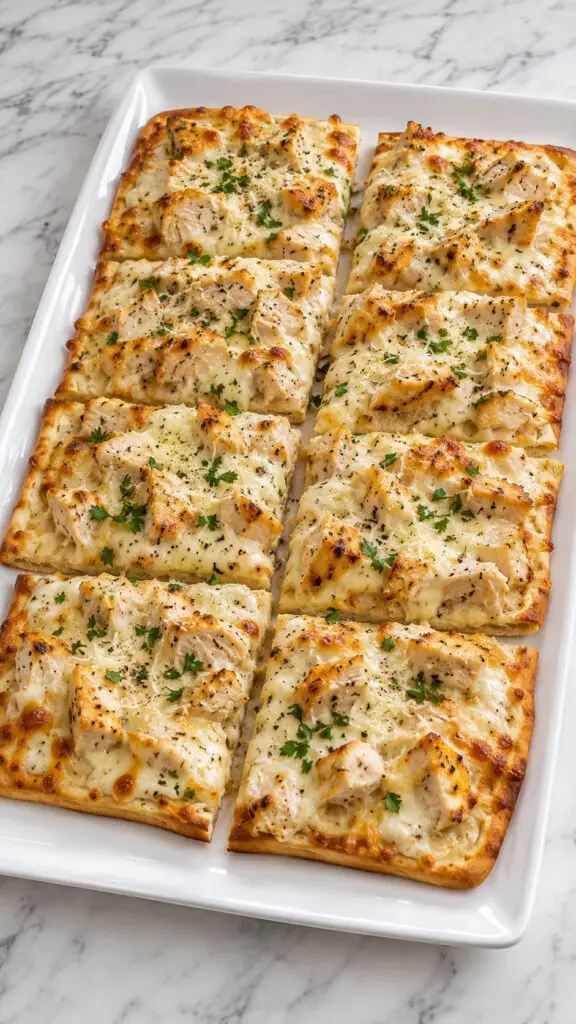
This flatbread is creamy, cheesy, and filling enough to serve as a complete meal.
Spread Alfredo sauce over a prepared flatbread, then scatter cooked chicken breast, shredded mozzarella, and a little Parmesan on top.
Add a pinch of black pepper and Italian seasoning before baking until the cheese bubbles.
For a fresh finish, sprinkle with chopped parsley.
I especially like using leftover roasted chicken here because it saves time and turns yesterday’s dinner into something everyone gets excited about.
Ingredients
- 2 large store-bought flatbreads or homemade flatbread bases
- 1½ cups cooked chicken breast, diced or shredded
- ½ cup Alfredo sauce
- 1½ cups shredded mozzarella cheese
- ¼ cup grated Parmesan cheese
- 2 cloves garlic, minced
- 1 tablespoon olive oil
- ½ teaspoon Italian seasoning
- ¼ teaspoon black pepper
- 2 tablespoons fresh parsley, chopped
- ¼ teaspoon salt, or to taste
Instructions
1. Preheat the oven
Preheat your oven to 400°F (200°C). Line a large baking sheet with parchment paper to prevent the flatbreads from sticking. Allow the oven to heat fully before baking so the crust becomes lightly crisp while the cheese melts evenly.
2. Prepare the chicken
If you’re not using leftover cooked chicken, season chicken breast with salt, black pepper, and a little Italian seasoning. Heat olive oil in a skillet over medium heat and cook the chicken for approximately 6–8 minutes per side, depending on thickness, until the center reaches 165°F (74°C). Let it rest briefly before dicing or shredding.
3. Prepare the Alfredo sauce
Place the Alfredo sauce in a small bowl and stir in the minced garlic, Italian seasoning, and black pepper. Mix until everything is evenly combined. If your sauce is particularly thick, add a small splash of milk to make it easier to spread over the flatbread.
4. Prepare the flatbread bases
Arrange the flatbread bases on the prepared baking sheet. Lightly brush the edges with olive oil to encourage golden, crispy crusts. Make sure the flatbreads lie flat and have enough space between them for the heat to circulate properly.
5. Spread the Alfredo sauce
Spoon the prepared Alfredo sauce over each flatbread and spread it evenly using the back of a spoon. Leave a small border around the edges to create a lovely golden crust. Avoid adding too much sauce because excess moisture can make the flatbread soggy.
6. Add the cooked chicken
Scatter the diced or shredded chicken evenly over the Alfredo sauce. Distribute the pieces across the entire surface so every slice gets a good amount of chicken. This also helps the toppings stay balanced rather than leaving some bites mostly bread.
7. Add the cheese
Sprinkle the shredded mozzarella generously over the chicken, followed by the grated Parmesan. The mozzarella provides that delicious melted, stretchy texture, while Parmesan adds a deeper, savory flavor. Make sure the cheese reaches close to the edges without completely covering the crust.
8. Bake the flatbreads
Transfer the baking sheet to the preheated oven and bake for approximately 8–12 minutes, or until the mozzarella has melted, the toppings are bubbling, and the edges are golden and crisp. Keep an eye on the flatbreads during the final few minutes because thinner bases can brown quickly.
9. Garnish the flatbreads
Remove the flatbreads from the oven and allow them to rest for 2–3 minutes. Sprinkle freshly chopped parsley over the melted cheese for a fresh finishing touch. Add a little extra Parmesan and freshly cracked black pepper if desired.
10. Slice and serve
Transfer the chicken Alfredo flatbreads to a cutting board and slice them into squares or long strips using a pizza cutter. Arrange the pieces on a serving platter and serve while warm, when the cheese is still beautifully melted. They make a delicious lunch, easy dinner, or crowd-pleasing appetizer.
Tip
For extra flavor, use leftover roasted garlic chicken instead of plain cooked chicken. You can also add sautéed mushrooms or baby spinach for a little variety. Just make sure to cook off excess moisture from the vegetables before adding them, so your flatbread stays crisp rather than soggy.
4. Mediterranean Vegetable Flatbread
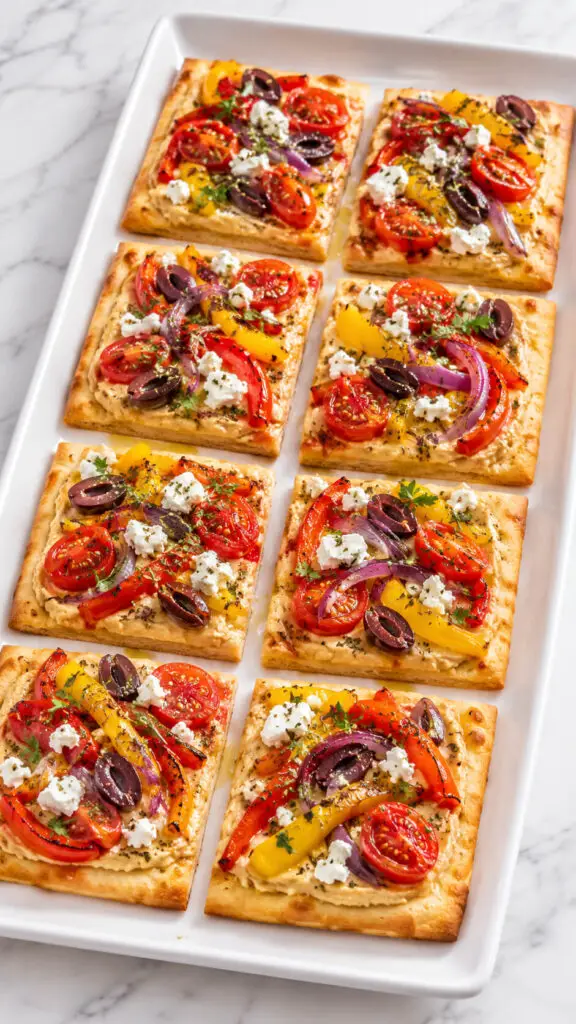
Bring a little Mediterranean sunshine to your table with this colorful vegetable flatbread.
Spread a thin layer of hummus or olive oil over the base, then add sliced bell peppers, red onions, cherry tomatoes, Kalamata olives, and crumbled feta.
Sprinkle with oregano and bake until the vegetables soften and the edges turn golden.
Finish with fresh parsley and a squeeze of lemon.
The combination of salty feta, sweet vegetables, and briny olives makes every bite interesting.
Ingredients
- 2 large rectangular flatbreads or naan breads
- ½ cup hummus
- ½ red bell pepper, thinly sliced
- ½ yellow bell pepper, thinly sliced
- 1 cup cherry tomatoes, halved
- ½ small red onion, thinly sliced
- ¼ cup Kalamata olives, halved
- ½ cup crumbled feta cheese
- 1 tablespoon olive oil
- ½ teaspoon dried oregano
- ¼ teaspoon black pepper
- 2 tablespoons fresh parsley, chopped
- 1 teaspoon fresh lemon juice
Instructions
1. Preheat the oven
Preheat your oven to 400°F (200°C). Line a large baking sheet with parchment paper to prevent the flatbreads from sticking. If you prefer a crispier base, place the baking sheet in the oven while it preheats so it becomes nice and hot.
2. Prepare the vegetables
Wash the cherry tomatoes, bell peppers, and fresh parsley thoroughly. Slice the red and yellow bell peppers into thin strips, halve the cherry tomatoes, and thinly slice the red onion. Cut the Kalamata olives in half and set all the prepared vegetables aside.
3. Prepare the flatbread bases
Place the rectangular flatbreads on the prepared baking sheet, leaving a little space between them. Check that the surfaces are relatively flat so the toppings distribute evenly. If the flatbreads are particularly thick, you can bake them for 3–4 minutes before adding the toppings to help create a firmer base.
4. Spread the hummus
Divide the hummus evenly between the two flatbreads. Use the back of a spoon to spread it across each surface, leaving a small border around the edges. The creamy hummus provides a flavorful base and helps hold the vegetables in place.
5. Arrange the vegetables
Scatter the sliced red and yellow bell peppers, cherry tomatoes, red onions, and Kalamata olives evenly over the hummus. Distribute the toppings naturally so every slice gets a little of everything. Avoid piling the vegetables too heavily, as too much moisture can make the flatbread soggy.
6. Add the feta and seasonings
Sprinkle the crumbled feta cheese evenly over the vegetables. Drizzle the olive oil across the toppings, then season with dried oregano and black pepper. The salty feta, fragrant oregano, and fruity olive oil bring all the Mediterranean flavors together beautifully.
7. Bake the flatbreads
Place the baking sheet in the preheated oven and bake for approximately 10–15 minutes, or until the edges are golden and crisp and the vegetables have softened slightly. Keep an eye on the flatbreads toward the end of cooking because thinner bases can brown quickly.
8. Add the fresh finishing touches
Remove the flatbreads from the oven and allow them to rest for 2–3 minutes. Sprinkle freshly chopped parsley over the top and finish with a light squeeze of fresh lemon juice. The lemon adds brightness and balances the creamy hummus and salty feta.
9. Slice and serve
Transfer the flatbreads to a cutting board and slice them into evenly sized rectangular pieces. Arrange them on a serving platter and serve while warm. They’re delicious as a light lunch, appetizer, or vegetarian dinner alongside a fresh salad.
Tip
For the best texture, pat the cherry tomatoes dry after washing them and avoid using overly watery hummus. You can also roast the bell peppers for a few minutes before assembling the flatbreads to bring out their natural sweetness. If you love extra crunch, add a handful of fresh arugula after baking rather than putting it in the oven.
5. Cheese-Stuffed Flatbread

If your family loves pulling apart warm, cheesy bread, this stuffed version will disappear quickly.
Prepare a soft dough using flour, yogurt, salt, and a little olive oil.
Divide it into portions, flatten each piece, and place shredded mozzarella or a mixture of mozzarella and cheddar in the center.
Fold the dough around the filling, seal the edges, and gently roll it flat.
Cook in a skillet until golden and cooked through.
Serve warm while the cheese is wonderfully stretchy.
Ingredients
- 2 cups all-purpose flour
- ¾ cup plain Greek yogurt
- 1 teaspoon baking powder
- ½ teaspoon salt
- 1 tablespoon olive oil
- 1 cup shredded mozzarella cheese
- ½ cup shredded cheddar cheese
- 2 tablespoons unsalted butter, melted
- 2 cloves garlic, minced
- 2 tablespoons fresh parsley, finely chopped
- Extra flour, for rolling
- 1–2 tablespoons olive oil, for cooking
Instructions
1. Prepare the flatbread dough
In a large mixing bowl, combine the all-purpose flour, baking powder, and salt. Add the Greek yogurt and olive oil, then stir until the ingredients form a rough dough. Transfer the mixture to a lightly floured surface and knead for about 3–5 minutes until smooth and soft. The dough should be slightly tacky but manageable.
2. Prepare the cheese filling
In a separate bowl, combine the shredded mozzarella and cheddar cheese. Mix thoroughly so both cheeses are evenly distributed. Mozzarella gives the filling that lovely stretchy texture, while cheddar adds a richer, sharper flavor. Set aside until you’re ready to stuff the flatbreads.
3. Divide the dough into portions
Shape the dough into a ball and divide it into 6 equal portions. Roll each portion between your palms to create smooth dough balls. Cover them with a clean kitchen towel and let them rest for about 5–10 minutes. This makes the dough easier to roll and helps prevent it from shrinking.
4. Roll out the dough
Lightly flour your work surface and roll each dough ball into a small circle approximately 5–6 inches in diameter. Keep the dough slightly thicker in the center so it can hold the cheese filling without tearing. Avoid rolling it too thin, as the melted cheese may escape during cooking.
5. Add the cheese filling
Place approximately 2–3 tablespoons of the mozzarella and cheddar mixture in the center of each dough circle. Leave enough space around the edges to seal the flatbread properly. Avoid overfilling, even if the temptation is strong—too much cheese can make the dough difficult to close.
6. Seal the stuffed flatbreads
Bring the edges of each dough circle toward the center, gathering them over the cheese filling. Pinch the edges firmly together to seal completely, making sure there are no openings. Gently flatten each stuffed dough ball with your hands before rolling it into a round flatbread. Use light pressure to prevent the filling from breaking through.
7. Heat the skillet
Place a large nonstick or cast-iron skillet over medium heat. Add a small amount of olive oil and spread it evenly across the surface. Allow the skillet to heat properly before adding the stuffed flatbreads. Avoid using excessively high heat because the outside may brown before the cheese inside has melted.
8. Cook the stuffed flatbreads
Place one stuffed flatbread into the heated skillet and cook for approximately 2–3 minutes until the bottom develops golden-brown spots. Carefully flip it using a spatula and cook the other side for another 2–3 minutes. Gently press the surface with the spatula to encourage even cooking, taking care not to squeeze out the filling.
9. Prepare the garlic butter
While the flatbreads are cooking, combine the melted butter and minced garlic in a small bowl. Stir well to distribute the garlic evenly. Add the finely chopped parsley and mix again. This simple garlic butter gives the finished flatbreads a beautiful aroma and an extra layer of savory flavor.
10. Brush with garlic butter
Remove the cooked flatbreads from the skillet and immediately brush both sides with the prepared garlic butter. Pay special attention to the golden edges, allowing the butter to soak slightly into the warm dough. The surface should look glossy and inviting, with little flecks of fresh parsley and garlic.
11. Serve the cheese-stuffed flatbreads
Arrange the flatbreads in a neat stack on a serving platter. For an especially appealing presentation, cut one flatbread in half to reveal the melted mozzarella and cheddar filling. Serve immediately while the cheese is warm and stretchy. They pair wonderfully with tomato soup, marinara sauce, creamy garlic dip, or a fresh green salad.
Tip
For the best cheese pull, use low-moisture mozzarella rather than fresh mozzarella, which releases more moisture during cooking. You can also add a little grated Parmesan to the filling for extra savory flavor. If preparing several flatbreads, keep the cooked ones loosely covered with a clean kitchen towel while finishing the remaining portions so they stay soft and warm.
6. BBQ Chicken Flatbread

BBQ chicken flatbread is a crowd-pleaser that brings together smoky, sweet, and savory flavors.
Spread barbecue sauce over a flatbread base, then add shredded cooked chicken, sliced red onions, and shredded mozzarella.
Bake until the cheese melts and the edges become crisp.
Once out of the oven, scatter fresh cilantro over the top and add an extra drizzle of barbecue sauce if desired.
It’s a great way to use leftover chicken and makes an easy Friday night dinner.
Ingredients
- 2 medium-sized flatbreads or naan breads
- 1½ cups cooked chicken breast, shredded
- ½ cup barbecue sauce, plus extra for drizzling
- 1½ cups shredded mozzarella cheese
- ½ small red onion, thinly sliced
- 1 tablespoon olive oil
- ¼ teaspoon garlic powder
- ¼ teaspoon smoked paprika
- ¼ teaspoon black pepper
- 2 tablespoons fresh cilantro, chopped
- 2 tablespoons crumbled cooked bacon (optional)
Instructions
1. Preheat the oven
Preheat your oven to 400°F (200°C). Line a large baking sheet with parchment paper to prevent the flatbreads from sticking and make cleanup easier. Allow the oven to heat completely before baking so the crust becomes nicely crisp while the cheese melts evenly.
2. Prepare the chicken
Place the cooked shredded chicken in a medium-sized mixing bowl. Add the barbecue sauce, garlic powder, smoked paprika, and black pepper. Stir until the chicken is evenly coated with the sauce. Make sure the chicken is moist but not swimming in barbecue sauce, as too much liquid can make the flatbread soggy.
3. Prepare the flatbread bases
Place the flatbreads on the prepared baking sheet. Lightly brush the edges with olive oil to encourage a golden, slightly crispy crust. If your flatbreads are particularly soft or thick, you can pre-bake them for 3–4 minutes before adding the toppings to help them hold their shape.
4. Add the barbecue chicken
Divide the barbecue chicken mixture evenly between the flatbreads. Spread it across the surface, leaving a small border around the edges. Distribute the chicken in an even layer so every slice gets a good amount of that smoky, sweet barbecue flavor.
5. Add the cheese and red onions
Sprinkle the shredded mozzarella generously over the barbecue chicken. Arrange the thinly sliced red onions evenly across the top. If you’re using cooked bacon, scatter it over the cheese for an extra smoky, savory touch. The combination of melted mozzarella, tender chicken, and slightly sweet red onions makes this flatbread especially delicious.
6. Bake the flatbreads
Transfer the baking sheet to the preheated oven and bake for 8–12 minutes, or until the mozzarella is completely melted and bubbly and the edges are golden brown. Keep an eye on the flatbreads during the final few minutes because thinner bases can crisp up quickly.
7. Add the finishing touches
Remove the flatbreads from the oven and let them rest for about 2 minutes. Drizzle a little extra barbecue sauce over the melted cheese and sprinkle with freshly chopped cilantro. The fresh herbs add a lovely pop of color and balance the rich, smoky flavors.
8. Slice and serve
Use a sharp pizza cutter or knife to slice the BBQ chicken flatbreads into squares or wedges. Arrange them on a serving platter and serve while warm, when the cheese is still deliciously melted. Pair with a fresh green salad, coleslaw, or ranch dressing for dipping.
Tip
For the best flavor, use rotisserie chicken or leftover roasted chicken to save preparation time. If your barbecue sauce is particularly sweet, balance it with a small squeeze of fresh lemon juice. You can also use smoked mozzarella for an extra smoky flavor that works beautifully with the barbecue chicken.
7. Spinach and Feta Stuffed Flatbread
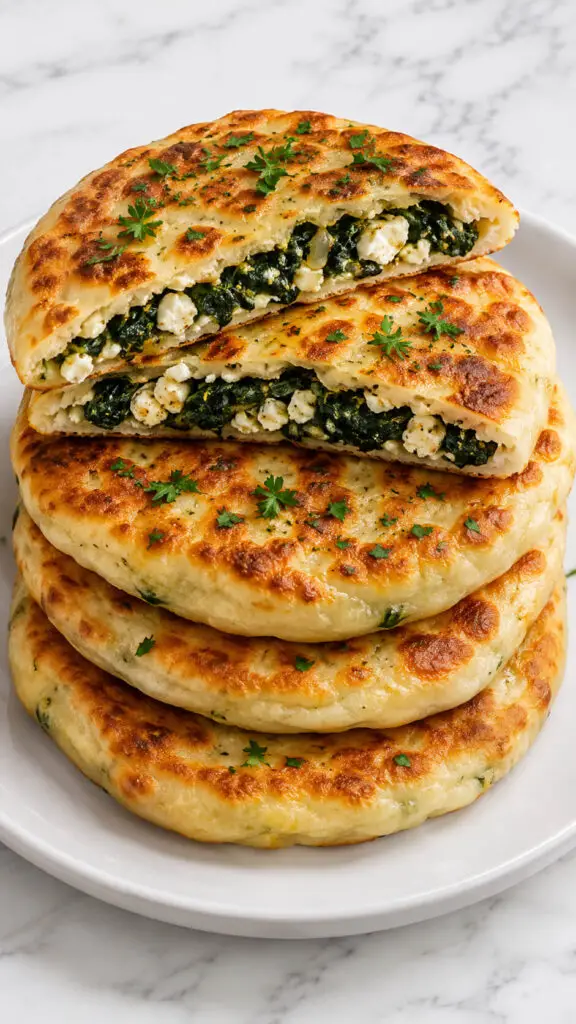
This Greek-inspired stuffed flatbread is packed with savory spinach and creamy feta.
Cook chopped spinach with a little garlic until wilted, then let it cool and squeeze out excess moisture.
Mix with crumbled feta, black pepper, and a pinch of oregano. Place the filling inside small rounds of dough, fold, seal, and roll gently.
Cook in a skillet until golden on both sides.
The outside becomes lightly crisp while the inside stays soft and flavorful. Serve with plain yogurt or tzatziki.
Ingredients
For the flatbread dough
- 2 cups all-purpose flour
- ¾ cup plain Greek yogurt
- 1 teaspoon baking powder
- ½ teaspoon salt
- 1 tablespoon olive oil
- 1–2 tablespoons water, if needed
- Extra flour, for rolling
For the spinach and feta filling
- 2 cups fresh spinach, finely chopped
- 1 cup crumbled feta cheese
- 1 tablespoon olive oil
- 2 cloves garlic, minced
- ¼ teaspoon black pepper
- ½ teaspoon dried oregano
- ¼ teaspoon salt, or to taste
For brushing
- 2 tablespoons melted butter
- 1 tablespoon fresh parsley, finely chopped
Instructions
1. Prepare the spinach
Wash the fresh spinach thoroughly and pat it dry with a clean kitchen towel. Finely chop the leaves into small pieces so they distribute evenly throughout the filling. If the spinach is particularly wet, squeeze out as much moisture as possible to prevent the flatbread dough from becoming soggy.
2. Cook the spinach and garlic
Heat the olive oil in a skillet over medium heat. Add the minced garlic and sauté for about 30 seconds until fragrant. Add the chopped spinach and cook for 2–3 minutes, stirring occasionally, until wilted. Remove from the heat and allow it to cool completely.
3. Prepare the feta filling
Transfer the cooled spinach to a mixing bowl and add the crumbled feta cheese, black pepper, dried oregano, and salt if needed. Mix gently until the ingredients are evenly combined. Taste the filling before adding extra salt because feta is naturally salty. The mixture should be flavorful, creamy, and moist without excess liquid.
4. Mix the flatbread dough
In a large mixing bowl, combine the all-purpose flour, baking powder, and salt. Add the Greek yogurt and olive oil, then stir until a soft dough begins to form. If the mixture feels too dry or crumbly, add water gradually until the ingredients come together into a manageable dough.
5. Knead and rest the dough
Transfer the dough to a lightly floured countertop and knead for approximately 3–5 minutes until smooth and elastic. Shape it into a ball, cover with a clean kitchen towel, and let it rest for 15–20 minutes. Resting makes the dough easier to roll and helps prevent it from shrinking during shaping.
6. Divide the dough into portions
Divide the rested dough into 6–8 equal portions, depending on how large you want your stuffed flatbreads. Roll each portion into a smooth ball and keep the remaining dough covered while working. This prevents the surface from drying out and makes the stuffing process easier.
7. Fill each dough portion
Take one dough ball and flatten it into a small circle using your hands or a rolling pin. Place approximately 2 tablespoons of the spinach and feta mixture in the center, leaving enough space around the edges to seal the dough. Avoid overfilling, as too much filling can cause the flatbread to split during cooking.
8. Seal and shape the stuffed flatbreads
Gather the edges of the dough over the filling and pinch them firmly together at the top to enclose the mixture completely. Turn the sealed side downward and gently flatten the dough with your hands. Use a rolling pin to carefully shape it into a round flatbread, approximately 6–7 inches wide, taking care not to press too hard and force the filling through the dough.
9. Heat the skillet
Place a large nonstick or cast-iron skillet over medium heat and allow it to warm properly. Lightly brush the surface with a little olive oil if needed. The skillet should be hot enough to create golden-brown spots but not so hot that the outside burns before the dough cooks through.
10. Cook the stuffed flatbreads
Place one stuffed flatbread into the hot skillet and cook for approximately 2–3 minutes on the first side until golden-brown spots appear. Carefully flip and cook the other side for another 2–3 minutes. Press gently around the edges if necessary to encourage even cooking. Repeat with the remaining stuffed flatbreads, adjusting the heat as needed.
11. Brush with melted butter
Combine the melted butter with the finely chopped fresh parsley. While the flatbreads are still warm, brush both sides lightly with the herb butter. This adds a lovely buttery finish and gives the golden exterior an appetizing shine.
12. Stack and serve the flatbreads
Arrange the finished spinach and feta stuffed flatbreads in a slightly overlapping stack on a serving platter. Cut one in half to reveal the delicious green spinach and creamy feta filling inside. Serve warm with plain Greek yogurt, tzatziki, or a fresh cucumber salad. They’re wonderful as a light lunch, appetizer, or side dish alongside grilled chicken.
Tip
The secret to perfectly stuffed flatbreads is removing as much moisture as possible from the cooked spinach before mixing the filling. Excess moisture can make the dough difficult to seal and cause it to become soggy. For extra flavor, add a little crumbled ricotta or freshly grated Parmesan to the feta mixture.
8. Garlic Butter Naan Flatbread

Sometimes the simplest recipes are the ones everyone reaches for first.
Homemade garlic butter naan is soft, pillowy, and wonderfully fragrant.
Mix flour, plain yogurt, yeast, warm water, salt, and a little sugar to form a smooth dough.
Allow it to rise, divide into portions, and roll into oval shapes.
Cook in a hot skillet until bubbles form and brown spots appear.
Brush generously with melted butter mixed with minced garlic and chopped cilantro.
Serve alongside curry, stew, or grilled chicken.
Ingredients
- 3 cups all-purpose flour
- ¾ cup plain Greek yogurt
- ½ cup warm water
- 2¼ teaspoons active dry yeast (1 packet)
- 1 teaspoon granulated sugar
- 1 teaspoon salt
- 2 tablespoons olive oil
- Extra flour, for kneading and rolling
For the Garlic Butter
- 4 tablespoons unsalted butter, melted
- 3 cloves garlic, minced
- 2 tablespoons fresh cilantro, finely chopped
- ¼ teaspoon salt
Instructions
1. Activate the yeast
In a small bowl, combine the warm water, active dry yeast, and sugar. Stir gently and let the mixture sit for 5–10 minutes until foamy. This indicates that the yeast is active and ready to help the naan develop its soft, airy texture. Make sure the water is warm rather than hot, as excessive heat can damage the yeast.
2. Combine the dry ingredients
In a large mixing bowl, add the all-purpose flour and salt. Whisk briefly to distribute the salt evenly throughout the flour. Creating this dry mixture first helps ensure that the dough develops a consistent texture when the wet ingredients are added.
3. Prepare the naan dough
Add the activated yeast mixture, Greek yogurt, and olive oil to the flour. Stir with a wooden spoon until a rough dough forms. If the mixture feels too dry, add a little warm water, one tablespoon at a time. The dough should be soft and slightly sticky rather than stiff.
4. Knead the dough
Transfer the dough to a lightly floured countertop and knead for approximately 8–10 minutes until smooth, elastic, and soft. If using a stand mixer, knead with a dough hook for about 5–7 minutes. Avoid adding too much extra flour because a slightly tacky dough produces softer naan.
5. Allow the dough to rise
Lightly grease a clean mixing bowl with olive oil and place the dough inside. Turn it once to coat the surface, then cover with a clean kitchen towel or plastic wrap. Leave it in a warm place for approximately 1–1½ hours, or until doubled in size. This resting time allows the yeast to develop the airy texture naan is known for.
6. Prepare the garlic butter
While the dough rises, combine the melted butter, minced garlic, chopped cilantro, and salt in a small bowl. Stir well and set aside. The garlic will infuse the warm butter, creating a fragrant topping that makes homemade naan especially delicious.
7. Divide the dough into portions
Once the dough has doubled in size, gently press it down to release excess air. Transfer it to a lightly floured surface and divide it into 8 equal portions. Shape each portion into a smooth ball and cover with a kitchen towel. Let the dough balls rest for another 10–15 minutes to make rolling easier.
8. Roll out the naan
Roll each dough ball into an oval shape approximately 7–8 inches long and about ¼ inch thick. The edges can remain slightly uneven for a traditional homemade appearance. Avoid rolling the dough too thin, as naan should have a soft, pillowy center when cooked.
9. Heat the skillet
Place a cast-iron skillet or heavy-bottomed frying pan over medium-high heat. Allow it to become thoroughly hot before cooking. A properly heated skillet helps create the characteristic golden-brown blisters and toasted patches on the naan without drying out the bread.
10. Cook the naan
Place one rolled naan into the hot, dry skillet. Cook for approximately 1–2 minutes until bubbles begin forming across the surface and the underside develops golden-brown spots. Flip and cook the other side for another 1–2 minutes until puffed and lightly charred in places. Repeat with the remaining dough portions.
11. Brush with garlic butter
While each naan is still hot, generously brush the surface with the prepared garlic butter. Make sure to cover the edges as well as the center so every bite gets that delicious buttery garlic flavor. Sprinkle with a little extra fresh cilantro if desired.
12. Stack and serve the naan
Arrange the finished naan in a neat stack on a serving platter and serve while warm. These soft, buttery flatbreads are wonderful alongside butter chicken, creamy curries, lentil stew, grilled meats, or roasted vegetables. They’re also delicious torn into pieces and dipped into hummus or your favorite sauce.
Tip
For extra-soft naan, brush each freshly cooked piece with garlic butter immediately and stack them under a clean kitchen towel while cooking the remaining portions. The trapped warmth keeps the bread soft and prevents it from drying out. If you love a slightly smoky, restaurant-style finish, cook the naan in a very hot cast-iron skillet until small golden-brown blisters develop.
9. Caprese Pesto Flatbread
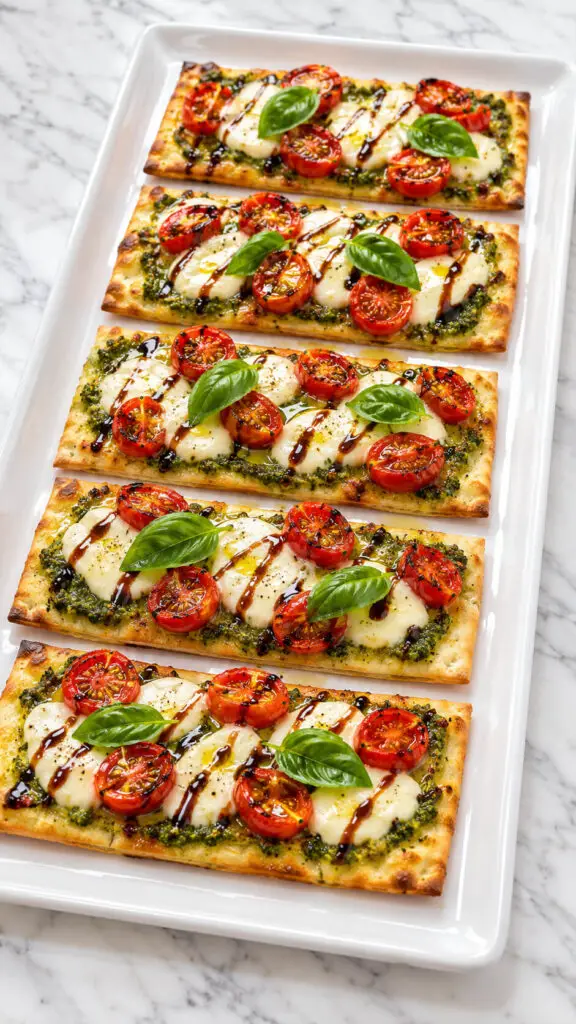
This flatbread takes inspiration from the classic Italian Caprese salad, with a little pesto added for extra flavor.
Spread basil pesto over a crisp flatbread, then arrange fresh mozzarella slices and halved cherry tomatoes on top.
Bake until the cheese softens and the tomatoes begin to blister.
Finish with fresh basil leaves, a drizzle of balsamic glaze, and a little black pepper.
The result is colorful, aromatic, and perfect for serving as an appetizer or light summer-style dinner.
Ingredients
- 2 medium flatbreads or naan breads
- ⅓ cup basil pesto
- 1 cup fresh mozzarella, sliced or torn into small pieces
- 1 cup cherry tomatoes, halved
- ¼ cup fresh basil leaves
- 2 tablespoons grated Parmesan cheese
- 1 tablespoon olive oil
- 1 tablespoon balsamic glaze
- ¼ teaspoon freshly ground black pepper
- ¼ teaspoon dried oregano
Instructions
1. Preheat the oven
Preheat your oven to 400°F (200°C). Line a large baking sheet with parchment paper to prevent the flatbreads from sticking. If you prefer a particularly crispy base, place the baking sheet in the oven while it heats so the flatbreads start cooking on a hot surface.
2. Prepare the flatbread bases
Arrange the flatbreads on the prepared baking sheet in a single layer. Make sure they aren’t overlapping so the edges can crisp evenly. If the flatbreads feel particularly thick or soft, bake them for 2–3 minutes before adding the toppings to help prevent a soggy center.
3. Spread the basil pesto
Spoon the basil pesto evenly over each flatbread, spreading it almost to the edges with the back of a spoon. Leave a small border around the sides to create a lovely golden crust. The pesto provides a fragrant base with fresh basil, garlic, Parmesan, and olive oil flavors.
4. Add the mozzarella cheese
Distribute the fresh mozzarella slices or torn pieces evenly over the pesto. Avoid piling too much cheese in one area, as this can make the flatbread watery. Fresh mozzarella gives the flatbread its creamy texture and delicious melted cheese topping.
5. Arrange the cherry tomatoes
Scatter the halved cherry tomatoes across the flatbreads, placing them cut-side up where possible. This helps them roast beautifully while releasing some of their natural sweetness. Sprinkle the tomatoes with dried oregano and freshly ground black pepper for extra flavor.
6. Drizzle with olive oil
Lightly drizzle olive oil over the toppings, concentrating on the tomatoes and mozzarella. This adds richness and helps the ingredients develop a beautiful roasted appearance. Be careful not to use too much, as the pesto already contains olive oil.
7. Bake the flatbreads
Place the baking sheet in the preheated oven and bake for approximately 8–12 minutes, or until the mozzarella has melted, the tomatoes have softened, and the edges are golden and crisp. Keep an eye on the flatbreads toward the end because thinner bases can brown quickly.
8. Add the fresh basil
Remove the flatbreads from the oven and allow them to rest for about 1–2 minutes. Scatter fresh basil leaves over the melted cheese and roasted tomatoes. Adding the basil after baking keeps its vibrant green color and fresh aroma intact.
9. Finish with Parmesan and balsamic glaze
Sprinkle grated Parmesan over the flatbreads and drizzle lightly with balsamic glaze. The Parmesan adds a savory finish, while the balsamic glaze provides a sweet and tangy contrast to the creamy mozzarella and aromatic pesto.
10. Slice and serve
Transfer the flatbreads to a cutting board and slice into wedges or rectangular portions using a sharp pizza cutter. Arrange them on a serving platter and serve immediately while the cheese is warm and stretchy. They’re wonderful as a light lunch, appetizer, or easy family dinner.
Tip
For the best results, pat fresh mozzarella dry with paper towels before adding it to the flatbread. Fresh mozzarella contains moisture, and removing some of that excess liquid helps prevent a soggy base. You can also add a handful of fresh arugula after baking for a peppery finish that complements the basil pesto beautifully.
10. Beef and Cheese Stuffed Flatbread

For something hearty, try flatbread stuffed with seasoned ground beef and melted cheese.
Brown the beef in a skillet with diced onions, garlic, paprika, cumin, salt, and black pepper.
Let the filling cool slightly before spooning it onto flattened dough rounds.
Add shredded cheddar or mozzarella, fold the dough over, and seal securely.
Cook in a lightly oiled skillet until both sides are golden and the filling is hot.
Serve with sour cream or a fresh tomato salsa for dipping.
Ingredients
For the flatbread dough
- 2 cups all-purpose flour
- ¾ cup plain Greek yogurt
- 1 teaspoon baking powder
- ½ teaspoon salt
- 1 tablespoon olive oil
- 2–3 tablespoons water, if needed
- Extra flour, for rolling
For the beef filling
- ½ pound (225 g) ground beef
- ½ small onion, finely chopped
- 2 cloves garlic, minced
- ½ teaspoon paprika
- ½ teaspoon ground cumin
- ¼ teaspoon black pepper
- ½ teaspoon salt
- 1 tablespoon olive oil
- ½ cup shredded cheddar cheese
- ½ cup shredded mozzarella cheese
- 2 tablespoons fresh parsley, chopped
For cooking and serving
- 2 tablespoons olive oil or melted butter, for brushing
- Sour cream or tomato salsa, for serving (optional)
Instructions
1. Prepare the flatbread dough
In a large mixing bowl, combine the all-purpose flour, baking powder, and salt. Add the Greek yogurt and olive oil, then mix until a soft dough begins to form. If the mixture feels too dry, add water gradually until everything comes together. Knead for approximately 3–5 minutes until the dough becomes smooth and elastic.
2. Let the dough rest
Shape the dough into a ball and place it back into the mixing bowl. Cover with a clean kitchen towel and let it rest for 15–20 minutes. This allows the flour to hydrate properly and makes the dough easier to roll without constantly shrinking back.
3. Cook the ground beef
Heat the olive oil in a skillet over medium heat. Add the chopped onion and cook for 2–3 minutes until softened. Stir in the minced garlic and cook for another 30 seconds. Add the ground beef, breaking it apart with a wooden spoon as it cooks. Continue cooking until the beef is completely browned and reaches an internal temperature of 160°F (71°C).
4. Season the beef filling
Add the paprika, ground cumin, salt, and black pepper to the cooked beef. Stir thoroughly so the seasonings coat the meat evenly. Cook for another minute to allow the spices to release their aroma. Remove the skillet from the heat and stir in the chopped fresh parsley. Drain any excess grease and allow the filling to cool slightly before assembling.
5. Divide and roll the dough
Transfer the rested dough to a lightly floured countertop and divide it into 6 equal portions. Roll each portion into a smooth ball. Using a rolling pin, flatten each ball into a circle approximately 6–7 inches in diameter. Keep the dough evenly thick so it can hold the filling without tearing.
6. Add the beef and cheese filling
Place a generous spoonful of the cooled ground beef mixture in the center of each dough circle. Sprinkle shredded cheddar and mozzarella over the beef. Avoid overfilling the flatbreads, as too much filling can make sealing difficult and cause the cheese to leak during cooking.
7. Seal the stuffed flatbreads
Bring the edges of each dough circle toward the center, enclosing the beef and cheese filling completely. Pinch the edges firmly together to seal. Turn each stuffed dough ball seam-side down and gently flatten it with your hands. Use a rolling pin to carefully roll it into a thick, round flatbread, taking care not to press too hard and tear the dough.
8. Heat the skillet
Place a large nonstick or cast-iron skillet over medium-low to medium heat. Lightly brush the skillet with olive oil or melted butter. Allow it to heat evenly before adding the stuffed flatbreads. Moderate heat is important because the outside needs time to cook while the cheese melts and the filling heats through.
9. Cook the stuffed flatbreads
Place one stuffed flatbread into the heated skillet and cook for approximately 3–4 minutes on the first side until golden brown. Carefully flip and cook the other side for another 3–4 minutes. Press gently with a spatula if necessary to encourage even contact with the skillet. Repeat with the remaining flatbreads, adjusting the heat if they brown too quickly.
10. Brush with butter and serve
Remove the cooked flatbreads from the skillet and brush the tops lightly with melted butter or olive oil. Allow them to rest for 2–3 minutes before cutting so the melted cheese settles slightly. Slice into halves or wedges and arrange on a serving platter. Serve warm with sour cream, fresh tomato salsa, or your favorite dipping sauce.
Tip
For the best stuffed flatbreads, make sure the beef filling has cooled before adding it to the dough. Warm filling can soften the dough and make it harder to seal. Also, don’t skip pinching the edges firmly together! A good seal keeps the melted cheddar and mozzarella tucked inside instead of escaping into your skillet.
11. Mushroom and Caramelized Onion Flatbread
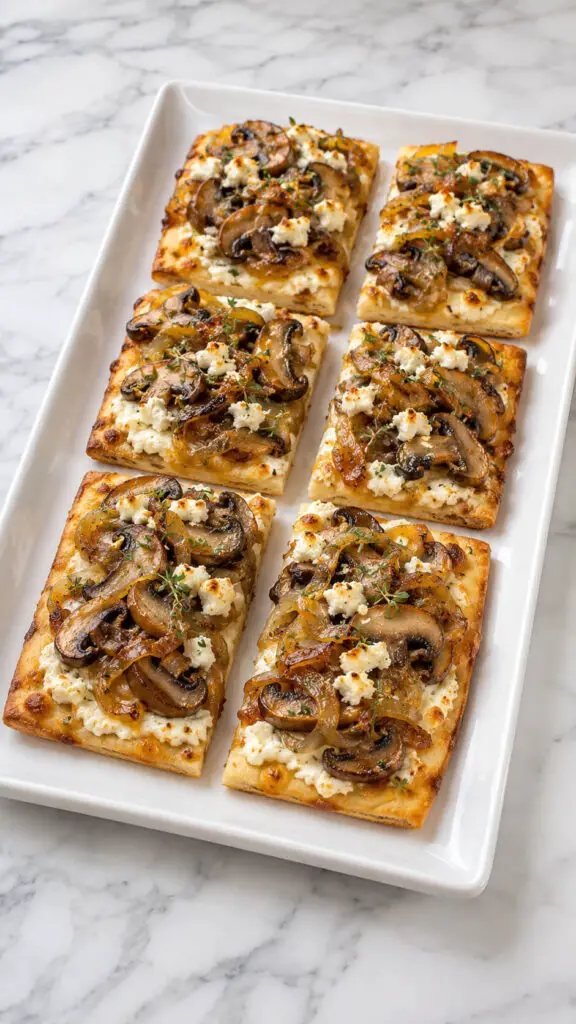
This is one of those flatbreads that feels a little fancy without requiring complicated cooking.
Slowly cook sliced onions in olive oil until soft, sweet, and golden. In another pan, sauté mushrooms with garlic, thyme, salt, and black pepper.
Spread a thin layer of ricotta over the flatbread, then add the mushrooms, caramelized onions, and crumbled goat cheese.
Bake until the edges are crisp and the cheese softens.
Finish with fresh thyme for an earthy, savory combination.
Ingredients
- 2 large rectangular flatbreads or flatbread bases
- 1 cup ricotta cheese
- 2 cups fresh mushrooms, thinly sliced
- 2 medium yellow onions, thinly sliced
- ½ cup crumbled goat cheese
- 2 cloves garlic, minced
- 2 tablespoons olive oil
- 1 tablespoon butter
- ½ teaspoon dried thyme
- 1 tablespoon fresh thyme leaves
- ½ teaspoon salt
- ¼ teaspoon black pepper
- 1 tablespoon balsamic glaze (optional)
Instructions
1. Prepare the onions
Peel the onions and slice them thinly into even strips. Heat the butter and 1 tablespoon of olive oil in a large skillet over medium-low heat. Add the onions and cook for 20–25 minutes, stirring occasionally, until they become soft, deeply golden, and naturally sweet. Avoid rushing this process because slowly cooked onions develop the best caramelized flavor.
2. Season the mushrooms
Clean the mushrooms using a damp paper towel and slice them evenly. Heat the remaining olive oil in a separate skillet over medium-high heat. Add the mushrooms and cook for 5–7 minutes until they release their moisture and develop golden-brown edges. Stir in the minced garlic, dried thyme, salt, and black pepper, cooking for another minute until fragrant.
3. Prepare the ricotta base
Place the ricotta cheese in a small mixing bowl and stir until smooth and creamy. Add a pinch of salt and black pepper to enhance its flavor. If the ricotta feels particularly thick, add a small drizzle of olive oil to make it easier to spread across the flatbread.
4. Prepare the flatbread bases
Preheat your oven to 400°F (200°C). Place the flatbread bases on a baking sheet lined with parchment paper. If you prefer a slightly crispier crust, bake them without toppings for about 3–4 minutes. Remove them from the oven and allow them to cool slightly before adding the toppings.
5. Spread the ricotta cheese
Divide the seasoned ricotta between the flatbread bases. Use the back of a spoon to spread it evenly across each surface, leaving a small border around the edges. The creamy ricotta creates a delicious foundation for the savory mushrooms and sweet caramelized onions.
6. Add the mushrooms and caramelized onions
Distribute the cooked mushrooms evenly over the ricotta layer. Follow with generous portions of caramelized onions, spreading them across the flatbreads so every slice gets a little of both toppings. Avoid piling everything into the center, as even distribution helps the flatbreads bake consistently.
7. Add the goat cheese and thyme
Scatter the crumbled goat cheese over the mushrooms and onions. Add fresh thyme leaves across the surface for an aromatic finish. The tangy goat cheese balances the sweetness of the caramelized onions, while the thyme complements the earthy mushroom flavor.
8. Bake the flatbreads
Place the prepared flatbreads in the preheated oven and bake for approximately 8–12 minutes, or until the edges are golden and crisp and the goat cheese has softened. Keep an eye on them toward the end of baking, as thinner flatbread bases can brown quickly.
9. Finish with balsamic glaze
Remove the flatbreads from the oven and allow them to rest for 2–3 minutes. Drizzle a little balsamic glaze over the toppings if desired. Add a few extra fresh thyme leaves for color and a final burst of herbal flavor.
10. Slice and serve
Transfer the flatbreads to a cutting board and slice into evenly sized rectangles or squares. Arrange the pieces on a serving platter and serve while warm. They make a wonderful appetizer for entertaining or a satisfying light meal alongside a fresh green salad.
Tip
For the best caramelized onions, cook them slowly over medium-low heat rather than increasing the temperature to save time. You can prepare the onions and mushrooms a day ahead and refrigerate them separately. When you’re ready to serve, simply assemble the flatbreads and bake. This little preparation trick makes entertaining much easier!
12. Turkish Lahmacun Flatbread
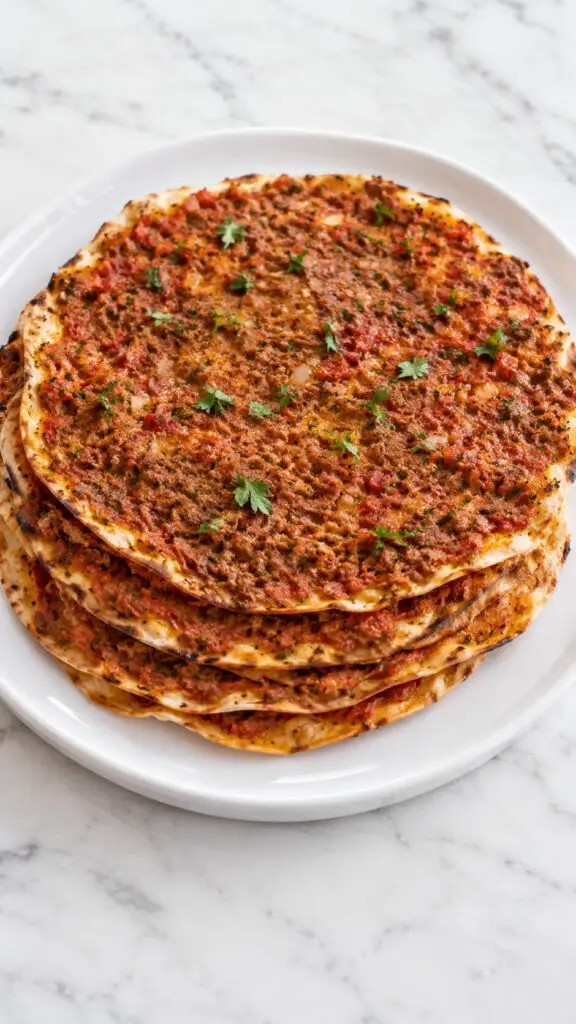
Lahmacun is a thin Turkish flatbread topped with a flavorful mixture of minced meat and vegetables.
Combine ground lamb or beef with finely chopped tomatoes, onion, garlic, parsley, paprika, cumin, and a little tomato paste.
Spread a thin layer over rolled-out dough, reaching almost to the edges.
Bake in a very hot oven until the dough is crisp and the meat is fully cooked.
Serve with lemon wedges, fresh parsley, and sliced onions for a delicious meal with plenty of character.
Ingredients
For the dough
- 3 cups all-purpose flour
- 1 teaspoon instant yeast
- 1 teaspoon sugar
- 1 teaspoon salt
- 2 tablespoons olive oil
- 1 cup warm water (approximately)
- Extra flour, for rolling
For the meat topping
- ½ pound (225 g) ground lamb or beef
- 1 medium tomato, finely chopped
- 1 small red onion, finely chopped
- 2 cloves garlic, minced
- ½ red bell pepper, finely chopped
- 2 tablespoons tomato paste
- ¼ cup fresh parsley, finely chopped
- 1 tablespoon olive oil
- 1 teaspoon paprika
- ½ teaspoon ground cumin
- ½ teaspoon ground coriander
- ½ teaspoon red pepper flakes (optional)
- ½ teaspoon salt
- ¼ teaspoon black pepper
For serving
- 1 lemon, cut into wedges
- Fresh parsley, chopped
- ½ small red onion, thinly sliced
Instructions
1. Activate the yeast
In a small bowl, combine the warm water, sugar, and instant yeast. Stir gently and let the mixture sit for about 5 minutes. It should become slightly foamy. Make sure the water is warm rather than hot, as excessive heat can prevent the yeast from working properly.
2. Prepare the dough
In a large mixing bowl, combine the flour and salt. Add the yeast mixture and olive oil, then stir until a rough dough begins to form. Mix until the ingredients are evenly incorporated and no large patches of dry flour remain.
3. Knead the dough
Transfer the dough to a lightly floured surface and knead for approximately 8–10 minutes until smooth, elastic, and soft. If the dough feels excessively sticky, sprinkle in a little flour, but avoid adding too much because you want the finished flatbreads to remain thin and tender.
4. Allow the dough to rise
Place the kneaded dough in a lightly oiled bowl and turn it once to coat the surface. Cover with a clean kitchen towel or plastic wrap and leave it in a warm place for approximately 1 hour, or until doubled in size. This resting time allows the dough to develop a light, flexible texture.
5. Prepare the meat topping
Add the ground lamb or beef to a large mixing bowl. Add the finely chopped tomato, red onion, garlic, red bell pepper, tomato paste, parsley, olive oil, paprika, cumin, coriander, red pepper flakes, salt, and black pepper. Mix thoroughly until all the ingredients are evenly distributed throughout the meat.
6. Check the consistency of the topping
Examine the meat mixture before spreading it onto the dough. It should be moist enough to spread easily but not watery. If the tomatoes have released too much liquid, drain the excess. Keeping the topping relatively thick helps prevent the dough from becoming soggy during baking.
7. Divide and shape the dough
Punch down the risen dough gently to release excess air. Divide it into 6–8 equal portions and roll each portion into a smooth ball. Cover the dough balls with a clean towel and allow them to rest for approximately 10 minutes. This makes them easier to roll into thin, even rounds.
8. Roll out the flatbreads
Lightly flour your work surface and roll each dough ball into a thin circle, approximately 8–9 inches in diameter. The dough should be thin enough to cook quickly but strong enough to hold the meat topping without tearing. Place the rolled rounds on parchment-lined baking sheets.
9. Spread the meat mixture
Divide the prepared meat topping evenly among the dough rounds. Using the back of a spoon or your fingers, spread a thin, even layer over each flatbread, extending almost to the edges. Press the mixture gently into the dough so it adheres properly. Avoid adding a thick layer, as the meat needs to cook thoroughly while the thin bread becomes crisp.
10. Bake the lahmacun
Preheat your oven to 475°F (245°C), preferably with a baking stone or heavy baking sheet inside. Carefully transfer the prepared flatbreads onto the hot baking surface and bake for approximately 7–10 minutes, or until the edges are lightly golden and crisp and the meat topping is completely cooked through. Cooking time may vary depending on your oven and the thickness of the dough.
11. Garnish with fresh herbs
Remove the cooked lahmacun from the oven and allow it to rest briefly. Sprinkle freshly chopped parsley over the top and add a few thin slices of red onion. The fresh herbs and onion provide a lovely contrast to the warm, savory meat topping.
12. Serve the lahmacun
Arrange the Turkish lahmacun on a large serving platter and serve immediately with fresh lemon wedges. Squeeze a little lemon juice over the meat topping just before eating. You can also add fresh parsley and onion, then roll each flatbread loosely for a traditional serving style. Enjoy while the edges are still crisp and the topping is warm.
Tip
For the best lahmacun, make sure the meat mixture is finely chopped and spread in a very thin, even layer. A food processor can help you achieve the traditional finely textured topping, but pulse the vegetables carefully so they don’t turn watery. Also, bake on a thoroughly preheated baking surface to help the bottom become crisp while the meat cooks evenly.
13. Buffalo Chicken Flatbread
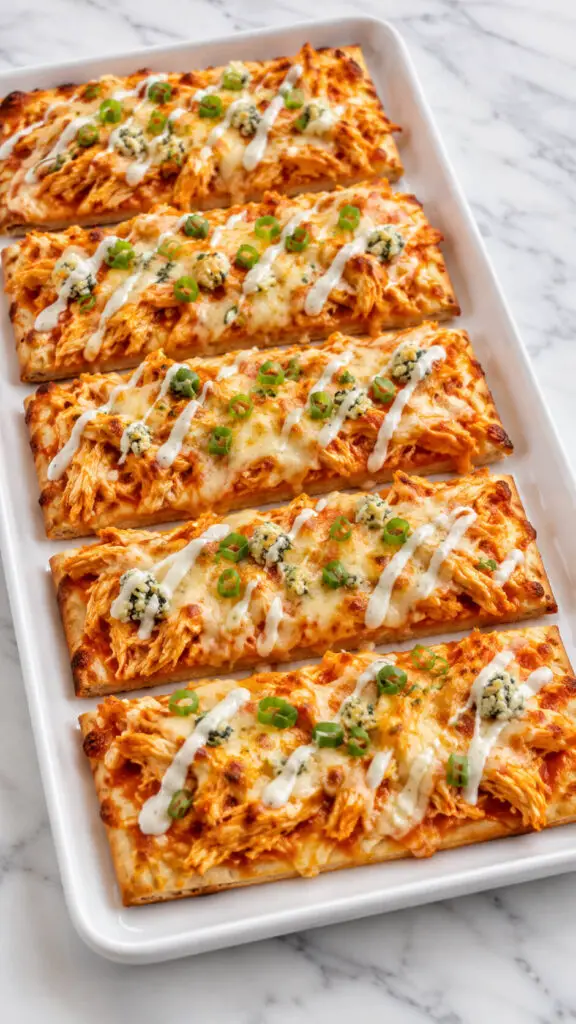
If you enjoy a little heat, buffalo chicken flatbread deserves a spot on your dinner menu.
Toss shredded cooked chicken with buffalo sauce and spread it over a prepared flatbread.
Add mozzarella cheese and a little crumbled blue cheese before baking until everything is melted and bubbly.
Once cooked, drizzle with ranch dressing and sprinkle with chopped green onions.
The spicy chicken, creamy dressing, and salty cheese create a delicious balance.
It’s particularly good for game nights and casual gatherings.
Ingredients
- 2 medium flatbreads or naan breads
- 2 cups cooked chicken breast, shredded
- ⅓ cup buffalo sauce
- 1 tablespoon melted butter
- 1 cup shredded mozzarella cheese
- ¼ cup crumbled blue cheese
- ¼ cup ranch dressing
- 2 tablespoons green onions, finely chopped
- 1 tablespoon olive oil
- ½ teaspoon garlic powder
- ¼ teaspoon black pepper
Instructions
1. Preheat the oven
Preheat your oven to 400°F (200°C). Line a large baking sheet with parchment paper to prevent the flatbreads from sticking. Allow the oven to heat fully so the bases become crisp while the cheese melts evenly.
2. Prepare the chicken
Place the shredded cooked chicken in a medium mixing bowl. Make sure the chicken is cut into small, evenly sized pieces so it spreads easily over the flatbreads. If using leftover roasted or rotisserie chicken, remove any skin and bones before shredding.
3. Season the chicken
Add the buffalo sauce, melted butter, garlic powder, and black pepper to the shredded chicken. Toss everything together until the chicken is evenly coated. The mixture should look moist and have a rich orange-red color. Adjust the buffalo sauce depending on how spicy you like your flatbread.
4. Prepare the flatbread bases
Arrange the flatbreads on the prepared baking sheet. Lightly brush the edges with olive oil to encourage a beautiful golden crust. If your flatbreads are particularly soft, you can pre-bake them for 3–4 minutes to help prevent the centers from becoming soggy once the toppings are added.
5. Add the buffalo chicken
Spread the seasoned chicken evenly over each flatbread, leaving a small border around the edges. Distribute the chicken in a single layer rather than piling it too high. This helps every bite contain a good balance of spicy chicken and crispy bread.
6. Add the cheeses
Sprinkle the shredded mozzarella evenly over the buffalo chicken, followed by the crumbled blue cheese. The mozzarella creates a creamy, stretchy topping, while the blue cheese adds a delicious tangy flavor that balances the heat of the buffalo sauce.
7. Bake the flatbreads
Transfer the baking sheet to the preheated oven and bake for 8–12 minutes, or until the cheese is completely melted and bubbling and the edges are golden brown. Make sure the chicken is heated through to 165°F (74°C) if it was previously refrigerated.
8. Drizzle with ranch dressing
Remove the flatbreads from the oven and let them rest for about 2 minutes. Drizzle ranch dressing lightly over the melted cheese and buffalo chicken. Avoid adding too much dressing, as you still want the spicy chicken and cheese flavors to stand out.
9. Garnish with green onions
Sprinkle the finely chopped green onions over the flatbreads. Their fresh, slightly sharp flavor provides a lovely contrast to the rich cheese and spicy buffalo chicken. You can also add a little extra crumbled blue cheese if you enjoy a stronger flavor.
10. Slice and serve
Transfer the flatbreads to a cutting board and slice them into evenly sized squares or wedges using a sharp pizza cutter. Arrange the pieces on a serving platter and serve immediately while the cheese is warm and stretchy. These are especially delicious for game nights, casual family dinners, or parties.
Tip
For the best flavor, use freshly cooked or rotisserie chicken and avoid adding too much buffalo sauce, which can make the flatbread soggy. If you’re serving guests with different spice preferences, mix a little extra ranch dressing with the buffalo sauce before tossing the chicken to create a milder, creamier topping.
14. Spinach and Ricotta Flatbread
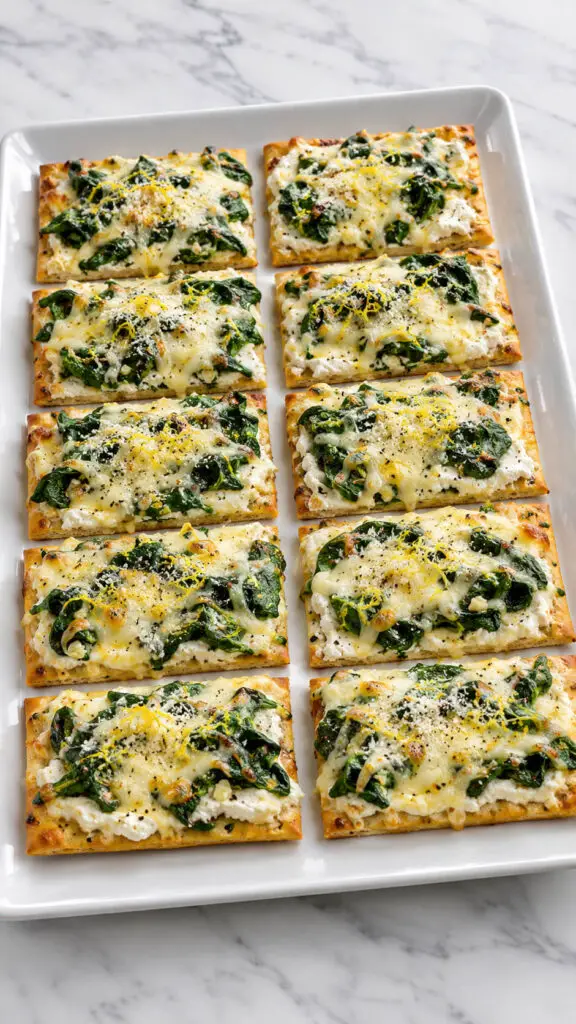
For a lighter, creamy option, try a flatbread topped with spinach and ricotta.
Spread seasoned ricotta over the base, then add fresh spinach, minced garlic, mozzarella, and a sprinkle of Parmesan.
Season with black pepper and a little nutmeg to bring out the creamy filling’s flavor.
Bake until the cheese is melted and the spinach has wilted.
Finish with lemon zest for brightness. This is a lovely meat-free option that works equally well for lunch or a simple dinner.
Ingredients
- 2 medium flatbreads or flatbread bases
- 1 cup fresh spinach, roughly chopped
- ¾ cup ricotta cheese
- 1 cup shredded mozzarella cheese
- ¼ cup grated Parmesan cheese
- 2 cloves garlic, minced
- 1 tablespoon olive oil
- ¼ teaspoon salt
- ¼ teaspoon black pepper
- ⅛ teaspoon ground nutmeg
- ½ teaspoon dried oregano
- 1 teaspoon fresh lemon zest
- 1 tablespoon fresh parsley, chopped
Instructions
1. Preheat the oven
Preheat your oven to 400°F (200°C). Line a large baking sheet with parchment paper to prevent the flatbreads from sticking. If you prefer a crispier base, place the baking sheet in the oven while it heats so the flatbreads begin cooking on a hot surface.
2. Prepare the spinach
Wash the fresh spinach thoroughly and pat it dry with a clean kitchen towel. Roughly chop the leaves into smaller pieces. Heat the olive oil in a skillet over medium heat, add the minced garlic, and cook for about 30 seconds until fragrant. Add the spinach and cook for 2–3 minutes until wilted.
3. Remove excess moisture from the spinach
Transfer the cooked spinach to a fine-mesh strainer or clean kitchen towel. Allow it to cool slightly, then gently squeeze out any excess liquid. This is an important step because watery spinach can make the flatbread soggy and prevent the cheese from developing a lovely baked texture.
4. Prepare the ricotta mixture
Place the ricotta cheese in a medium mixing bowl. Add the salt, black pepper, ground nutmeg, and dried oregano. Stir until creamy and well combined. The nutmeg adds a gentle warmth that complements the spinach and ricotta without overpowering their delicate flavors.
5. Combine the spinach and ricotta
Add the drained spinach and sautéed garlic to the ricotta mixture. Stir gently until the ingredients are evenly distributed. Taste and adjust the seasoning if necessary. The filling should be creamy, slightly savory, and packed with spinach without becoming too wet.
6. Prepare the flatbread bases
Arrange the flatbread bases on your prepared baking sheet. If they are particularly soft, you can pre-bake them for 3–4 minutes to help firm up the surface. This creates a sturdier base that can hold the creamy spinach and cheese toppings without becoming soggy.
7. Spread the spinach and ricotta mixture
Divide the spinach and ricotta mixture evenly between the flatbread bases. Use the back of a spoon or a small spatula to spread it across each surface, leaving a narrow border around the edges. Make sure the filling is distributed evenly so every slice has a good balance of creamy cheese and spinach.
8. Add the mozzarella and Parmesan
Sprinkle the shredded mozzarella evenly over the spinach and ricotta mixture. Follow with the grated Parmesan cheese. The mozzarella provides a delicious melted, stretchy texture, while the Parmesan adds a slightly salty, nutty flavor and helps create a beautifully golden finish.
9. Bake the flatbreads
Transfer the baking sheet to the preheated oven and bake for approximately 10–15 minutes, or until the mozzarella has melted, the edges are golden and crisp, and the cheese is lightly bubbling. Keep an eye on the flatbreads toward the end of cooking to prevent the edges from becoming too dark.
10. Add the fresh finishing touches
Remove the flatbreads from the oven and allow them to rest for 2–3 minutes. Sprinkle fresh lemon zest and chopped parsley over the top. The lemon adds a bright, refreshing flavor that balances the creamy ricotta and melted cheese beautifully.
11. Slice and serve
Use a sharp pizza cutter or knife to slice the flatbreads into triangles or rectangular portions. Arrange them on a serving platter and serve while warm. They make a lovely light lunch, easy dinner, or appetizer alongside a fresh green salad or bowl of tomato soup.
Tip
Always squeeze as much moisture as possible from the cooked spinach before mixing it with the ricotta. This little trick makes a big difference in keeping the flatbread crisp rather than soggy. For extra flavor, add a pinch of red pepper flakes to the spinach mixture for a gentle kick of heat.
15. Za’atar Olive Oil Flatbread
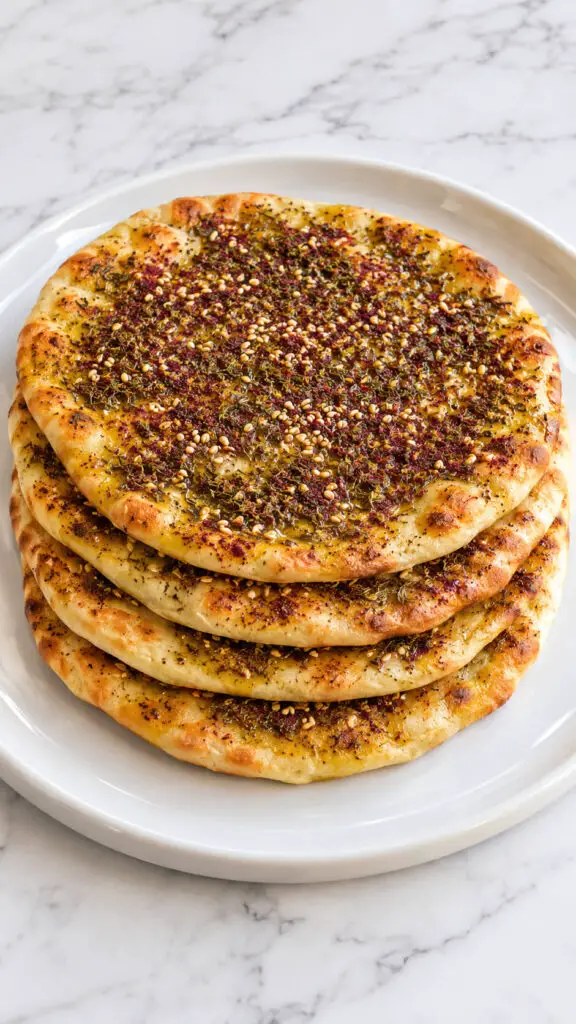
This Middle Eastern-inspired flatbread proves that you don’t need lots of toppings to create something delicious.
Prepare a simple yeast dough, roll it into thin rounds, and brush generously with olive oil.
Mix za’atar seasoning with a little extra olive oil and spread it over the dough.
Bake in a hot oven until the edges are golden and the surface is fragrant.
The combination of thyme, sesame seeds, and sumac gives the bread a distinctive earthy, tangy flavor.
Serve with hummus or labneh.
Ingredients
- 2 cups all-purpose flour
- ¾ cup warm water
- 1 teaspoon instant yeast
- ½ teaspoon sugar
- ½ teaspoon salt
- 2 tablespoons olive oil
- 3 tablespoons za’atar seasoning
- ¼ cup extra virgin olive oil, for the topping
- Extra flour, for rolling
Instructions
1. Activate the yeast
In a small bowl, combine the warm water, instant yeast, and sugar. Stir gently and let the mixture sit for about 5 minutes. It should become slightly foamy, indicating that the yeast is ready to help the dough rise. Make sure the water is warm rather than hot to avoid damaging the yeast.
2. Combine the dry ingredients
In a large mixing bowl, add the all-purpose flour and salt. Whisk briefly to distribute the salt evenly throughout the flour. This creates a balanced base for the flatbread and helps ensure consistent flavor in every bite.
3. Prepare the dough
Pour the yeast mixture and 2 tablespoons of olive oil into the flour mixture. Stir with a wooden spoon until a rough dough forms. Transfer it to a lightly floured surface and knead for approximately 8–10 minutes until smooth, elastic, and slightly tacky. Add a little flour if the dough is excessively sticky, but avoid adding too much.
4. Allow the dough to rise
Place the dough in a lightly oiled bowl and turn it once to coat the surface. Cover with a clean kitchen towel or plastic wrap and leave it in a warm place for approximately 1 hour, or until doubled in size. This resting period develops the dough’s texture and makes it easier to roll out.
5. Prepare the za’atar topping
In a small bowl, combine the za’atar seasoning with the extra virgin olive oil. Stir until the mixture forms a thick, spreadable paste. The olive oil helps release the fragrant flavors of the thyme, sesame seeds, and sumac while giving the flatbreads their characteristic glossy finish.
6. Divide the dough
Once the dough has risen, gently press it down to release excess air. Transfer it to a lightly floured surface and divide it into 6–8 equal portions. Shape each portion into a smooth ball and cover them with a kitchen towel. Let them rest for another 10 minutes to relax the gluten and make rolling easier.
7. Roll out the flatbreads
Take one dough ball and roll it into a thin circle approximately 6–7 inches in diameter. Repeat with the remaining portions, keeping the thickness as even as possible. Arrange the rolled dough on lightly floured baking sheets or a clean work surface while you prepare the topping.
8. Spread the za’atar mixture
Spoon the prepared za’atar and olive oil mixture over each rolled-out flatbread. Use the back of a spoon to spread it evenly across the surface, leaving a small border around the edges. Make sure the seasoning is distributed generously so every bite has that delicious herbal, tangy flavor.
9. Bake the flatbreads
Preheat your oven to 425°F (220°C). Arrange the prepared flatbreads on baking sheets lined with parchment paper, leaving a little space between each one. Bake for approximately 8–12 minutes, or until the edges are lightly golden and the bottoms are cooked through. Keep an eye on them toward the end because thin flatbreads can brown quickly.
10. Cool slightly and serve
Remove the flatbreads from the oven and allow them to rest for 2–3 minutes. The olive oil and za’atar topping will look beautifully glossy and fragrant. Serve warm, either whole or cut into wedges. They are delicious alongside hummus, labneh, roasted vegetables, grilled meats, or a fresh Mediterranean salad.
Tip
For the best flavor, use good-quality extra virgin olive oil and fresh za’atar seasoning. If you enjoy a slightly tangy finish, squeeze a little fresh lemon juice over the flatbreads just before serving. You can also prepare the dough a day ahead and refrigerate it overnight; simply bring it to room temperature before shaping and baking.
16. Breakfast Flatbread with Eggs and Bacon

Who says flatbread has to wait until lunch or dinner?
This breakfast version is filling, savory, and a fun way to change up your usual morning routine.
Spread a little cream cheese or shredded cheddar over the flatbread, then add cooked bacon pieces and sautéed bell peppers.
Carefully crack an egg or two over the top and bake until the egg whites are set.
Finish with chopped chives and black pepper. Slice into wedges and serve while everything is warm.
Ingredients
- 2 medium flatbreads, homemade or store-bought
- 4 large eggs
- 6 slices bacon
- 1 cup shredded cheddar cheese
- ½ red bell pepper, diced
- ½ yellow bell pepper, diced
- 2 tablespoons cream cheese (optional)
- 1 tablespoon olive oil
- 2 tablespoons fresh chives, finely chopped
- ¼ teaspoon black pepper
- ¼ teaspoon paprika
- ¼ teaspoon salt
- 1 tablespoon fresh parsley, chopped (optional)
Instructions
1. Prepare the bacon
Heat a large skillet over medium heat and arrange the bacon slices in a single layer. Cook for about 6–8 minutes, turning occasionally, until crispy and golden brown. Transfer the bacon to a paper towel-lined plate to drain excess grease. Once cooled slightly, chop it into small bite-sized pieces.
2. Sauté the bell peppers
Add the olive oil to a clean skillet over medium heat. Add the diced red and yellow bell peppers and cook for 3–4 minutes, stirring occasionally, until they soften slightly but still retain a little crunch. Season with a pinch of salt and black pepper, then remove from the heat and set aside.
3. Prepare the flatbread bases
Preheat your oven to 375°F (190°C). Arrange the flatbreads on a baking sheet lined with parchment paper. If desired, spread a thin layer of cream cheese over each flatbread for extra creaminess. Leave a small border around the edges to help keep the toppings in place.
4. Add the cheddar cheese
Sprinkle the shredded cheddar cheese evenly over both flatbreads. The cheese creates a delicious base for the bacon, peppers, and eggs while helping the toppings come together during baking. Make sure the cheese is distributed evenly rather than piled in the center.
5. Arrange the bacon and peppers
Scatter the chopped crispy bacon and sautéed bell peppers over the cheese. Spread the toppings evenly across the flatbreads, leaving enough space for the eggs. Their smoky, savory flavor pairs beautifully with the sweetness of the peppers and richness of the cheddar.
6. Add the eggs
Carefully crack two eggs onto each flatbread, spacing them apart so they cook evenly. Create small spaces among the toppings if necessary to help the eggs sit securely. Sprinkle the eggs lightly with paprika, salt, and black pepper for extra flavor.
7. Bake the flatbreads
Place the baking sheet in the preheated oven and bake for approximately 8–12 minutes, depending on the thickness of the flatbread and how firmly you prefer your eggs cooked. The egg whites should be completely set, while the yolks can remain slightly soft if desired. Make sure the eggs are safely cooked before serving.
8. Add the fresh herbs
Remove the flatbreads from the oven and allow them to rest for a minute. Sprinkle freshly chopped chives and parsley over the top. The fresh herbs add a lovely pop of color and balance the richness of the bacon, eggs, and melted cheese.
9. Slice and serve
Transfer the breakfast flatbreads to a cutting board and slice into halves or wedges. Serve immediately while the cheese is melted, the bacon is crisp, and the eggs are warm. They make a wonderful breakfast or brunch option, especially when you want something more exciting than ordinary toast and eggs.
Tip
For the best results, use flatbreads that are sturdy enough to hold the toppings without becoming soggy. If you prefer crispy edges, pre-bake the plain flatbreads for 3–4 minutes before adding the cheese and other ingredients. You can also add sliced avocado or a little hot sauce just before serving for extra flavor.
17. Sweet Nutella and Strawberry Flatbread

Flatbread can certainly have a place on the dessert table, and this sweet version is always a hit.
Brush the flatbread lightly with melted butter and warm it in the oven until slightly crisp.
Spread a generous layer of Nutella over the warm surface, then arrange fresh sliced strawberries on top.
Add a light dusting of powdered sugar and a few chopped hazelnuts for crunch. Slice into small triangles and serve immediately.
It’s a lovely treat for children and adults alike.
Ingredients
- 2 medium ready-made flatbreads
- ½ cup Nutella or chocolate hazelnut spread
- 1 cup fresh strawberries, hulled and thinly sliced
- 2 tablespoons chopped toasted hazelnuts
- 1 tablespoon unsalted butter, melted
- 1 tablespoon powdered sugar, for dusting
- ½ teaspoon ground cinnamon (optional)
- 1 tablespoon honey, for drizzling (optional)
Instructions
1. Prepare the strawberries
Wash the fresh strawberries under cool running water and pat them completely dry with a clean kitchen towel. Remove the green tops and slice the strawberries into thin, even pieces. Set them aside until you’re ready to assemble the flatbreads. Drying the strawberries is important because excess moisture can make the chocolate topping watery.
2. Prepare the flatbread bases
Preheat your oven to 375°F (190°C). Place the flatbreads on a baking sheet lined with parchment paper. If necessary, trim any uneven edges to create a neat shape. Brush the tops lightly with melted butter to help them develop a slightly crisp, golden surface as they bake.
3. Bake the flatbreads
Place the baking sheet in the preheated oven and bake for approximately 5–7 minutes, or until the flatbreads are lightly golden and slightly crisp around the edges. Keep an eye on them because thin flatbreads can brown quickly. Remove from the oven and allow them to cool for 2–3 minutes.
4. Spread the Nutella
Spoon the Nutella onto the warm flatbread bases and spread it evenly using the back of a spoon or an offset spatula. Leave a small border around the edges to create a neat presentation. The gentle warmth of the flatbread will soften the chocolate hazelnut spread, making it smooth, glossy, and easy to spread.
5. Arrange the strawberries
Arrange the sliced strawberries evenly over the Nutella-covered flatbreads. You can slightly overlap the slices to create an attractive pattern while ensuring every portion gets plenty of fresh fruit. The bright red strawberries provide a lovely contrast against the rich chocolate spread.
6. Add the toasted hazelnuts
Sprinkle the chopped toasted hazelnuts over the strawberries. Distribute them evenly so each bite gets a little crunch. The nutty flavor complements the chocolate hazelnut spread beautifully, while the toasted texture adds a satisfying contrast to the soft fruit.
7. Add the finishing touches
Lightly dust the flatbreads with powdered sugar using a small sieve. If desired, add a delicate drizzle of honey and a little ground cinnamon for extra sweetness and warmth. Avoid adding too much honey because the Nutella and strawberries already provide plenty of sweetness.
8. Slice and serve
Transfer the finished flatbreads to a serving board and cut them into evenly sized triangles using a sharp pizza cutter or knife. Arrange the slices slightly overlapping on a serving platter. Serve immediately while the base is still slightly crisp and the chocolate topping is soft and creamy.
Tip
For the best results, add the Nutella and strawberries after baking rather than putting them in the oven. This keeps the chocolate smooth and prevents the strawberries from releasing too much moisture. If you’re entertaining, bake the flatbread bases ahead of time, then add the toppings just before serving so they stay fresh, crisp, and beautiful.
18. Greek Chicken Souvlaki Flatbread
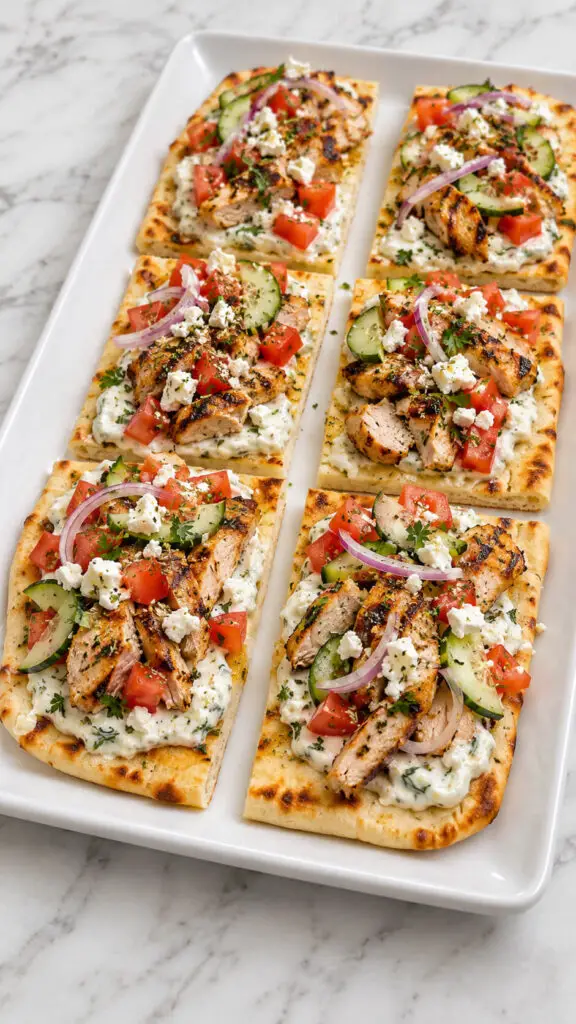
Turn the flavors of Greek street food into a satisfying flatbread meal.
Season chicken strips with olive oil, lemon juice, garlic, oregano, paprika, salt, and black pepper, then grill or pan-cook until thoroughly done.
Spread tzatziki over a warm flatbread and add the sliced chicken, diced tomatoes, cucumber, red onion, and crumbled feta.
Finish with fresh parsley and another squeeze of lemon.
Fold it like a wrap or serve open-faced for a colorful, flavorful lunch.
Ingredients
For the chicken souvlaki
- 1 lb (450 g) boneless, skinless chicken breast, cut into strips
- 2 tablespoons olive oil
- 2 tablespoons fresh lemon juice
- 3 cloves garlic, minced
- 1 teaspoon dried oregano
- ½ teaspoon paprika
- ½ teaspoon salt
- ¼ teaspoon black pepper
For the flatbread and toppings
- 4 large flatbreads
- ½ cup tzatziki sauce
- 1 cup cherry tomatoes, diced
- 1 medium cucumber, diced
- ½ small red onion, thinly sliced
- ½ cup crumbled feta cheese
- 2 tablespoons fresh parsley, chopped
- 1 tablespoon fresh lemon juice
Instructions
1. Prepare the chicken marinade
In a medium mixing bowl, combine the olive oil, lemon juice, minced garlic, dried oregano, paprika, salt, and black pepper. Whisk until everything is well combined. The lemon adds brightness, while the garlic and oregano give the chicken that delicious Greek-inspired flavor.
2. Marinate the chicken
Add the sliced chicken breast to the marinade and toss until every piece is evenly coated. Cover the bowl and refrigerate for at least 30 minutes. If you have extra time, allow the chicken to marinate for up to 2 hours for deeper flavor. Avoid marinating for too long because the lemon juice can affect the chicken’s texture.
3. Prepare the fresh vegetables
While the chicken marinates, dice the cherry tomatoes and cucumber into small, bite-sized pieces. Thinly slice the red onion and chop the fresh parsley. Place the vegetables in separate bowls or on a plate and refrigerate until needed. Keeping the vegetables fresh and chilled gives the finished flatbreads a lovely crunchy contrast.
4. Cook the chicken
Heat a large skillet or grill pan over medium-high heat. Arrange the marinated chicken strips in a single layer, working in batches if necessary to avoid overcrowding. Cook for approximately 5–7 minutes, turning occasionally, until golden brown and cooked through. The thickest pieces should reach an internal temperature of 165°F (74°C). Remove from the heat and allow the chicken to rest briefly.
5. Warm the flatbreads
Heat a clean skillet over medium heat and warm each flatbread for approximately 30–45 seconds on each side. Alternatively, wrap the flatbreads in foil and warm them in a 350°F (175°C) oven for about 5 minutes. Keep them soft and flexible so they are easy to fold or serve open-faced.
6. Spread the tzatziki sauce
Place the warm flatbreads on a clean work surface or serving platter. Spread a generous layer of tzatziki sauce over each one, leaving a small border around the edges. The creamy cucumber and yogurt sauce provides a refreshing base that complements the seasoned chicken beautifully.
7. Add the chicken and vegetables
Arrange the cooked chicken strips evenly over the tzatziki-covered flatbreads. Scatter the diced tomatoes, cucumber, and sliced red onions across the top. Distribute the ingredients evenly so every portion gets a little chicken, fresh vegetable crunch, and creamy sauce.
8. Add the feta and fresh herbs
Sprinkle crumbled feta cheese over each flatbread, followed by the chopped fresh parsley. Drizzle with a little fresh lemon juice for extra brightness. The salty feta, fragrant parsley, and tangy lemon bring all the Greek-inspired flavors together.
9. Serve the flatbreads
Serve the Greek chicken souvlaki flatbreads immediately while the chicken is warm and the bread is soft. You can leave them open-faced and cut them into smaller portions for sharing, or fold them into wraps for a more filling meal. They pair wonderfully with a simple Greek salad or roasted potatoes.
Tip
For extra flavorful chicken, marinate it the night before and keep it refrigerated until ready to cook. If you’re preparing these flatbreads for guests, cook the chicken and chop the vegetables ahead of time, then assemble everything just before serving. This keeps the flatbreads from becoming soggy and ensures the vegetables stay fresh and crisp.
19. Roasted Red Pepper and Goat Cheese Flatbread
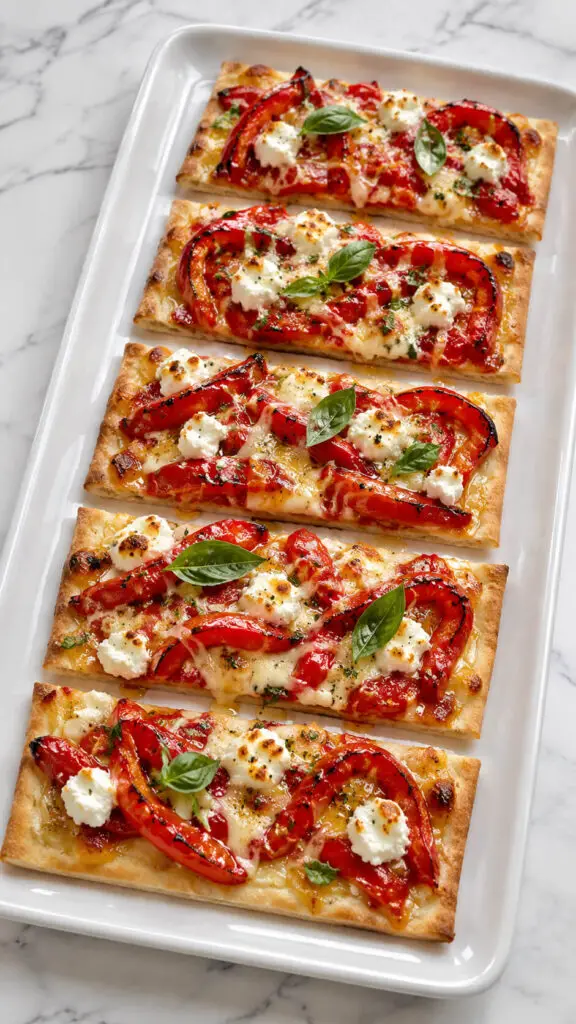
Sweet roasted red peppers and tangy goat cheese make a wonderful combination on a crisp flatbread.
Spread a thin layer of garlic-infused olive oil over the base, then arrange strips of roasted red pepper and small spoonfuls of goat cheese across the surface.
Add a little mozzarella if you prefer a stretchier cheese topping.
Bake until the edges are golden and the cheese is soft.
Finish with fresh basil and a drizzle of honey for a lovely sweet-and-savory contrast.
Ingredients
- 2 medium rectangular flatbreads or 1 large flatbread
- ½ cup roasted red bell peppers, sliced into strips
- ½ cup goat cheese, crumbled
- ½ cup shredded mozzarella cheese
- 2 tablespoons olive oil
- 1 clove garlic, minced
- 1 teaspoon fresh basil, chopped
- 1 teaspoon honey
- ¼ teaspoon dried oregano
- ¼ teaspoon black pepper
- A pinch of salt
- Fresh basil leaves, for garnish
Instructions
1. Preheat the oven
Preheat your oven to 400°F (200°C). Line a large baking sheet with parchment paper to prevent the flatbread from sticking. If you’re using a ready-made flatbread, make sure it is at room temperature before adding the toppings so it heats evenly.
2. Prepare the roasted red peppers
Drain the roasted red bell peppers thoroughly and pat them dry with paper towels to remove excess moisture. Slice them into thin, even strips. Removing excess liquid is important because too much moisture can make the flatbread soggy instead of beautifully crisp.
3. Prepare the garlic olive oil
In a small bowl, combine the olive oil, minced garlic, dried oregano, black pepper, and a pinch of salt. Stir well until everything is combined. This fragrant mixture will provide a flavorful base for the flatbread and complement the sweetness of the roasted peppers.
4. Prepare the flatbread base
Place the flatbreads on the prepared baking sheet. Brush the surface evenly with the garlic-infused olive oil, making sure to cover the edges lightly. Leave a small border around each flatbread to create a golden, crispy crust when baked.
5. Add the mozzarella cheese
Sprinkle the shredded mozzarella evenly over the flatbread bases. The mozzarella provides a creamy, stretchy layer that helps hold the toppings together. Avoid adding too much cheese, as you still want the roasted red peppers and goat cheese to shine through.
6. Arrange the roasted red peppers
Distribute the roasted red pepper strips evenly over the mozzarella. Arrange them in a single layer so every bite gets a little sweetness and smoky flavor. Try not to pile the peppers too heavily in one area, as this can make the flatbread difficult to slice.
7. Add the goat cheese
Scatter the crumbled goat cheese over the roasted peppers. Spread the pieces evenly across the surface, allowing some of the cheese to remain in slightly larger crumbles. The tangy goat cheese balances the sweetness of the peppers and creates a delicious creamy texture as it warms.
8. Bake the flatbreads
Transfer the baking sheet to the preheated oven and bake for approximately 8–12 minutes, or until the mozzarella has melted, the goat cheese has softened, and the edges of the flatbreads are golden and crisp. Keep an eye on them during the final minutes to prevent the edges from becoming too dark.
9. Add the honey and fresh basil
Remove the flatbreads from the oven and let them rest for about 2 minutes. Drizzle the honey lightly over the toppings, then sprinkle with freshly chopped basil. Add a few whole basil leaves for a fresh, attractive finish. The honey adds a gentle sweetness that beautifully complements the tangy goat cheese.
10. Slice and serve
Transfer the flatbreads to a cutting board and slice into even rectangles or squares. Arrange the pieces on a serving platter and serve while warm, when the mozzarella is still soft and the goat cheese is wonderfully creamy. These flatbreads make a lovely appetizer, light lunch, or easy addition to a casual dinner spread.
Tip
For the best flavor and texture, use well-drained roasted red peppers and avoid overcrowding the flatbread with toppings. If you have a little extra time, roast your own red peppers until their skins are blistered, then peel and slice them before using. The homemade peppers add a lovely smoky sweetness that makes this recipe taste even more special.
20. Indian Spiced Potato Stuffed Flatbread (Aloo Paratha)

Aloo paratha is a popular Indian stuffed flatbread filled with warmly spiced mashed potatoes.
Prepare a mixture of boiled potatoes, finely chopped green chilies, cilantro, cumin, garam masala, salt, and grated ginger.
Place the filling inside small portions of whole-wheat dough, seal, and carefully roll into flat rounds.
Cook on a hot skillet, brushing both sides with ghee until golden brown spots appear.
Serve with plain yogurt, pickle, or butter. It’s hearty, comforting, and wonderful for breakfast or lunch.
Ingredients
For the dough
- 2 cups whole-wheat flour
- ¾ cup warm water, approximately
- ½ teaspoon salt
- 1 tablespoon vegetable oil or melted ghee
- Extra flour, for rolling
- Ghee or butter, for cooking
For the potato filling
- 3 medium potatoes, boiled and peeled
- 1 small onion, finely chopped
- 1 green chili, finely chopped
- 1 teaspoon freshly grated ginger
- 2 tablespoons fresh cilantro, chopped
- ½ teaspoon cumin seeds
- ½ teaspoon garam masala
- ½ teaspoon ground coriander
- ¼ teaspoon turmeric
- ½ teaspoon red chili powder
- ½ teaspoon salt, or to taste
- 1 teaspoon lemon juice
Instructions
1. Prepare the whole-wheat dough
Add the whole-wheat flour and salt to a large mixing bowl. Gradually pour in the warm water while mixing with your fingers until a soft dough begins to form. Add the vegetable oil or melted ghee and knead for about 5–7 minutes until smooth and pliable. The dough should be soft without feeling excessively sticky. Cover with a clean kitchen towel and let it rest for 20–30 minutes.
2. Boil and mash the potatoes
Place the potatoes in a saucepan, cover with water, and boil for approximately 15–20 minutes until completely tender when pierced with a fork. Drain the water and allow the potatoes to cool slightly before peeling. Mash them thoroughly with a potato masher or fork until smooth. Make sure there are no large lumps, as these can tear the flatbread when rolling.
3. Prepare the spiced potato filling
Transfer the mashed potatoes to a mixing bowl. Add the finely chopped onion, green chili, grated ginger, fresh cilantro, cumin seeds, garam masala, ground coriander, turmeric, red chili powder, salt, and lemon juice. Mix everything thoroughly until the spices and herbs are evenly distributed throughout the potatoes. Taste and adjust the seasoning if necessary. The filling should be flavorful, slightly tangy, and well balanced.
4. Divide the dough and potato filling
Divide the rested dough into 8 equal portions and roll each portion into a smooth ball. Divide the potato mixture into 8 similarly sized portions. Keeping the dough and filling portions relatively equal makes stuffing easier and helps the parathas cook evenly. Keep the portions covered while working to prevent the dough from drying out.
5. Fill the dough with the potato mixture
Take one dough ball and gently flatten it between your palms. Use a rolling pin to roll it into a small circle about 4 inches wide. Place one portion of the potato filling in the center. Bring the edges of the dough together over the filling, pinching them securely to seal completely. Remove any excess dough from the top if necessary.
6. Roll out the stuffed flatbreads
Lightly dust your work surface and rolling pin with flour. Gently flatten the stuffed dough ball, then roll it into a circular flatbread approximately 6–7 inches in diameter. Use light, even pressure and rotate the dough as you roll. Avoid pressing too hard, especially around the edges, because the potato filling can break through the dough.
7. Heat the skillet
Place a heavy-bottomed skillet or flat griddle over medium heat. Allow it to become hot before adding the first paratha. A properly heated skillet helps the dough cook evenly and develop those beautiful golden-brown patches without burning the outside before the inside is ready.
8. Cook the potato stuffed flatbread
Place one rolled paratha onto the hot skillet and cook for approximately 1–2 minutes until small bubbles appear and the underside develops light brown spots. Flip it carefully and cook the other side for another minute. Brush the upper surface with a little ghee or butter, flip again, and cook until golden and lightly crisp. Repeat with the remaining stuffed flatbreads.
9. Brush with ghee and finish cooking
As the parathas finish cooking, brush both sides lightly with additional ghee or melted butter. Press gently around the edges using a spatula to ensure the dough cooks completely. The finished parathas should have beautiful golden-brown spots, a slightly crisp exterior, and a soft, flavorful potato filling inside.
10. Stack and serve the aloo parathas
Transfer the cooked parathas to a serving plate and stack them while warm. Garnish with a little freshly chopped cilantro if desired. Serve immediately with plain yogurt, mango pickle, or your favorite chutney. These potato stuffed flatbreads are delicious for breakfast, lunch, or even a comforting dinner when you want something homemade and satisfying.
Tip
The secret to perfectly stuffed aloo parathas is keeping the potato filling completely cool and relatively dry before stuffing. Warm or watery potatoes can make the dough sticky and difficult to roll. If your potatoes seem moist, allow them to cool uncovered and avoid adding extra liquid to the filling. Roll gently to prevent tearing, and cook over medium heat so the inside cooks thoroughly while the outside develops a beautiful golden crust.
21. Smoked Salmon and Cream Cheese Flatbread
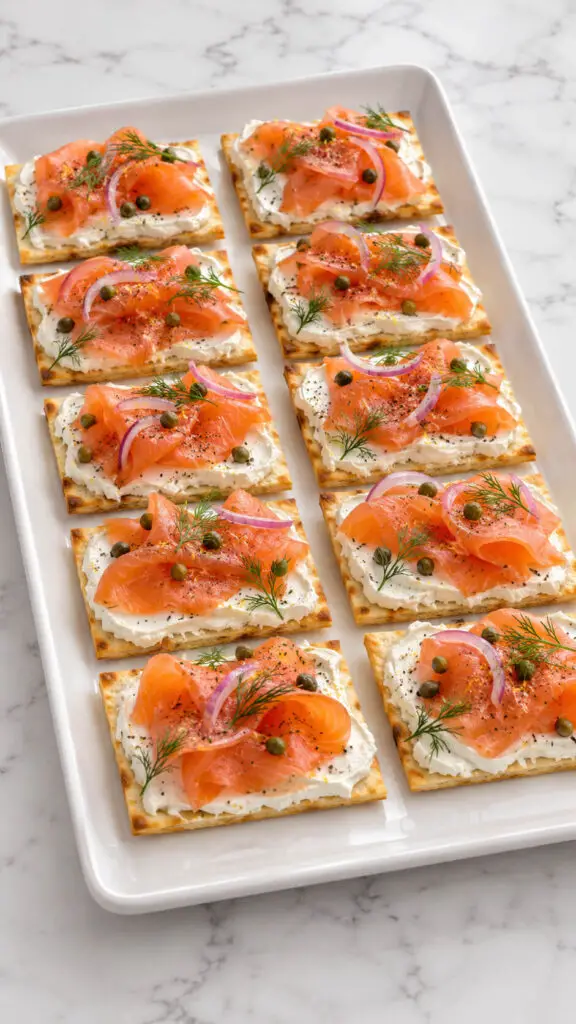
For an elegant flatbread that works beautifully at brunch or as a light appetizer, try smoked salmon and cream cheese.
Spread softened cream cheese over a warm, lightly toasted flatbread, then arrange thin slices of smoked salmon across the surface.
Add capers, thinly sliced red onion, fresh dill, and a squeeze of lemon.
A little freshly cracked black pepper completes the combination.
Cut into smaller pieces for entertaining, or leave whole for a quick lunch that feels a little special.
Ingredients
- 2 large flatbreads (homemade or store-bought)
- 6 ounces smoked salmon, thinly sliced
- ½ cup cream cheese, softened
- 2 tablespoons sour cream
- 1 teaspoon fresh lemon juice
- 1 tablespoon fresh dill, finely chopped
- 2 tablespoons capers, drained
- ¼ small red onion, thinly sliced
- 1 tablespoon fresh chives, chopped
- ½ teaspoon freshly cracked black pepper
- 1 teaspoon olive oil
- 1 teaspoon lemon zest
- Fresh dill sprigs, for garnish
Instructions
1. Prepare the cream cheese spread
Place the softened cream cheese in a small mixing bowl. Add the sour cream, fresh lemon juice, chopped dill, and freshly cracked black pepper. Mix until smooth, creamy, and easy to spread. The sour cream loosens the cream cheese slightly, making it easier to distribute over the flatbread without tearing the surface.
2. Prepare the flatbread bases
Preheat your oven to 375°F (190°C). Arrange the flatbreads on a baking sheet and lightly brush the edges with olive oil. Warm them in the oven for approximately 5–7 minutes until slightly crisp around the edges but still soft in the center. Remove and allow them to cool for a few minutes before adding the toppings.
3. Slice the red onion
Peel the red onion and cut it into very thin slices. Separate the slices into delicate strands and set aside. Thinly sliced onion provides a pleasant crunch and mild sharpness without overpowering the delicate smoked salmon.
4. Spread the cream cheese mixture
Divide the prepared cream cheese mixture between the two flatbreads. Spread it evenly across each surface using the back of a spoon or a small spatula, leaving a narrow border around the edges. Make sure the layer is generous enough to provide creaminess in every bite without making the flatbread soggy.
5. Arrange the smoked salmon
Gently separate the smoked salmon slices and arrange them across the cream cheese layer. Fold some slices into loose ribbons for an elegant presentation rather than laying every piece completely flat. Distribute the salmon evenly so each portion gets a good balance of smoky, savory flavor.
6. Add the capers and red onion
Scatter the drained capers over the smoked salmon, followed by the thinly sliced red onion. The capers add a salty, tangy bite, while the onion brings a little crunch and freshness. Avoid adding too many capers at once because smoked salmon already has a naturally salty flavor.
7. Add the fresh herbs and lemon
Sprinkle the chopped chives and remaining fresh dill over the flatbreads. Finish with a little lemon zest and an additional squeeze of fresh lemon juice if desired. These fresh ingredients brighten the creamy topping and complement the rich, smoky salmon beautifully.
8. Slice and serve the flatbreads
Use a sharp pizza cutter or knife to slice each flatbread into evenly sized rectangles or small appetizer portions. Arrange the pieces neatly on a serving platter, making sure the salmon and colorful toppings remain visible. Serve immediately while the flatbread edges are still slightly crisp.
Tip
For the best texture, allow the toasted flatbread to cool completely before spreading the cream cheese mixture. Adding smoked salmon to a hot base can soften its delicate texture and make the cream cheese slide around. You can prepare the cream cheese spread a day ahead and refrigerate it in an airtight container, making assembly much easier when guests arrive.
22. Pesto Chicken and Sun-Dried Tomato Flatbread
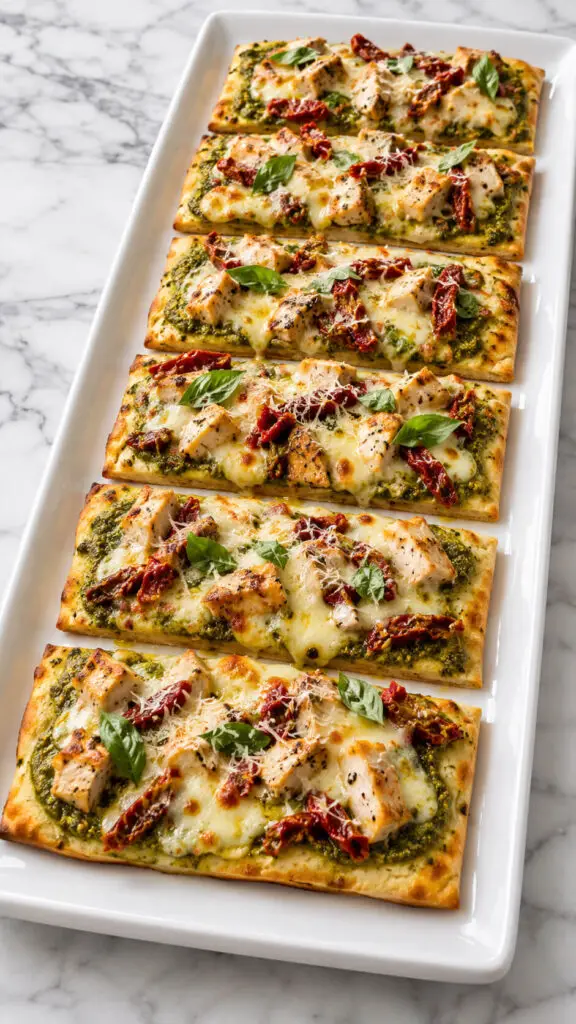
This recipe is full of bold Italian-inspired flavors and makes excellent use of leftover chicken.
Spread basil pesto over the flatbread, then add shredded or sliced cooked chicken, chopped sun-dried tomatoes, and mozzarella.
Sprinkle with Parmesan and bake until the cheese melts and the edges become crisp.
Finish with fresh basil leaves and a drizzle of olive oil.
The sun-dried tomatoes bring concentrated sweetness, while the pesto adds an aromatic richness that makes this flatbread hard to resist.
Ingredients
- 2 medium flatbreads or naan breads
- 1 cup cooked chicken breast, shredded or diced
- ½ cup basil pesto
- ½ cup sun-dried tomatoes, drained and chopped
- 1½ cups shredded mozzarella cheese
- ¼ cup freshly grated Parmesan cheese
- 2 tablespoons olive oil
- ¼ teaspoon black pepper
- ¼ teaspoon Italian seasoning
- ¼ cup fresh basil leaves
- 1 teaspoon balsamic glaze (optional)
Instructions
1. Preheat the oven
Preheat your oven to 400°F (200°C). Line a large baking sheet with parchment paper to prevent the flatbreads from sticking and make cleanup easier. Allow the oven to reach the correct temperature before baking so the crust becomes nicely crisp while the cheese melts evenly.
2. Prepare the chicken
If you’re not using leftover cooked chicken, season chicken breast with a little salt, black pepper, and Italian seasoning. Heat olive oil in a skillet over medium heat and cook the chicken until golden on the outside and fully cooked inside, reaching an internal temperature of 165°F (74°C). Let it rest for a few minutes before shredding or cutting it into bite-sized pieces.
3. Prepare the sun-dried tomatoes
Drain the sun-dried tomatoes thoroughly if they’re packed in oil, then chop them into small strips or bite-sized pieces. Pat away excess oil with a paper towel if necessary. This helps prevent the flatbread from becoming too greasy while allowing the tomatoes’ concentrated sweet and tangy flavor to shine.
4. Prepare the flatbread bases
Arrange the flatbreads on the prepared baking sheet. If you prefer a slightly crispier base, brush each one lightly with olive oil. Make sure they lie flat without overlapping so the heat can circulate evenly during baking.
5. Spread the basil pesto
Spoon the basil pesto onto each flatbread and spread it evenly using the back of a spoon. Leave a small border around the edges to create a lovely golden crust. The pesto provides a fragrant combination of basil, garlic, Parmesan, and olive oil that forms the flavorful foundation of this recipe.
6. Add the chicken and sun-dried tomatoes
Distribute the cooked chicken evenly over the pesto-covered flatbreads. Scatter the chopped sun-dried tomatoes across the surface, making sure every portion gets a little of both ingredients. Sprinkle with black pepper and Italian seasoning for extra flavor.
7. Add the cheeses
Cover the chicken and tomato toppings with shredded mozzarella, spreading it evenly across both flatbreads. Finish with freshly grated Parmesan cheese. The mozzarella creates that delicious melted, stretchy texture, while Parmesan adds a savory richness and helps develop a beautifully golden finish.
8. Bake the flatbreads
Transfer the baking sheet to the preheated oven and bake for approximately 8–12 minutes, or until the mozzarella has melted, the edges are crisp, and the cheese develops a few golden spots. Keep an eye on the flatbreads toward the end of cooking because thinner bases can brown quickly.
9. Add the fresh basil
Remove the flatbreads from the oven and allow them to rest for 2–3 minutes. Scatter fresh basil leaves over the melted cheese. If desired, drizzle a little balsamic glaze over the top for a subtle sweet and tangy finish that complements the pesto and sun-dried tomatoes.
10. Slice and serve
Transfer the flatbreads to a cutting board and slice into rectangular strips or triangular wedges using a sharp pizza cutter. Arrange the pieces on a serving platter and serve while warm. The combination of tender chicken, fragrant pesto, juicy sun-dried tomatoes, and melted cheese makes this a wonderful lunch, appetizer, or easy family dinner.
Tip
For the best flavor, use sun-dried tomatoes packed in oil and drain them well before adding them to the flatbread. If your pesto is particularly thick, stir in a teaspoon of olive oil to make spreading easier. You can also prepare the chicken a day ahead and refrigerate it, making this recipe especially convenient for busy evenings or entertaining guests.
23. Zucchini and Parmesan Flatbread
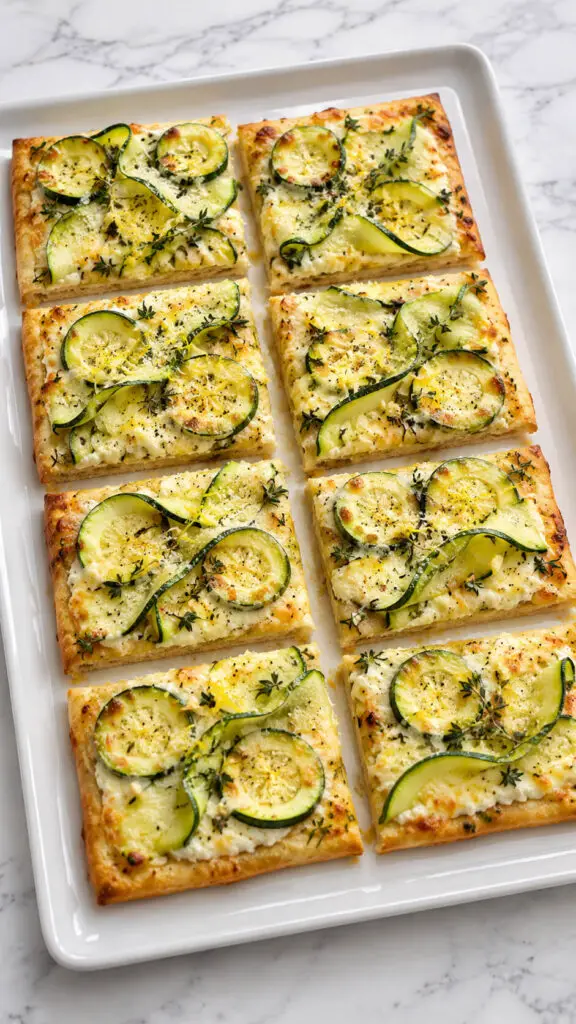
When you want something lighter but still satisfying, zucchini and Parmesan make a lovely topping combination.
Slice zucchini into thin rounds or ribbons and toss with olive oil, garlic, salt, and black pepper.
Spread a little ricotta or mozzarella over the flatbread, arrange the zucchini on top, and finish with freshly grated Parmesan.
Bake until the zucchini softens and the edges become golden.
Add fresh thyme and lemon zest before serving.
It’s a delicious way to use up extra garden zucchini.
Ingredients
- 2 medium zucchini, thinly sliced into rounds or ribbons
- 2 medium flatbreads or prepared flatbread bases
- ½ cup ricotta cheese
- 1 cup shredded mozzarella cheese
- ½ cup freshly grated Parmesan cheese
- 2 tablespoons olive oil
- 2 cloves garlic, minced
- ½ teaspoon dried thyme
- ¼ teaspoon black pepper
- ¼ teaspoon salt
- 1 teaspoon fresh lemon zest
- 1 tablespoon fresh thyme leaves, for garnish
Instructions
1. Preheat the oven
Preheat your oven to 400°F (200°C). Line a large baking sheet with parchment paper to prevent the flatbreads from sticking. Allow the oven to heat completely before baking so the bases become crisp and the cheese melts evenly.
2. Prepare the zucchini
Wash the zucchini thoroughly and pat them dry with a clean kitchen towel. Slice them into thin, even rounds or use a vegetable peeler to create delicate ribbons. Keeping the slices thin helps them cook quickly and prevents the flatbread from becoming too heavy with moisture.
3. Remove excess moisture from the zucchini
Arrange the zucchini slices on a clean paper towel and sprinkle lightly with salt. Let them sit for about 10 minutes to draw out excess moisture. Pat them dry before using. This little trick helps prevent soggy flatbread, which is especially important when working with watery vegetables.
4. Season the zucchini
Transfer the prepared zucchini to a mixing bowl. Add olive oil, minced garlic, dried thyme, black pepper, and a small pinch of salt. Toss gently until all the slices are lightly coated. The olive oil helps the zucchini roast beautifully while the garlic and thyme add a delicious savory flavor.
5. Prepare the ricotta base
Place the ricotta cheese in a small bowl and stir until smooth and creamy. Spread it evenly over each flatbread, leaving a small border around the edges. The ricotta creates a soft, rich base that complements the fresh zucchini without overpowering its delicate flavor.
6. Add the mozzarella and zucchini
Sprinkle the shredded mozzarella evenly over the ricotta layer. Arrange the seasoned zucchini slices or ribbons across the surface, slightly overlapping them to create an attractive pattern. Distribute them evenly so every slice of flatbread gets a good amount of zucchini.
7. Add the Parmesan cheese
Scatter the freshly grated Parmesan over the zucchini and mozzarella. Make sure the cheese is distributed across the entire surface, including around the edges. Parmesan adds a delicious salty, nutty flavor and helps create those lovely golden spots as the flatbread bakes.
8. Bake the flatbreads
Transfer the prepared flatbreads to the lined baking sheet and bake for approximately 10–15 minutes, or until the cheese is melted, bubbly, and lightly golden. The zucchini should become tender with slightly roasted edges, while the flatbread develops a crisp, golden crust. Keep an eye on the edges to prevent over-browning.
9. Add the fresh finishing touches
Remove the flatbreads from the oven and allow them to rest for 2–3 minutes. Sprinkle fresh thyme leaves and lemon zest over the top. The lemon zest adds a bright, refreshing flavor that balances the creamy cheese and roasted zucchini beautifully.
10. Slice and serve
Transfer the flatbreads to a cutting board and slice into evenly sized squares or rectangles. Arrange the pieces on a serving platter and serve warm while the cheese is still soft and delicious. These flatbreads make a lovely light lunch, appetizer, or simple vegetarian dinner.
Tip
For the best results, always remove excess moisture from your zucchini before adding it to the flatbread. If you want an extra crispy base, bake the plain flatbreads for 3–4 minutes before adding the toppings. You can also finish with a tiny drizzle of good-quality olive oil just before serving for an extra glossy, flavorful finish.
24. Lamb Kofta Flatbread
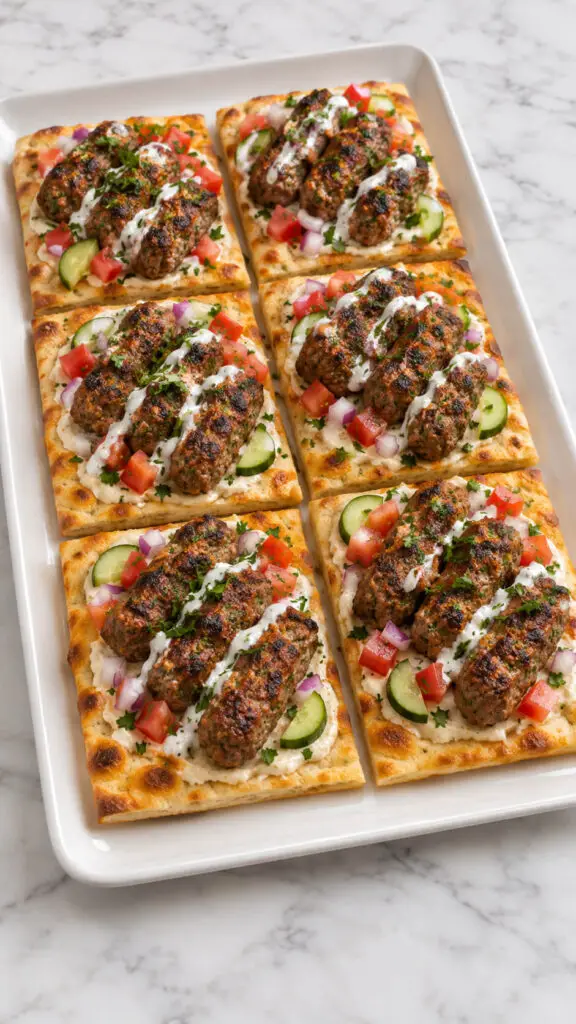
Lamb kofta flatbread brings the delicious flavors of Middle Eastern cooking straight to your kitchen.
Mix ground lamb with minced garlic, grated onion, cumin, coriander, paprika, chopped parsley, salt, and pepper.
Shape into small kofta pieces and cook in a skillet or grill until browned and thoroughly cooked.
Arrange them over warm flatbread with hummus, shredded lettuce, diced tomatoes, and cucumber.
Finish with a generous spoonful of garlic yogurt sauce.
It’s a satisfying meal that everyone can customize.
Ingredients
For the flatbread
- 4 medium flatbreads
- 2 tablespoons olive oil
- ½ teaspoon garlic powder
- ½ teaspoon dried oregano
For the lamb kofta
- 1 pound (450 g) ground lamb
- ½ small onion, finely grated
- 2 cloves garlic, minced
- 2 tablespoons fresh parsley, finely chopped
- 1 teaspoon ground cumin
- 1 teaspoon ground coriander
- ½ teaspoon paprika
- ½ teaspoon ground cinnamon
- ½ teaspoon salt
- ¼ teaspoon black pepper
- 1 tablespoon olive oil, for cooking
For the garlic yogurt sauce
- ½ cup plain Greek yogurt
- 1 tablespoon fresh lemon juice
- 1 clove garlic, minced
- 1 tablespoon fresh parsley, finely chopped
- ¼ teaspoon salt
For the toppings
- 1 cup cherry tomatoes, diced
- ½ cucumber, diced
- ¼ red onion, thinly sliced
- ¼ cup fresh parsley, chopped
- ¼ cup crumbled feta cheese
Instructions
1. Prepare the lamb kofta mixture
Place the ground lamb in a large mixing bowl. Add the grated onion, minced garlic, chopped parsley, cumin, coriander, paprika, cinnamon, salt, and black pepper. Mix gently with your hands until all the seasonings are evenly distributed. Avoid overmixing, as this can make the kofta dense rather than tender.
2. Shape the kofta
Divide the seasoned lamb mixture into 12 equal portions. Shape each portion into a small elongated oval or sausage-like piece, gently pressing the mixture together so it holds its shape during cooking. Place the shaped kofta on a plate and refrigerate for about 15 minutes to help them firm up.
3. Prepare the garlic yogurt sauce
In a small bowl, combine the Greek yogurt, lemon juice, minced garlic, chopped parsley, and salt. Stir until smooth and creamy. Taste and adjust the lemon juice or seasoning if needed. Cover and refrigerate until serving time so the flavors have a chance to blend.
4. Prepare the fresh vegetables
Wash and dry the cherry tomatoes and cucumber before dicing them into small, even pieces. Thinly slice the red onion and chop the fresh parsley. Keep the vegetables separate in small bowls until you’re ready to assemble the flatbreads. This helps preserve their freshness and prevents the flatbread from becoming soggy.
5. Cook the lamb kofta
Heat the olive oil in a large skillet over medium heat. Arrange the kofta in a single layer, leaving a little space between each piece. Cook for approximately 8–12 minutes, turning occasionally, until browned on all sides and thoroughly cooked through. For ground lamb, check that the internal temperature reaches 160°F (71°C). Transfer to a plate and allow them to rest briefly.
6. Warm the flatbreads
Heat a clean skillet over medium heat and warm each flatbread for approximately 30–45 seconds per side until soft, flexible, and lightly toasted. Alternatively, wrap them in foil and warm them in a 350°F (175°C) oven for about 5–8 minutes. Avoid overheating, as dry flatbreads can crack when folded.
7. Prepare the flatbread base
Arrange the warm flatbreads on a clean work surface or serving platter. Spread a generous layer of garlic yogurt sauce over each one, leaving a small border around the edges. The creamy sauce creates a flavorful base and helps hold the toppings in place.
8. Add the lamb kofta
Arrange three cooked lamb kofta pieces over each flatbread. Position them evenly so every portion gets a good amount of seasoned meat. The browned exterior and aromatic spices should be clearly visible, making the flatbreads look hearty and inviting.
9. Add the fresh vegetable toppings
Scatter the diced tomatoes, cucumber, and thinly sliced red onion over the lamb. Add the chopped parsley and crumbled feta cheese. Distribute the toppings evenly so every bite includes a combination of juicy vegetables, savory lamb, creamy cheese, and fresh herbs.
10. Finish and serve the flatbreads
Drizzle a little extra garlic yogurt sauce over the assembled flatbreads and finish with freshly chopped parsley. Serve immediately while the lamb is warm and the flatbreads are soft. You can leave them open-faced for a beautiful presentation or fold them gently into wraps for an easy, satisfying meal.
Tip
For especially juicy lamb kofta, avoid using extra-lean ground lamb. A little natural fat keeps the meat tender and flavorful. You can also prepare the yogurt sauce and chop the vegetables several hours ahead. Keep everything refrigerated separately and cook the kofta shortly before serving for the freshest results.
25. Caramelized Onion and Blue Cheese Flatbread
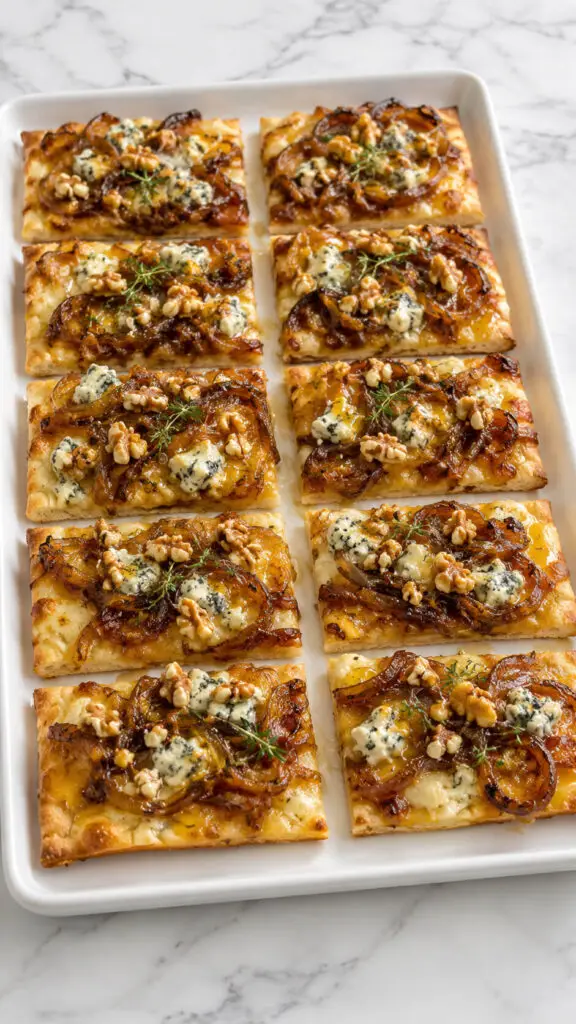
This flatbread is for anyone who enjoys bold, savory flavors.
Slowly cook sliced onions in butter or olive oil until deeply golden and naturally sweet.
Spread a thin layer of olive oil over the flatbread, then scatter the caramelized onions and crumbled blue cheese across the surface.
Add a handful of chopped walnuts for crunch and bake until the cheese softens. Finish with a light drizzle of honey and fresh thyme.
The sweet onions balance the tangy cheese beautifully.
Ingredients
- 2 medium flatbread bases (homemade or store-bought)
- 2 large yellow onions, thinly sliced
- 2 tablespoons olive oil
- 1 tablespoon unsalted butter
- ¾ cup crumbled blue cheese
- ½ cup shredded mozzarella cheese
- ¼ cup walnuts, roughly chopped and toasted
- 1 tablespoon honey
- ½ teaspoon fresh thyme leaves
- ¼ teaspoon salt
- ¼ teaspoon black pepper
Instructions
1. Prepare the onions
Peel the onions, cut them in half, and slice them into thin, even strips. Keeping the slices relatively uniform helps them cook evenly and develop a consistent golden-brown color. Separate the onion layers gently before cooking.
2. Caramelize the onions
Heat the olive oil and butter in a large skillet over medium-low heat. Add the sliced onions and salt, then stir to coat them evenly. Cook for approximately 25–35 minutes, stirring occasionally, until the onions become soft, deeply golden, and naturally sweet. Lower the heat if they begin browning too quickly.
3. Prepare the walnuts
While the onions are cooking, place the chopped walnuts in a dry skillet over medium heat. Toast for approximately 3–5 minutes, stirring frequently, until fragrant and lightly golden. Remove them from the skillet immediately and set aside to cool. This simple step brings out their nutty flavor and gives the finished flatbread a lovely crunch.
4. Prepare the flatbread bases
Preheat your oven to 400°F (200°C). Arrange the flatbread bases on a large baking sheet lined with parchment paper. If the bases are particularly soft, you can bake them for 3–4 minutes before adding the toppings to help prevent them from becoming soggy.
5. Add the mozzarella cheese
Divide the shredded mozzarella evenly between the flatbread bases, spreading it across the surface while leaving a small border around the edges. The mozzarella provides a creamy, stretchy layer that balances the stronger flavor of the blue cheese.
6. Arrange the caramelized onions
Spread the caramelized onions evenly over the mozzarella. Distribute them across the flatbreads so every slice gets plenty of sweet, tender onion. Their rich golden color and natural sweetness create a delicious contrast with the tangy cheese.
7. Add the blue cheese and thyme
Scatter the crumbled blue cheese evenly over the onions, followed by the fresh thyme leaves and freshly ground black pepper. Don’t overload the flatbreads with blue cheese, as its flavor can be quite strong. You want enough to provide a delicious tang without overpowering the other ingredients.
8. Bake the flatbreads
Place the baking sheet in the preheated oven and bake for approximately 8–12 minutes, or until the mozzarella has melted, the blue cheese has softened, and the flatbread edges are crisp and golden. Keep an eye on them toward the end of baking because thinner flatbread bases can brown quickly.
9. Add the walnuts and honey
Remove the flatbreads from the oven and immediately scatter the toasted walnuts over the top. Drizzle lightly with honey, allowing it to fall naturally across the caramelized onions and melted cheese. The honey adds a delicate sweetness that complements the salty blue cheese beautifully.
10. Slice and serve
Allow the flatbreads to rest for 2–3 minutes before slicing them into manageable squares or wedges. Transfer to a serving platter and finish with a few fresh thyme leaves if desired. Serve warm as an appetizer, light lunch, or easy dinner alongside a fresh green salad.
Tip
For the best caramelized onions, cook them slowly over medium-low heat rather than turning up the temperature to speed things along. Proper caramelization develops a deeper, sweeter flavor that makes this flatbread special. If blue cheese is too strong for your family, substitute creamy goat cheese or feta for a milder but equally delicious variation.
26. Falafel Flatbread with Hummus
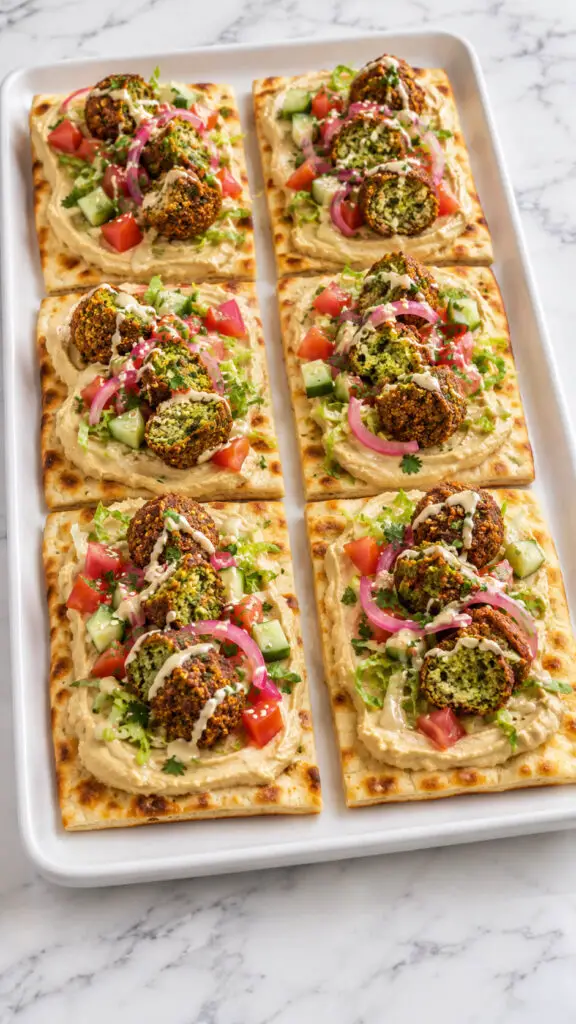
A falafel flatbread is a wonderful vegetarian option that doesn’t leave anyone feeling like they’re missing out.
Spread a generous layer of hummus over warm flatbread, then arrange freshly cooked falafel pieces on top.
Add shredded lettuce, diced cucumber, tomatoes, pickled red onions, and chopped parsley.
Drizzle with tahini sauce and a squeeze of lemon before serving.
The creamy hummus, crispy falafel, and crunchy vegetables create plenty of texture, making this a satisfying lunch or meat-free dinner.
Ingredients
For the falafel
- 1 can (15 ounces) chickpeas, drained and rinsed
- ¼ cup fresh parsley, roughly chopped
- ¼ cup fresh cilantro, roughly chopped
- ½ small red onion, roughly chopped
- 2 cloves garlic
- 1 teaspoon ground cumin
- ½ teaspoon ground coriander
- ½ teaspoon paprika
- ¼ teaspoon black pepper
- ½ teaspoon salt
- 2 tablespoons all-purpose flour
- ½ teaspoon baking powder
- 2 tablespoons olive oil, for cooking
For assembling the flatbreads
- 4 medium flatbreads
- 1 cup hummus
- 1 cup shredded lettuce
- 1 cup cherry tomatoes, diced
- 1 cucumber, diced
- ½ small red onion, thinly sliced
- 2 tablespoons fresh parsley, chopped
- 1 tablespoon sesame seeds
For the tahini sauce
- ¼ cup tahini
- 2 tablespoons fresh lemon juice
- 1 small garlic clove, minced
- 2–3 tablespoons water
- ¼ teaspoon salt
Instructions
1. Prepare the chickpeas
Drain and rinse the canned chickpeas thoroughly, then spread them over a clean kitchen towel. Pat them dry to remove excess moisture. This helps the falafel mixture hold together properly and prevents the patties from becoming too soft. Reserve a few chickpeas if you want to use them as an optional garnish.
2. Blend the falafel ingredients
Add the chickpeas, parsley, cilantro, red onion, garlic, cumin, coriander, paprika, black pepper, and salt to a food processor. Pulse several times until the mixture becomes finely chopped and crumbly. Avoid blending it into a completely smooth paste because falafel should have a little texture.
3. Bind the falafel mixture
Transfer the mixture to a bowl and stir in the flour and baking powder. Mix until everything is evenly combined. The mixture should hold together when pressed between your fingers. If it feels too wet, add another tablespoon of flour. Refrigerate for approximately 20–30 minutes to help it firm up.
4. Shape the falafel
Scoop small portions of the chilled mixture and shape them into compact balls or slightly flattened patties, approximately 1½ inches wide. Keep the portions similar in size so they cook evenly. Place the shaped falafel on a plate while you prepare the skillet.
5. Cook the falafel until golden
Heat the olive oil in a large nonstick skillet over medium heat. Arrange the falafel in a single layer, leaving enough space between each piece. Cook for approximately 3–4 minutes per side, turning carefully until all sides are golden brown and the centers are thoroughly heated. Transfer to a plate lined with paper towels to absorb excess oil.
6. Prepare the tahini sauce
In a small bowl, whisk together the tahini, fresh lemon juice, minced garlic, and salt. Gradually add water, one tablespoon at a time, while whisking until the sauce becomes smooth, creamy, and pourable. Taste and adjust the lemon juice or salt if needed. The sauce should be rich but light enough to drizzle over the flatbreads.
7. Prepare the fresh vegetables
Wash and dry the lettuce, tomatoes, and cucumber. Shred the lettuce into thin strips, dice the tomatoes and cucumber, and slice the red onion thinly. Chop the fresh parsley and set everything aside. Keeping the vegetables relatively dry helps prevent the flatbreads from becoming soggy during assembly.
8. Warm the flatbreads
Heat the flatbreads briefly in a dry skillet over medium heat for approximately 30–45 seconds per side. You can also warm them in a low-temperature oven. They should become soft, flexible, and slightly warm without turning crispy. This makes them easier to serve and allows the hummus to spread smoothly.
9. Spread the hummus over the flatbreads
Place the warm flatbreads on a clean work surface and spread a generous layer of hummus over each one. Use the back of a spoon to create an even coating, leaving a small border around the edges. The hummus provides a creamy base that holds the toppings together and adds plenty of flavor.
10. Arrange the falafel and vegetables
Place several cooked falafel pieces over the hummus on each flatbread. Add shredded lettuce, diced tomatoes, cucumber, and sliced red onion. Distribute the toppings evenly so every portion gets a little bit of everything. Finish with freshly chopped parsley for a burst of color and freshness.
11. Drizzle with tahini sauce
Spoon the prepared tahini sauce over the falafel and vegetables, creating delicate creamy streaks across the flatbreads. Sprinkle sesame seeds over the top for a little crunch and extra visual appeal. Avoid adding too much sauce at once, as you want the flatbread to remain easy to handle.
12. Serve the falafel flatbreads
Serve immediately while the falafel is warm and the flatbreads are soft. You can leave them open-faced and cut them into halves or fold them gently like wraps for easier eating. They make a satisfying vegetarian lunch, a relaxed family dinner, or a lovely addition to a Mediterranean-inspired meal.
Tip
For the best falafel texture, use thoroughly dried chickpeas and avoid over-processing the mixture. If you have time, prepare the falafel mixture a few hours ahead and refrigerate it before shaping. You can also prepare the tahini sauce and chop the vegetables in advance. Assemble everything just before serving to keep the flatbreads fresh, crisp, and delicious.
27. Hawaiian Ham and Pineapple Flatbread

If your family enjoys the sweet-and-savory combination of Hawaiian pizza, this flatbread will be right up their alley.
Spread tomato sauce over the base, then add shredded mozzarella, diced cooked ham, and small pineapple chunks.
Sprinkle with a little black pepper and bake until the cheese is bubbling and the edges are crisp.
For a smoky touch, use grilled pineapple or smoked ham.
Slice into small squares for parties or serve in larger wedges for a relaxed family meal.
Ingredients
- 2 large flatbreads or naan breads
- ½ cup pizza sauce or tomato sauce
- 1½ cups shredded mozzarella cheese
- 1 cup cooked ham, diced into small pieces
- ¾ cup pineapple chunks, drained and patted dry
- ¼ teaspoon black pepper
- ½ teaspoon dried oregano
- 1 tablespoon olive oil
- 1 tablespoon fresh parsley, chopped (optional)
Instructions
1. Preheat the oven
Preheat your oven to 400°F (200°C). Line a large baking sheet with parchment paper to prevent the flatbreads from sticking. If you prefer a crispier base, place the baking sheet in the oven while it heats so the flatbreads start cooking on a hot surface.
2. Prepare the flatbread bases
Place the flatbreads on the prepared baking sheet, leaving a little space between them. Lightly brush the edges with olive oil to help them turn golden and crisp during baking. Make sure the flatbreads are evenly positioned so the toppings cook consistently.
3. Spread the tomato sauce
Spoon the pizza sauce over each flatbread and spread it evenly using the back of a spoon. Leave approximately ½ inch around the edges to create a beautiful golden crust. Avoid adding too much sauce because excess moisture can make the flatbread soggy.
4. Add the mozzarella cheese
Sprinkle the shredded mozzarella evenly over the tomato sauce. Make sure the cheese reaches most areas of the flatbread so every bite has that delicious melted, stretchy texture. Reserve a small handful of cheese to sprinkle over the ham and pineapple for an attractive, cheesy finish.
5. Arrange the ham and pineapple
Scatter the diced cooked ham evenly across the mozzarella. Add the pineapple chunks, distributing them so every portion gets a little sweetness. Pat the pineapple dry before adding it to prevent excess moisture from making the flatbread soft.
6. Season the toppings
Sprinkle the black pepper and dried oregano evenly over the ham and pineapple. Add the reserved mozzarella on top to help hold the toppings together as everything melts. If you enjoy a little extra smoky flavor, you can use smoked ham instead of regular cooked ham.
7. Bake the flatbreads
Place the baking sheet in the preheated oven and bake for approximately 10–15 minutes, or until the mozzarella is completely melted, the pineapple is lightly caramelized, and the edges of the flatbreads are golden brown and crisp. Keep an eye on them toward the end because thinner flatbreads can cook quickly.
8. Add the fresh finishing touches
Remove the flatbreads from the oven and allow them to rest for 2–3 minutes. Sprinkle with freshly chopped parsley for a touch of color and freshness. If desired, add a little extra black pepper or a light drizzle of olive oil to enhance the flavor.
9. Slice and serve
Transfer the flatbreads to a cutting board and slice them into evenly sized squares or wedges using a sharp pizza cutter. Arrange the pieces on a serving platter and serve while warm, when the cheese is still deliciously melted. They make a wonderful quick dinner, lunch, or party appetizer.
Tip
For the best Hawaiian flatbread, always drain and pat the pineapple chunks dry before using them. This small trick prevents a soggy crust while allowing the pineapple to caramelize slightly in the oven. For an extra smoky flavor, try using smoked ham and a little smoked paprika.
28. Paneer Tikka Flatbread

Give your flatbread an Indian-inspired twist with flavorful paneer tikka.
Cut paneer into cubes and coat with yogurt, ginger-garlic paste, turmeric, cumin, garam masala, paprika, and lemon juice.
Let it marinate, then cook in a hot skillet until lightly charred.
Spread mint chutney or a thin layer of yogurt sauce over the flatbread, add the paneer, sliced onions, and bell peppers, and finish with fresh cilantro.
It’s colorful, satisfying, and full of warming spices.
Ingredients
For the flatbread
- 2 cups all-purpose flour
- ½ cup plain yogurt
- ½ teaspoon baking powder
- ½ teaspoon salt
- 2 tablespoons olive oil
- ¼ cup warm water, as needed
For the paneer tikka filling
- 250g paneer, cut into bite-sized cubes
- ½ cup plain yogurt
- 1 tablespoon ginger-garlic paste
- ½ teaspoon turmeric powder
- 1 teaspoon garam masala
- 1 teaspoon ground cumin
- 1 teaspoon paprika or Kashmiri chili powder
- ½ teaspoon salt
- 1 tablespoon lemon juice
- 1 small red bell pepper, diced
- 1 small yellow bell pepper, diced
- ½ small red onion, thinly sliced
- 1 tablespoon olive oil
For the mint yogurt sauce
- ½ cup plain yogurt
- 2 tablespoons fresh mint leaves, finely chopped
- 1 tablespoon fresh cilantro, chopped
- 1 teaspoon lemon juice
- ¼ teaspoon salt
For serving
- 2 tablespoons fresh cilantro, chopped
- 1 tablespoon olive oil
- Extra mint yogurt sauce, if desired
Instructions
1. Prepare the flatbread dough
In a large mixing bowl, combine the all-purpose flour, baking powder, and salt. Add the plain yogurt and olive oil, then mix until a soft dough begins to form. Gradually add warm water as needed, mixing until the ingredients come together. The dough should be soft and pliable without feeling overly sticky.
2. Knead and rest the dough
Transfer the dough to a lightly floured countertop and knead for approximately 5–7 minutes until smooth and elastic. Shape it into a ball, place it back in the mixing bowl, and cover with a clean kitchen towel. Let it rest for 20–30 minutes. This makes the dough easier to roll and helps produce softer flatbreads.
3. Prepare the paneer tikka marinade
In a medium-sized bowl, combine the plain yogurt, ginger-garlic paste, turmeric, garam masala, cumin, paprika, salt, and lemon juice. Mix until you have a smooth, thick marinade. The spices should be evenly distributed throughout the yogurt, creating a fragrant mixture with a beautiful golden-orange color.
4. Marinate the paneer
Add the paneer cubes to the marinade and gently toss until every piece is thoroughly coated. Cover the bowl and refrigerate for at least 20–30 minutes to allow the flavors to develop. Avoid stirring too aggressively because paneer can crumble easily, especially when cut into small cubes.
5. Prepare the vegetables
Wash and dice the red and yellow bell peppers into small, even pieces. Thinly slice the red onion and set the vegetables aside. Keeping the pieces relatively small makes them easier to distribute across the flatbreads and ensures they cook evenly alongside the paneer.
6. Cook the paneer tikka
Heat olive oil in a large nonstick skillet over medium heat. Add the marinated paneer cubes in a single layer, allowing excess marinade to drip off before placing them in the pan. Cook for approximately 2–3 minutes per side until lightly golden and slightly charred around the edges. Remove the paneer and set aside.
7. Sauté the vegetables
Using the same skillet, add the diced red and yellow bell peppers and sliced red onion. Cook for approximately 3–4 minutes, stirring occasionally, until the vegetables soften slightly but still retain some crunch. The remaining spices in the skillet will add extra flavor. Remove from the heat and set aside.
8. Prepare the mint yogurt sauce
In a small bowl, combine the plain yogurt, chopped mint leaves, fresh cilantro, lemon juice, and salt. Stir until everything is evenly incorporated. Taste and adjust the lemon juice or salt if needed. The sauce should be creamy, refreshing, and slightly tangy, providing a lovely contrast to the warm, spiced paneer.
9. Divide and roll the flatbread dough
Transfer the rested dough to a lightly floured surface and divide it into 6 equal portions. Roll each portion into a smooth ball, then flatten with a rolling pin into a thin round or oval shape, approximately 6–7 inches wide. Keep the thickness even so the flatbreads cook properly without becoming too crispy or doughy.
10. Cook the flatbreads
Heat a clean skillet over medium-high heat. Place one rolled-out flatbread into the hot skillet and cook for approximately 1–2 minutes until bubbles form and golden-brown spots appear underneath. Flip and cook the other side for another 1–2 minutes. Repeat with the remaining dough portions, keeping the cooked flatbreads covered with a clean kitchen towel to retain their softness.
11. Assemble the paneer tikka flatbreads
Spread a thin layer of mint yogurt sauce over each warm flatbread. Arrange the cooked paneer tikka cubes evenly across the surface, followed by the sautéed bell peppers and red onions. Make sure every flatbread gets a generous amount of filling so each bite has a good balance of creamy sauce, spiced paneer, and vegetables.
12. Add the finishing touches
Drizzle a little extra mint yogurt sauce over the assembled flatbreads. Sprinkle with freshly chopped cilantro and add a light drizzle of olive oil for extra flavor and a beautiful finish. The colorful paneer, peppers, and fresh herbs should create an inviting presentation.
13. Serve the flatbreads
Transfer the paneer tikka flatbreads to a serving platter and serve immediately while the bread is warm and the paneer is tender. Cut them into halves or smaller rectangular portions for sharing, or leave them whole for a more filling meal. They pair wonderfully with a fresh cucumber salad or additional mint yogurt sauce.
Tip
For the best paneer tikka flavor, allow the paneer to marinate for at least 30 minutes, or refrigerate it for up to 2 hours. Don’t overcrowd the skillet when cooking the paneer because this can cause it to release moisture instead of developing those delicious golden, lightly charred edges. If using store-bought flatbreads, simply warm them in a skillet before adding the toppings to save preparation time.
29. Chocolate Banana Dessert Flatbread
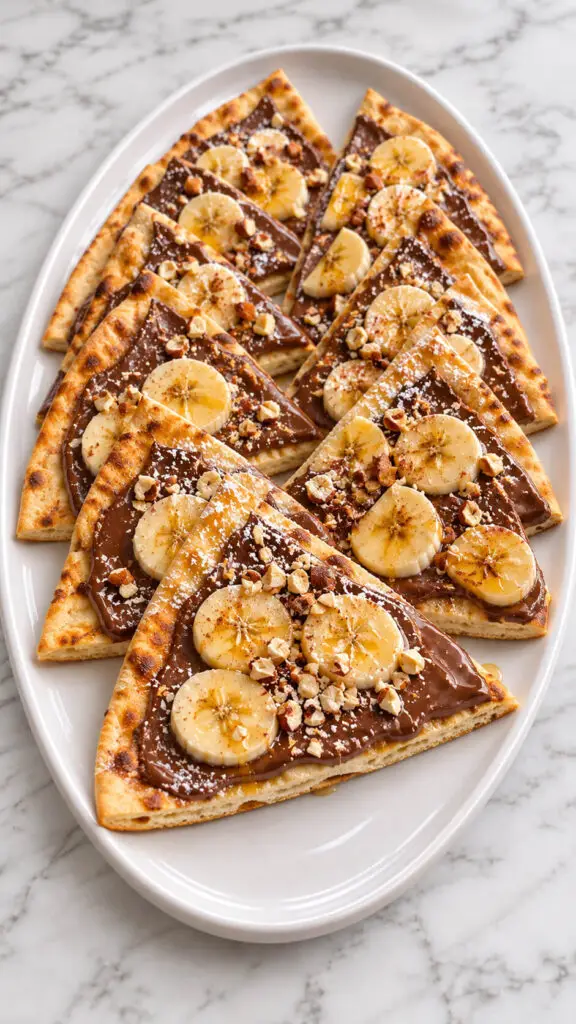
This sweet flatbread is a clever way to turn simple pantry ingredients into a dessert everyone can enjoy.
Brush the flatbread lightly with melted butter and bake until the surface becomes slightly crisp.
Spread melted chocolate or chocolate hazelnut spread over the warm base, then arrange thin banana slices on top.
Add chopped toasted nuts and a light drizzle of honey.
Finish with a pinch of cinnamon and slice into wedges.
Serve warm for the best combination of crisp bread and gooey chocolate.
Ingredients
- 2 medium flatbreads (homemade or store-bought)
- 3 tablespoons unsalted butter, melted
- ½ cup chocolate hazelnut spread (such as Nutella)
- 2 medium ripe bananas, thinly sliced
- ¼ cup chopped hazelnuts or almonds, toasted
- 1 tablespoon honey
- 1 tablespoon powdered sugar, for dusting
- ¼ teaspoon ground cinnamon
Instructions
1. Preheat the oven
Preheat your oven to 375°F (190°C). Line a baking sheet with parchment paper to prevent the flatbreads from sticking. This also makes cleanup easier, especially when working with melted chocolate and honey.
2. Prepare the flatbreads
Place the flatbreads on the prepared baking sheet. Brush their surfaces lightly with melted butter, making sure to cover the edges. The butter helps the flatbreads develop a beautiful golden color and a slightly crisp texture while baking.
3. Bake the flatbreads
Transfer the baking sheet to the preheated oven and bake for approximately 5–7 minutes, or until the flatbreads are lightly golden and slightly crisp around the edges. Keep an eye on them because thinner flatbreads can brown quickly. Remove from the oven and allow them to cool for about 2 minutes.
4. Spread the chocolate hazelnut spread
While the flatbreads are still slightly warm, spread the chocolate hazelnut spread evenly over each one. Use the back of a spoon or an offset spatula to create a smooth, generous chocolate layer, leaving a small border around the edges. The gentle warmth will soften the spread, making it easier to distribute.
5. Prepare the bananas
Peel the bananas and slice them into thin, even rounds. Arrange the banana slices across the chocolate-covered flatbreads, slightly overlapping them to create an attractive presentation. Distribute the slices evenly so every piece has a good balance of banana and chocolate.
6. Add the toasted nuts
Sprinkle the chopped toasted hazelnuts or almonds over the banana slices. The nuts add a lovely crunch that contrasts with the soft bananas and smooth chocolate. Spread them evenly rather than concentrating them in one area so every bite gets a little extra texture.
7. Drizzle with honey
Warm the honey slightly if it is too thick to drizzle easily. Using a spoon, lightly drizzle it over the bananas and toasted nuts. The honey adds a delicate sweetness and gives the toppings an attractive natural shine without overpowering the chocolate hazelnut flavor.
8. Add the cinnamon and powdered sugar
Sprinkle the ground cinnamon lightly over the flatbreads to introduce a gentle warming flavor. Finish with a dusting of powdered sugar for a pretty dessert-style presentation. Avoid adding too much, as the chocolate spread and bananas already provide plenty of sweetness.
9. Slice the flatbreads
Transfer the finished flatbreads to a cutting board and slice them into evenly sized triangular wedges using a sharp pizza cutter or knife. Arrange the pieces slightly overlapping on a serving platter so the chocolate, banana slices, and crunchy nuts are clearly visible.
10. Serve the dessert flatbreads
Serve immediately while the flatbread is slightly warm, the chocolate is soft, and the banana slices are fresh. These sweet flatbreads make a lovely afternoon treat, a fun family dessert, or an easy addition to a party dessert table. You can also serve them alongside a scoop of vanilla ice cream for an extra indulgent finish.
Tip
For the best texture, add the bananas, nuts, honey, and powdered sugar after baking rather than putting everything in the oven. This keeps the bananas fresh, prevents the nuts from burning, and preserves the beautiful chocolate finish. If preparing these for guests, bake the flatbread bases ahead of time and add the toppings just before serving.
30. Prosciutto, Fig, and Arugula Flatbread

For a flatbread that looks impressive enough for a dinner party, combine sweet figs, salty prosciutto, and peppery arugula.
Spread a thin layer of ricotta over the flatbread and add sliced fresh figs with a little mozzarella.
Bake until the cheese softens and the edges turn golden. Once out of the oven, arrange prosciutto and fresh arugula over the top.
Finish with balsamic glaze and cracked black pepper.
The contrasting flavors make every bite feel thoughtfully put together.
Ingredients
- 1 large rectangular flatbread or 2 medium flatbreads
- ½ cup ricotta cheese
- ½ cup shredded mozzarella cheese
- 4–5 fresh figs, thinly sliced
- 3 ounces thinly sliced prosciutto
- 1 cup fresh arugula
- 2 tablespoons balsamic glaze
- 1 tablespoon olive oil
- ¼ teaspoon freshly ground black pepper
- ½ teaspoon fresh thyme leaves
- 1 tablespoon honey (optional)
Instructions
1. Preheat the oven
Preheat your oven to 400°F (200°C). Line a large baking sheet with parchment paper to prevent the flatbread from sticking. Allow the oven to heat completely before baking so the crust cooks evenly and develops a lovely golden, crisp texture.
2. Prepare the flatbread base
Place the flatbread on the prepared baking sheet. If the edges are uneven, gently trim them to create a neat rectangular shape. Brush the surface lightly with olive oil, making sure to reach the edges. This helps the bread develop a slightly crisp exterior while keeping the center tender.
3. Spread the ricotta cheese
Spoon the ricotta cheese onto the flatbread and spread it evenly using the back of a spoon. Leave a small border around the edges to create a beautiful golden crust. The ricotta adds a creamy, slightly milky flavor that balances the sweetness of the figs and the saltiness of the prosciutto.
4. Add the mozzarella cheese
Sprinkle the shredded mozzarella evenly over the ricotta layer. Avoid adding too much cheese, as you want the individual toppings to remain visible rather than disappear under a thick layer. The mozzarella melts beautifully during baking and gives the flatbread a deliciously creamy texture.
5. Arrange the fresh figs
Wash and dry the figs thoroughly, then slice them into thin rounds or wedges. Arrange the fig slices evenly across the cheese-covered flatbread, making sure each portion will have a little fruit. Their beautiful pink-red centers and naturally sweet flavor give this flatbread its distinctive appearance and taste.
6. Bake the flatbread
Transfer the baking sheet to the preheated oven and bake for approximately 8–12 minutes, or until the cheese has melted and the edges are golden brown and crisp. Keep an eye on the flatbread during the final few minutes because thinner bases can brown quickly.
7. Add the prosciutto
Remove the flatbread from the oven and allow it to cool for about 2 minutes. Arrange the prosciutto slices over the warm surface, folding them gently into delicate ribbons. Adding the prosciutto after baking preserves its tender texture and allows its savory flavor to stand out without becoming overly crisp.
8. Top with fresh arugula
Scatter the fresh arugula evenly over the flatbread. The peppery greens provide a refreshing contrast to the creamy cheese, sweet figs, and salty prosciutto. Add the arugula just before serving so it stays fresh, vibrant, and slightly crisp.
9. Add the balsamic glaze
Drizzle the balsamic glaze over the toppings in thin, decorative lines. Sprinkle with freshly ground black pepper and fresh thyme leaves. If you enjoy a sweeter finish, add a light drizzle of honey. Be careful not to overdo the glaze because the figs already provide plenty of natural sweetness.
10. Slice and serve
Transfer the finished flatbread to a cutting board and slice it into evenly sized rectangular portions or small squares. Arrange the pieces neatly on a serving platter, making sure the figs, prosciutto, and arugula are visible on each portion. Serve immediately while the crust is still crisp and the cheese is pleasantly warm.
Tip
For the best flavor, use ripe but firm fresh figs so they hold their shape during baking. You can also prepare the ricotta and mozzarella base ahead of time and refrigerate it separately. Assemble and bake shortly before serving, then add the prosciutto and arugula at the end. This keeps the flatbread looking fresh and prevents the delicate toppings from becoming wilted.
31. Plain Yogurt Skillet Flatbread
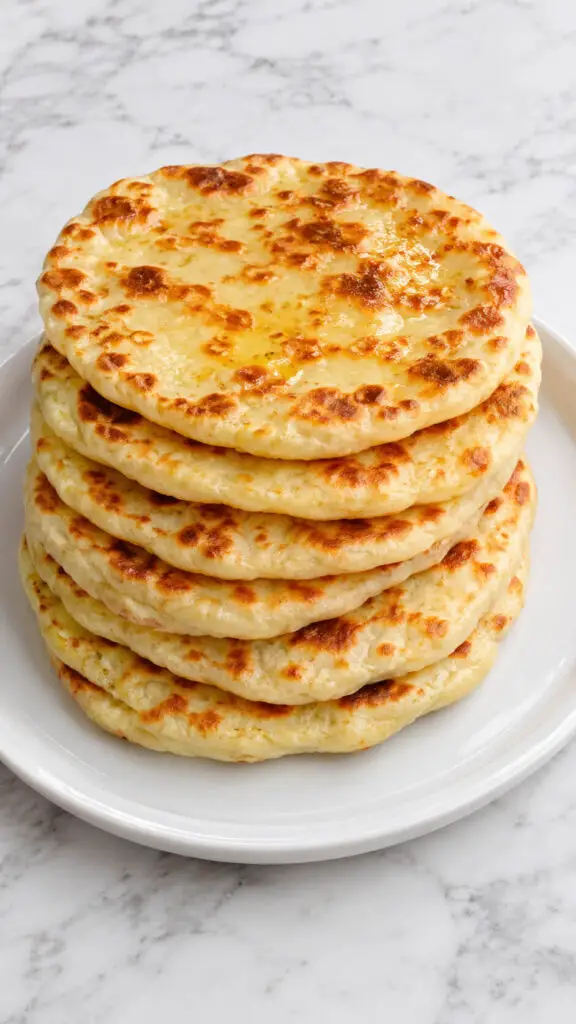
Sometimes you simply need a reliable, soft flatbread that can accompany almost anything.
This yogurt-based version is made with flour, plain yogurt, baking powder, salt, and a little olive oil.
Mix into a soft dough, divide into small balls, and roll each one into a thin circle.
Cook in a hot, dry skillet until bubbles form and golden spots appear on both sides.
Brush with butter if desired. Serve alongside soups, stews, curries, grilled meats, or dips.
It’s simple, versatile, and wonderfully homemade.
Ingredients
- 2 cups all-purpose flour
- 1 cup plain Greek yogurt
- 1 teaspoon baking powder
- ½ teaspoon salt
- 1 tablespoon olive oil
- 2–3 tablespoons water, as needed
- 2 tablespoons melted butter, for brushing (optional)
Instructions
1. Combine the dry ingredients
In a large mixing bowl, add the all-purpose flour, baking powder, and salt. Whisk everything together until evenly combined. Mixing the dry ingredients first helps distribute the baking powder throughout the flour, ensuring the flatbreads cook evenly and develop a soft, tender texture.
2. Add the yogurt and olive oil
Add the plain Greek yogurt and olive oil to the flour mixture. Stir with a wooden spoon or spatula until a rough dough begins to form. The yogurt provides moisture and tenderness, while the olive oil helps create a soft, flexible dough. If the mixture feels too dry, gradually add water, one tablespoon at a time.
3. Knead the dough until smooth
Transfer the dough to a lightly floured countertop and knead for approximately 4–5 minutes until it becomes smooth and elastic. The dough should feel soft and slightly tacky without sticking excessively to your hands. Avoid adding too much flour during kneading, as this can make the finished flatbreads tough instead of tender.
4. Allow the dough to rest
Place the dough back into the mixing bowl and cover it with a clean kitchen towel. Let it rest at room temperature for 15–20 minutes. This gives the flour time to absorb the moisture from the yogurt and allows the gluten to relax, making the dough easier to roll without constantly shrinking back.
5. Divide the dough into portions
Transfer the rested dough to your work surface and divide it into 8 equal portions using a sharp knife or dough scraper. Roll each portion between your palms to create a smooth ball. Keep the dough balls covered with a clean kitchen towel while working to prevent their surfaces from drying out.
6. Roll out the flatbreads
Lightly dust your countertop and rolling pin with flour. Take one dough ball and roll it into a thin circle approximately 6–7 inches in diameter. Keep the thickness even so the flatbread cooks properly without becoming too thick in the middle. Repeat with the remaining dough balls, stacking them with a light dusting of flour between each one if necessary.
7. Heat the skillet
Place a large cast-iron or nonstick skillet over medium-high heat. Allow it to heat thoroughly before cooking the flatbreads. The skillet should be hot enough to create golden-brown spots within a minute or two, but not so hot that the bread burns before the inside cooks. You can lightly dust away any excess flour before placing each flatbread in the pan.
8. Cook the first side
Place one rolled-out flatbread into the hot, dry skillet. Cook for approximately 1–2 minutes until small bubbles begin forming across the surface and golden-brown spots develop underneath. The bread should start puffing slightly as it cooks. Avoid pressing it down too firmly, as this can prevent the air pockets from developing.
9. Flip and cook the other side
Carefully flip the flatbread using a spatula or kitchen tongs. Cook the second side for another 1–2 minutes until golden spots appear and the bread is cooked through. Transfer it to a clean plate and repeat the process with the remaining dough portions, adjusting the heat if the skillet becomes too hot.
10. Brush with melted butter
While the flatbreads are still warm, lightly brush their surfaces with melted butter if desired. This adds a lovely buttery flavor and gives the bread a subtle sheen. If you prefer a completely plain flatbread, simply leave them as they are. Both versions are delicious and versatile.
11. Stack and serve the flatbreads
Arrange the cooked flatbreads in a neat vertical stack on a serving platter and cover them loosely with a clean kitchen towel until ready to serve. This helps retain their warmth and softness. Serve alongside soups, stews, curries, grilled meats, roasted vegetables, or your favorite dips. They are also delicious sliced into wedges for sharing.
Tip
For exceptionally soft flatbreads, don’t overcook them or add too much extra flour while kneading and rolling. Keep the cooked breads stacked and covered with a clean kitchen towel to prevent them from drying out. If you’re making them ahead, allow them to cool completely before storing in an airtight container in the refrigerator for up to 3 days. Reheat briefly in a dry skillet over medium heat to restore their softness.