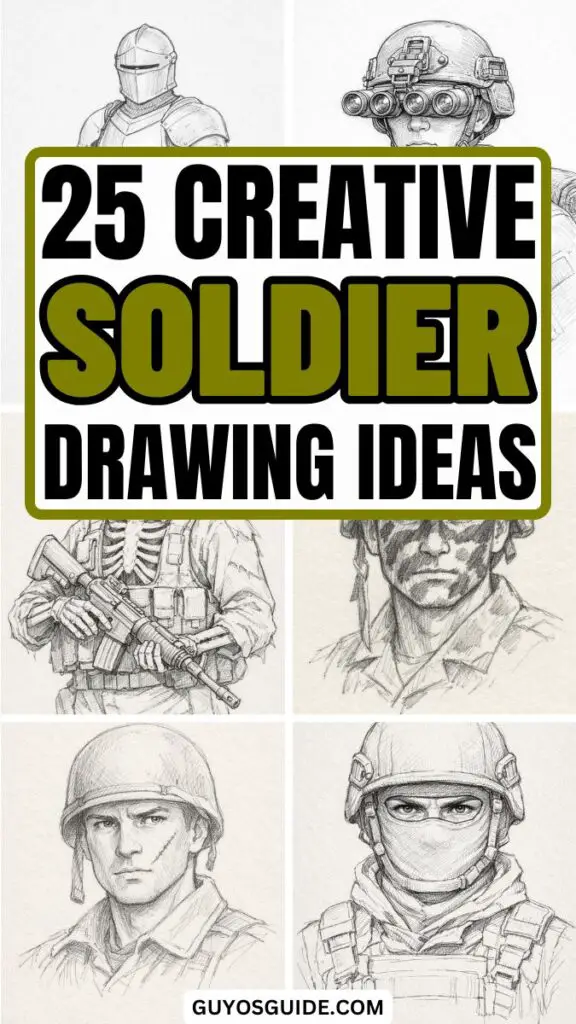
25 Soldier Drawing Ideas That Bring Art to Life

I used to think drawing soldiers had to look serious and super detailed to be good.
There was a time when every soldier I sketched looked stiff, plain, and almost the same!
Yes, I thought you had to copy a history book just to make it look “real.”
But after trying new poses, styles, and a lot of creative experimenting, I found drawing ideas that actually made my art stand out.
These soldier drawing ideas don’t just improve your skills! They’ll also help you tell stronger, more powerful stories through your art.
So let’s explore some creative ways to bring your soldier drawings to life:
1. Soldier Looking Over Shoulder
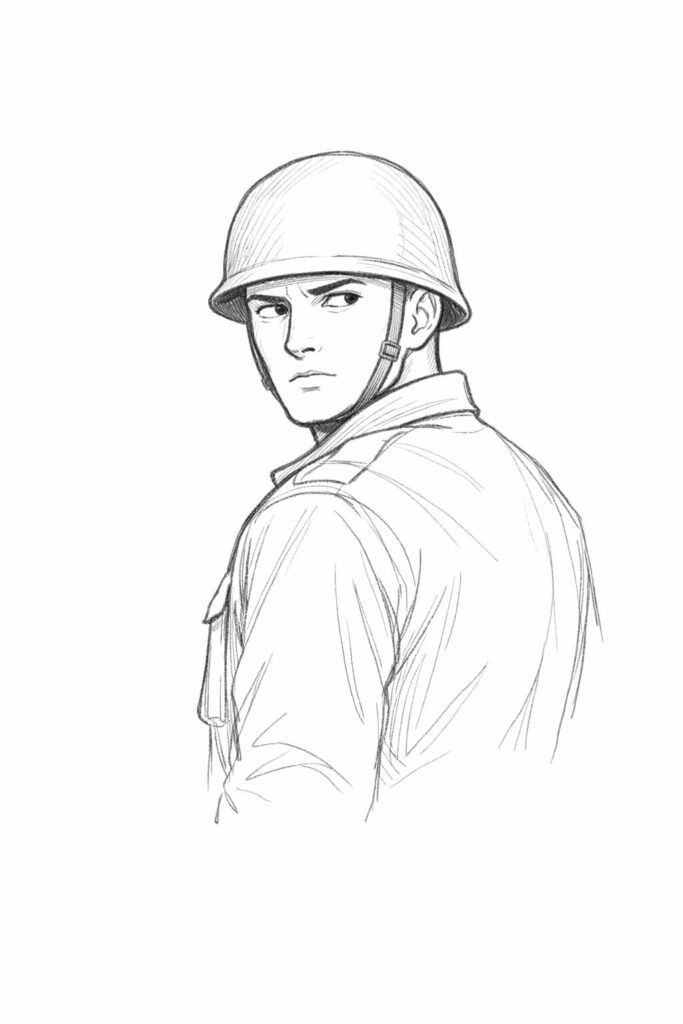
This pose is all about attitude and mystery.
Draw your soldier standing upright, body facing forward, but head turned slightly back over the shoulder. It instantly creates movement and tension.
Focus on the jawline, helmet angle, and sharp eye expression.
Keep the background simple so the viewer’s attention stays locked on that intense glance.
2. Soldier in a Fighting Pose
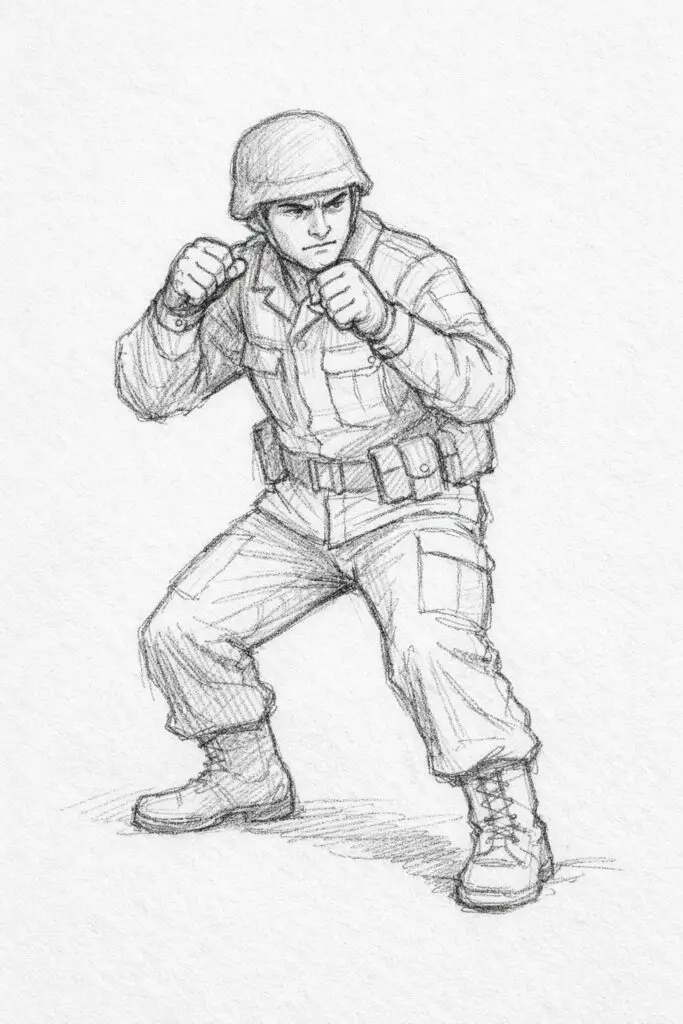
Capture raw action by sketching a soldier in a mid-combat stance.
Bend the knees slightly, angle the shoulders forward, and position the arms as if ready to strike or defend.
The key here is body balance—imagine where the weight falls. Use strong, confident lines for the limbs.
Wrinkles in the uniform will help show motion.
Whether inspired by modern infantry or cinematic heroes, this pose screams energy and determination without needing a complicated background.
3. Sniper
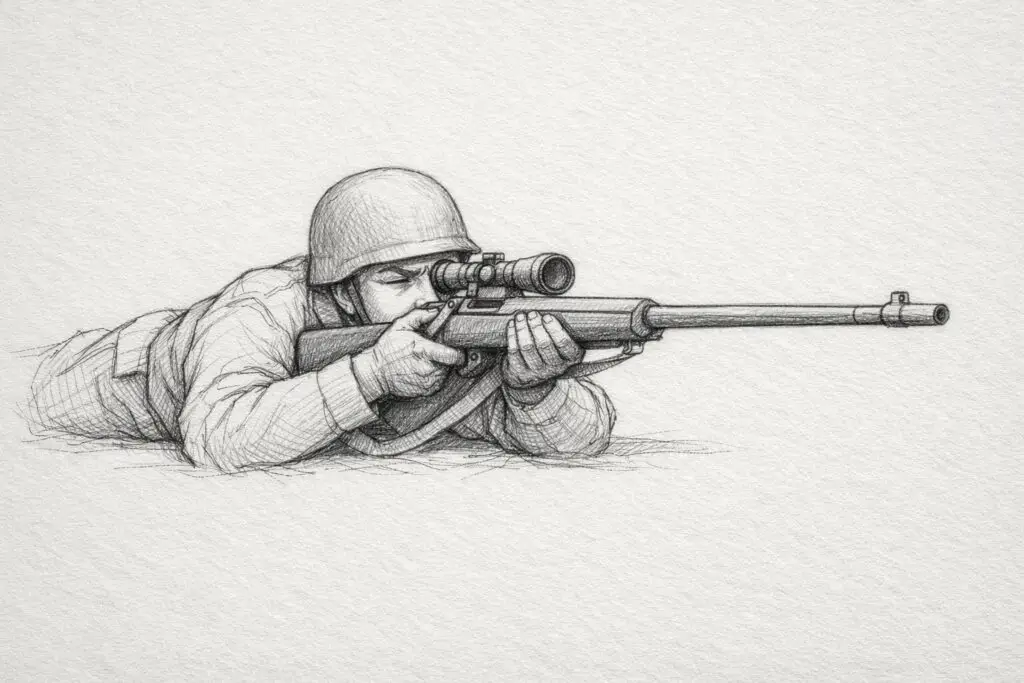
A sniper drawing focuses on precision and calm focus.
Sketch the soldier lying prone or kneeling, eye aligned with the rifle scope.
Pay close attention to perspective—especially the long barrel of the weapon.
The expression should be concentrated and steady.
Subtle shading around the eyes adds realism. Keep the environment minimal, maybe just a hint of grass or a ledge.
The tension in this drawing comes from stillness, not chaos, which makes it incredibly powerful.
4. Soldier Pointing a Gun
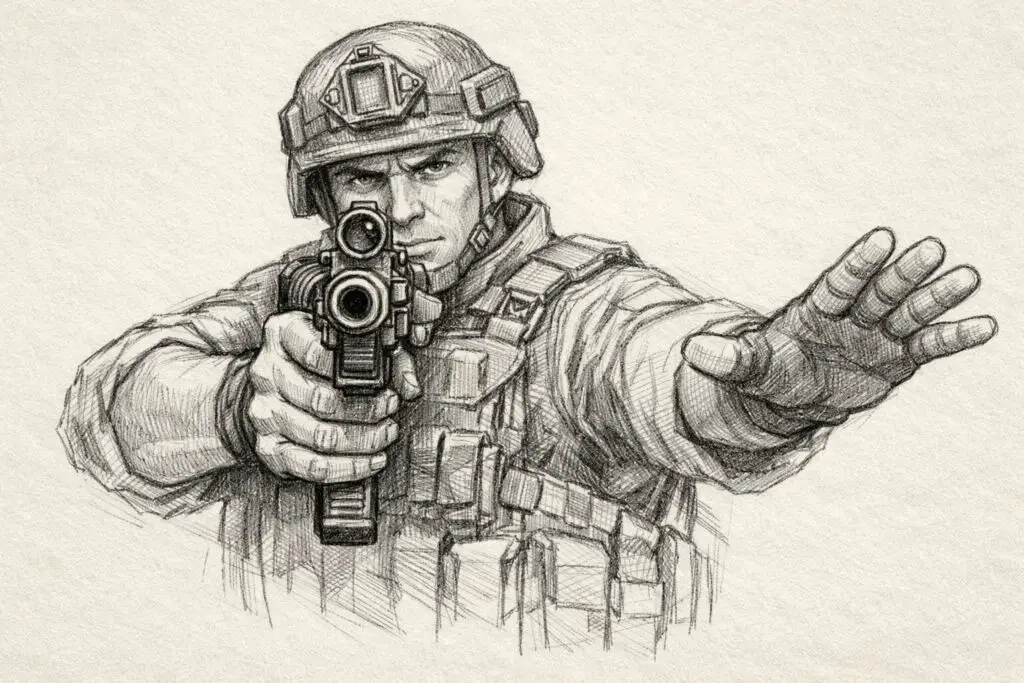
This dynamic angle pulls the viewer into the scene.
Draw the firearm slightly larger in the foreground to create perspective depth.
The soldier’s arm should be extended firmly, shoulders squared.
Focus on hand anatomy—grip details matter.
Add slight tension lines in the forearm to show strength. The facial expression can be serious or commanding.
This idea is perfect for practicing foreshortening and dramatic angles without overcrowding your composition.
5. Soldier Smoking a Cigar
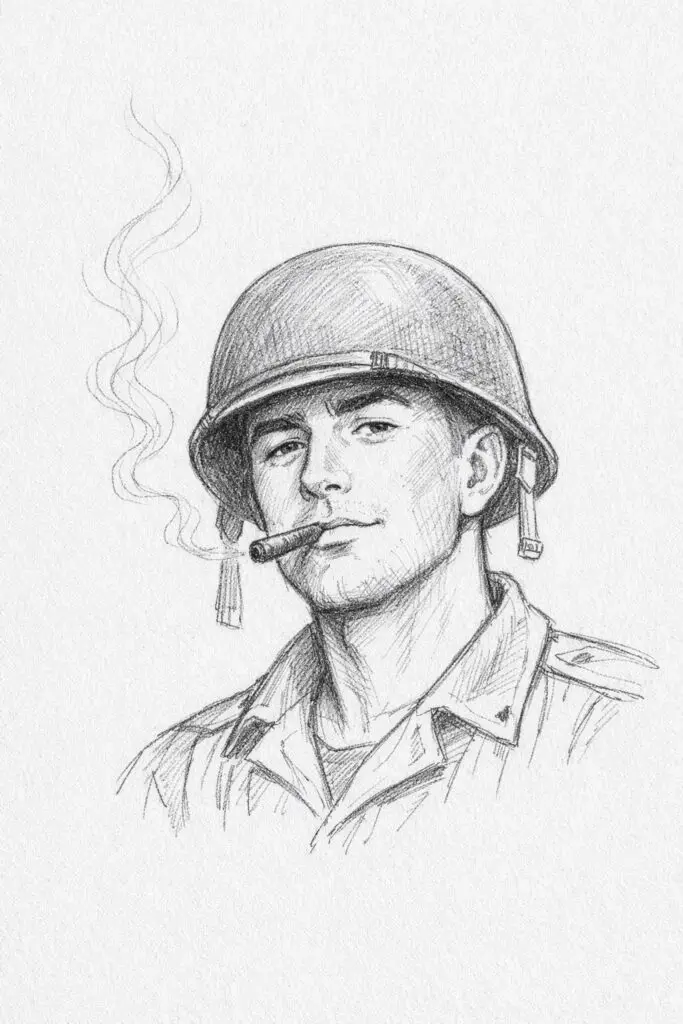
For a gritty, cinematic feel, sketch a soldier casually holding a cigar between their lips.
The smoke adds fantastic motion and atmosphere.
Focus on relaxed posture—maybe a slight smirk or narrowed eyes.
Use soft shading around the cheekbones and under the helmet brim.
The cigar smoke can swirl upward in loose, flowing lines, contrasting with the rigid uniform.
This drawing balances toughness with personality and is excellent for experimenting with lighting effects.
6. Soldier Close-Up Face
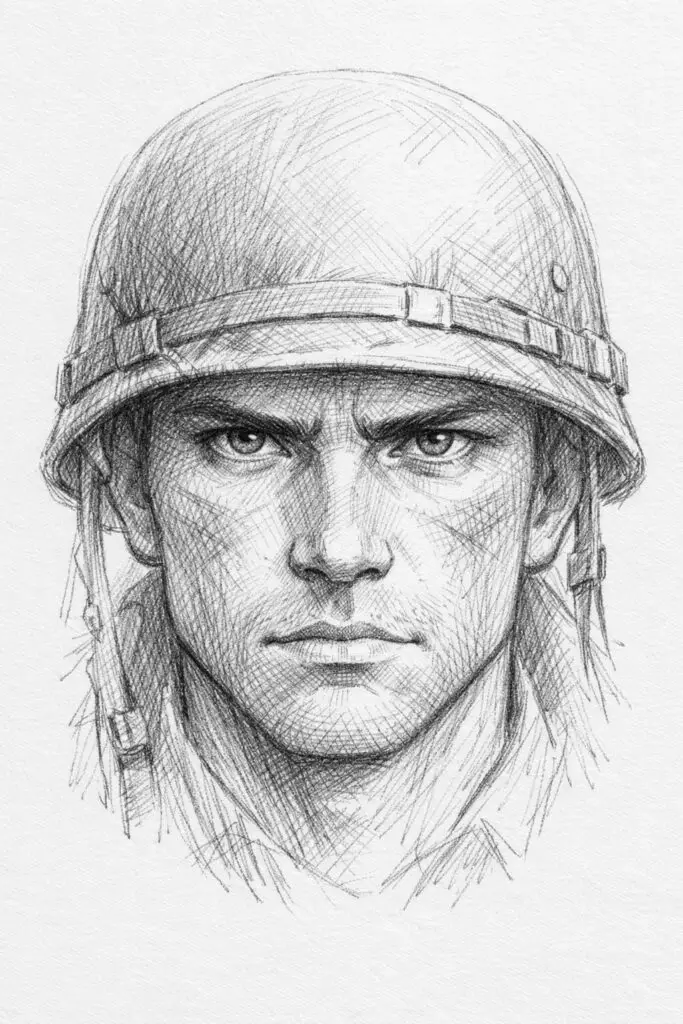
Zoom in and focus entirely on facial details.
Draw battle-worn skin, subtle scars, or dirt marks across the cheeks.
Study proportions carefully—the eyes and nose placement make or break a portrait.
Use cross-hatching or smooth blending for realistic shadows.
This is a great exercise in emotion: is the soldier exhausted, determined, calm?
A close-up lets you tell a powerful story with just expression and shading alone.
7. Female Soldier
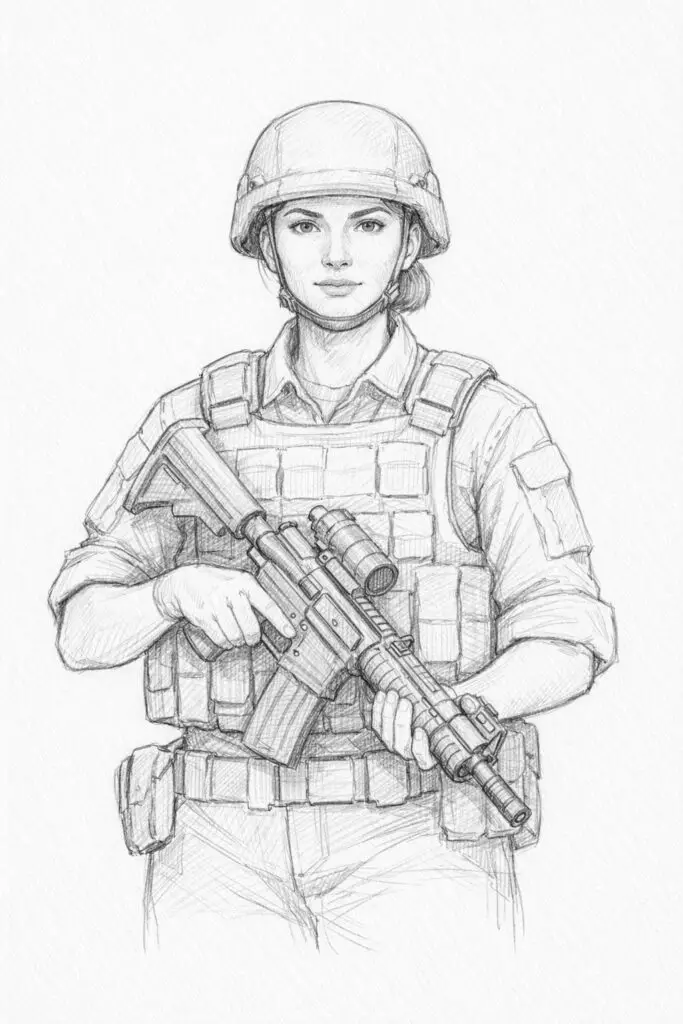
A female soldier drawing should radiate strength and confidence.
Avoid exaggerating features—focus on realistic proportions.
You can sketch her holding a helmet under one arm or gripping a weapon confidently.
This idea works beautifully in both modern military style and historical armor.
Emphasize capability and presence rather than stereotypes for a powerful finished piece.
8. Close-Up Face of Soldier Saluting
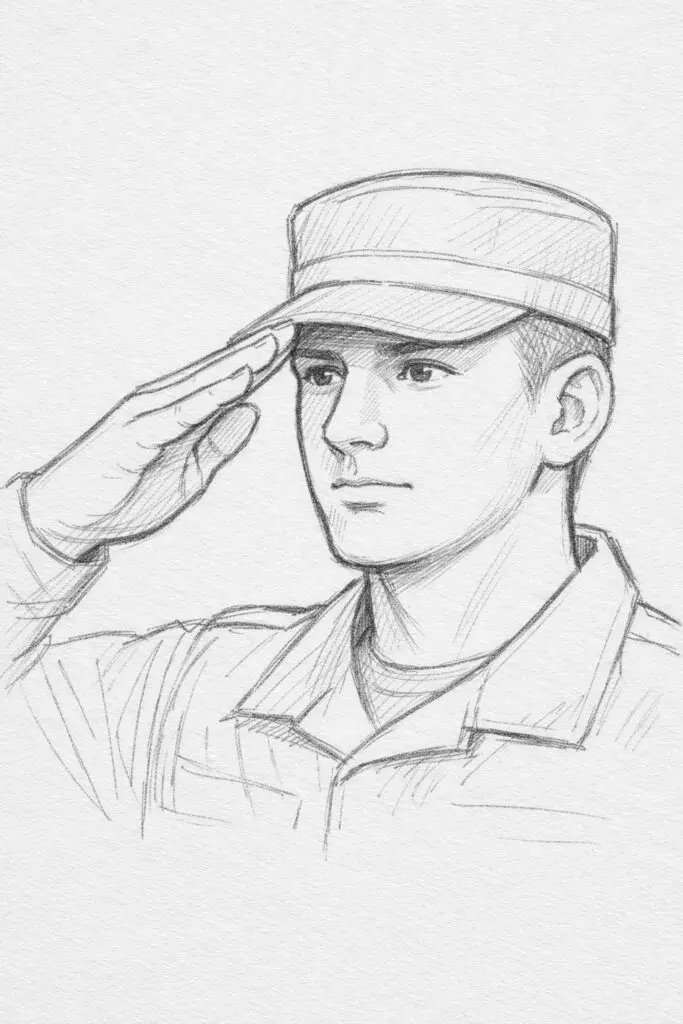
Salutes are full of respect and discipline.
Draw the hand raised precisely to the brow, fingers straight and aligned.
The challenge here is hand anatomy—take your time with finger proportions.
This drawing emphasizes honor and tradition without needing dramatic action elements.
9. Soldier Walking with a Dog
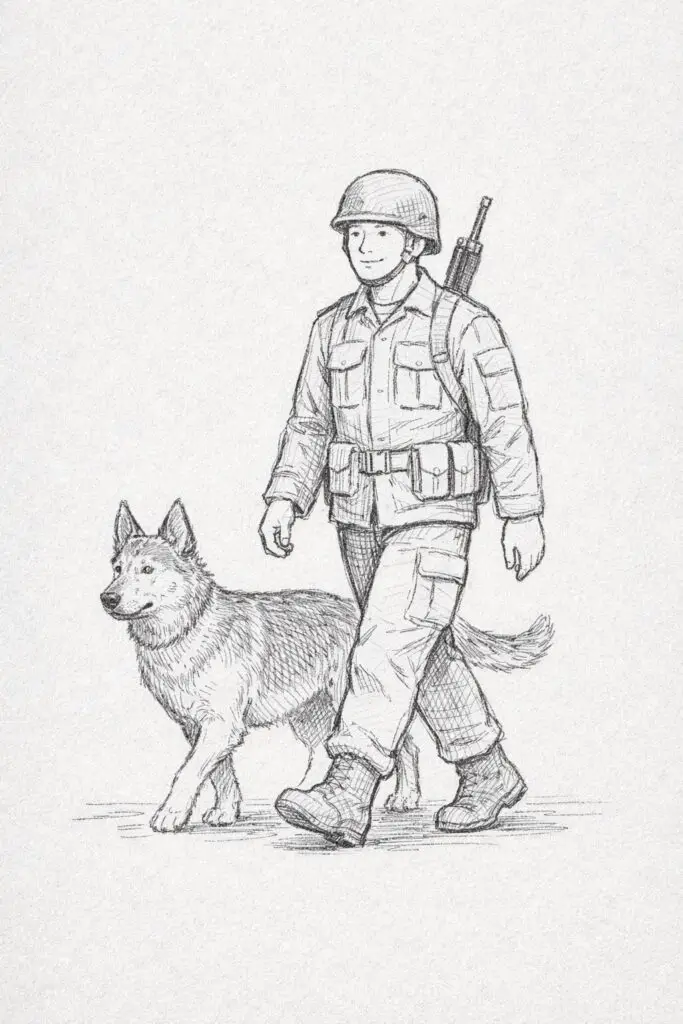
This idea adds warmth to your artwork.
Sketch the soldier walking confidently while a loyal dog trots beside them.
Keep the pose relaxed—arms swinging naturally.
This composition feels human and grounded, showing companionship rather than combat.
It’s perfect for exploring character depth beyond the battlefield.
10. Soldier Wearing a Ski Mask
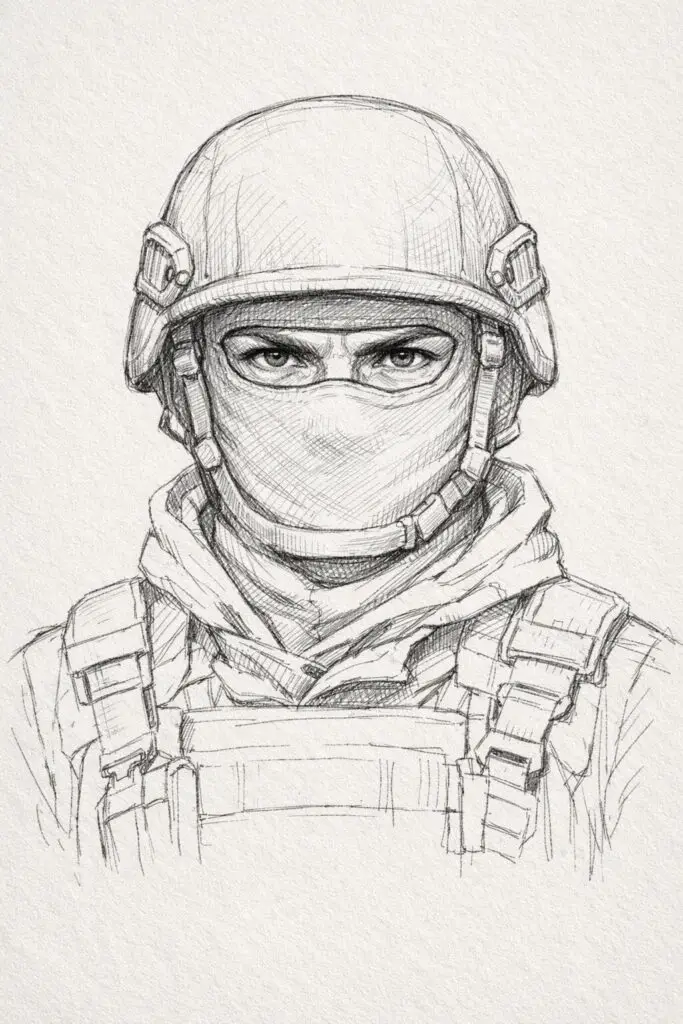
For a tactical vibe, draw a soldier with a snug ski mask covering most of the face.
The challenge lies in showing expression through just the eyes.
Use deep shading around the eye sockets for intensity.
Add folds and texture to the fabric for realism.
Keep the posture confident and composed.
This concept is visually striking because of its simplicity and mysterious edge.
11. Skeleton Soldier
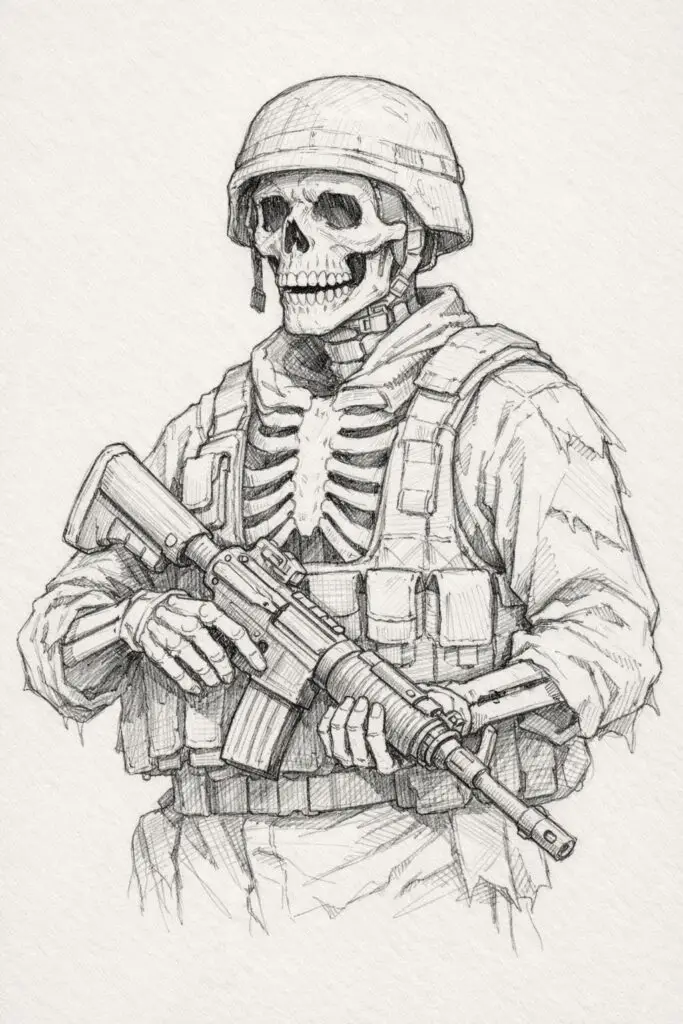
Combine anatomy with military gear by drawing a skeleton dressed as a soldier.
Carefully sketch bone structure first—especially the ribcage and skull proportions.
Then layer a uniform or helmet over it.
This contrast between life and mortality creates a dramatic piece. You can keep it stylized or realistic.
Focus on shadow work between bones to create depth.
It’s edgy, artistic, and perfect for experimenting with darker themes.
12. Roman Soldier
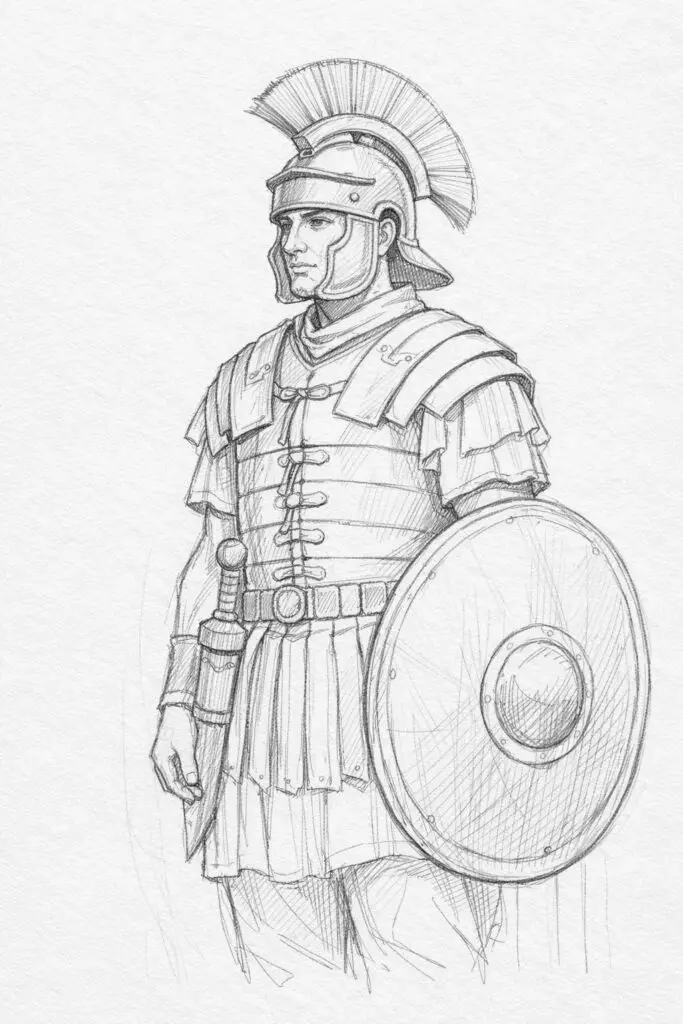
Inspired by warriors of the ancient world like those of the Roman Army, this drawing features a crested helmet and segmented armor.
Pay attention to symmetry in the shield and plume details. Add decorative engravings for authenticity.
Strong posture is key—Roman soldiers stood tall and disciplined. Keep the stance proud and firm.
This historical concept is fantastic for practicing metallic textures and structured armor forms.
13. Military General
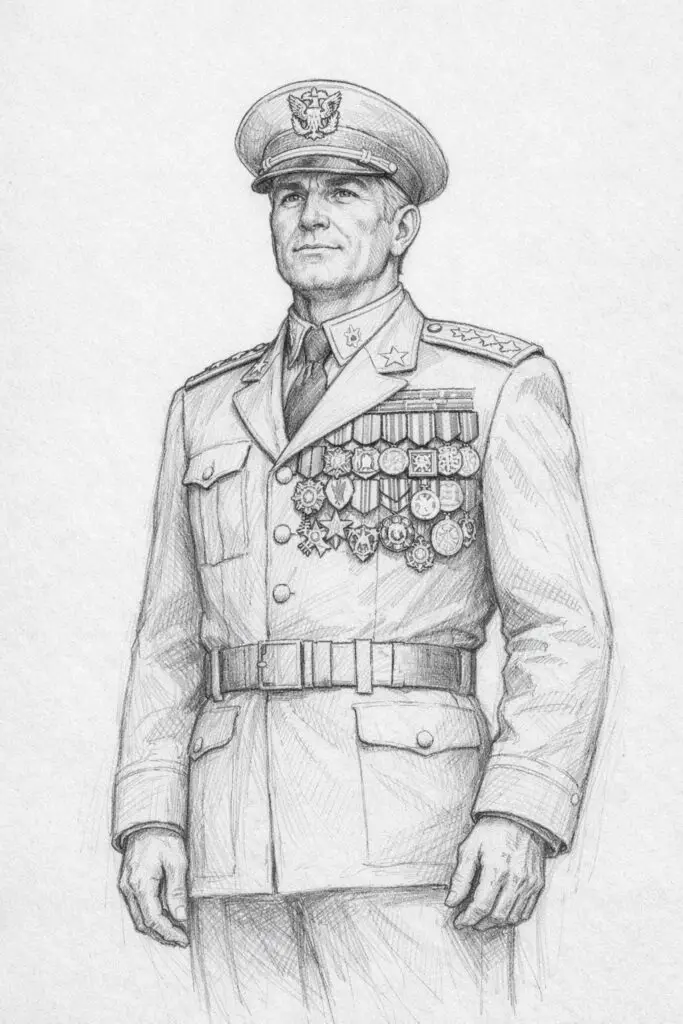
Draw a commanding figure with medals neatly displayed across the chest.
Focus on posture—straight back, chin slightly raised.
Details in the uniform, such as insignias and ribbons, bring authority to the drawing.
The expression should feel strategic and confident. Subtle wrinkles around the eyes can show experience.
This idea allows you to practice fine detailing while conveying leadership and power through body language alone.
14. Old School Soldier
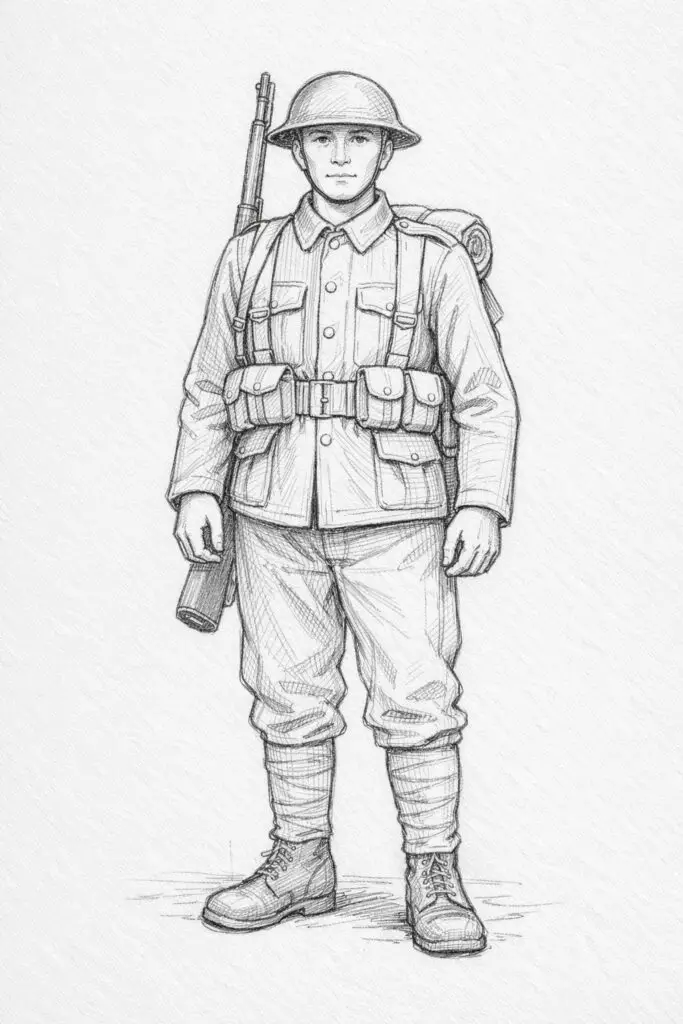
Think classic wartime uniforms from earlier decades. Simple helmet, sturdy boots, and traditional gear.
Keep the pose straightforward—standing at ease or gripping equipment confidently.
Focus on fabric folds and sturdy posture. The charm of this drawing lies in nostalgia and simplicity.
Muted shading works beautifully here.
It’s a great opportunity to study historical clothing references without overcrowding your artwork.
15. Soldier with Night Vision Goggles
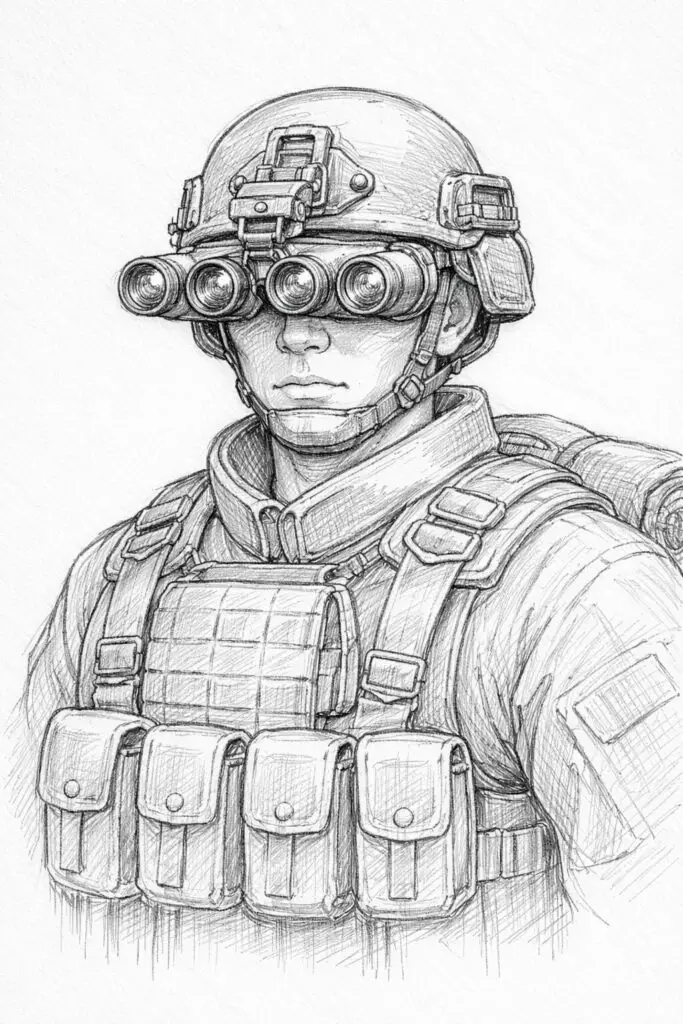
Night vision goggles instantly add a futuristic edge.
Draw the goggles slightly bulky with reflective lenses. The helmet straps should wrap naturally around the head.
You can experiment with a faint green glow effect in the lenses. Keep the pose alert and ready.
This drawing is ideal for exploring lighting contrast, especially highlighting gear details against darker shading.
16. Soldier in Parade Uniform
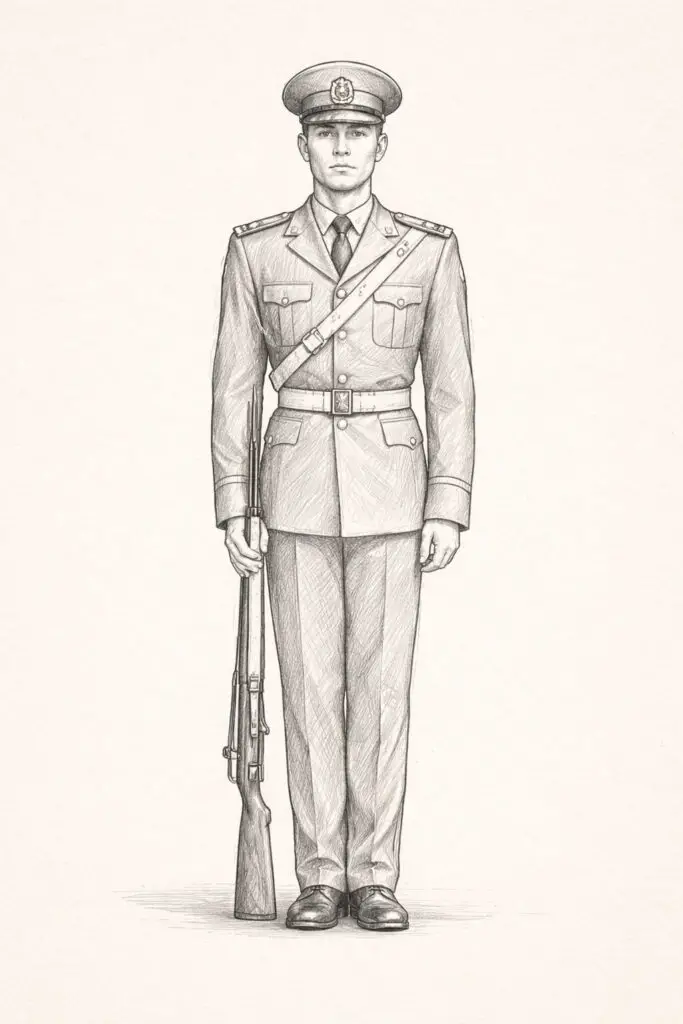
Unlike combat gear, parade uniforms are polished and crisp.
Focus on clean lines and neat proportions. Buttons should be evenly spaced, and the cap perfectly aligned.
The stance should be formal—feet together, shoulders squared.
Shading should be minimal and controlled to preserve the clean look.
This drawing emphasizes discipline and presentation over action, offering a different creative challenge.
17. Futuristic Sci-Fi Soldier
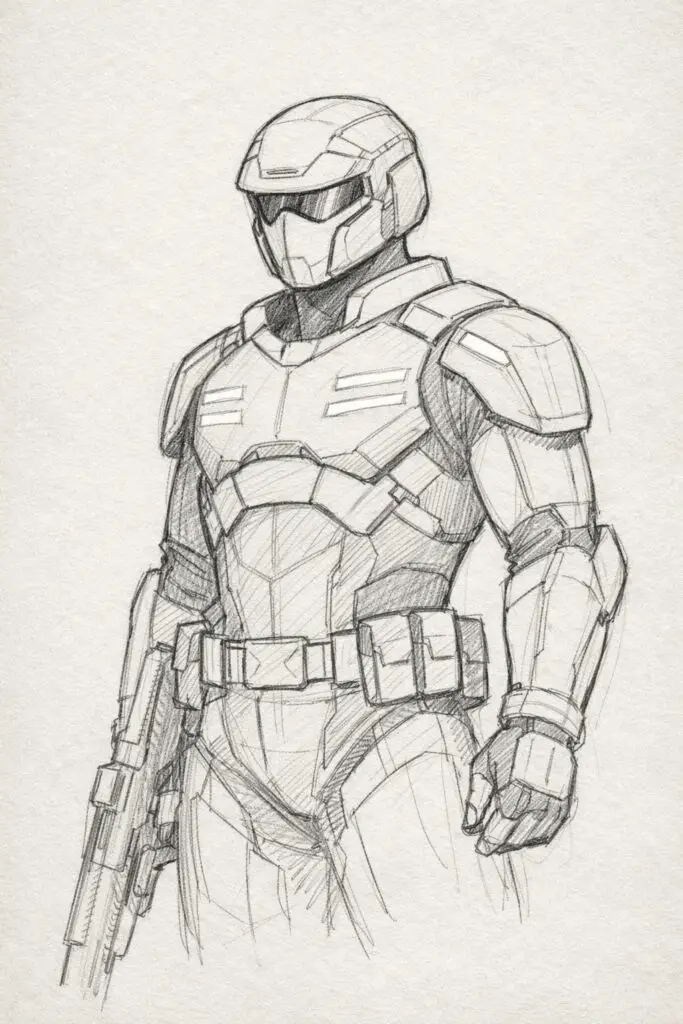
Imagine armor inspired by films like Star Wars, but design your own unique twist.
Sketch sleek plating, glowing lines, and advanced helmets. Keep the silhouette bold and readable.
You can exaggerate shoulder pads or boots slightly for dramatic effect.
Metallic shading techniques work beautifully here.
This idea pushes creativity while still keeping the focus on a single, strong character design.
18. Camouflage Face Paint Soldier
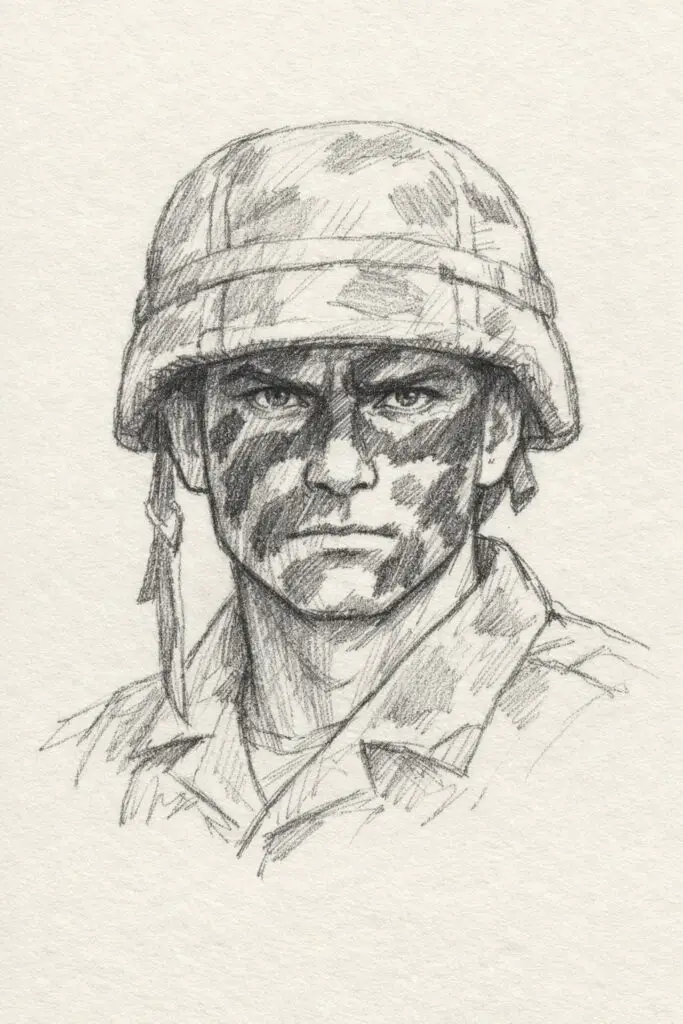
Focus closely on face paint patterns. Use irregular shapes across the cheeks and forehead.
Blend shades carefully so the paint looks natural on skin.
The eyes should remain sharp and expressive.
This drawing is excellent for practicing texture contrast between skin and paint.
Keep the rest of the composition simple to highlight the facial detail.
19. Soldier Kneeling with Rifle
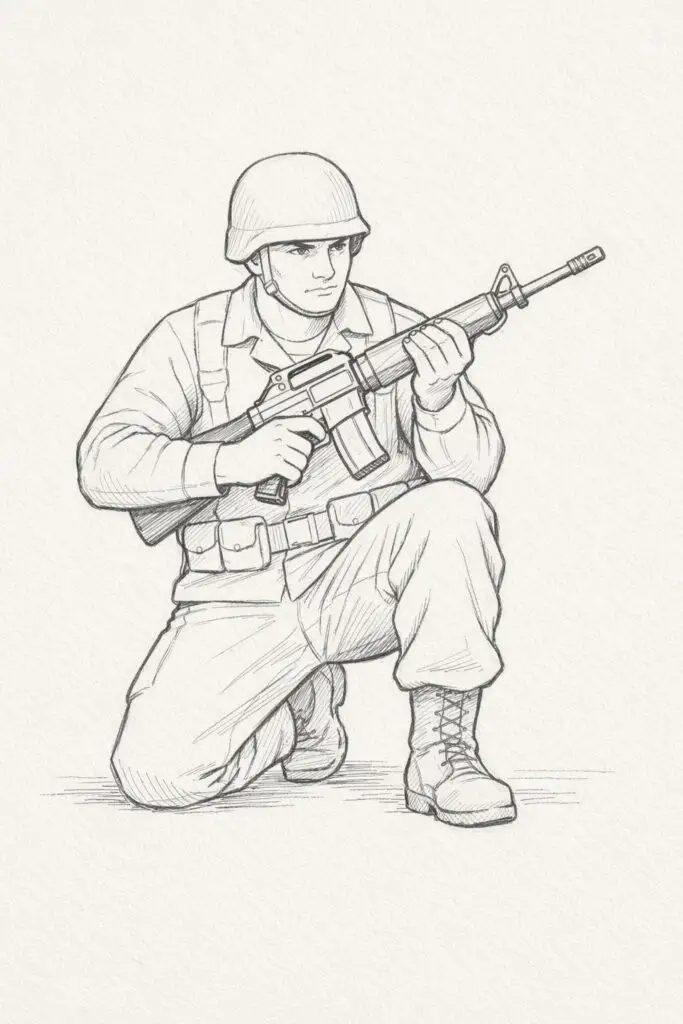
A kneeling pose offers strong composition balance.
One knee grounded, the other raised for support. Angle the rifle diagonally for visual interest.
Pay attention to weight distribution—hips should align naturally with the legs.
This pose feels tactical and ready without being overly complex.
Add subtle uniform creases around the knees for realism.
20. Young Recruit Soldier
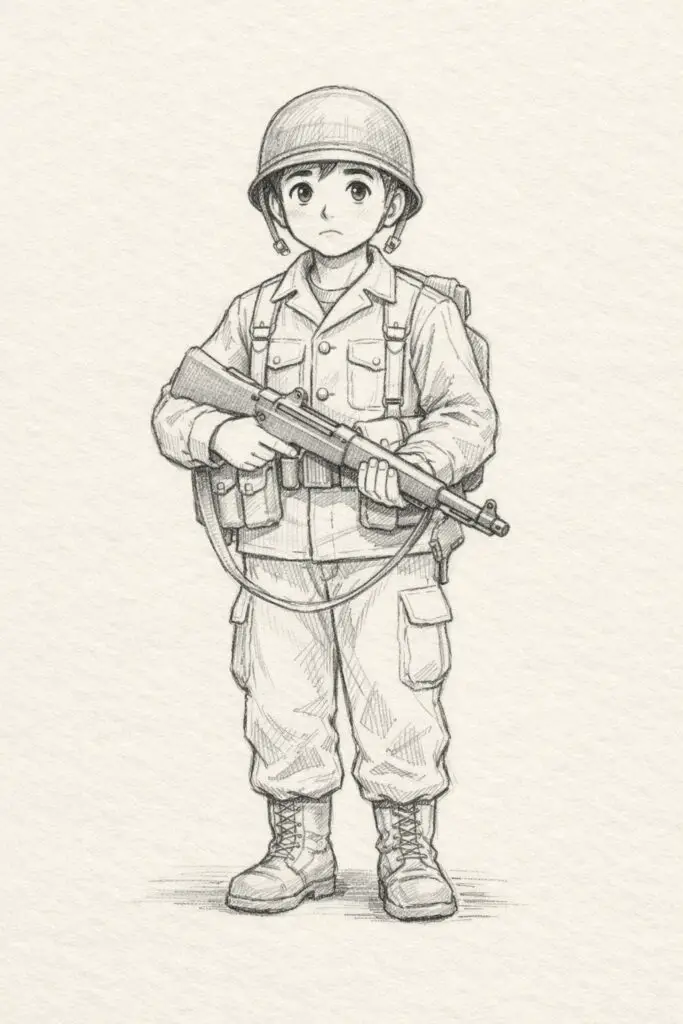
Capture determination and nervous energy in a young recruit’s face.
Keep features slightly softer, posture upright but not overly rigid.
You can show them adjusting their helmet or standing proudly.
Focus on expression—hope mixed with seriousness.
This idea is great for storytelling through subtle facial cues and simple body language.
21. Soldier with Scar Across Face
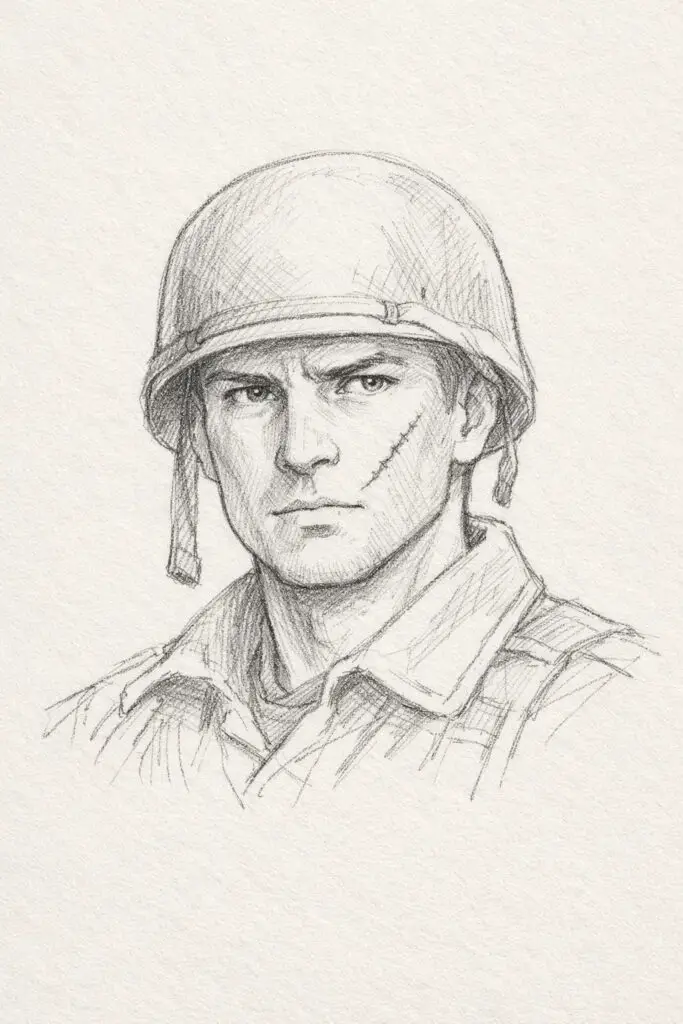
Scars tell stories. Draw a clear but subtle scar running across the cheek or eyebrow.
Avoid over-detailing—keep it natural and integrated into the skin texture.
Use light shading to show healed tissue. The expression should feel seasoned and confident.
This concept adds character depth and gives you practice with realistic facial detailing techniques.
22. Soldier Giving a Command
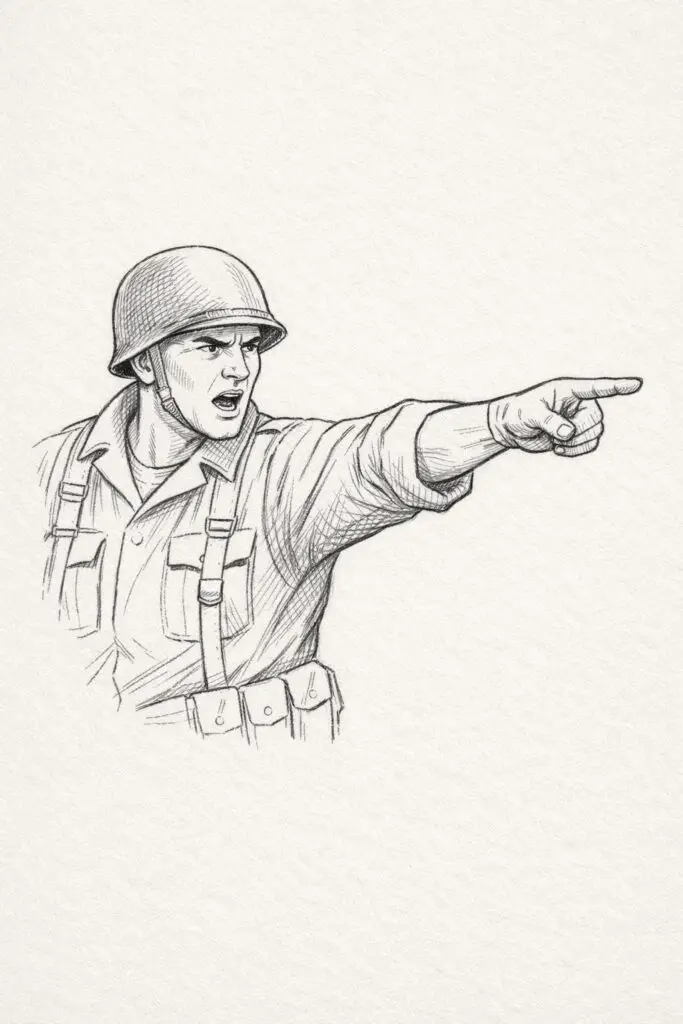
Sketch the soldier pointing forward or gesturing firmly with one hand.
The body should lean slightly into the command to show authority.
Focus on open mouth positioning if shouting instructions.
Strong jawlines and determined eyes add intensity.
This pose allows you to experiment with expressive hands and dynamic posture while keeping the composition clean.
23. Armored Medieval Soldier
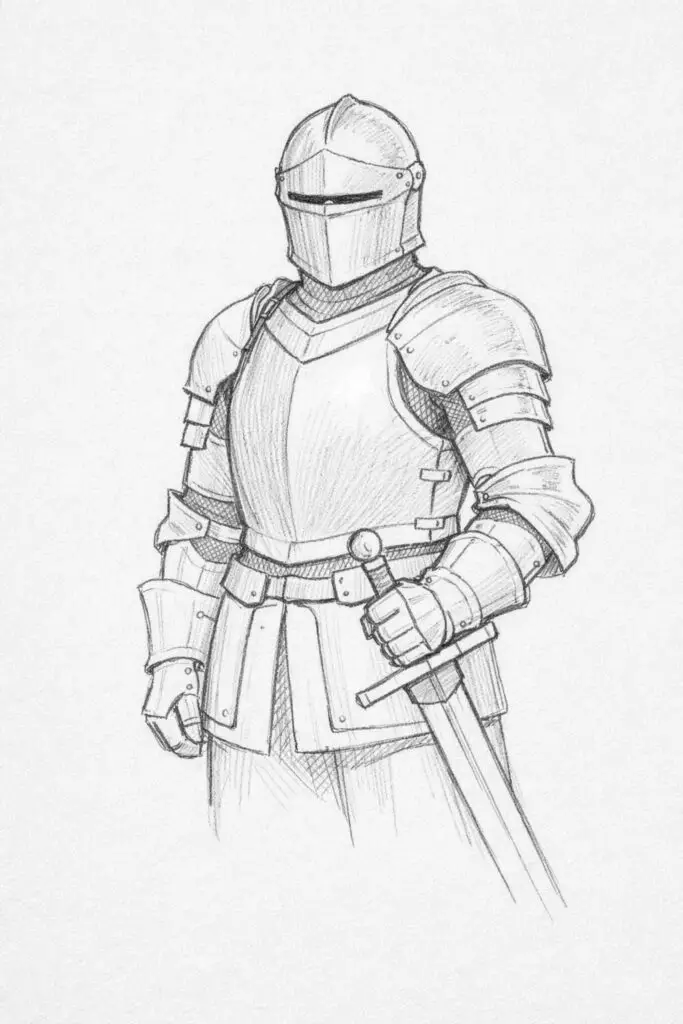
Draw a knight-like warrior inspired by forces such as the Knights Templar.
Focus on metallic armor plates, a simple sword, and a bold stance.
Practice reflective shading techniques on the helmet and chest plate.
Keep the background plain so the armor detail stands out.
This idea blends history with artistry and is perfect for mastering texture and shine.
24. Elf Soldier
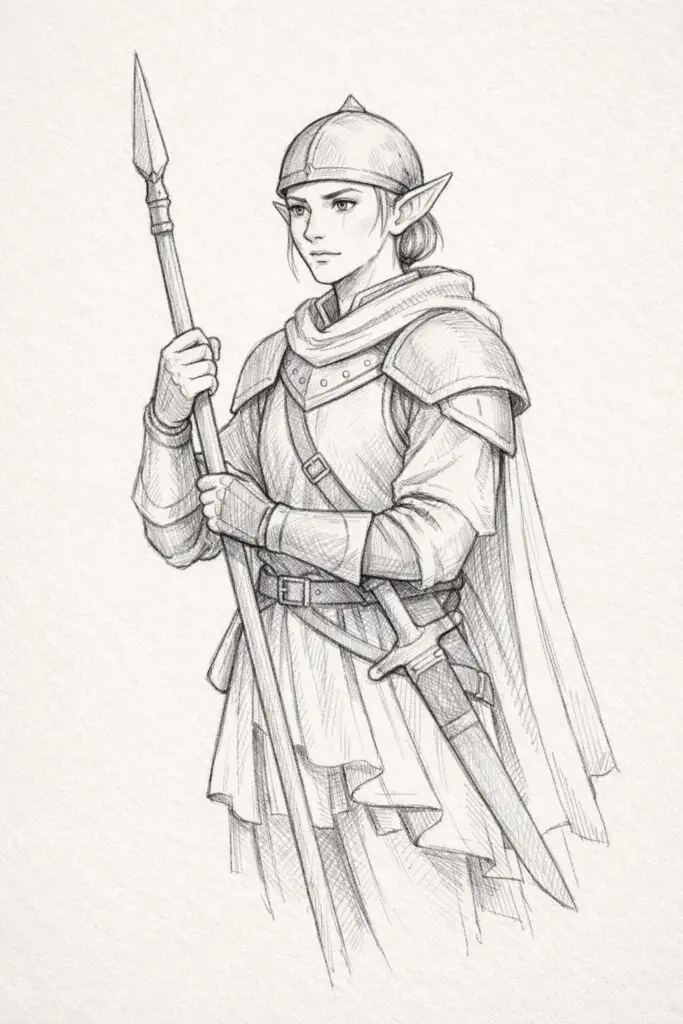
Bring elegance and precision into your sketch with an elf soldier inspired by the graceful warriors of The Lord of the Rings.
Focus on sharp, refined facial features—high cheekbones, narrow jawline, and long, pointed ears.
A slim sword or curved bow complements the character beautifully.
Soft shading around the eyes can create a wise, almost ancient expression while maintaining a strong warrior presence.
25. Alien Soldier
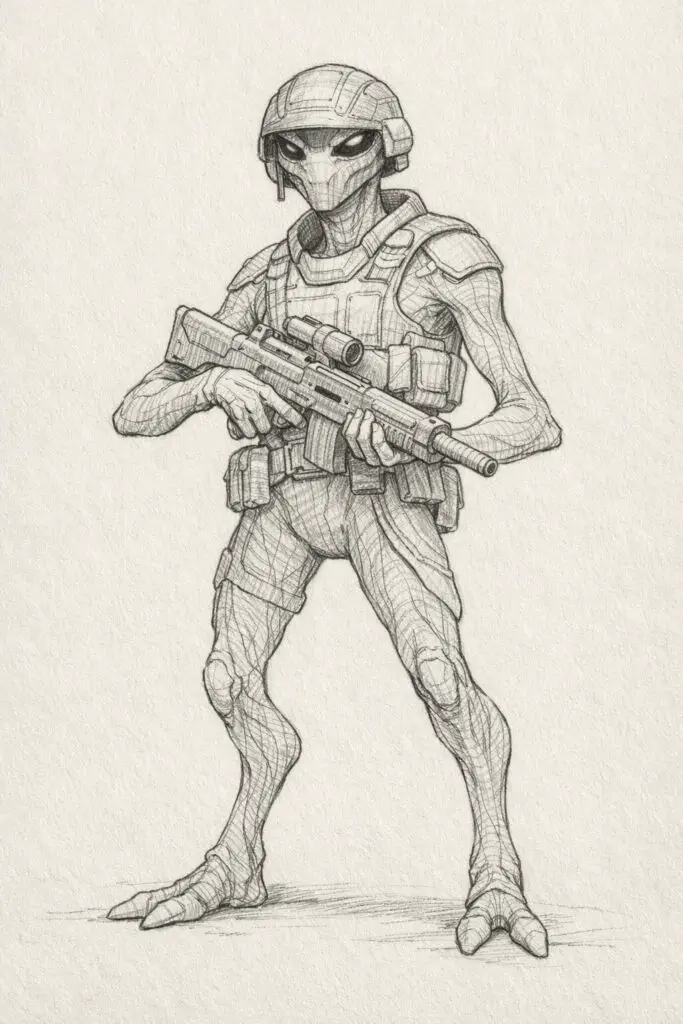
Let your imagination take control with an alien soldier design.
Think beyond human anatomy—elongated limbs, extra joints, or unusual skin textures.
You might draw inspiration from sci-fi worlds like Avatar, but create your own unique species.
This drawing is perfect for pushing creativity while practicing structure, proportion, and futuristic design elements.