23 Dining Room Lighting Ideas That Set the Perfect Mood

Dining Room Lighting Ideas - Guyo's Guide

I used to think a dining room had to be either bright or cozy, but never both.

There was a time when I just left the light on full blast and called it a day!

Yes, my dining room used to feel more like a cave at dinner and a spotlight stage at breakfast.

But after experimenting with lamps, chandeliers, and a lot of Pinterest scrolling, I found lighting ideas that actually work.

These dining room lighting tips don’t just brighten the space—they make it feel warm, stylish, and welcoming.

So let’s see how you can light up your dining room just right:


1. Make a Statement With a Classic Chandelier
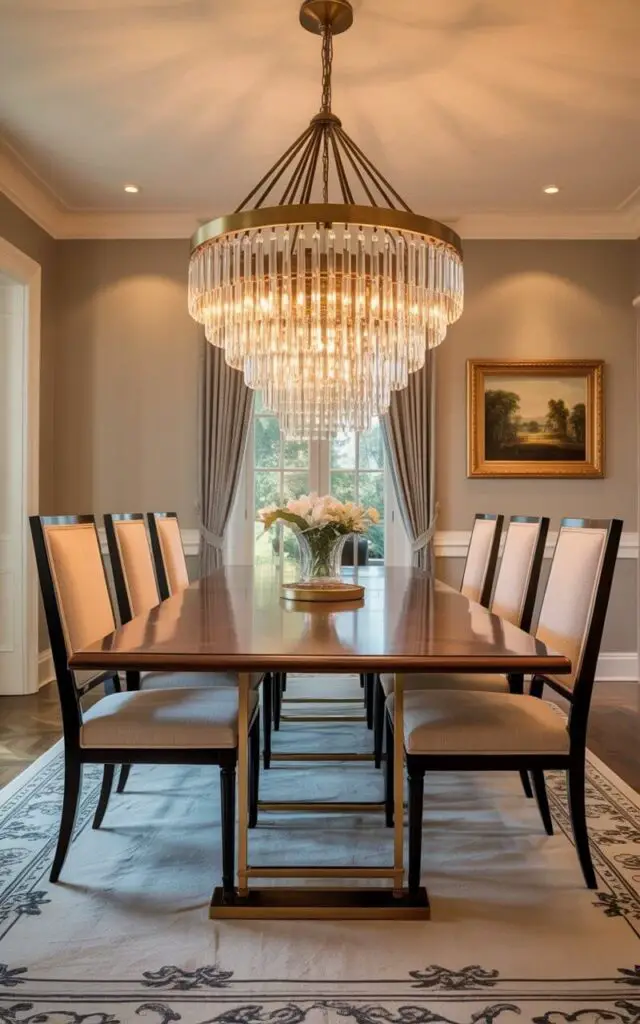
A multi-tiered chandelier with crystal pendants hangs centered above a rectangular dining table. The chandelier’s framework is constructed of polished brass, and the pendants reflect warm light onto the table’s smooth, dark walnut surface. Six upholstered dining chairs with straight backs and beige linen cushions are evenly spaced around the table. The dining room features pale gray walls, a dark hardwood floor with a subtle sheen, and a single rectangular landscape painting hanging on the far wall.

A classic chandelier remains one of the most important and commonly used dining room lighting choices—and for good reason. 

It naturally draws the eye, anchors the dining table, and gives the room a sense of purpose. 

Whether traditional, transitional, or modern in style, a well-sized chandelier creates balance and elegance. 

It works best when centered over the table and paired with a dimmer so the mood can shift easily from everyday meals to special gatherings.


2. Embrace Modern Pendant Lights
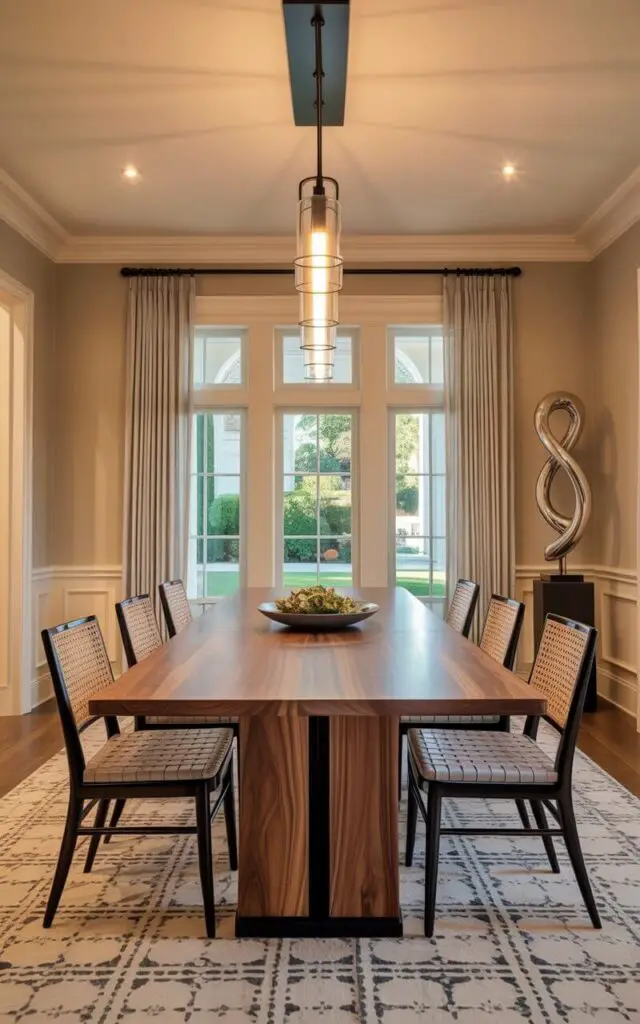
Three sleek, cylindrical pendant lights hang in a precise row above a rectangular dining table made of dark walnut wood. The table is surrounded by six dining chairs with woven grey fabric upholstery and slender black metal frames. The dining room’s walls are painted a soft beige, accented by a single, large abstract sculpture made of polished stainless steel positioned against one wall. Large windows with sheer white curtains allow natural light to filter into the room, revealing a glimpse of a manicured lawn visible outside.

Pendant lights are a favorite for dining rooms because they feel stylish without trying too hard. 

They can be sleek and minimal or slightly decorative, depending on the room’s personality. 

Pendants work especially well over rectangular tables, kitchen-dining hybrids, or casual dining spaces. 

When hung at the right height, they create intimacy while still providing functional lighting that feels relaxed, current, and thoughtfully designed.


3. Layer With Recessed Lighting
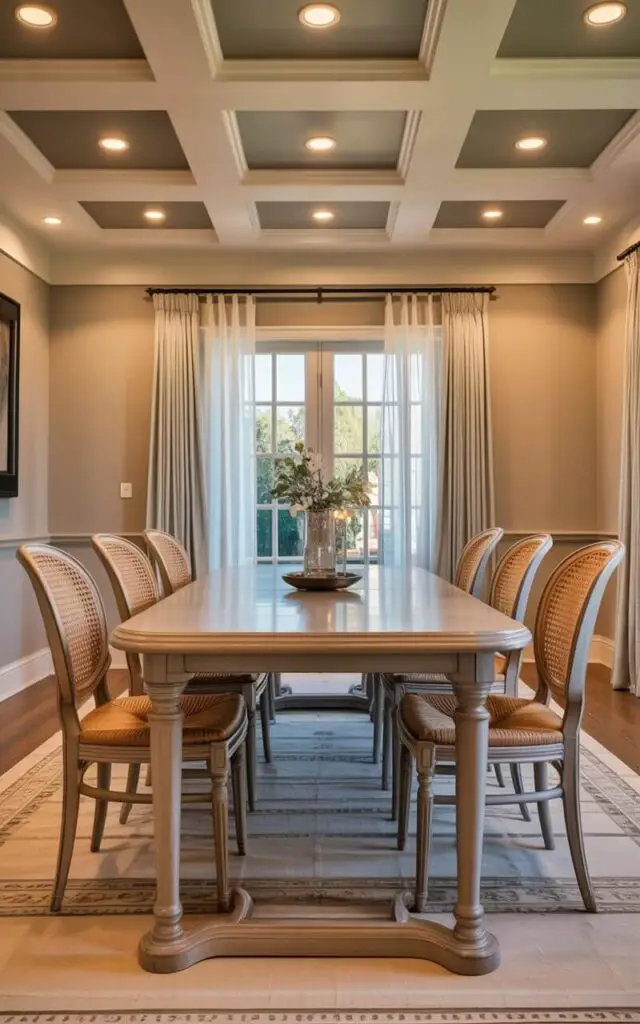
A rectangular dining table sits centered within a room, crafted from pale gray wood with a smooth, matte finish. Six matching dining chairs with curved backs and woven seats are evenly spaced around the table. Recessed ceiling lights are arranged in a grid pattern above, providing uniform illumination across the room’s surfaces, and subtle shadows fall gently along the walls. The room features a smooth, white ceiling and light gray walls with a simple baseboard, and a large window with sheer white curtains is visible in the background.

Recessed lights provide the quiet foundation that makes all other dining room lighting work better. 

They offer consistent ambient light without visually competing with statement fixtures. 

Used properly, recessed lighting helps eliminate dark corners and balances natural light during the evening. 

They’re especially useful in larger dining rooms or open floor plans, where one main fixture alone simply isn’t enough to evenly light the space.


4. Add Warmth With Wall Sconces
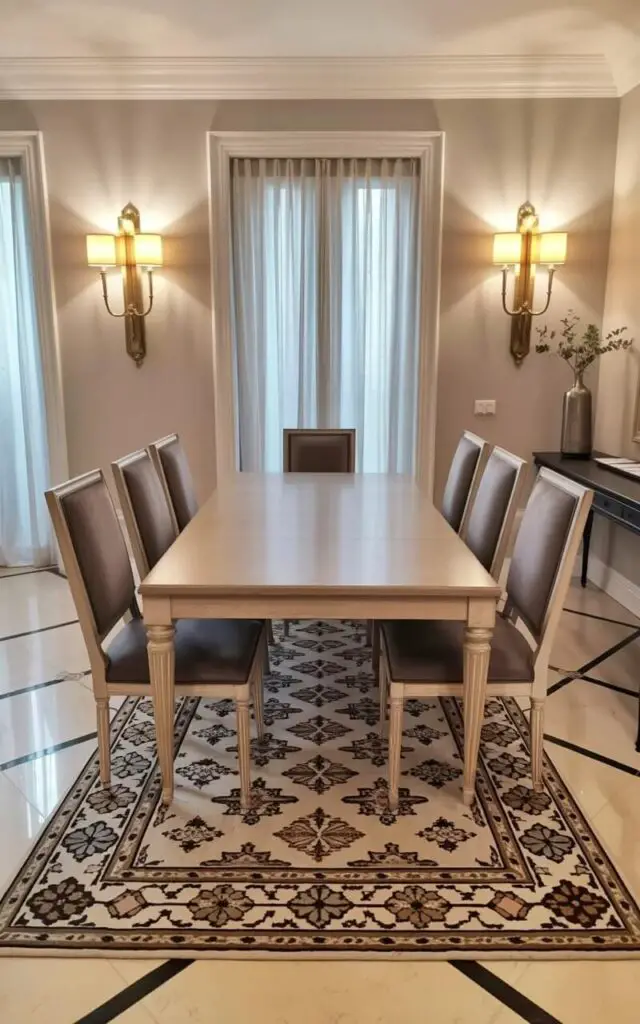
Two wall-mounted fixtures with brass finishes are spaced evenly along the walls of a dining room. The sconces cast a warm glow on the pale gray walls and illuminate a rectangular dining table crafted from light oak wood, surrounded by six upholstered dining chairs with dark gray fabric. The table is bare, and a patterned Persian rug with geometric designs in shades of cream, brown, and blue lies centered beneath it. Large windows with white linen curtains frame the room, allowing soft natural light to filter in while a tall, slender vase with a few sprigs of greenery sits on a nearby console table.

Wall sconces bring a soft, welcoming glow that instantly makes a dining room feel more personal. 

They’re ideal for adding warmth to side walls, highlighting a buffet, or framing artwork. 

Sconces also help reduce harsh shadows created by overhead lights. 

Their presence makes the room feel layered and intentional, as though lighting was considered part of the décor rather than an afterthought.


5. Go Sculptural With Artistic Lighting
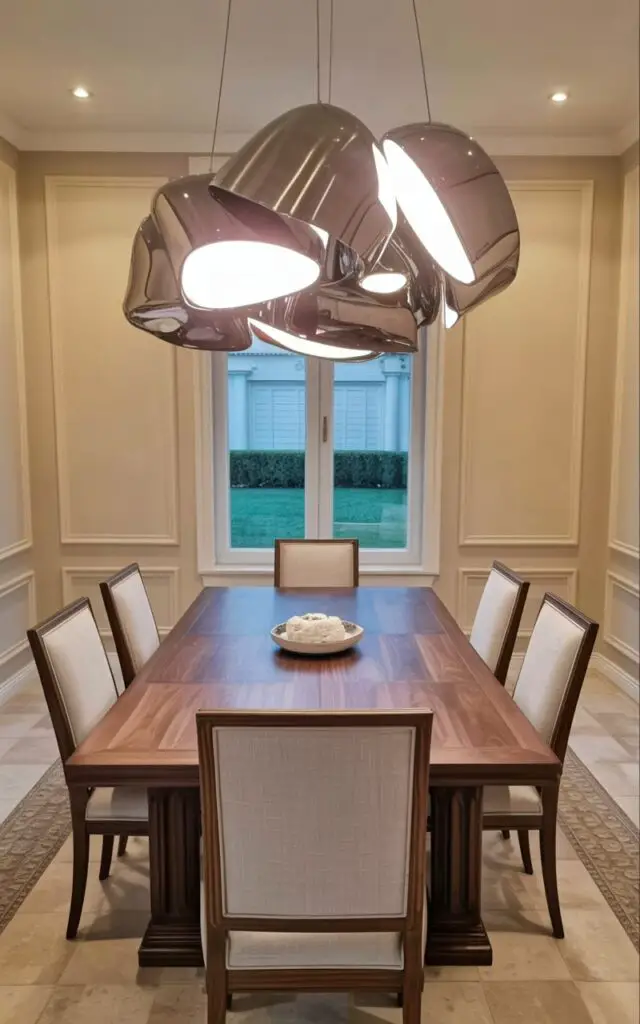
A large, irregularly shaped light fixture made of polished stainless steel hangs suspended above a rectangular dining table. The fixture features multiple intersecting planes and curved surfaces, creating a dynamic interplay of light and shadow. The dining table is crafted from dark walnut wood with six upholstered chairs in a light gray linen fabric placed around it. The dining room has pale cream-colored walls with a single large window offering a view of a manicured lawn with neatly trimmed hedges.

Sculptural lighting is for dining rooms that want a bit of personality without being loud. 

These fixtures often blur the line between lighting and art, adding visual interest even when turned off. 

A sculptural light works best when the rest of the room is relatively calm, allowing the fixture to shine. 

It’s a great way to introduce character while keeping the space refined and functional.


6. Try a Dome Pendant Light
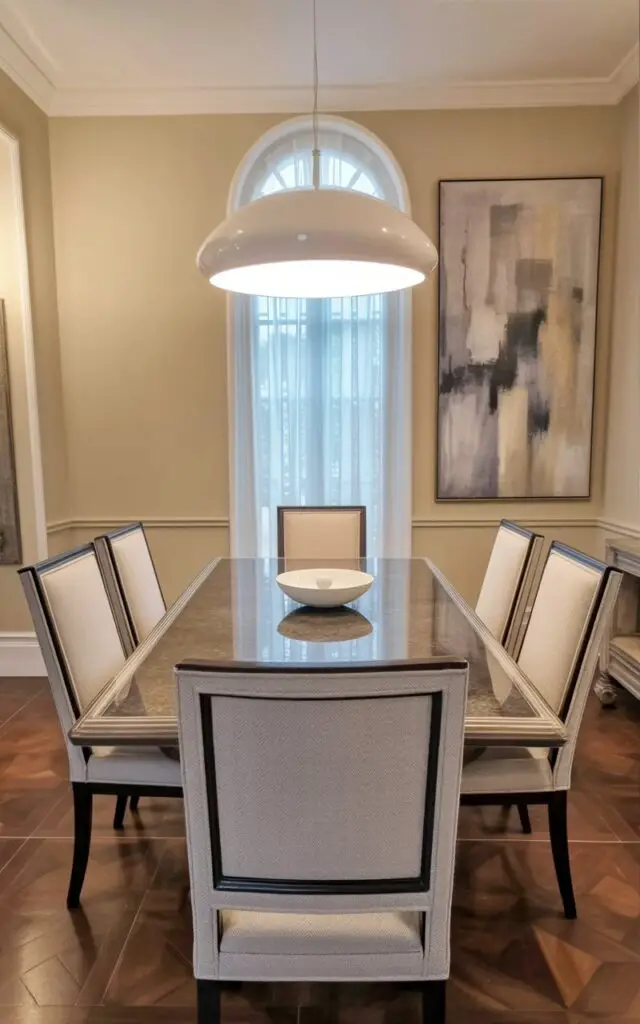
A smooth, white dome pendant hangs centered above a rectangular dining table with a dark wood grain finish and four upholstered dining chairs arranged around it. The pendant directs a pool of light onto the table's surface, revealing its polished texture and the subtle pattern of the chair fabric, which is a woven linen in a pale gray color. The dining room features pale cream-colored walls with a single, large abstract painting depicting shades of gray and beige hanging on one wall. A dark wood floor with a subtle herringbone pattern extends throughout the room, and a tall, arched window with sheer white curtains is visible in the background.

Dome pendant lights are both practical and visually pleasing, making them a reliable dining room choice. 

Their shape directs light downward, keeping the table well-lit without overwhelming the space. 

Metal dome pendants feel slightly industrial, while softer finishes create a more relaxed atmosphere. 

They work especially well in casual dining rooms, offering focused lighting that still feels warm and approachable.


7. Elevate the Ceiling With Cove Lighting
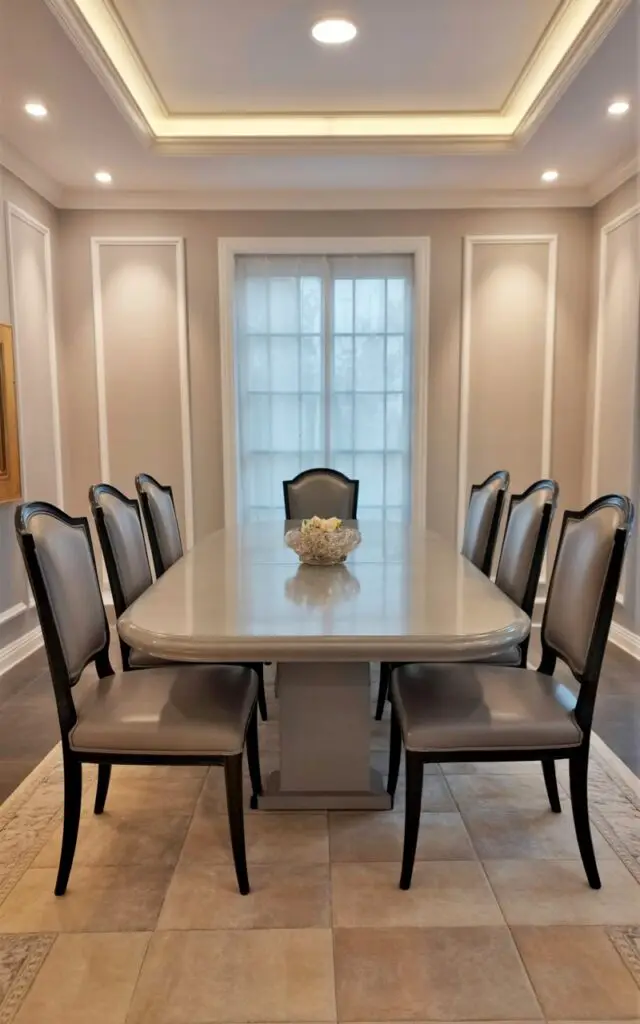
A rectangular dining table with a smooth, light gray surface sits centered within a room, surrounded by six matching dining chairs with dark gray upholstered seats and slender black metal legs. Recessed lighting fixtures are integrated into the ceiling perimeter, casting a soft glow upwards onto the smooth, white ceiling and highlighting the table's surface. The room features pale gray walls with subtle vertical paneling and a wide, dark gray hardwood floor. A large, rectangular window with sheer white curtains is visible in the background, allowing diffused natural light to filter into the room.

Cove lighting adds subtle sophistication without drawing too much attention to itself. 

Hidden along ceiling edges or architectural details, it creates an indirect glow that enhances the room’s overall atmosphere. 

In dining rooms, cove lighting works beautifully alongside chandeliers or pendants, adding depth and softness. 

It’s especially effective for evening dinners when bright overhead lighting would feel too harsh.


8. Highlight Art With Picture Lights
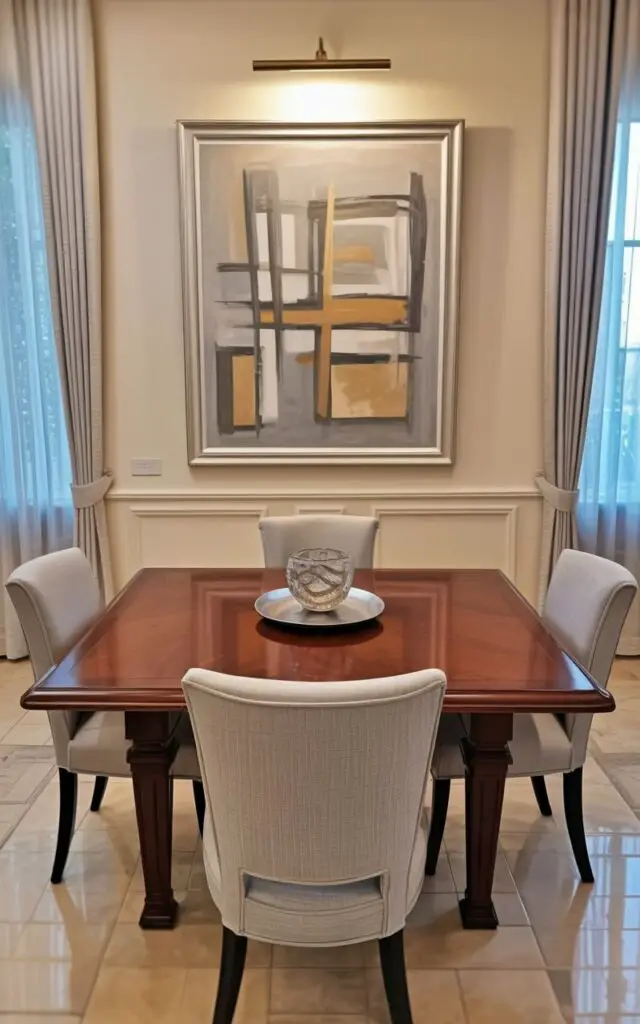
A focused picture light illuminates a large abstract painting hanging on a cream-colored wall above an empty dining table. The painting features broad strokes of gray, beige, and ochre arranged in geometric shapes. The dining table is rectangular, made of dark wood with a smooth, polished surface and is surrounded by four light gray upholstered dining chairs with slender wooden legs. The dining room has light-colored hardwood flooring and a tall window with sheer white curtains allowing soft daylight to filter into the space.

Picture lights are a thoughtful way to showcase artwork while adding another layer of light to the dining room. 

They create a focused, warm glow that feels curated and intentional. 

This type of lighting works well in traditional, transitional, or eclectic spaces. 

Picture lights also help the dining room feel more personal, drawing attention to art and décor that reflect your taste.


9. Keep It Clean With a Linear Chandelier
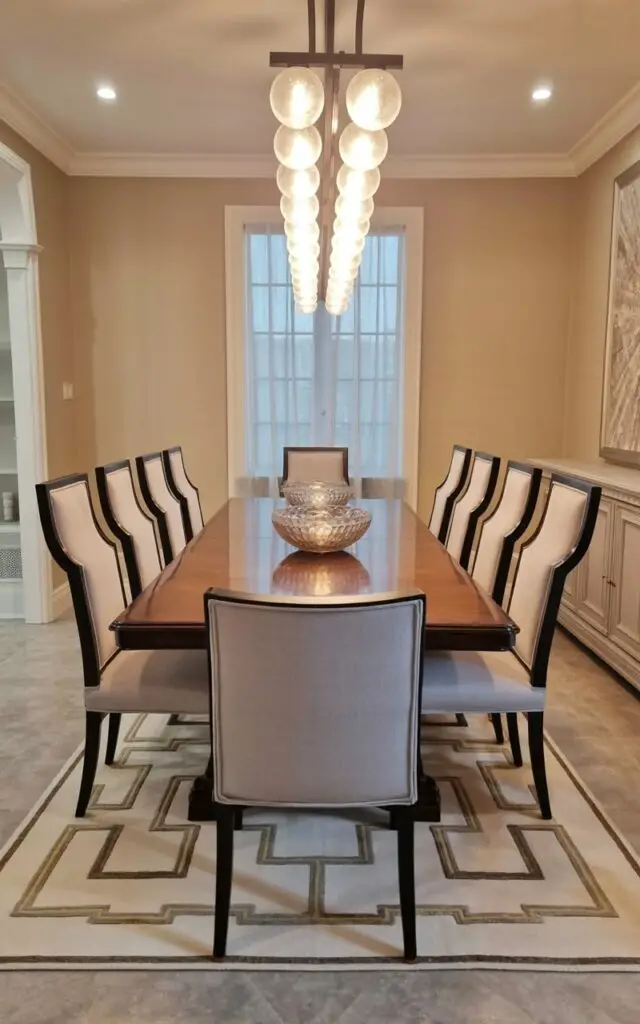
A long, rectangular chandelier with multiple frosted glass orbs hangs directly above a polished dark wood dining table. Eight upholstered dining chairs with high backs and light gray fabric are evenly spaced around the table, each with thin black metal legs. The dining room features pale beige walls and a light gray hardwood floor, with a large rectangular area rug in a geometric pattern of cream, gray, and brown beneath the table. A tall, narrow window with sheer white curtains sits against one wall, allowing soft natural light to illuminate the scene.

Linear chandeliers are a natural match for rectangular dining tables. 

Their elongated shape mirrors the table below, creating a sense of order and balance. 

These fixtures often feature clean lines and understated finishes, making them popular in modern and contemporary interiors. 

They distribute light evenly across the table, ensuring the entire dining area feels well-lit and visually cohesive.


10. Soften the Mood With Fabric Shades
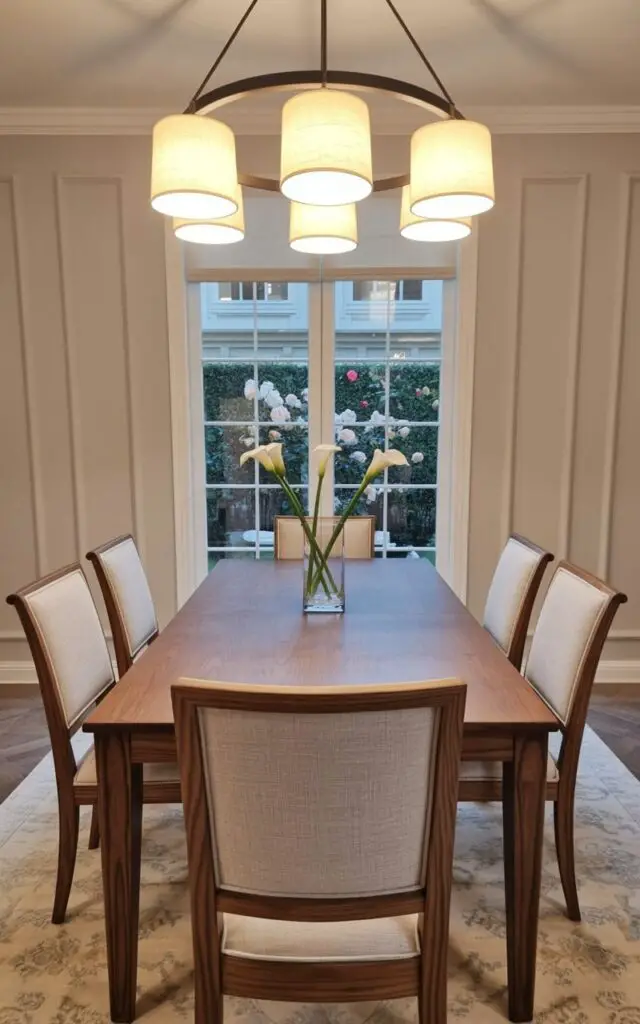
A circular dining room light fixture with three cream-colored fabric shades hangs directly above a rectangular dining table. The table is crafted from dark walnut wood and features a simple, clean design with four matching chairs upholstered in light gray linen fabric. A vase containing three white calla lilies sits at the center of the table, positioned slightly off-center. The room has light gray walls with subtle vertical paneling, and a large window reveals a garden with neatly trimmed hedges and blossoming rose bushes beyond.

Lighting with fabric shades brings a gentle, diffused glow that instantly softens a dining room. 

Fabric shades reduce glare and make the space feel more comfortable, especially during long meals. 

Linen and neutral-toned fabrics are particularly popular because they pair easily with many styles. 

This type of lighting is ideal for dining rooms that feel too stark or overly formal.


11. Add Drama With a Black Fixture
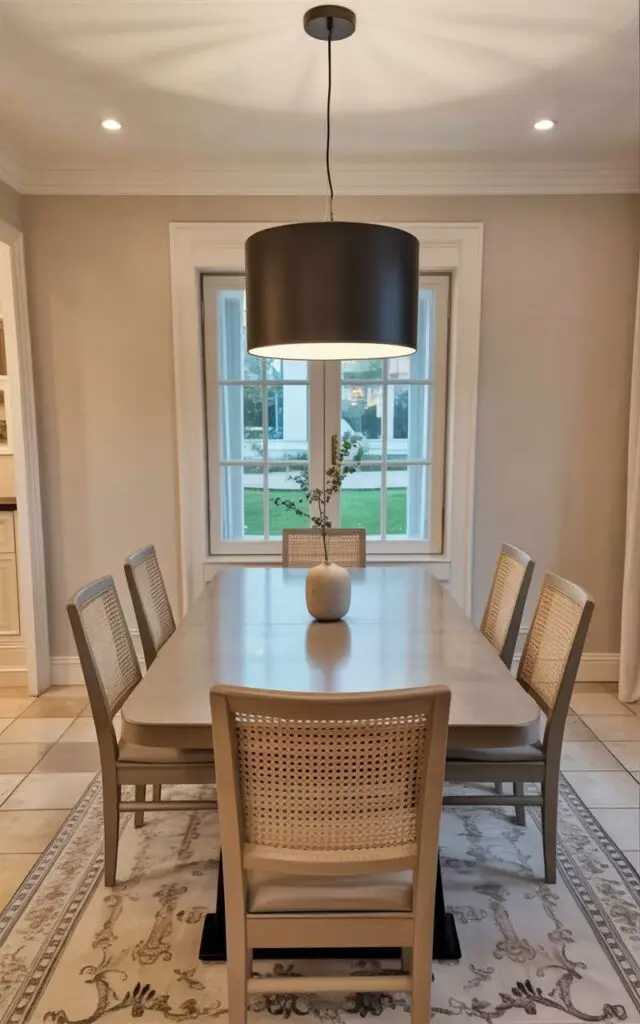
A black, cylindrical light fixture with a matte finish hangs from the ceiling on a thin metal cable, positioned directly above a rectangular dining table. The table is made of light-colored wood with a smooth surface, and four identical dining chairs with woven fabric seats are arranged around it. The room features light-toned wooden flooring and walls painted a soft beige color, with a large window showing a glimpse of a green lawn and distant trees. A simple, minimalist vase with a single sprig of greenery sits on the center of the table, adding a subtle touch of life to the otherwise uncluttered space.

Black lighting fixtures add contrast and grounding to a dining room without feeling overdone. 

They work especially well in spaces with lighter walls or neutral color palettes. 

A black chandelier or pendant introduces structure and definition while still feeling timeless. 

This choice adds just enough drama to elevate the room without overpowering the dining table or surrounding décor.


12. Use Glass Fixtures for an Airy Feel
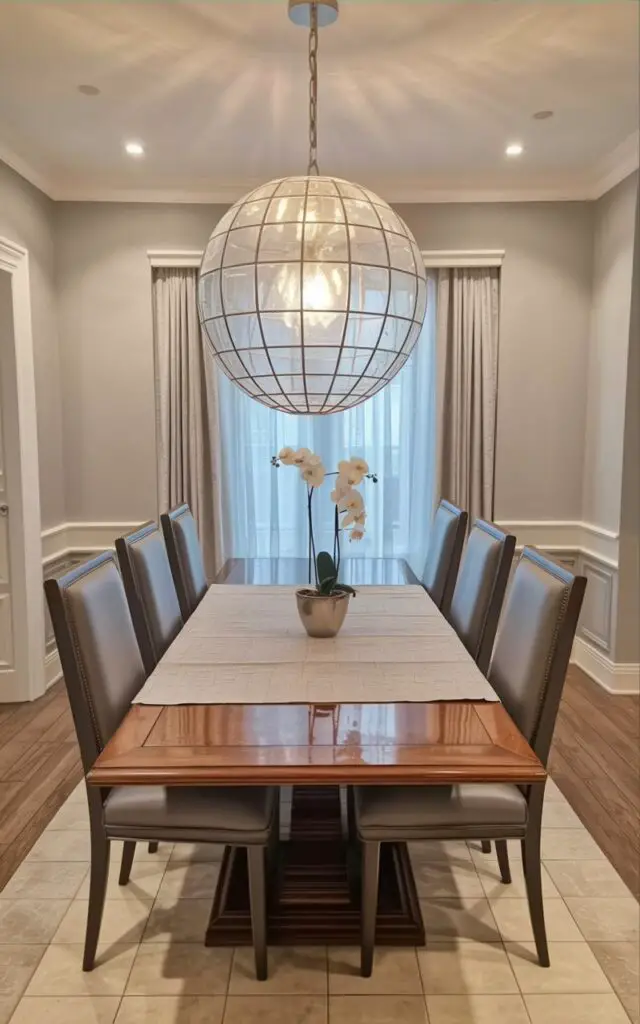
A spherical glass dining room light fixture hangs suspended above a rectangular dining table with a polished walnut surface and tapered, dark gray upholstered chairs positioned around its perimeter. The glass panels of the light are subtly etched with a geometric pattern of intersecting lines allowing diffused light to pass through. The dining table is set with a simple linen tablecloth in a light beige color and a single, low vase containing three white orchids. The room features light gray walls with recessed lighting and wide-planked hardwood floors, and a large window with sheer white curtains allows soft natural light to fill the space.

Glass fixtures are a smart choice for dining rooms that need light without visual heaviness. 

Clear or lightly tinted glass allows light to pass through freely, helping the room feel more open. 

This makes glass pendants and chandeliers especially useful in smaller dining rooms. 

They blend easily with different styles while keeping the focus on the table and surrounding design elements.


13. Create Ambiance With Dimmer Switches

Dimmer switches are one of the most important yet overlooked elements of dining room lighting. 

They allow you to adjust brightness depending on the occasion, making the space more flexible and comfortable. 

From casual breakfasts to evening dinners, dimmers help set the right tone. 

They also extend bulb life and make every lighting choice feel more intentional and user-friendly.


14. Play With Mixed Metals
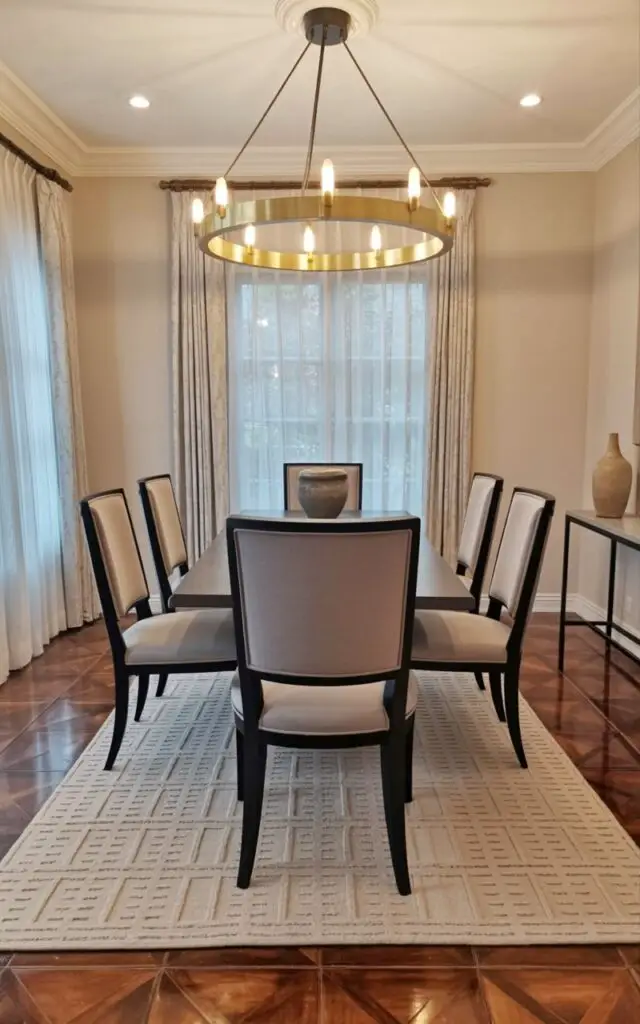
A circular dining room light fixture with a brass central ring and a black metal frame hangs suspended from the ceiling above a rectangular dining table. Six upholstered dining chairs, each with a dark gray fabric and slender black legs, are evenly spaced around the table's perimeter. A textured area rug with a subtle geometric pattern in neutral tones lies beneath the table, anchoring the furniture arrangement within the room. Large windows with sheer white curtains allow soft daylight to filter into the space, illuminating the polished hardwood floors and a minimalist console table with a ceramic vase placed against one wall.

Mixed-metal lighting adds depth and a lived-in feel to a dining room. 

Combining finishes like brass, black, and chrome can help tie together different elements in the space. 

The key is balance—letting one finish lead while others support. 

Mixed metals prevent the room from feeling too matched, giving it a layered, thoughtful look that feels naturally collected over time.


15. Install Multiple Light Sources
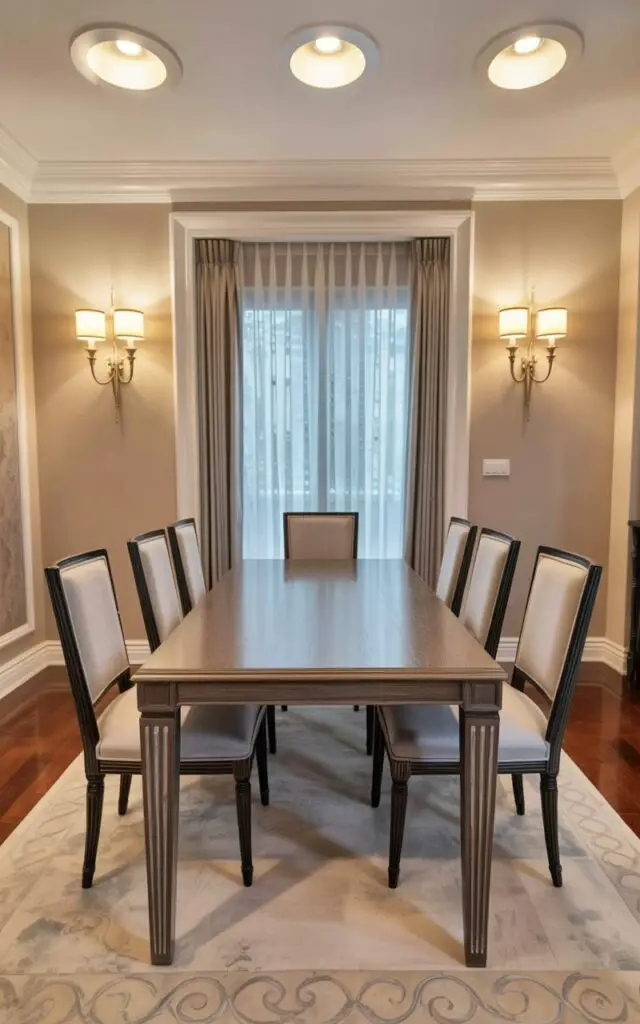
An empty, rectangular dining table with a dark wood grain finish sits centered within a well-decorated dining room. Six matching dining chairs upholstered in a light gray fabric are arranged around the table, each featuring a slender, black metal frame and slightly curved backrests. Three recessed ceiling lights with brushed nickel fixtures provide overhead illumination, while two sconces with frosted glass shades are mounted on the walls flanking the table. A large window with sheer white curtains allows natural light to filter into the room, revealing hardwood floors and a neutral-colored wall with subtle texture.

Using more than one type of light source makes a dining room feel complete and adaptable. 

Combining a main fixture with sconces, recessed lights, or accent lighting allows you to control both function and mood. 

This approach ensures the room works well throughout the day and evening. 

Multiple light sources create depth, comfort, and a sense of intentional design without exaggeration.


16. Choose LED Lighting for Everyday Efficiency
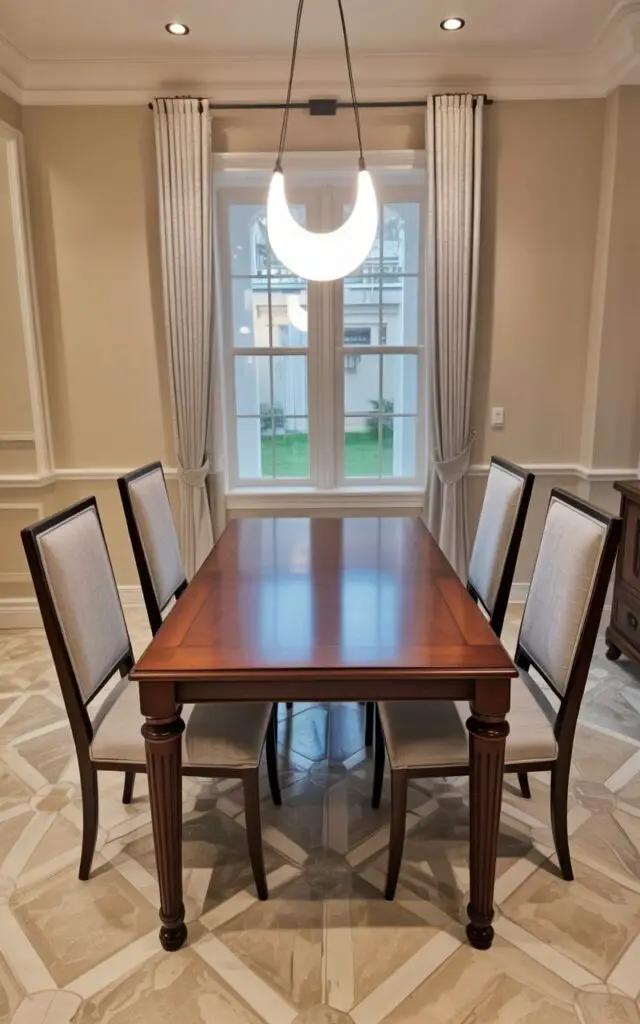
An LED bulb hangs from the ceiling, emitting a soft, warm light that illuminates the surrounding area. Below the light, a rectangular dining table made of polished dark wood sits centered in the room, accompanied by four identical dining chairs upholstered in a light gray linen fabric. The table is bare, displaying the natural grain of the wood, while the chairs are neatly arranged around its perimeter. The dining room features pale beige walls and a light oak wood floor, with a large window showing a glimpse of a green lawn outside.

LED lighting has become a practical standard for dining rooms, offering reliable performance without drawing attention to itself. 

Modern LED bulbs now provide warm, natural light that feels comfortable rather than harsh. 

They work well in chandeliers, pendants, recessed lights, and wall sconces alike. 

Beyond energy savings, LEDs are low-maintenance and long-lasting, making them ideal for dining spaces where lights are used frequently throughout the day and evening.


17. Highlight Architectural Features With Light
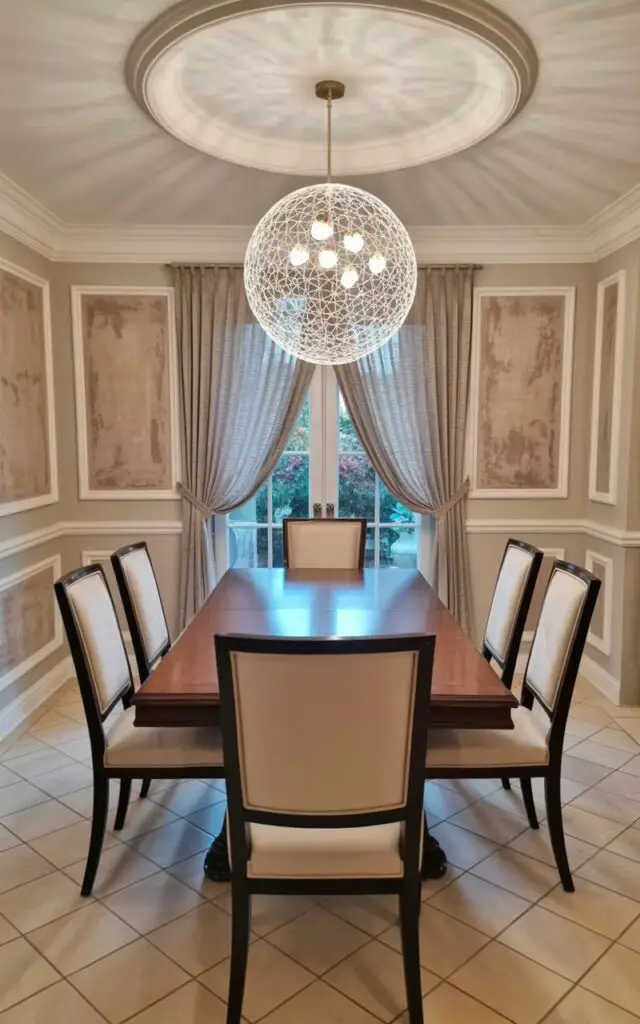
A spherical dining room light fixture hangs from a sculpted ceiling, casting a soft glow downwards. The light illuminates an empty, rectangular dining table made of polished dark wood, surrounded by six upholstered dining chairs with slender, tapered legs. The walls feature a textured plaster finish with subtle variations in tone and a decorative molding detail running horizontally along the perimeter. A large window with sheer linen curtains allows diffused natural light to enter, complementing the artificial illumination and revealing a glimpse of an outdoor garden beyond.

Lighting can quietly emphasize architectural details that might otherwise go unnoticed. 

Recessed lights, subtle uplighting, or directional fixtures can bring attention to ceiling beams, moldings, or textured walls. 

This approach adds depth without introducing new décor elements. 

In dining rooms, highlighting architecture helps the space feel more intentional and thoughtfully designed, especially in homes with traditional details or custom-built features worth showcasing.


18. Use Adjustable Hanging Heights
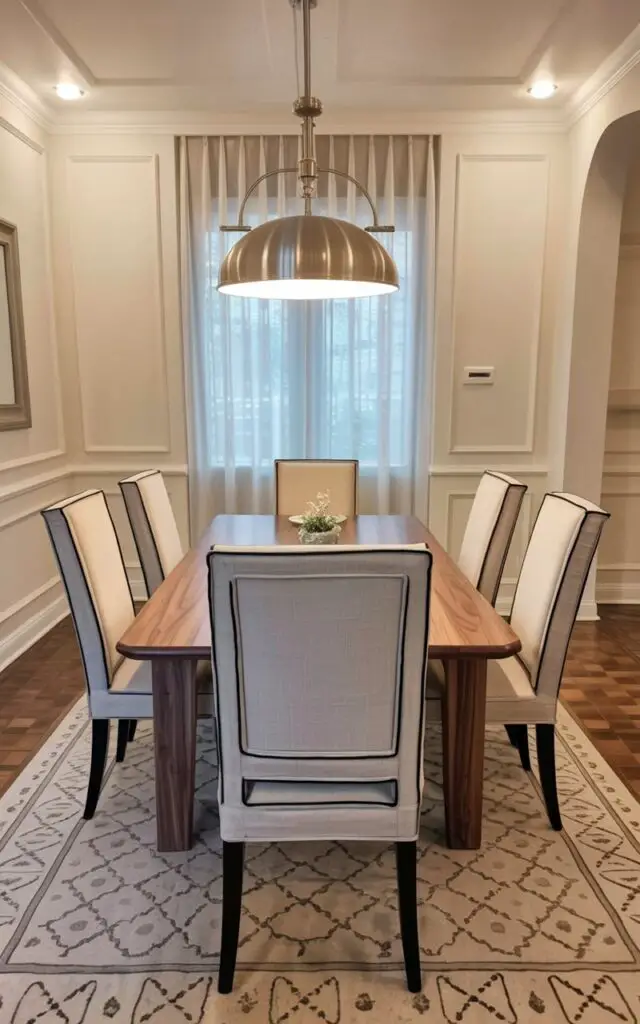
An adjustable dining room light with a brushed nickel finish hangs directly above a rectangular dining table made of dark walnut wood. Six upholstered dining chairs with light gray linen fabric and slender black legs are arranged around the table, spaced evenly apart. The room's walls are painted a soft off-white color and feature subtle crown molding near the ceiling, while a large window with sheer white curtains allows diffused natural light to enter. A patterned area rug with a geometric design in shades of gray and beige lies beneath the table, anchoring the furniture arrangement within the space.

Adjustable lighting fixtures add flexibility that’s surprisingly useful in dining rooms. 

Being able to raise or lower a chandelier or pendant ensures proper clearance above the table and adapts easily if furniture changes. 

This is especially helpful in multi-purpose dining areas or open layouts. 

Adjustable fixtures keep lighting comfortable and visually balanced, preventing it from feeling either too dominant or too distant from the dining surface.


19. Bring in Natural Materials
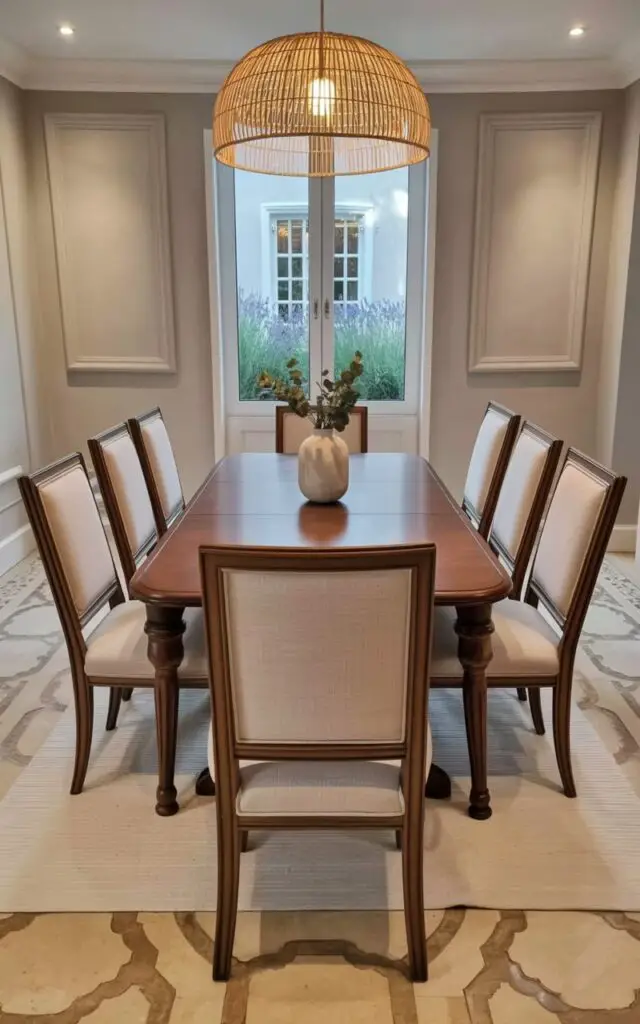
A dining room light fixture, crafted from woven rattan, hangs centered above a rectangular dining table made of polished walnut. Six upholstered dining chairs with linen cushions in a soft beige color are arranged around the table, each positioned equidistant from one another. The dining room features pale gray walls with a single, large window revealing a garden filled with lavender bushes and tall grasses beyond. A simple, cream-colored rug lies beneath the table, grounding the space while a single vase holding a sprig of eucalyptus sits on the table's surface.

Lighting fixtures made from natural materials like wood, rattan, or woven fibers bring warmth and texture into the dining room. 

These materials soften the overall look and pair well with wood tables and neutral color palettes. 

Natural-material lighting works especially well in casual, farmhouse, or coastal-style dining rooms. 

It adds character without overpowering the space, making the room feel comfortable and lived-in.


20. Go Bold With Oversized Fixtures
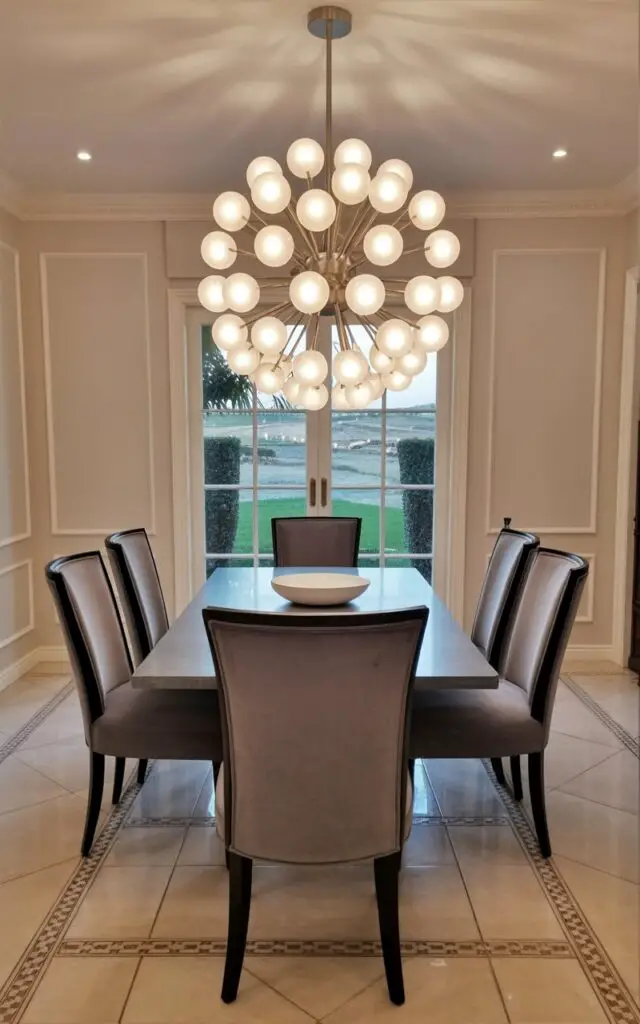
A large, spherical dining room light fixture with a brushed nickel finish hangs directly above a rectangular dining table. The fixture’s surface is composed of interconnected, frosted glass orbs radiating outward from a central core. Six dark grey upholstered dining chairs are evenly spaced around the table, each with a gently curved back and thin, polished wooden legs. The room features light beige walls with subtle crown molding and a large window showing a manicured lawn with neatly trimmed hedges and a distant view of rolling hills.

Oversized light fixtures can work beautifully in dining rooms when chosen thoughtfully. 

A larger chandelier or pendant creates a strong focal point and helps define the dining area, especially in open floor plans. 

The key is proportion—pairing a bold fixture with a table that can visually support it. 

When balanced correctly, oversized lighting feels confident and purposeful rather than overwhelming.


21. Use Candle-Style Lighting for Soft Ambiance
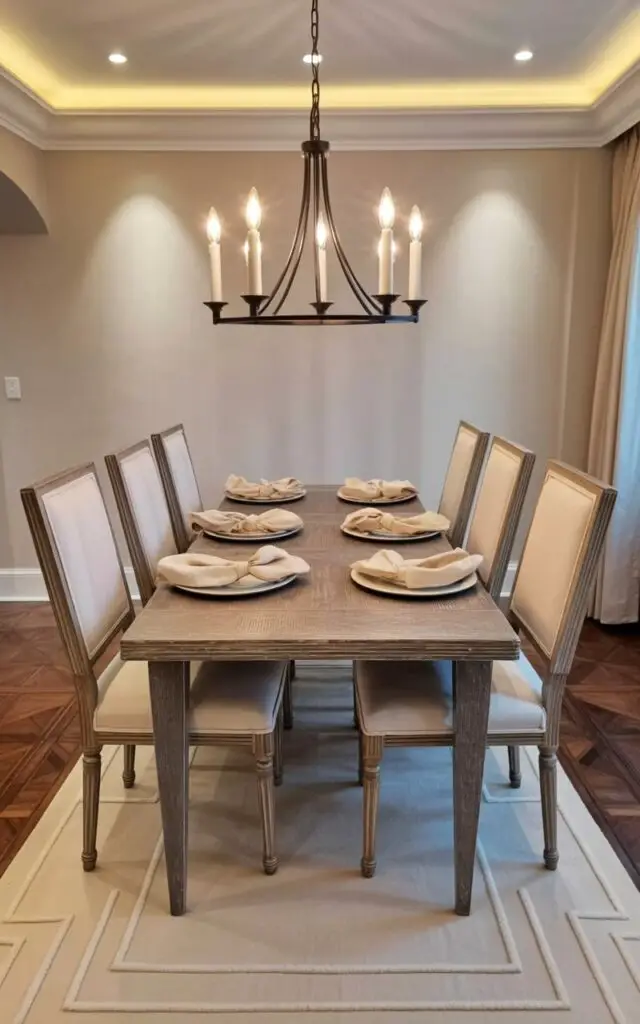
A chandelier with six candle-style bulbs hangs directly above a rectangular dining table with a dark wood grain finish and tapered legs. Six upholstered dining chairs with a light gray fabric and thin wooden frames are arranged around the table, facing inwards. The table is set with cream-colored linen napkins and simple ceramic plates with a subtle ridged texture. A pale beige rug with a geometric pattern lies on the hardwood floor beneath the table, and the walls are painted a soft neutral color with recessed lighting along the ceiling perimeter.

Candle-style lighting brings a warm, familiar glow that feels especially suited to dining spaces. 

Often used in chandeliers and wall sconces, these fixtures create gentle light without harsh brightness. 

They’re ideal for traditional or transitional dining rooms and help set a relaxed mood for meals. 

Candle-style lights add charm and warmth while keeping the overall lighting approach simple and timeless.


22. Match Lighting to the Table Shape
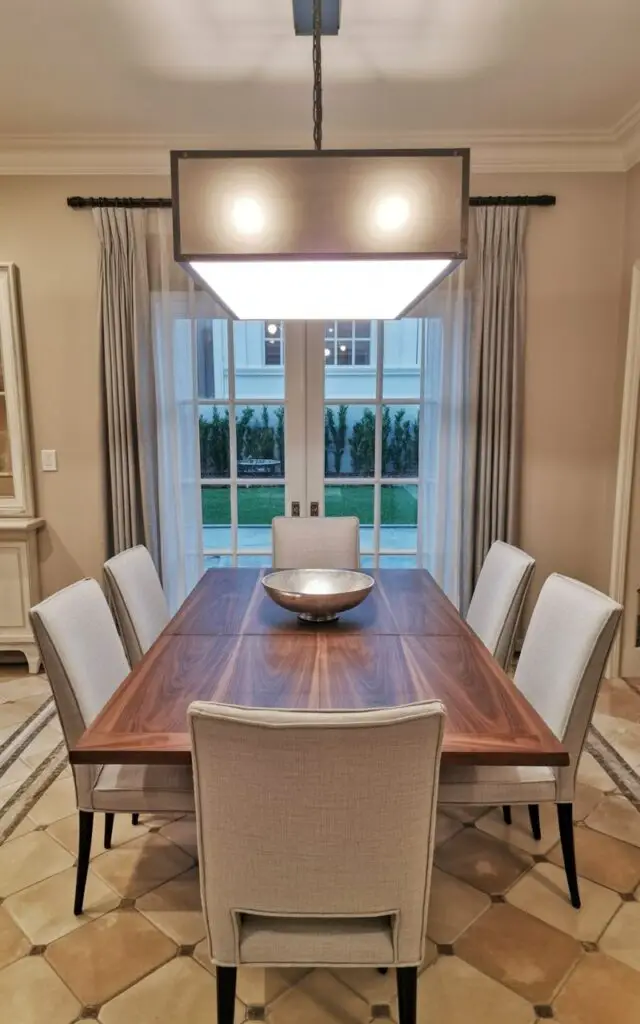
A rectangular light fixture with a matte silver finish hangs directly above a dining table with a dark walnut wood surface. The fixture’s edges are flush and its surface reflects the light softly across the table's surface. Six dining chairs with light gray linen upholstery and slender black metal legs surround the table. The dining room features light beige walls and a large window with sheer white curtains offering a view of a manicured lawn with neatly trimmed hedges.

Choosing lighting that complements your dining table’s shape helps the room feel more visually balanced. 

Round tables pair naturally with round chandeliers or globe pendants, while rectangular tables benefit from linear fixtures or multiple pendants. 

This alignment ensures even lighting across the table and keeps the space feeling cohesive. 

It’s a subtle detail that makes a noticeable difference in overall design.


23. Finish With Accent and Task Lighting
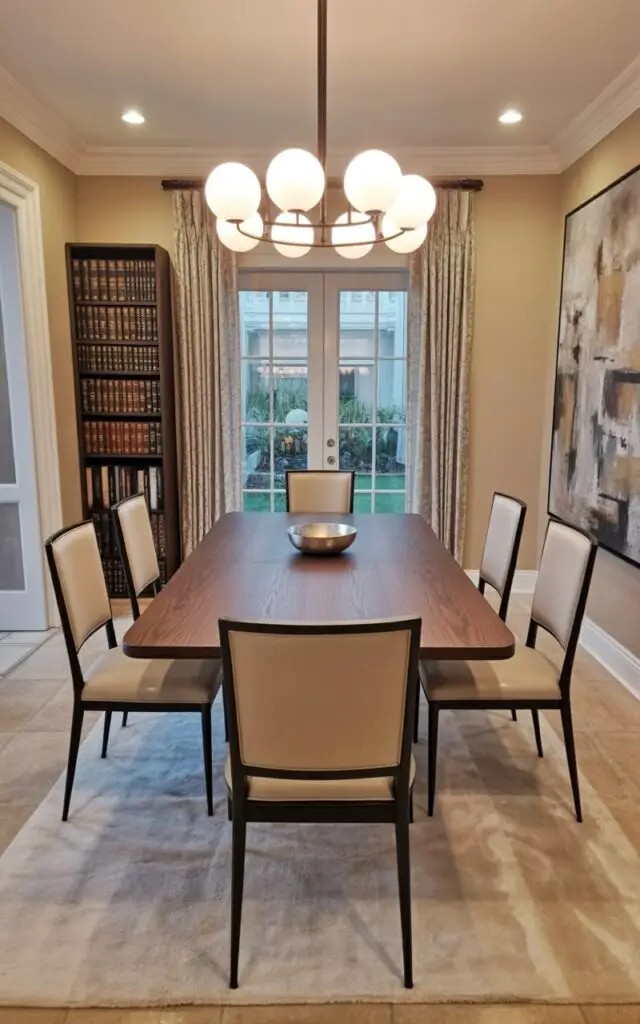
An empty dining table made of dark walnut wood sits centered in a well-lit dining room, surrounded by six upholstered dining chairs with slender black metal legs. A sleek, modern chandelier with frosted glass orbs hangs directly above the table, casting soft light downwards, while recessed lighting fixtures are positioned around the perimeter of the room. A large abstract painting with shades of gray and beige hangs on the far wall, and a tall, narrow bookshelf filled with leather-bound books stands against the wall to the left of the table. The floor is covered with a plush cream-colored rug, and sheer linen curtains hang over the large windows overlooking a manicured garden.

Accent and task lighting complete the dining room by adding function where it’s needed most. 

Table lamps on a buffet, picture lights over artwork, or small recessed lights near storage areas all contribute to a well-lit space. 

These layers prevent the room from relying solely on overhead lighting. 

The result is a dining room that feels comfortable, adaptable, and thoughtfully finished.

Dining Room Lighting Ideas

Similar Posts