25 Japandi Dining Room Ideas to Create a Peaceful Retreat
Japandi Dining Room Ideas - Guyo's Guide

I used to think a dining room had to be either cozy or stylish—you couldn’t really have both.

For the longest time, mine felt cluttered with too many chairs, heavy furniture, and not enough breathing room. It never felt like a place to relax.

Then I discovered Japandi style—the calm mix of Japanese minimalism and Scandinavian warmth. With a few changes, my dining room went from crowded to calming, and now it feels like a space I actually want to linger in.

These Japandi dining room ideas prove that less really can be more—without losing comfort or charm.

Let’s dive in!


1. Choose a Solid Wood Dining Table
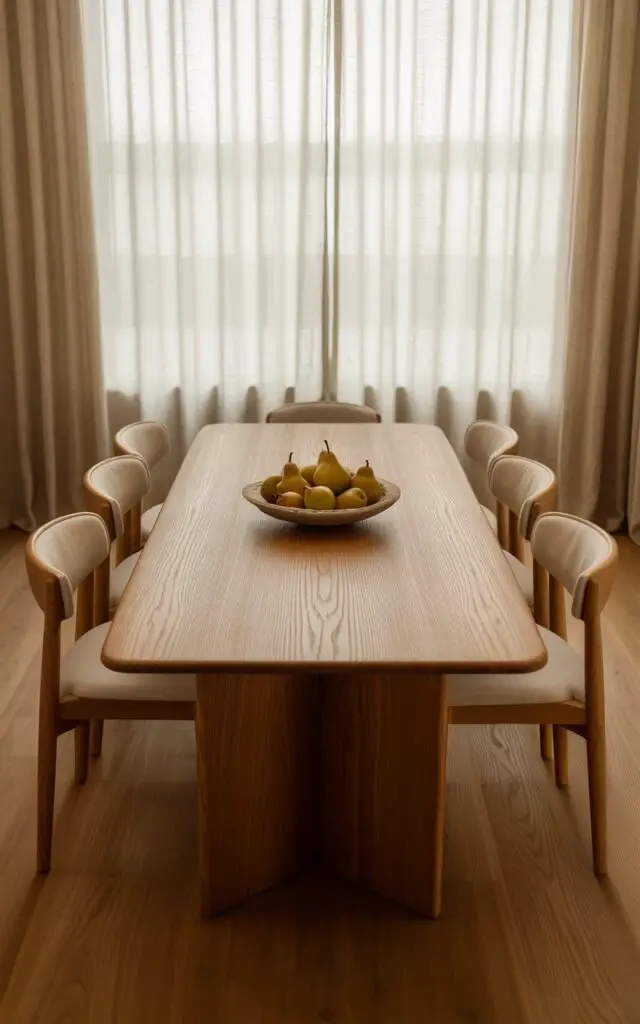
A photograph of a Japandi-style dining room centered around a beautifully designed oak dining table. The table features a smooth matte finish that emphasizes the natural wood grain, and is set with six simple, elegant chairs upholstered in soft beige linen, arranged neatly around its surface. A handmade ceramic bowl filled with ripe, golden pears sits at the table's center, illuminated by the gentle, diffused light filtering through linen curtains drawn across a large window. The pale wood flooring and minimalist décor create a calm, inviting space, bathed in a warm and tranquil glow.

If Japandi design had a throne, it would be the dining table. 

Go for solid wood—oak, ash, or walnut—with clean, low-profile lines. 

Skip shiny finishes and stick with matte or natural tones that let the grain shine through. 

The table should feel grounded, timeless, and effortlessly welcoming.


2. Pair with Mismatched Chairs
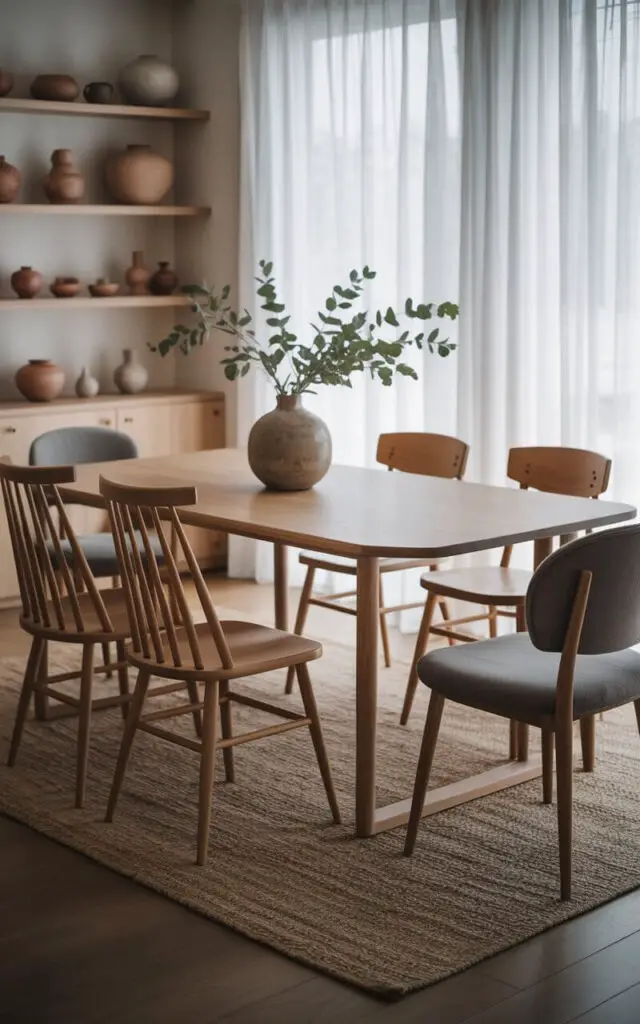
A photograph of a Japandi dining room, showcasing a beautifully styled dining table as the central focus. The table is crafted from light-toned wood with a minimalist design, surrounded by mismatched chairs – spindle-back wooden chairs in light oak on one side and comfortable, muted gray upholstered chairs on the other, creating a balanced aesthetic. A large, neutral woven rug anchors the space, while minimalist shelves in the background display a collection of unique pottery and a ceramic vase filled with delicate eucalyptus branches, all bathed in soft, diffused natural light streaming through sheer curtains. The room exudes a sense of calm and understated elegance, perfectly embodying the Japandi design philosophy.

Forget matchy-matchy. Japandi thrives on subtle contrast. 

Try pairing sleek wooden chairs with simple upholstered seats in muted fabrics. 

It keeps the room balanced yet dynamic. Think spindle-backs beside linen cushions—different, but harmonious. 

It’s the design equivalent of mixing tea and coffee: surprisingly refreshing when blended right.


3. Add a Statement Pendant Light
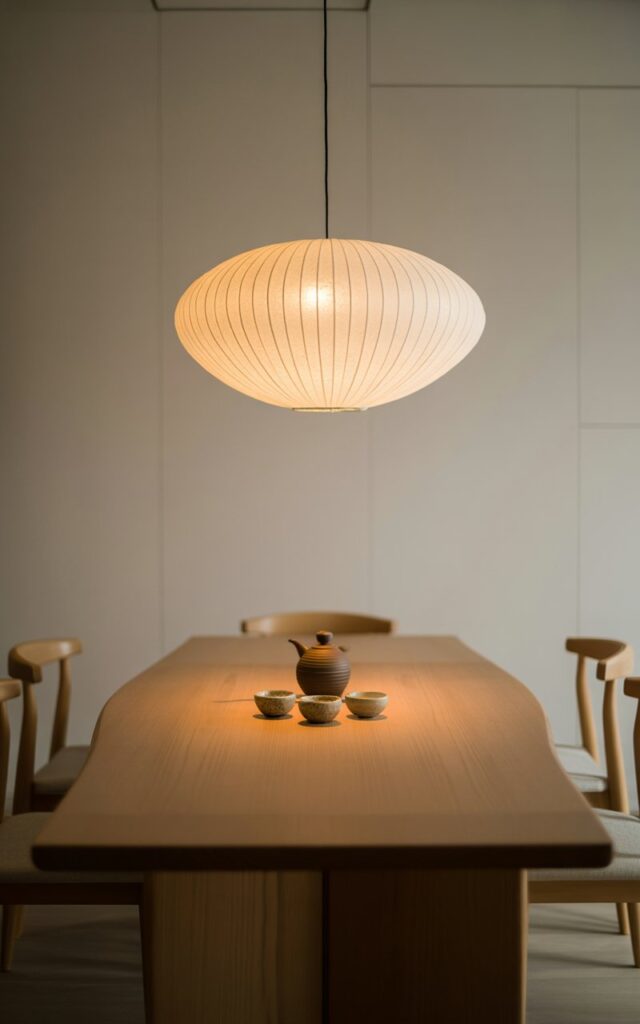
A photograph of a minimalist Japandi dining room, with a beautifully crafted wooden dining table as the central focus. The table showcases a single ceramic teapot and three small, textured bowls arranged neatly in the center, all bathed in the soft glow of a large, white paper pendant light suspended above, shaped like a traditional Japanese lantern. Slim, light-toned wooden chairs are positioned around the table, and the room's walls are painted a serene off-white, complemented by subtle textures and “Zen Garden” art pieces placed strategically to enhance the sense of calm. The scene is illuminated by the pendant light, creating a warm, inviting atmosphere that emphasizes the room's clean lines and uncluttered aesthetic.

Lighting can make or break a dining room. 

A single oversized pendant—paper lantern, rattan weave, or matte ceramic—creates intimacy and focus. 

Hang it low over the table for that cozy, dinner-party glow. 

It’s minimal, sculptural, and quietly dramatic—the perfect Japandi finishing touch for shared meals.


4. Layer Soft Neutrals
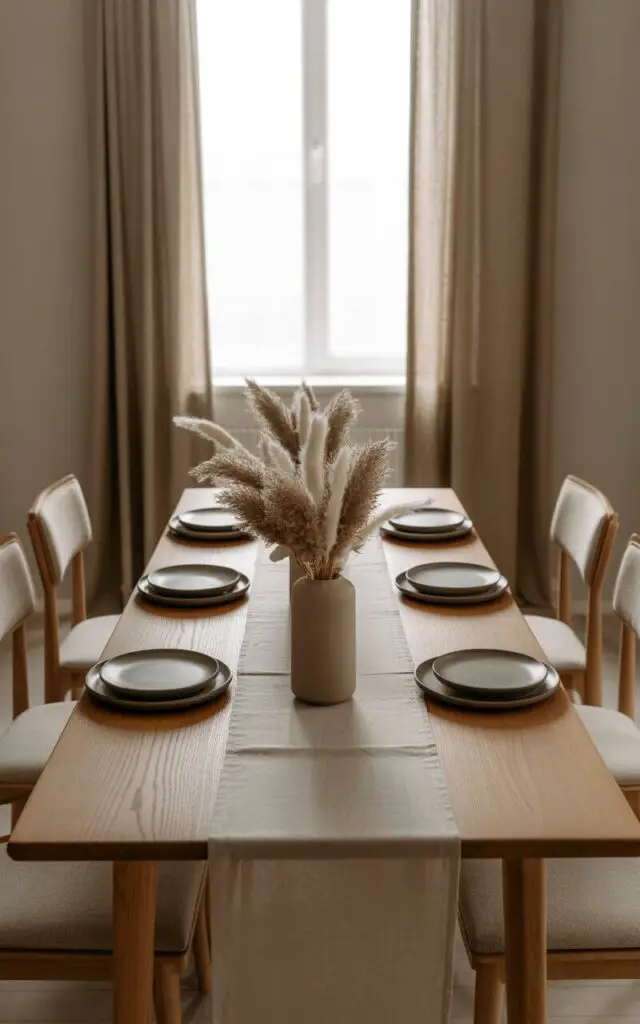
A photograph of a beautifully set Japandi dining table, centered within a serene dining room. The table, crafted from pale oak, is adorned with a linen runner and features muted ceramic plates arranged neatly for a formal dinner, accompanied by a low centerpiece of dried pampas grass in a matte, cylindrical vase. Stone-gray walls and taupe linen curtains frame the scene, while light streams in through a nearby window, softly illuminating the beige, ivory, and gray tones of the room and highlighting the linen seats of the matching chairs. The overall effect is one of understated elegance and tranquil balance, creating a soothing atmosphere.

Color in Japandi isn’t loud—it whispers. 

Use soft neutrals like ivory, beige, taupe, or pale gray, and layer them in subtle ways. 

The magic happens in the interplay of tones: a stone-gray wall, oak table, linen napkins. 

Suddenly, you’ve got a room that feels calm yet textured.


5. Embrace Minimalist Storage
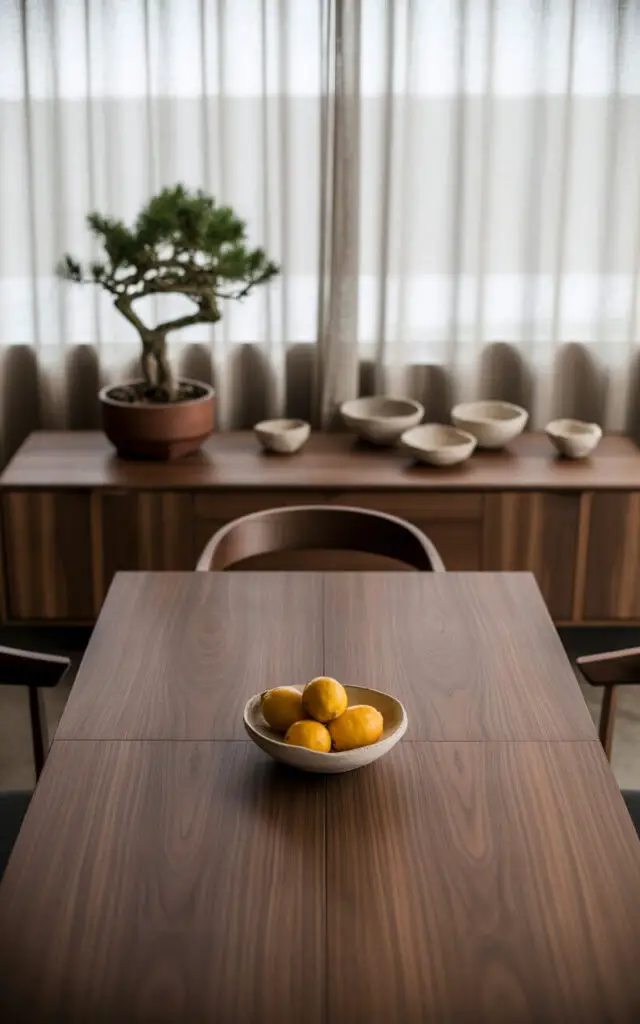
A photograph of a minimalist Japandi dining room, focusing on a beautifully designed walnut dining table and chairs. The table is set with two sleek chairs, and centered on the table is a single, delicate ceramic bowl filled with fresh lemons, subtly showcasing “minimalism”. Opposite the table, a low wooden sideboard displays a small bonsai tree in a terracotta pot and a curated selection of handmade ceramic bowls, arranged with intentional spacing. Soft, natural light filters through a sheer linen curtain, casting a calming glow and highlighting the room’s clean lines and understated elegance.

No clutter allowed—Japandi demands it. 

Choose low wooden sideboards, floating cabinets, or slim shelving that blends into the space. 

Think practicality meets beauty: bowls and ceramics on display, the rest hidden. 

Storage should feel intentional, not like an afterthought, keeping your dining area serene and distraction-free.


6. Introduce Natural Textiles
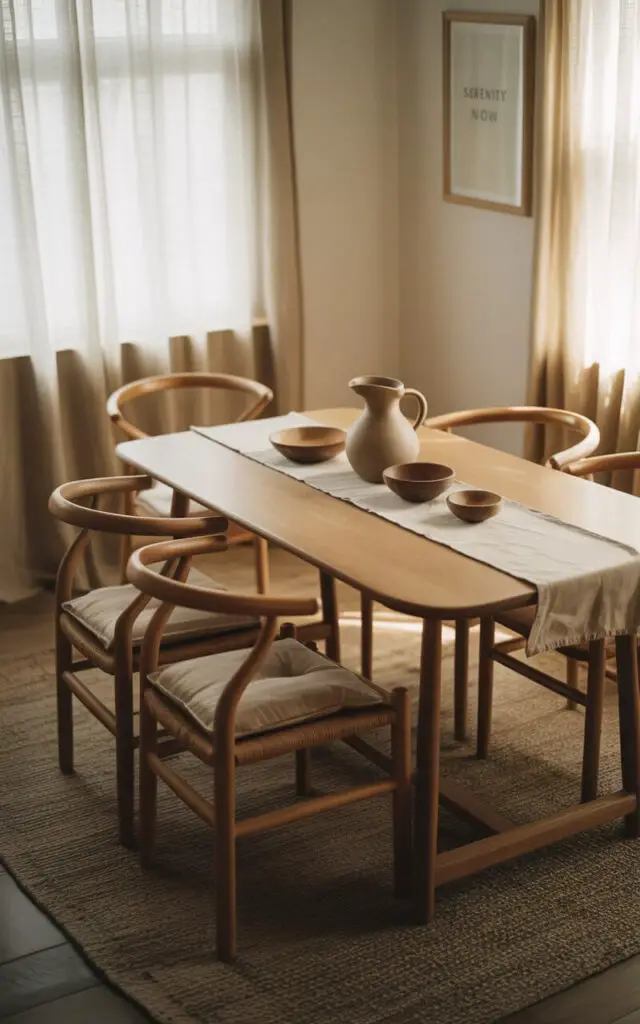
A photograph of a serene Japandi dining room, emphasizing the elegant simplicity of the space. A beautifully designed dining table with six ash wood chairs sits centered in the room, featuring linen seat cushions in earthy sand tones and a linen runner adorned with a ceramic pitcher and three wooden bowls. Soft light filters through cotton drapes at the windows, illuminating a handwoven wool rug beneath the table and highlighting the texture of the natural fabrics, creating a cozy and minimalist atmosphere. A small, framed print on the wall reads "serenity now" adding a subtle decorative touch.

Wood may be the star, but textiles add the softness. 

Think linen runners, cotton curtains, or wool seat cushions. Stick to earthy shades that echo nature—sand, clay, soft gray. 

Natural fabrics bring warmth without breaking the Japandi rule of restraint. 

It’s cozy minimalism, woven right into your dining space.


7. Keep the Table Setting Simple
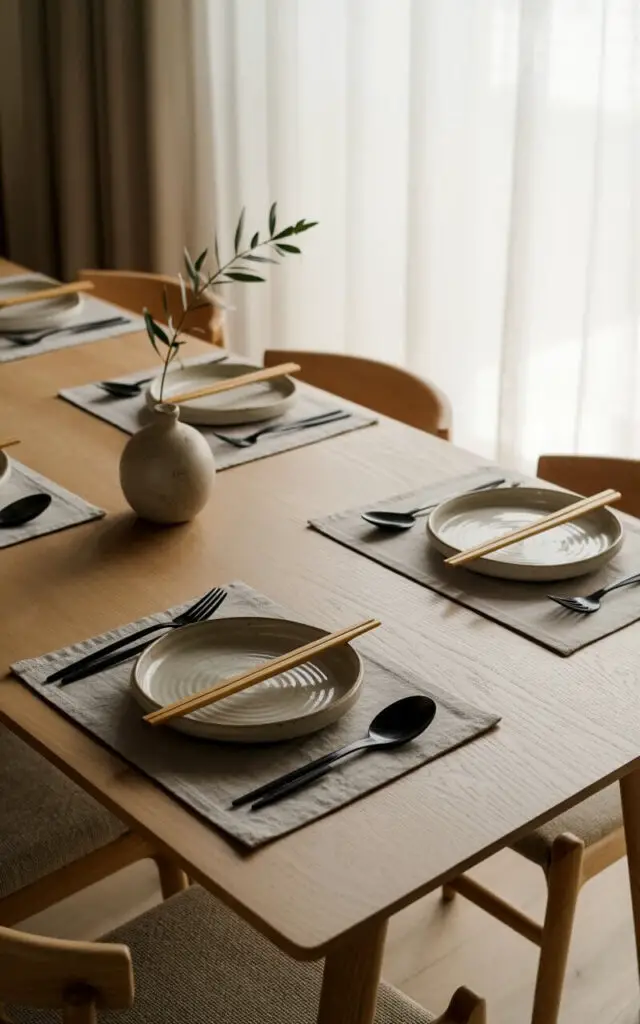
A photograph of a minimalist Japandi dining room showcasing a beautifully set table as the focal point. The dining table, crafted from light ash wood, is adorned with linen placemats, matte black flatware, and handmade ceramic plates featuring subtle organic textures, with wooden chopsticks carefully placed across the plates. A small ceramic vase with a single sprig of olive branch adds a touch of understated elegance, while pale oak chairs are neatly arranged around the table. Soft, natural light streams through a sheer linen curtain, creating a tranquil and inviting atmosphere.

No need for a five-course setup. 

Japandi table styling is about restraint and elegance. Use handmade ceramic plates, wooden chopsticks, and matte flatware. 

Add a linen placemat or a single sprig of greenery. 

It’s not about showing off; it’s about slowing down and savoring meals in style.


8. Add a Touch of Black
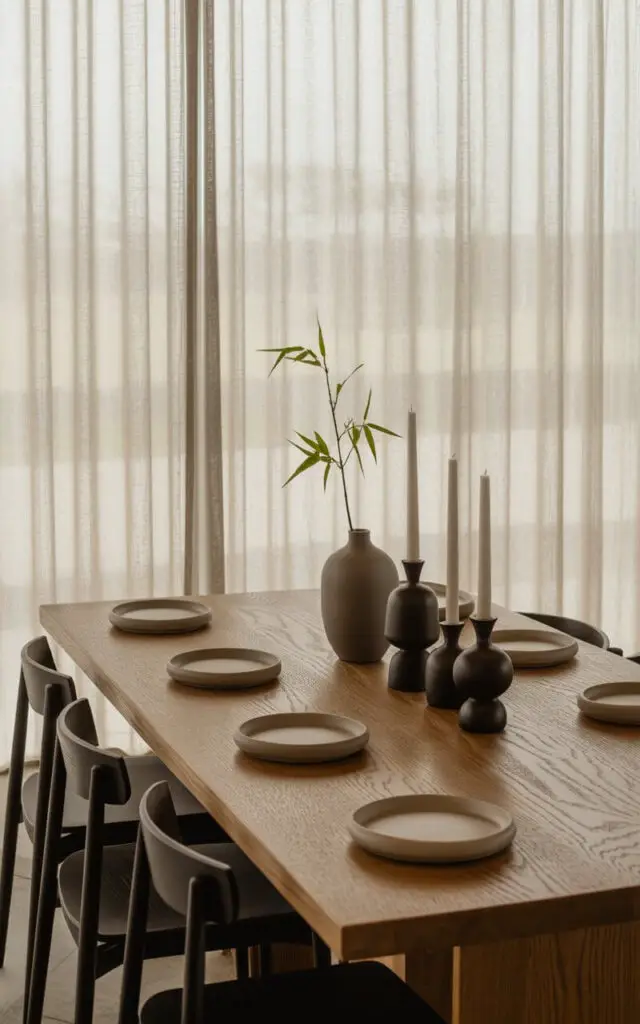
A photograph of a meticulously arranged Japandi-style dining table as the focal point of a serene dining room. The warm oak table features a minimalist centerpiece composed of sleek black ceramic candleholders, a charcoal-gray vase holding a single sprig of bamboo, and a collection of neutral stoneware plates. Slim, matte black metal chairs are neatly positioned around the table, their clean lines providing a subtle contrast to the wood’s natural warmth. Soft, diffused natural light streams through sheer linen curtains, casting gentle shadows and highlighting the room’s harmonious blend of textures and colors.

Every Japandi dining room needs a grounding note, and black delivers it. 

Add just a dash—a slim chair frame, a matte vase, or simple candleholders. 

Too much feels harsh, but a little goes a long way in anchoring the space and making all those soft neutrals pop.


9. Use Sliding Doors or Screens
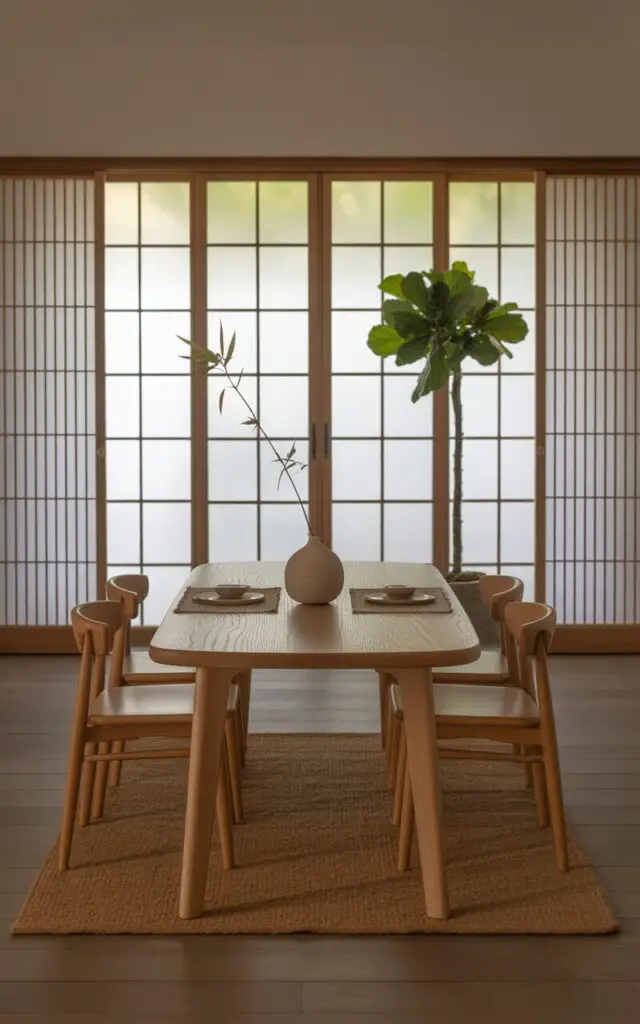
A photograph of a minimalist Japandi dining room, centered around a beautifully crafted pale wood dining table and chairs. The table is set with a single, understated ceramic vase holding a sprig of bamboo, and two placemats are neatly arranged. Behind the table, sliding shoji-inspired doors with frosted glass panels diffuse soft natural light, revealing a glimpse of a tranquil, Zen-inspired garden beyond, while a tall fiddle-leaf fig tree sits elegantly in the corner, anchored by a simple woven rug beneath the table. The room exudes a sense of calm functionality, where every detail feels deliberately placed and in harmony with Japandi design principles.

Sliding doors aren’t just practical—they’re sculptural. 

Inspired by Japanese shoji screens, they let light filter in softly while saving space. 

Perfect for small dining rooms or homes that love an open flow. 

Choose light wood frames or frosted glass for privacy without sacrificing that airy Japandi feel.


10. Incorporate Indoor Greenery
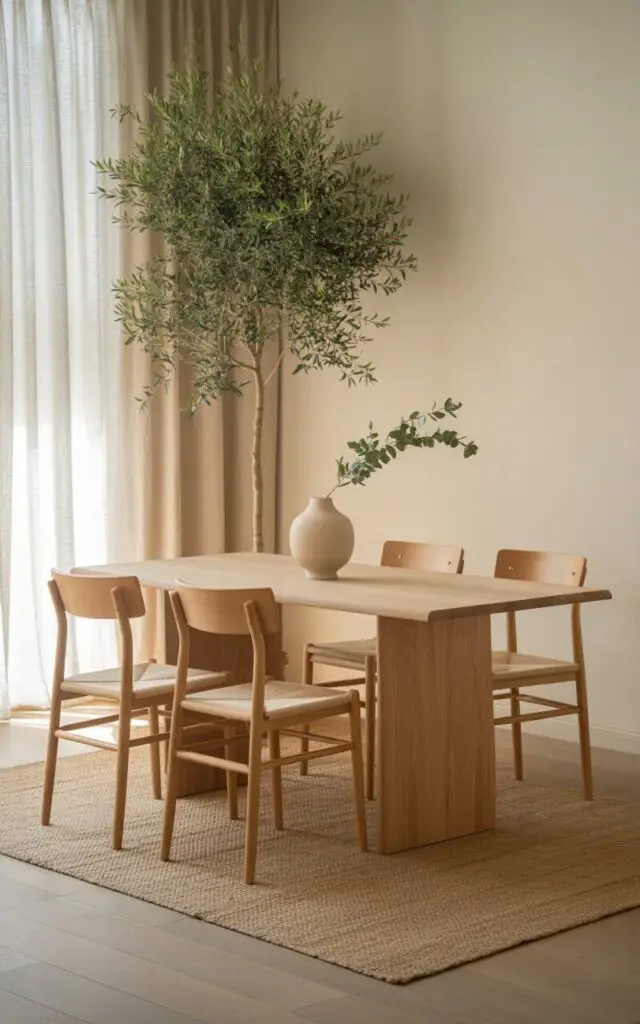
A photograph of a Japandi dining room bathed in soft, natural light, showcasing a minimalist aesthetic. At the center stands a beautifully designed dining table crafted from light oak, accompanied by four light wood chairs with clean, simple lines, and a single ceramic vase holding a delicate eucalyptus branch. A tall olive tree stands in the corner, complementing neutral linen curtains and a textured jute rug; the walls are a calming shade of cream, and a subtle pattern is visible in the wooden flooring. The scene exudes tranquility and organic elegance, emphasizing the harmonious blend of Scandinavian restraint and Japanese serenity.

Japandi plants aren’t jungly—think calm, sculptural greenery. 

A bonsai on the sideboard, a tall olive tree in the corner, or a eucalyptus branch in a ceramic vase. 

They bring life without chaos. It’s about appreciating nature in its purest form: simple, intentional, and beautifully understated.


11. Opt for Low Seating Options
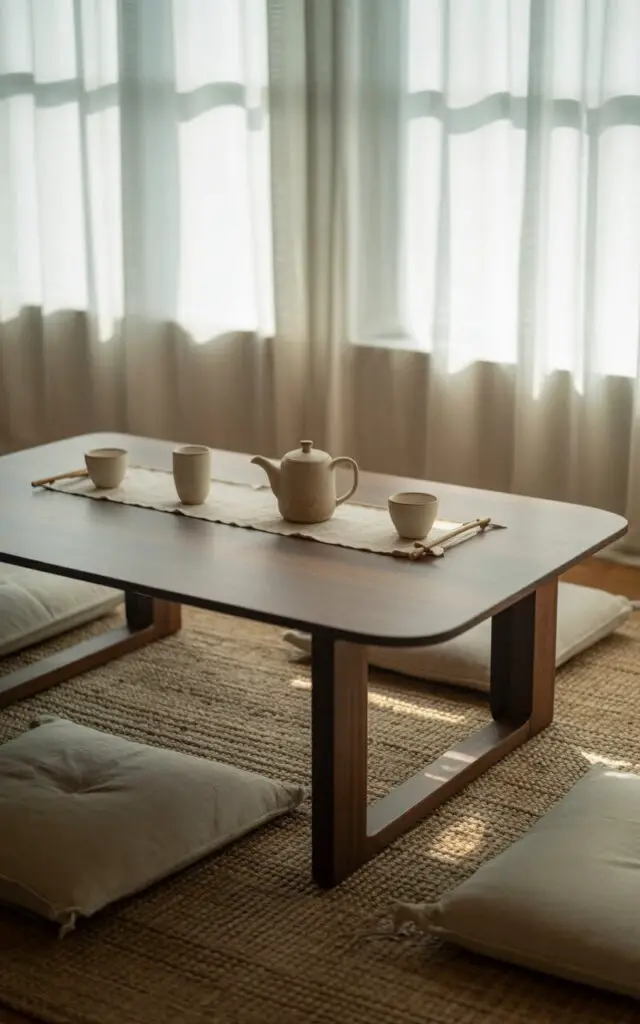
A photograph of a serene Japandi dining room centered around a dark walnut dining table with four chairs set low to the ground, alongside cushioned floor seating and short wooden stools. The table features a minimalist ceramic tea set in the center, with delicate porcelain cups and a matching teapot resting on a natural linen placemat. Soft, diffused light filters through sheer white curtains, illuminating the room and highlighting the textures of a handwoven rug and the muted tones of the linen cushions scattered around the space. Subtle shadows cast by the curtains create a tranquil, grounded atmosphere, showcasing the seamless blend of Japanese tradition and Scandinavian warmth.

Want a dining room that feels grounded—literally? Try lower seating. 

A shorter table with cushions, benches, or low stools channels Japanese dining traditions while keeping things casual. 

It’s perfect for intimate dinners, where everyone feels relaxed, close to the earth, and fully present at the table.


12. Add Texture with Rugs
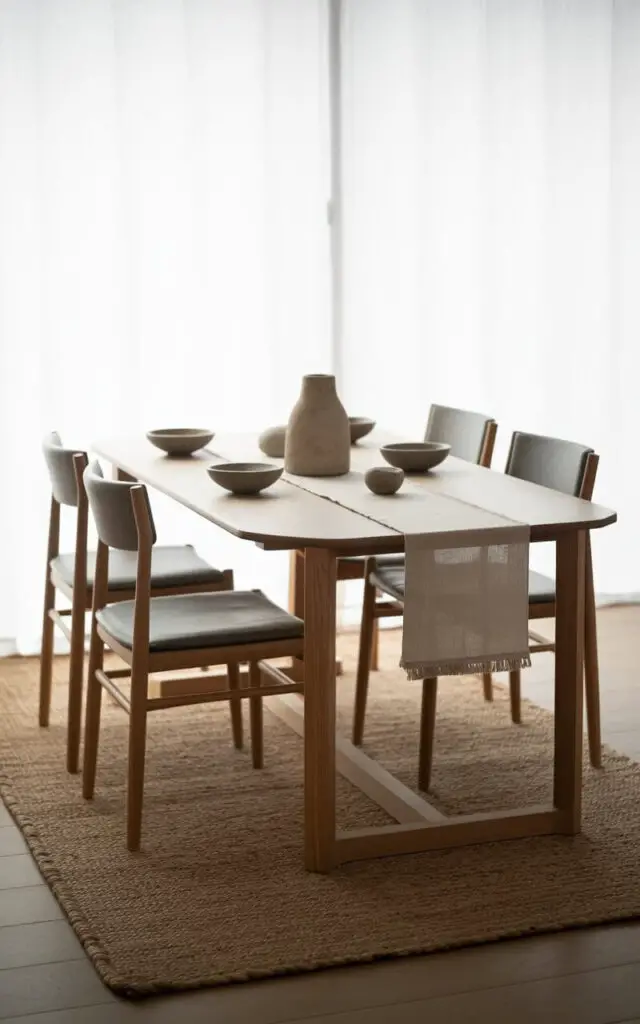
A photograph of a Japandi dining room, showcasing a meticulously styled pale oak dining table as its centerpiece. The table is elegantly set with four sleek, gray linen-upholstered chairs and a simple linen runner, complemented by ceramic bowls and a single stone vase, evoking a sense of understated luxury. A handwoven jute rug adds warmth and texture to the minimalist setting, softening the wooden floor while a large window to the left of the table floods the room with soft, diffused natural light. The overall atmosphere is calm, tactile, and inviting, perfectly embodying the principles of both Japanese and Scandinavian design.

Minimal doesn’t mean flat. Layering a rug beneath your dining table adds warmth and grounding. 

Go for jute, wool, or hemp—natural fibers that echo Japandi’s earthy soul. 

The rug frames the dining zone beautifully, softening footsteps while tying together the table, chairs, and the room itself.


13. Choose Muted Wall Colors
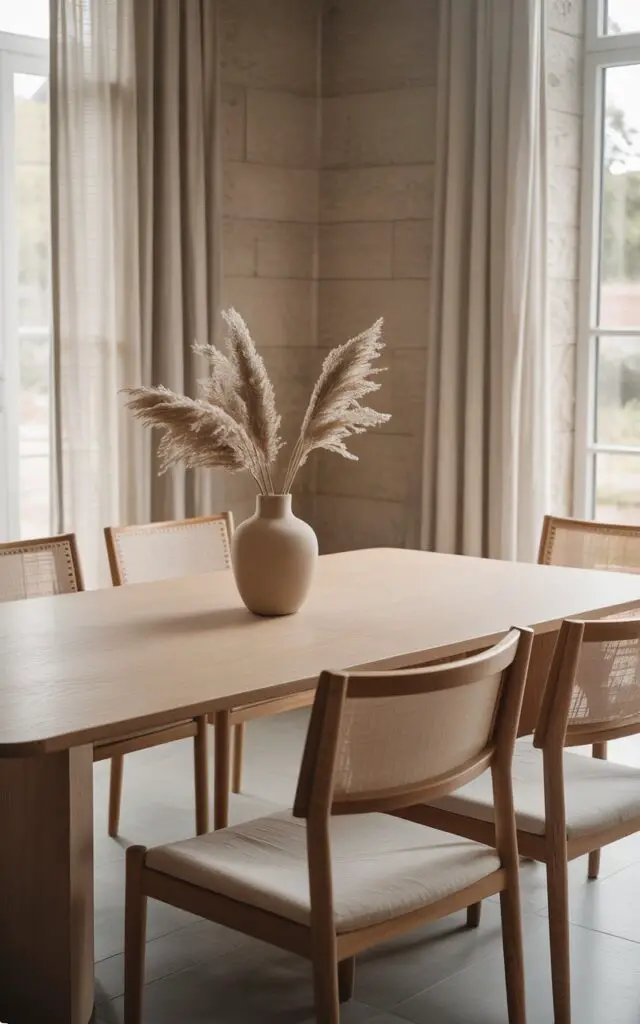
A photograph of a Japandi-style dining room bathed in soft, diffused light. A sleek, rectangular dining table crafted from pale oak wood takes center stage, surrounded by six chairs upholstered in a sandy beige linen with subtly textured stitching. Against the stone-gray walls, a single, minimalist ceramic vase filled with dried pampas grass sits elegantly on the table, while pale linen curtains frame the large windows, allowing gentle sunlight to filter in. The room's atmosphere is one of tranquil serenity, accentuated by the natural wood tones and neutral color palette.

Walls should soothe, not shout.

Muted tones—stone gray, pale sage, or sandy beige—set the backdrop for wood and greenery to shine. 

Pure white can feel sterile, but warm neutrals invite you in. 

The walls become a calming canvas that lets textures, ceramics, and furniture tell the story.


14. Add Subtle Artwork
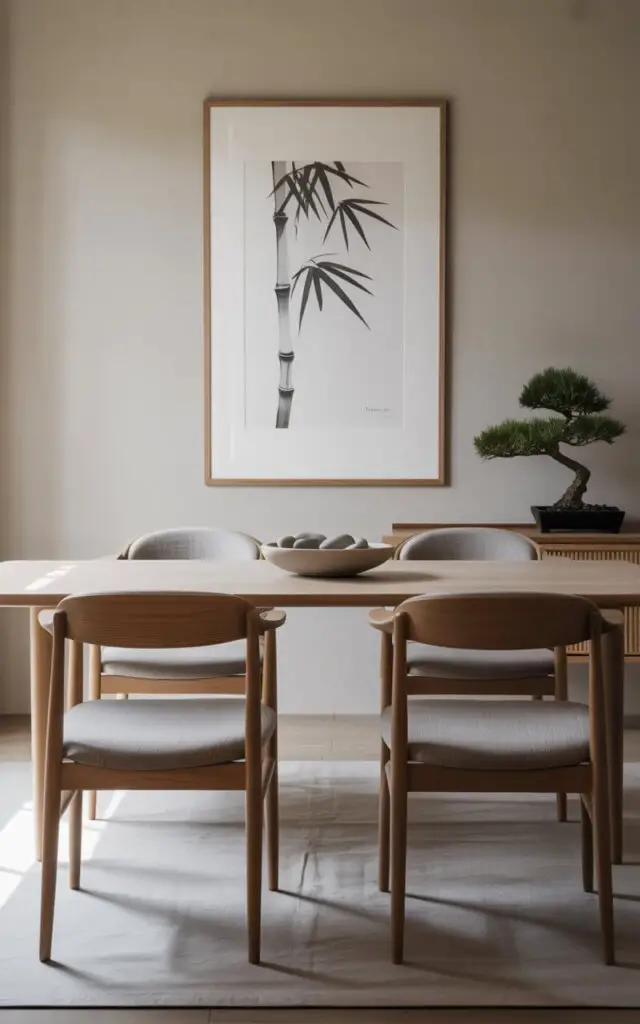
A photograph of a minimalist Japandi dining room bathed in soft natural light. The focal point is a sleek, rectangular dining table crafted from light-toned wood, surrounded by four Scandinavian-inspired chairs upholstered in a calming gray fabric. Above the table hangs a simple framed artwork—a monochrome ink sketch of a single bamboo stalk within a slim wooden frame—adding a touch of understated elegance to the space. A single ceramic bowl filled with smooth river stones sits on the table, while a small bonsai tree rests on a nearby sideboard, completing the room's atmosphere of quiet sophistication.

Japandi doesn’t do gallery walls—it does thoughtful restraint. 

Hang one or two meaningful pieces: a soft abstract, a Japanese ink painting, or a minimalist sketch. 

Keep the frames simple, the palette muted. 

The art should whisper, not scream, creating a calm pause on your dining room walls.


15. Bring Warmth with Candlelight
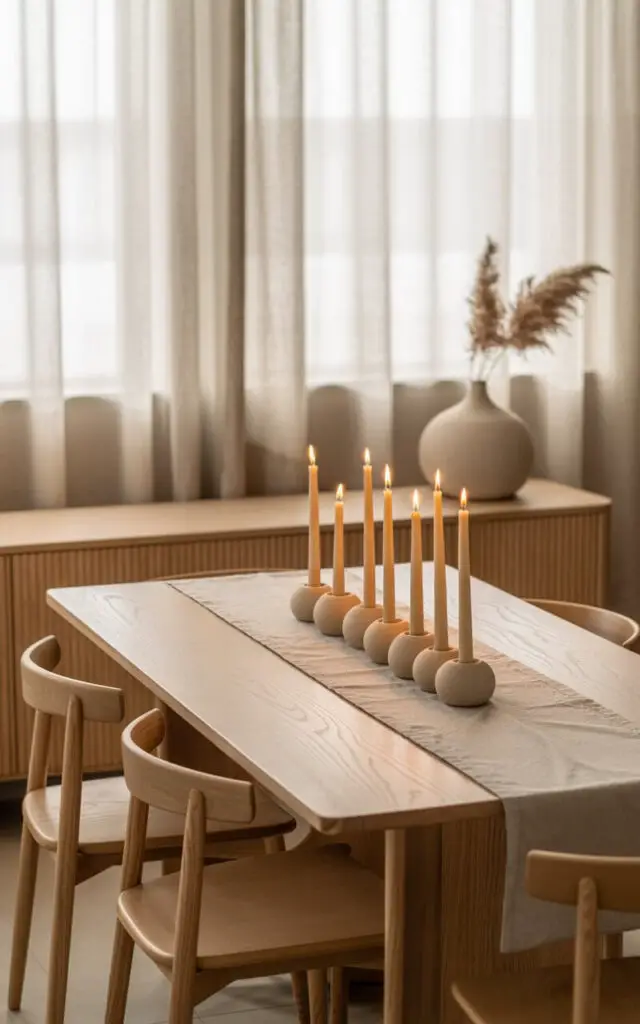
A photograph of a Japandi-style dining room centered around a beautifully designed, rectangular dining table. The table is adorned with a light grey linen runner and set with simple, matte ceramic candleholders holding unscented beeswax candles that cast a warm golden glow. Four slim, minimalist chairs in light oak surround the table, while a single matte white vase with a small arrangement of dried pampas grass sits elegantly on a nearby sideboard. Soft, diffused natural light streams through sheer linen curtains, creating a serene and inviting atmosphere.

Few things make a dining room cozier than candlelight. 

Choose simple ceramic or stone holders and unscented candles so the glow—not the fragrance—takes center stage. 

Place a few on the table or sideboard, and suddenly the room feels like a cocoon, perfect for slow meals and good company.


16. Add a Bench for Flexibility
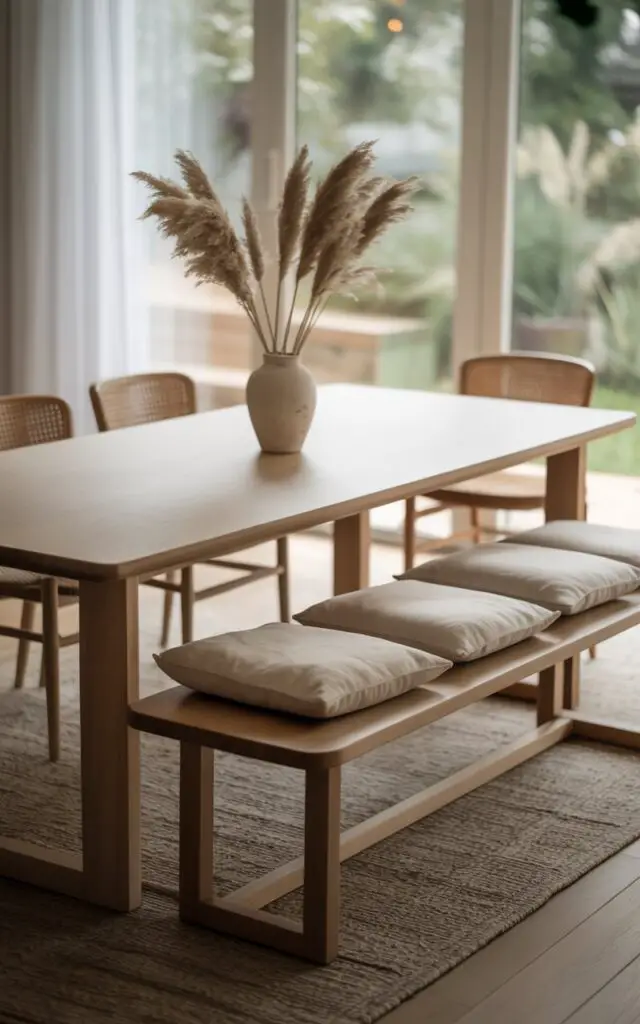
A photograph of a Japandi-style dining room bathed in soft, natural light, centered around a pale oak dining table. The table is simply set with four modern chairs and a longer wooden bench adorned with neatly arranged linen cushions in muted beige tones, facing the camera. A neutral-toned rug lies beneath the table, while a ceramic vase filled with dried pampas grass sits gracefully at the table's center, adding texture and warmth to the minimalist decor. Large windows in the background reveal a tranquil garden scene, softly blurred, reinforcing the room's serene and inviting atmosphere.

Benches are a Japandi secret weapon. 

They’re space-savers, versatile, and communal. Slide one under the table when not in use, or pull it out when guests arrive. 

Pair a simple wooden bench with a soft linen cushion for comfort. 

It’s casual, practical, and effortlessly stylish—exactly what Japandi is about.


17. Highlight the Ceiling
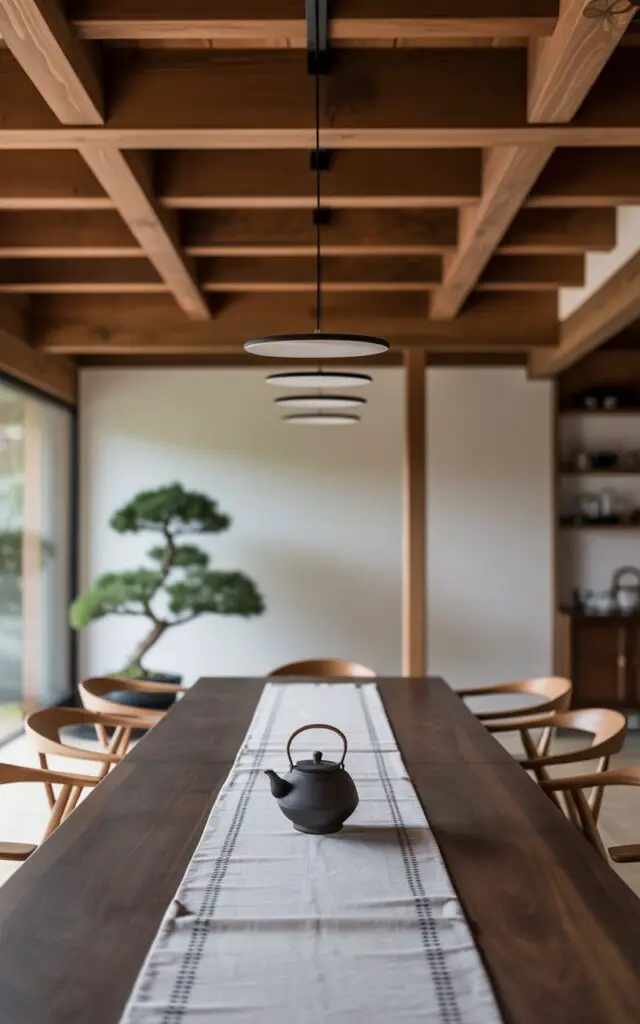
A photograph of a meticulously designed Japandi dining room, with the ceiling as a central design element. A dark walnut dining table sits beneath exposed wooden beams, a linen runner adorned with subtle geometric patterns tracing its length, and a handcrafted ceramic teapot sits centered on the table. Slim, light oak chairs are elegantly arranged around the table, complemented by minimalist pendant lights suspended between the beams, casting a soft, warm glow. The space is completed by a single, potted bonsai tree in the corner, and a blurred view of a serene garden through a nearby window.

People often forget to look up—but not in Japandi design. 

Exposed beams, slatted wood panels, or even a painted neutral ceiling bring warmth overhead. 

It adds architectural depth and makes the room feel considered from top to bottom. 

The ceiling becomes part of the story, not just a backdrop.


18. Choose Handmade Ceramics
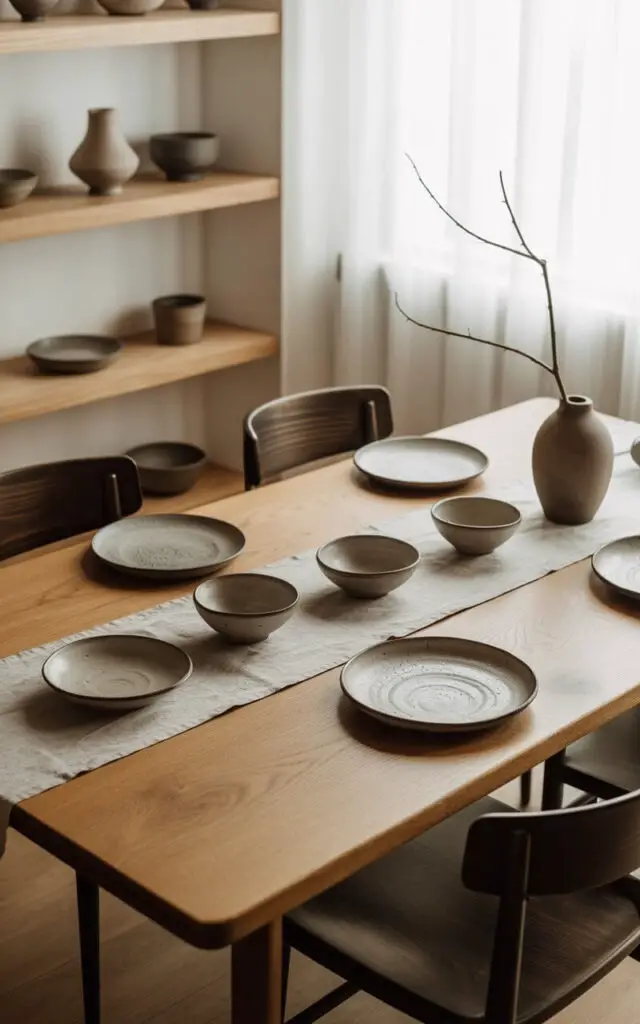
A photograph of a Japandi-style dining room centered around a beautifully set wooden table. The table is crafted from natural oak and is adorned with a linen runner, featuring an assortment of uniquely textured ceramic bowls and plates; each plate is subtly imperfect. Around the table sit four dark walnut chairs, while nearby open shelving displays a curated collection of additional handmade ceramics and a single branch elegantly arranged in a clay vase. Soft, diffused natural light streams through a nearby window, highlighting the wabi-sabi beauty and quiet artistry of the space.

There’s something special about eating from ceramics made by hand. 

The slight imperfections, earthy glazes, and unique shapes elevate simple meals into mindful experiences. 

Japandi loves these wabi-sabi details—plates, mugs, bowls, all slightly irregular yet beautiful. 

They remind us that dining isn’t just about food, but about ritual.


19. Blend Light and Dark Woods
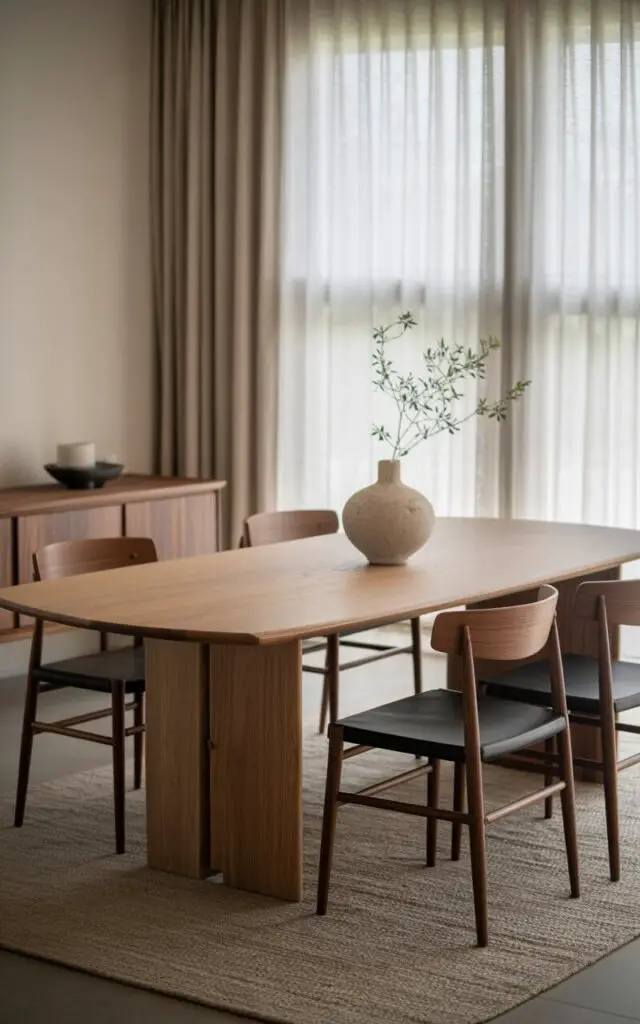
A photograph of a serene Japandi dining room, centered around a meticulously designed dining table. The table, crafted from light oak, stands as the focal point, surrounded by a mix of light oak and darker walnut chairs, creating a striking contrast; a stone vase sits in the middle holding a few simple green branches. A slim walnut sideboard along the wall reflects the room’s natural color palette, while neutral linen curtains gently frame a large window with diffused natural light softly illuminating the space, highlighting the interplay of textures and tones.

Scandinavian light oak, meet Japanese dark walnut. Mixing wood tones creates harmony without monotony. 

A pale table paired with darker chairs, or a walnut sideboard against a white oak floor, makes the space feel balanced. 

It’s contrast, but soft and natural—never harsh. The secret? Keep the finishes matte.


20. Create an Open Flow
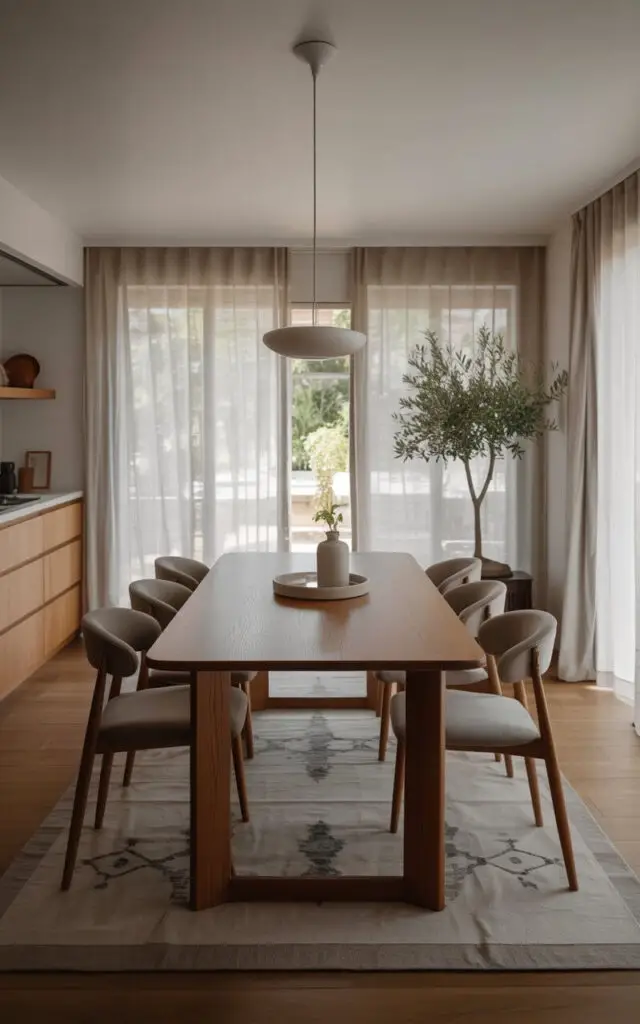
A photograph of an airy Japandi dining room showcasing a beautifully designed oak dining table surrounded by six muted gray upholstered chairs. The table sits centrally between a modern kitchen and a cozy living space, seamlessly uniting the home with expansive open sightlines, and a minimalist pendant light illuminates the table from above. Sheer linen curtains gently frame the wide windows, allowing soft natural light to fill the space, while a potted olive tree adds a touch of organic warmth and a subtle geometric rug anchors the dining area. The overall atmosphere is spacious, uncluttered, and evokes a sense of tranquil daily life.

Japandi thrives on openness. 

Let your dining area connect naturally with the kitchen or living room, using wide doorways, sliding panels, or simply a thoughtful layout. 

Open flow encourages light and air to circulate freely. 

Meals feel less like a formal event and more like an extension of daily living.


21. Incorporate Stone Accents
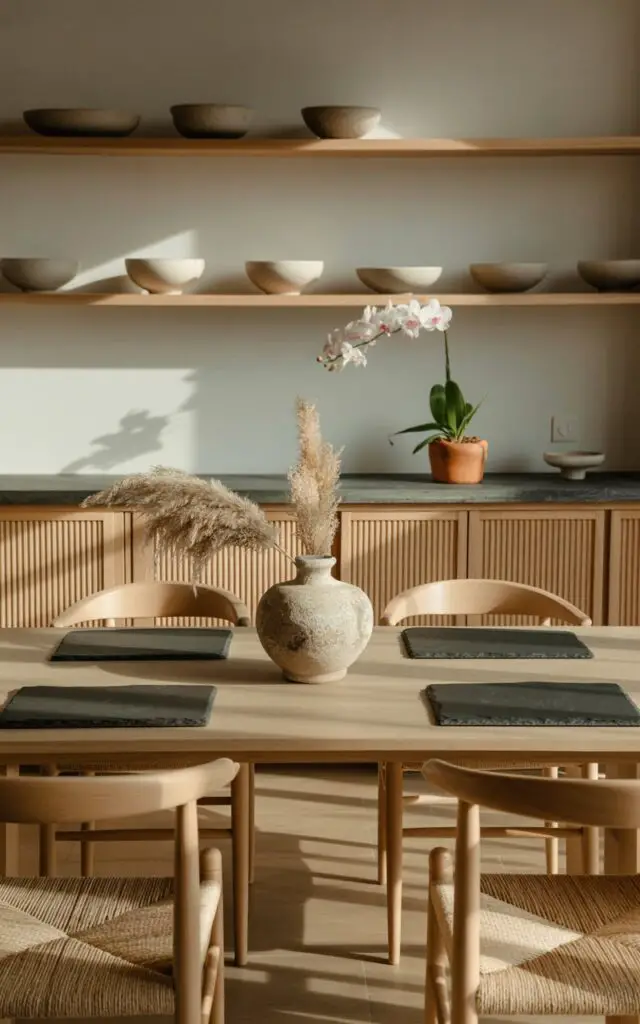
A photograph of a meticulously designed Japandi dining room bathed in soft, natural light. A pale oak dining table, displaying slate placemats and a stoneware vase with dried pampas grass, is the room's centerpiece, surrounded by four matching chairs with woven linen seats. Behind the table, a stone-topped sideboard showcases minimalist shelves lined with handcrafted ceramic bowls and a single, striking orchid in a terracotta pot. The room exudes a sense of serene balance, with subtle shadows and warm tones complementing the cool stone elements.

Wood is essential, but stone adds grounding weight. 

A slate vase, stone placemats, or even a marble sideboard brings texture and contrast. 

It prevents the room from feeling too light or airy, adding a layer of quiet strength. 

Stone in Japandi is never flashy—it’s raw, organic, and understated.


22. Play with Symmetry
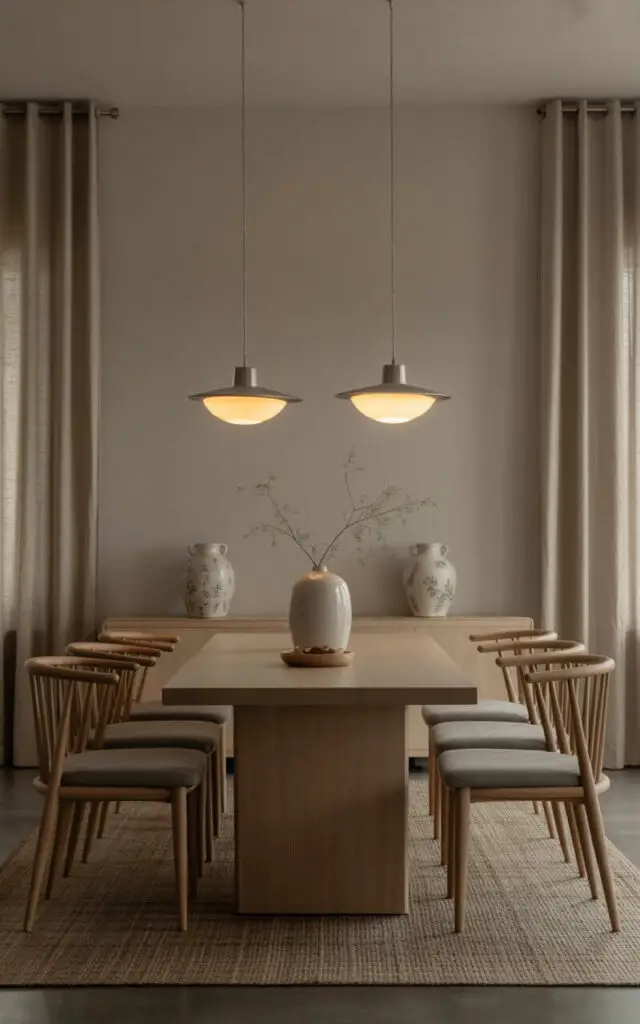
A photograph of a serene Japandi dining room emphasizing balanced symmetry and minimalist design. A sleek, rectangular dining table crafted from light-toned wood sits centered within the room, surrounded by six identical spindle-back chairs upholstered in a soft gray linen. Above the table, two minimalist pendant lamps with brushed nickel finishes hang at equal height, illuminating the table with a warm, diffused glow and highlighting the subtle texture of a woven jute rug beneath. Neutral linen curtains frame the windows, and matching ceramic vases with delicate floral patterns sit symmetrically on either end of a low sideboard, contributing to the room's overall sense of calm and harmony.

Japandi is all about harmony, and symmetry helps you find it. 

Try identical chairs facing each other, twin pendants hanging over the table, or matching vases on a sideboard. 

Balanced layouts create instant calm and order. It’s not about perfection—it’s about finding peace in even, thoughtful arrangements.


23. Use Soft Window Treatments
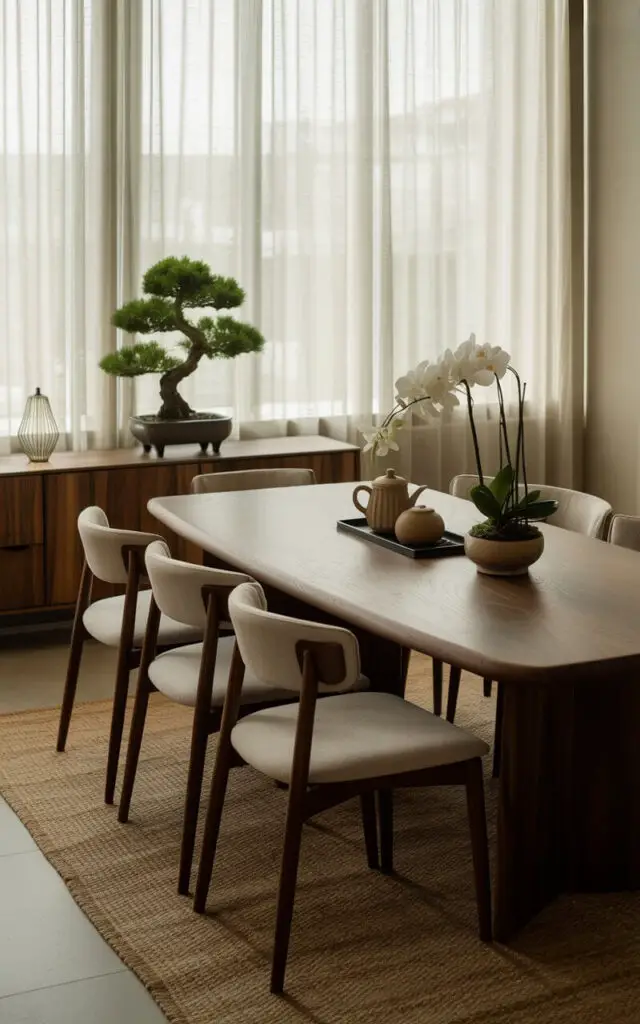
A photograph of a modern Japandi dining room bathed in soft, filtered daylight. A beautifully designed walnut dining table stands prominently in the center of the room, surrounded by six light beige upholstered chairs arranged with meticulous care. A small bonsai tree sits gracefully on a sideboard against a wall draped with sheer linen curtains, while a ceramic teapot set rests elegantly on the table next to a small vase of white orchids. A woven jute rug anchors the space, and the entire scene is illuminated by a gentle, calming glow, evoking a sense of serene tranquility.

Heavy curtains? Hard pass. Japandi windows deserve softness. 

Think sheer linen drapes or bamboo blinds that filter light gently. They let the daylight flow in, creating a serene glow during meals. 

Natural fabrics bring texture, while the understated design keeps the focus on simplicity. 

Light becomes part of the décor.


24. Embrace Wabi-Sabi Imperfection
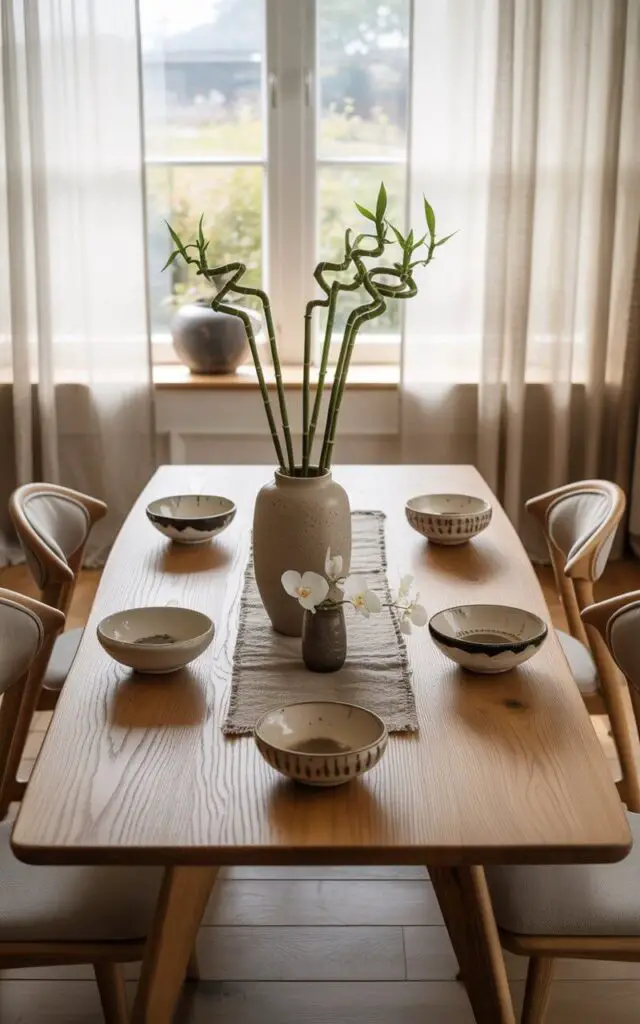
A photograph showcases a Japandi dining room bathed in soft, natural light, centered around a beautifully set dining table. The table, crafted from natural oak, proudly displays knots and irregular grain patterns, accompanied by six chairs upholstered in muted gray linen, their rustic charm balanced with Scandinavian refinement. A slightly uneven ceramic vase filled with sprigs of bamboo, alongside handmade bowls with textured glazes and a woven runner with subtle flaws, decorates the table, with a single, delicate orchid blossom sitting atop one bowl; a window with sheer linen curtains provides a glimpse of a tranquil garden beyond. The scene embodies wabi-sabi—authentic, imperfect, and soulful—creating a space that feels lived-in, warm, and quietly elegant.

Japandi is not a showroom look—it’s about authenticity. 

Let your table show its natural knots, let your rug have uneven fibers, and treasure that slightly wobbly handmade vase. 

Wabi-sabi celebrates imperfection as beauty. In a dining room, it means creating a space that feels real, lived-in, and soulful.


25. Keep It Uncluttered
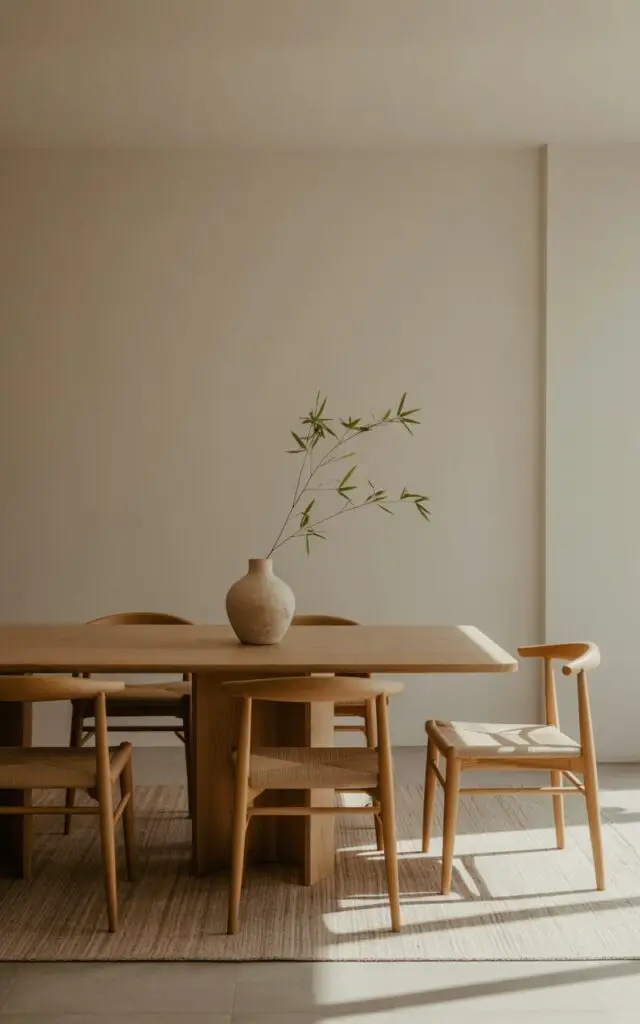
A photograph of a minimalist Japandi dining room bathed in soft, natural light. A beautifully designed dining table crafted from light oak with four matching chairs occupies the center of the frame, its surface intentionally bare to emphasize simplicity. A single, handcrafted ceramic vase holding a delicate sprig of bamboo rests on the table, alongside a subtly textured neutral woven rug that grounds the space beneath. The room’s clean lines and ample open space create a serene atmosphere, perfectly embodying Japandi's design philosophy of "less is more".

The golden Japandi rule: less is more. 

Every piece in your dining room should earn its place. Skip the over-decorating and focus on quality over quantity. 

A clear table, a few ceramics, a single plant—that’s enough. 

A clutter-free dining space isn’t just visually calming, it makes every meal feel intentional.

Japandi Dining Room Ideas

Similar Posts