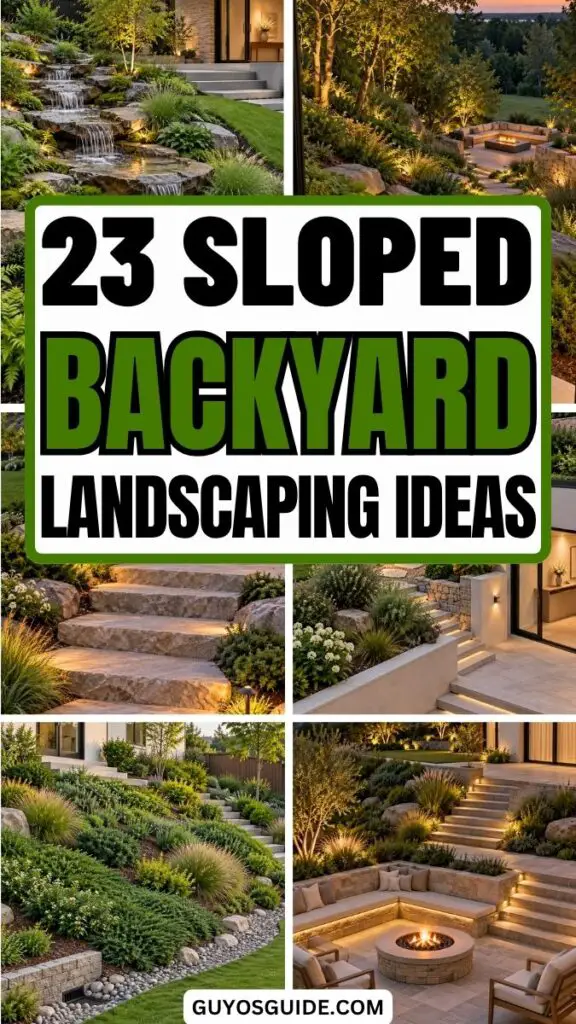
23 Sloped Backyard Landscaping Ideas for Any Yard

I used to think a sloped backyard was more trouble than it was worth.
Mowing it was tricky, furniture never seemed to sit right, and heavy rain could wash soil downhill.
But with a little creativity, that slope can become one of the most beautiful parts of your yard.
These sloped backyard landscaping ideas can add style, function, and charm without making the space feel difficult to use.
So let’s look at some clever ways to turn that tricky slope into a backyard you’ll love.
1. Build Terraced Garden Beds
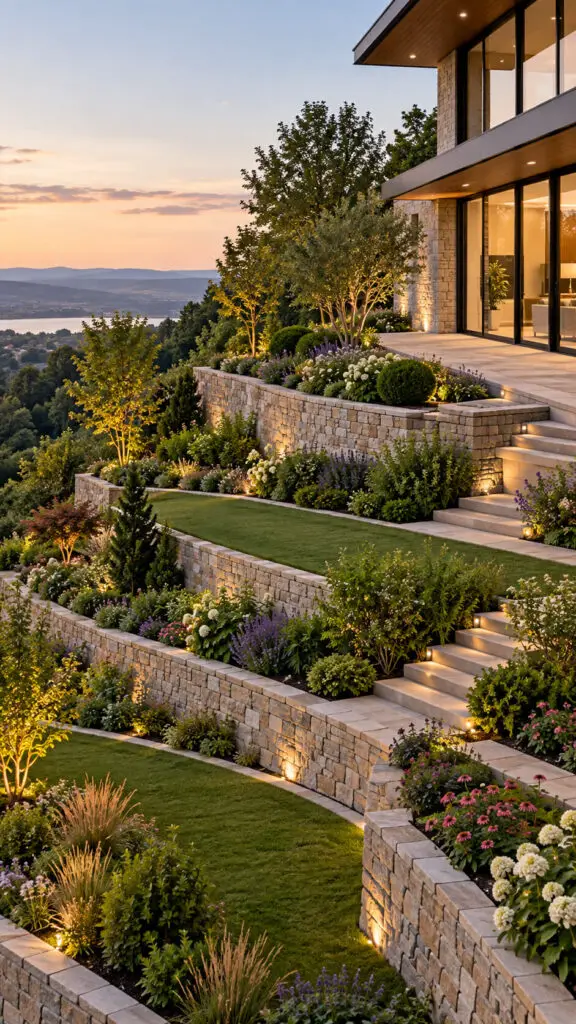
Terracing is one of the most practical ways to transform a steep backyard into usable planting space.
Create several level beds with retaining walls made from stone, timber, or concrete, then fill each tier with soil and plants suited to its conditions.
Besides adding structure, terraces slow runoff and give a difficult slope an intentional, beautifully layered appearance.
2. Install a Stone Retaining Wall
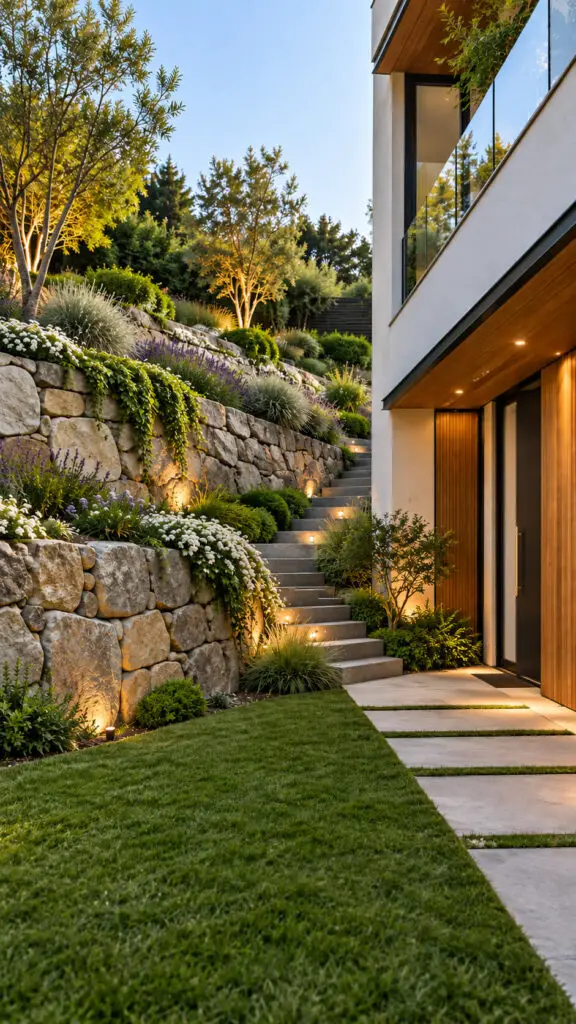
A stone retaining wall can turn a challenging incline into a dramatic landscape feature.
Use natural stone in varying sizes for a relaxed, organic look, or choose neatly stacked blocks for a cleaner contemporary garden.
Plant low-growing perennials and groundcovers around the wall so the hardscape gradually blends into the surrounding landscape instead of looking overly constructed.
3. Create a Sloped Lawn
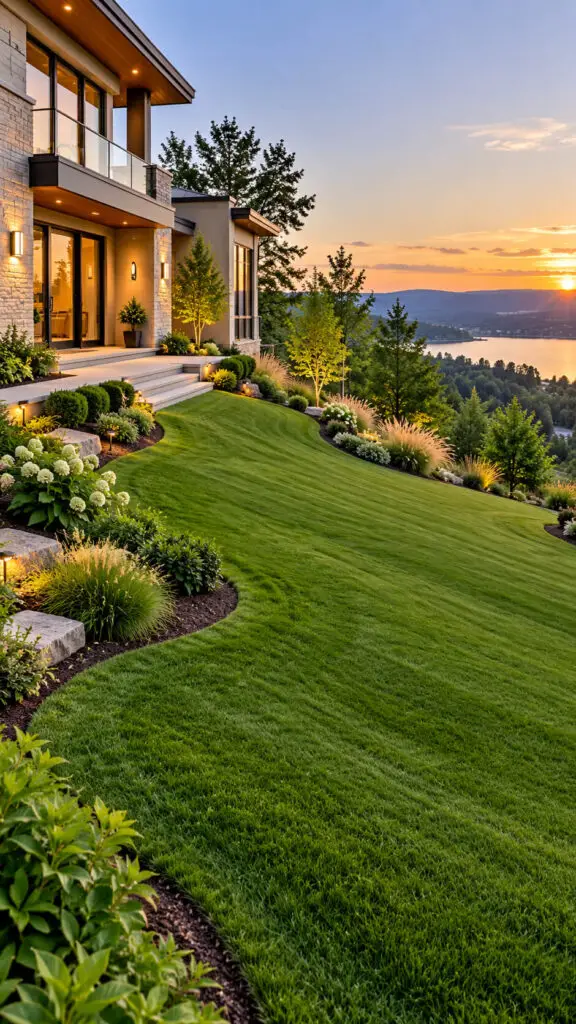
If the incline is gentle enough to mow safely, a carefully planned lawn can make a sloped backyard feel surprisingly spacious.
Choose grass suited to your local climate and establish a strong root system to help hold the soil.
Keep the surrounding planting beds generous and curved, giving the lawn an elegant shape rather than forcing it into a rigid rectangle.
4. Add a Meandering Garden Path
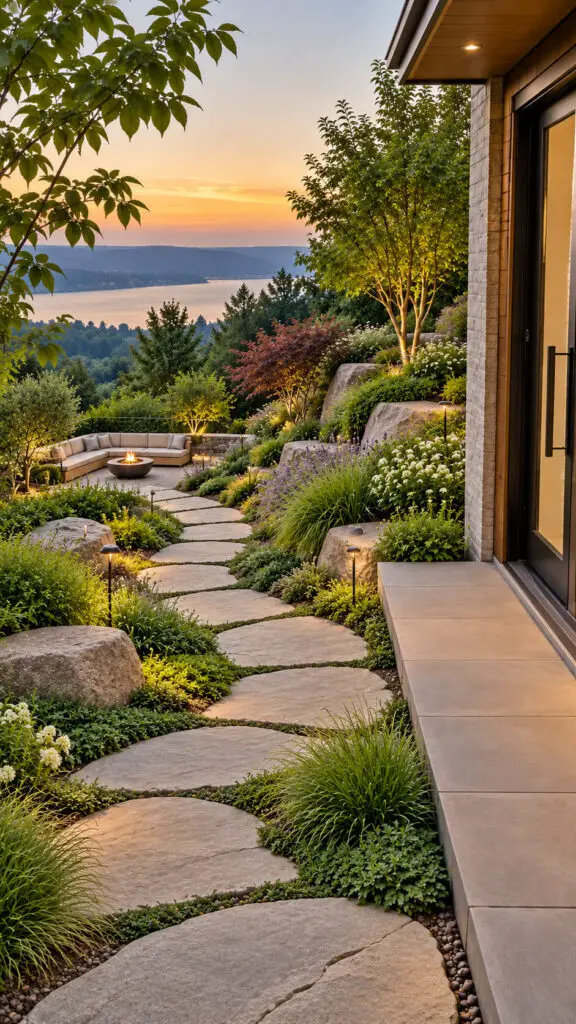
A winding path makes a steep backyard feel like a destination rather than an obstacle.
Instead of running directly uphill, let the walkway gently curve across the slope using stone, gravel, brick, or stepping slabs.
The changing direction naturally slows foot traffic and creates opportunities for planting pockets, benches, and small garden features along the journey.
5. Plant Deep-Rooted Groundcovers
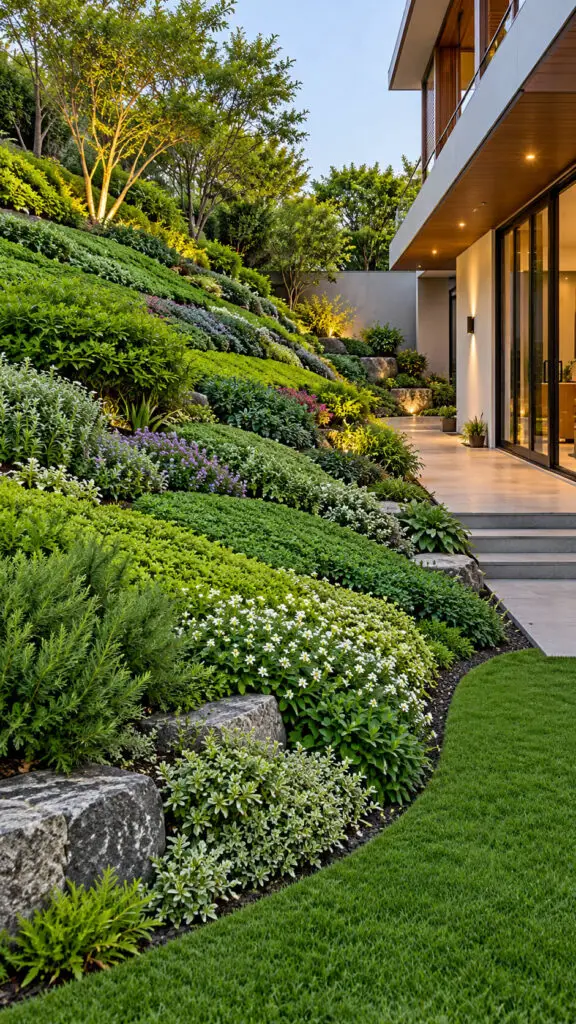
Groundcovers are invaluable on slopes because they can provide living protection against soil erosion while adding plenty of visual interest.
Choose spreading plants with strong root systems that suit your sun, soil, and moisture conditions.
Mix several compatible varieties for a tapestry-like effect, allowing foliage and seasonal flowers to soften the slope and make maintenance easier.
6. Add a Staircase Through the Landscape
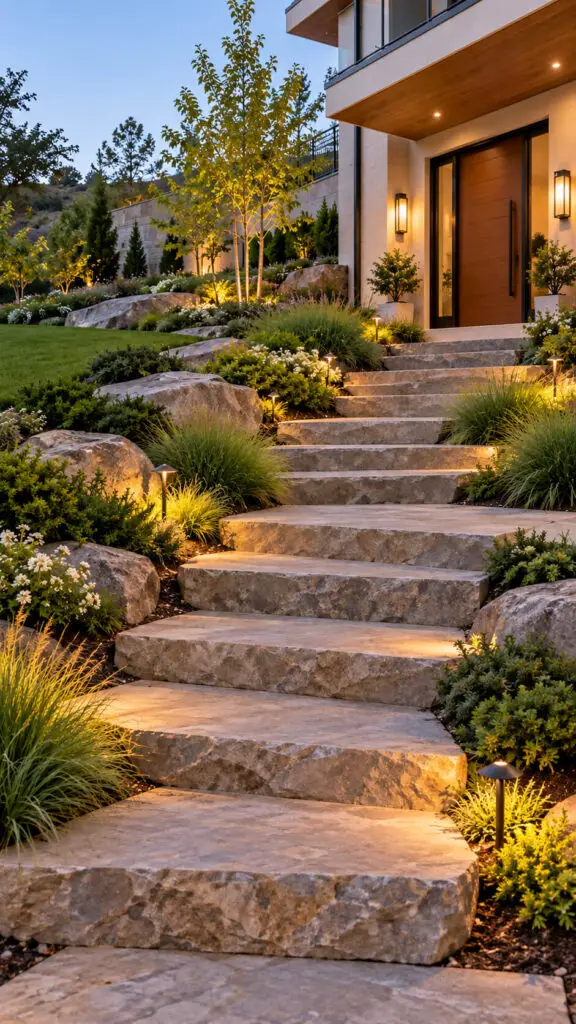
A staircase can make a steep backyard far more accessible while becoming an attractive architectural feature.
Use broad stone steps, timber, brick, or poured concrete depending on your home’s style.
Flank the stairs with low shrubs, ornamental grasses, or flowering plants to soften the edges.
A well-designed staircase should feel integrated into the garden, not simply dropped onto it.
7. Create a Dry Creek Bed
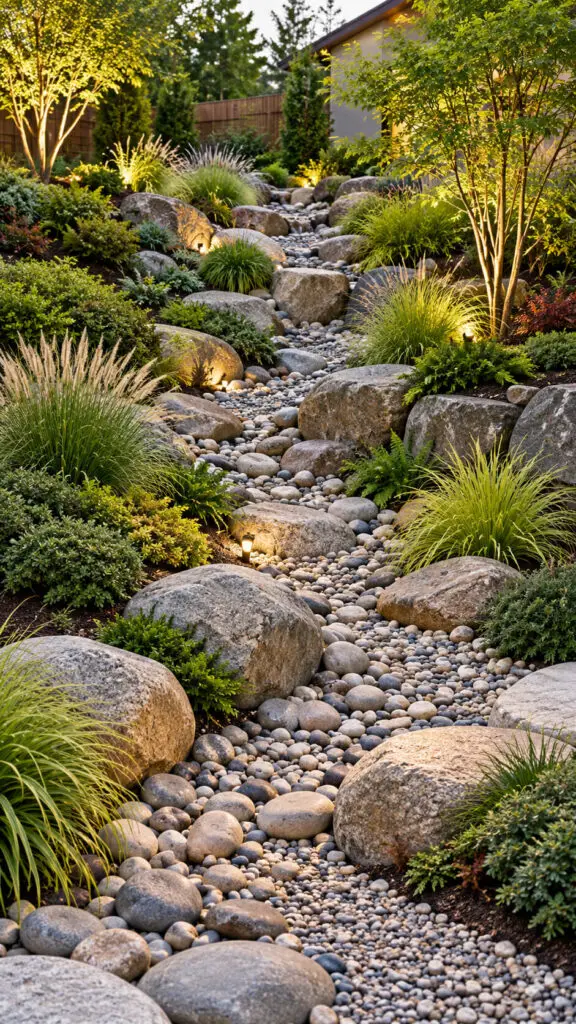
A dry creek bed offers both visual charm and a practical way to manage water moving downhill.
Arrange smooth stones, larger boulders, and gravel in a natural winding channel, then surround it with moisture-tolerant plants where appropriate.
The result can resemble a little seasonal stream, giving your backyard character while helping guide stormwater toward a suitable drainage area.
8. Design a Backyard Fire Pit Terrace
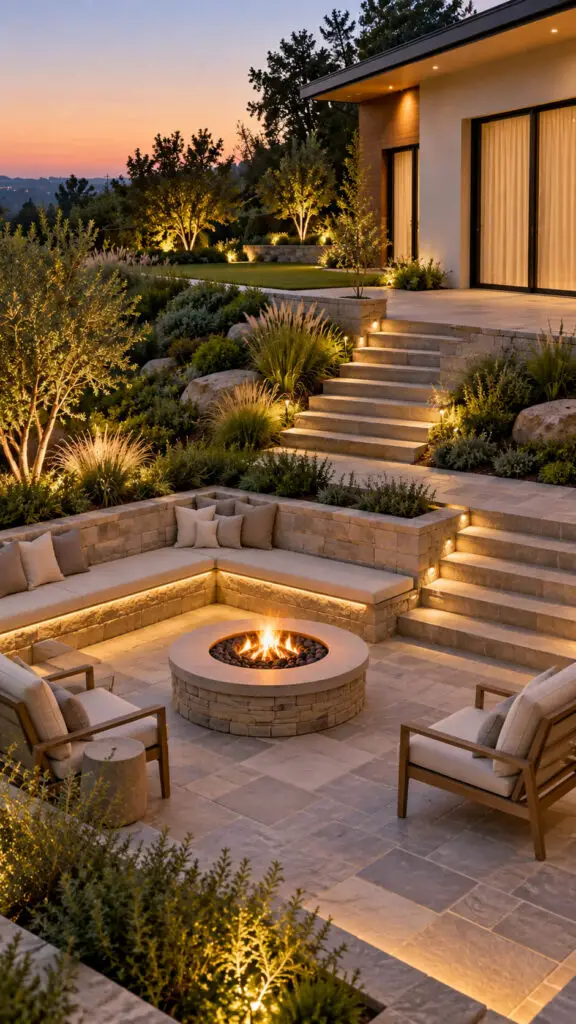
Turn an awkward portion of the slope into an outdoor gathering spot by creating a level terrace around a fire pit.
A retaining structure can establish the necessary flat area, while gravel, pavers, or stone provide a durable surface.
Add built-in seating or weather-resistant chairs around the fire, creating a cozy destination that makes the slope feel like an advantage.
9. Add a Tiered Water Feature
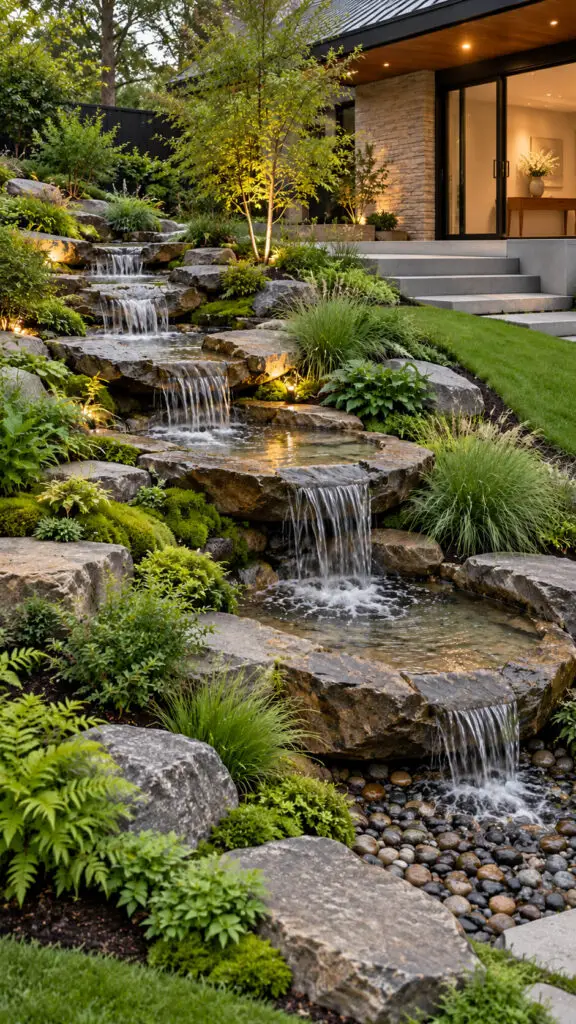
A sloped yard is naturally suited to a cascading water feature.
Let water move from one shallow basin to another using stone ledges, planted edges, or small channels.
Keep the scale appropriate for your property and plan drainage carefully.
The gentle sound of moving water can make the garden feel peaceful, while the changing elevations give the landscape an extra layer of drama.
10. Build a Raised Deck
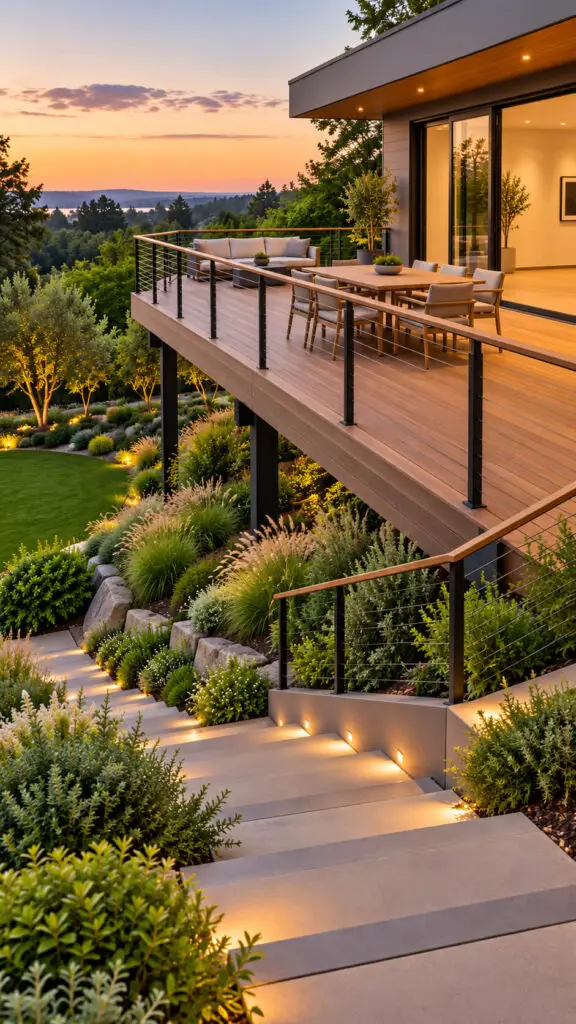
A deck can create valuable level outdoor living space without requiring the entire backyard to be flattened.
Depending on the slope, a raised structure can provide room for dining, lounging, or entertaining while preserving the natural grade beneath it.
Choose materials that complement the house, and consider integrated steps or planting beds to connect the deck naturally with the garden.
11. Create a Rock Garden
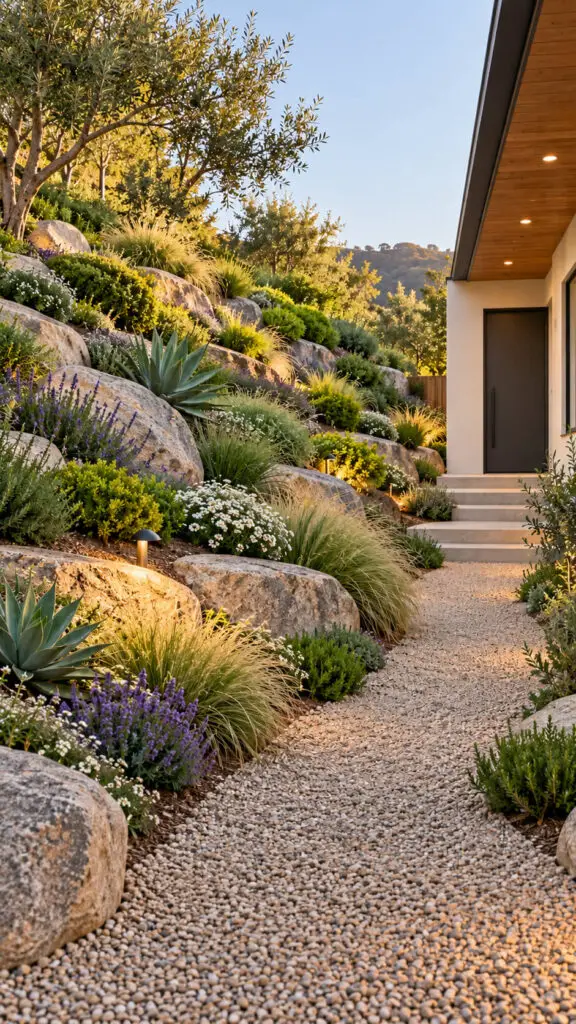
Rock gardens are practically made for challenging slopes.
Position larger rocks securely into the hillside, then surround them with drought-tolerant plants, ornamental grasses, succulents, or alpine varieties suited to your climate.
The stones provide visual structure while the plants soften their edges.
Arrange everything in natural-looking clusters rather than evenly spacing every plant like soldiers.
12. Plant Ornamental Grasses
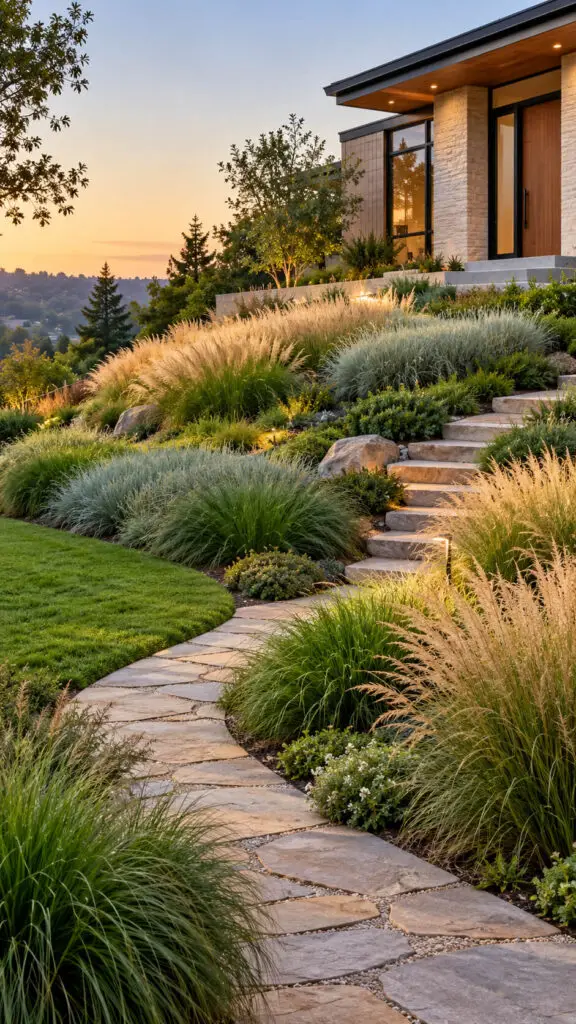
Ornamental grasses can give a sloped backyard wonderful movement and texture.
Their roots can help stabilize soil, while their feathery foliage catches the breeze and creates gentle motion across the hillside.
Combine grasses of different heights and forms, leaving enough space for each variety to develop.
They are particularly effective when repeated in flowing drifts rather than scattered randomly.
13. Create a Woodland Garden
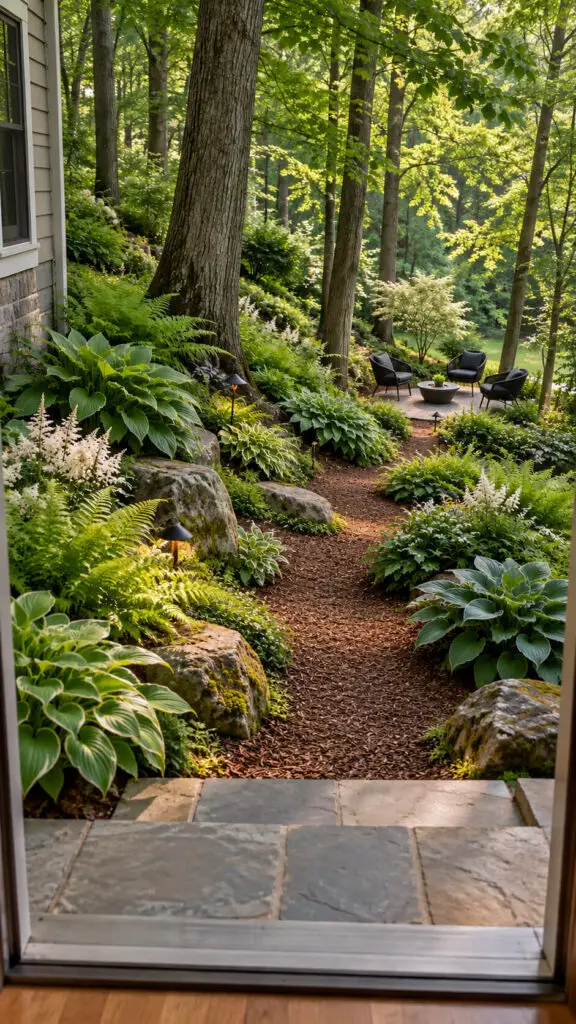
If your slope receives partial shade, consider turning it into a woodland-inspired retreat.
Plant shade-tolerant shrubs, ferns, hostas, woodland perennials, and suitable native trees in informal groupings.
Add a mulch-covered path or a few strategically placed rocks to complete the scene.
The relaxed planting style works beautifully with uneven terrain, making the slope feel naturally established rather than artificially corrected.
14. Add a Backyard Seating Nook
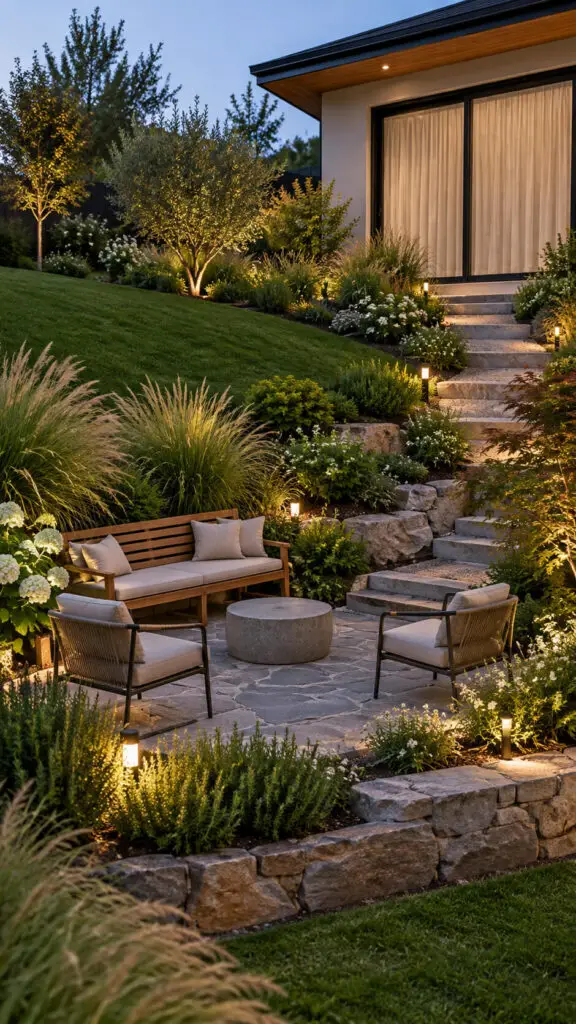
You don’t need to landscape every inch of a slope.
Create a small level terrace just large enough for a bench, two chairs, or a compact café table.
Surround the seating area with fragrant plants or tall grasses for privacy.
Suddenly, that previously useless corner becomes your favorite place to enjoy morning coffee or an evening breeze.
15. Use Native Plants
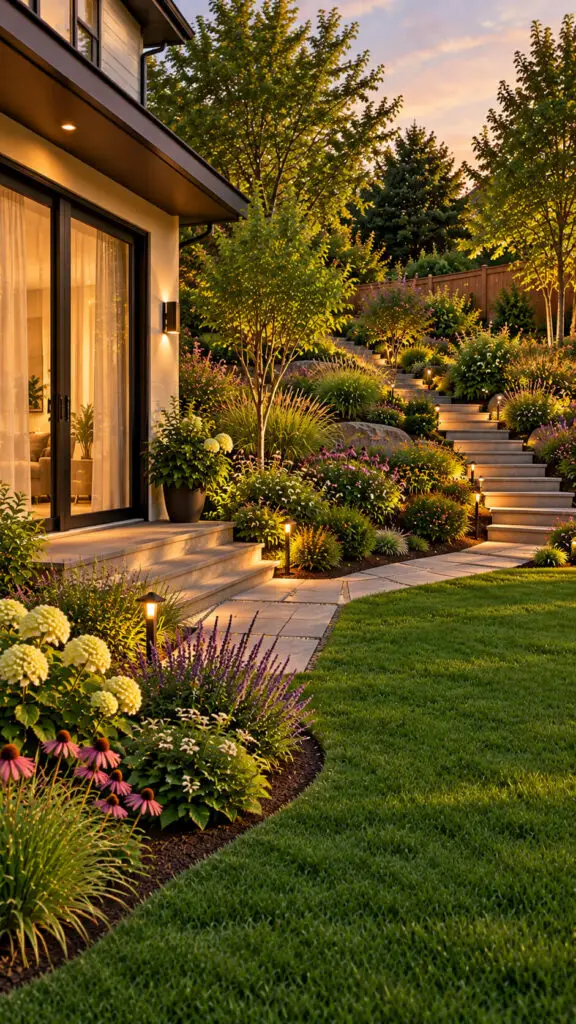
Native plants are a smart choice for sloped landscapes because they are generally adapted to the local climate and growing conditions.
Select species appropriate for your region, paying attention to soil, sun, rainfall, and mature size.
A thoughtfully layered mix of native trees, shrubs, grasses, and groundcovers can create a resilient garden that feels connected to the surrounding environment.
16. Incorporate Boulders Into the Slope
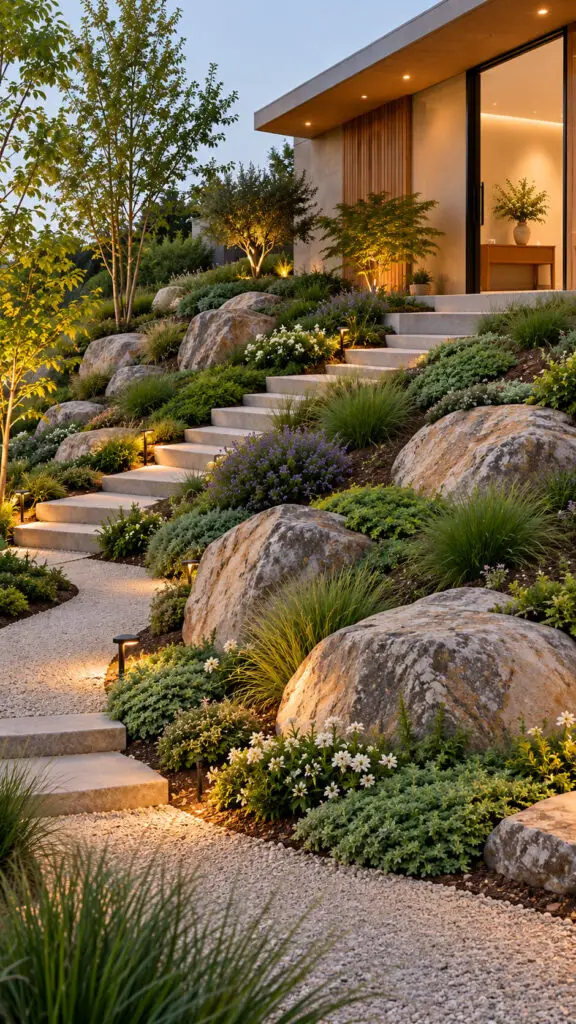
Large natural boulders can provide structure without making the landscape feel overly formal.
Partially bury each boulder so it appears anchored naturally into the hillside, then plant around its base with grasses, groundcovers, or flowering perennials.
Group stones in varied sizes and positions for a convincing natural composition.
Done well, the rocks look as though they belong there.
17. Create a Vegetable Garden
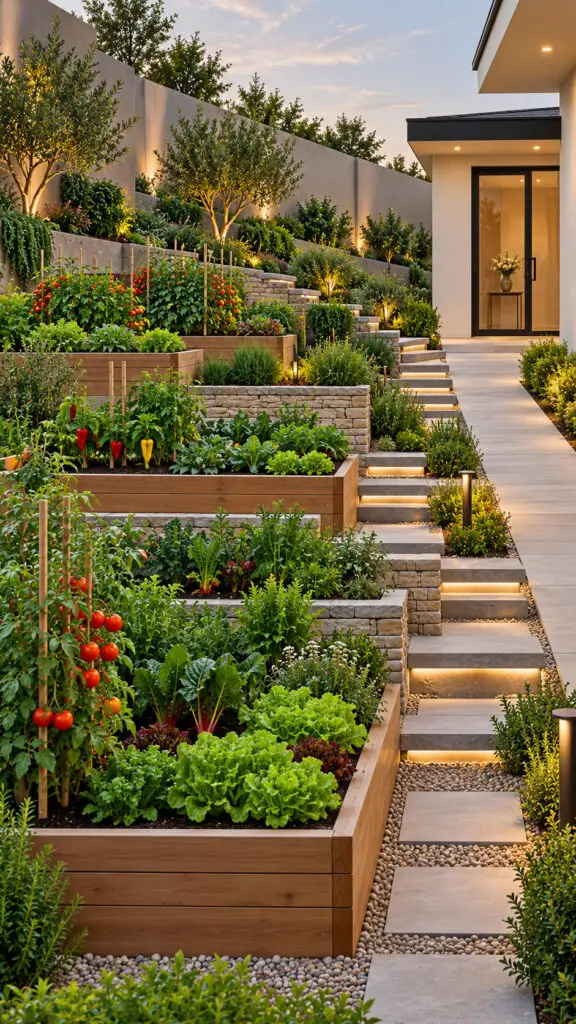
A sloped backyard doesn’t automatically rule out growing vegetables.
Build level planting terraces or raised beds across a suitable section, ensuring each area has adequate drainage and sunlight.
Keep the beds accessible with stable paths between them.
Tomatoes, herbs, leafy greens, peppers, and other vegetables can thrive when the growing areas are designed around the site’s slope rather than fighting against it.
18. Add a Pergola on a Level Terrace
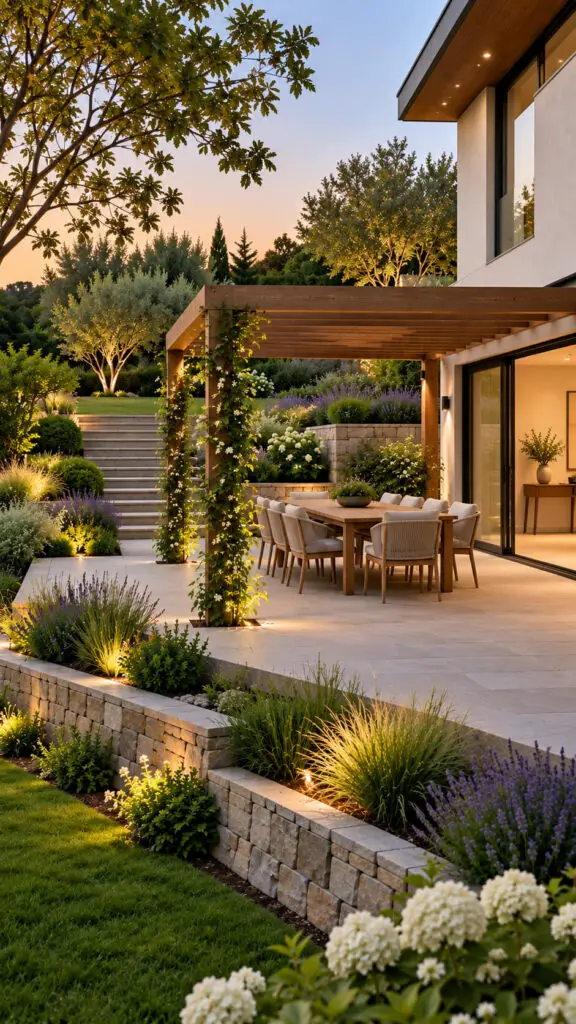
A pergola can give a terraced section of your backyard a strong sense of purpose.
Place it on a properly constructed level area, then furnish the space with comfortable outdoor seating or a dining table.
Train suitable climbing plants around the structure for additional shade and greenery.
The combination creates an inviting outdoor room with the landscape rising beautifully behind it.
19. Install Erosion-Control Planting
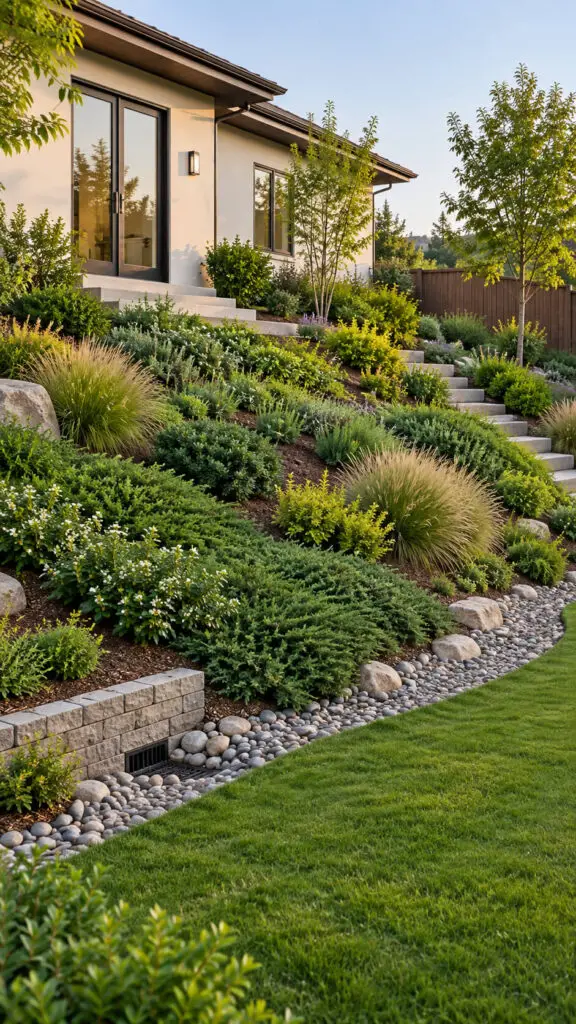
For slopes where runoff is a major concern, prioritize plants and landscape techniques that help protect exposed soil.
Combine deep-rooted shrubs, spreading groundcovers, grasses, and strategically placed mulch or erosion-control materials.
Avoid simply covering the entire slope with decorative gravel and hoping for the best.
A layered planting strategy can be both functional and attractive when matched to site conditions.
20. Build a Multi-Level Patio
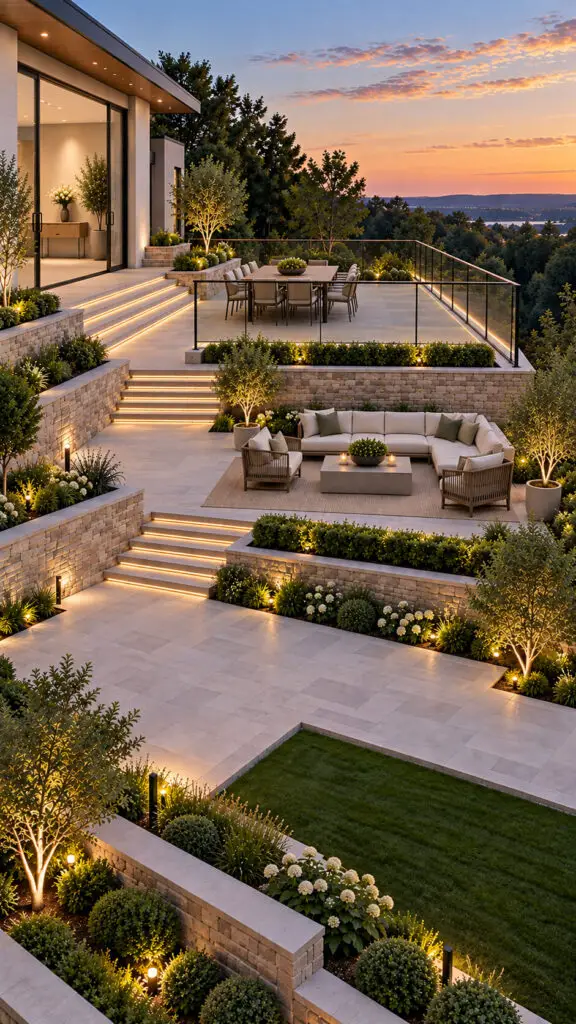
Instead of forcing one large patio onto uneven ground, create several connected outdoor levels.
Each platform can serve a different purpose, such as dining, lounging, grilling, or relaxing.
Use retaining walls and properly engineered foundations where necessary, then connect the levels with stairs.
The result feels more like a series of outdoor rooms than one oversized hardscape.
21. Frame the Slope With Flowering Shrubs
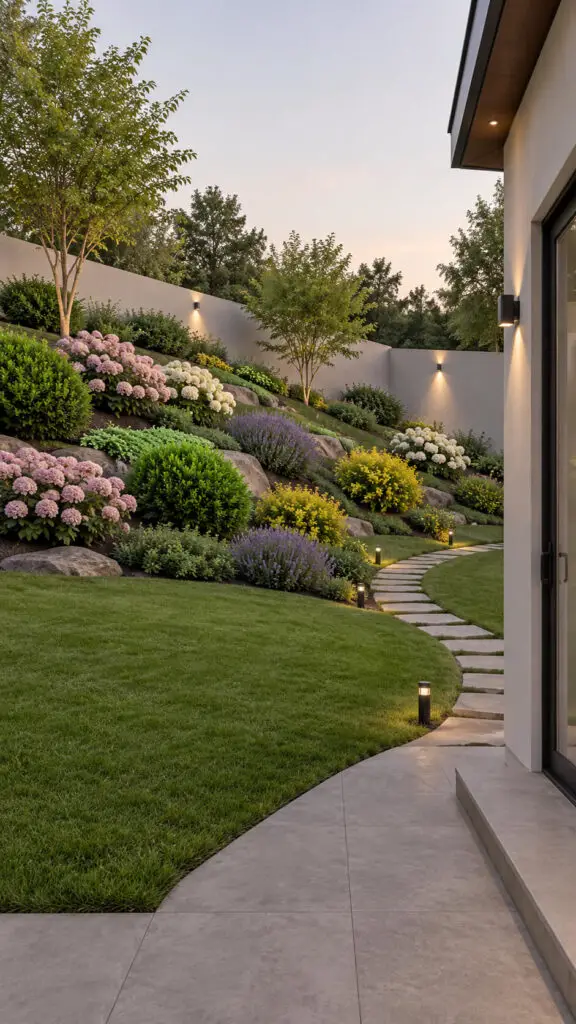
Flowering shrubs can give a sloped backyard year-round structure while adding bursts of seasonal color.
Arrange shrubs in broad groups along the contour rather than planting them in a single rigid row.
Choose varieties appropriate to your climate and available space, considering their mature height and spread.
Evergreen structure combined with seasonal blooms keeps the hillside attractive through changing weather.
22. Add Stepping Stones Through Planting
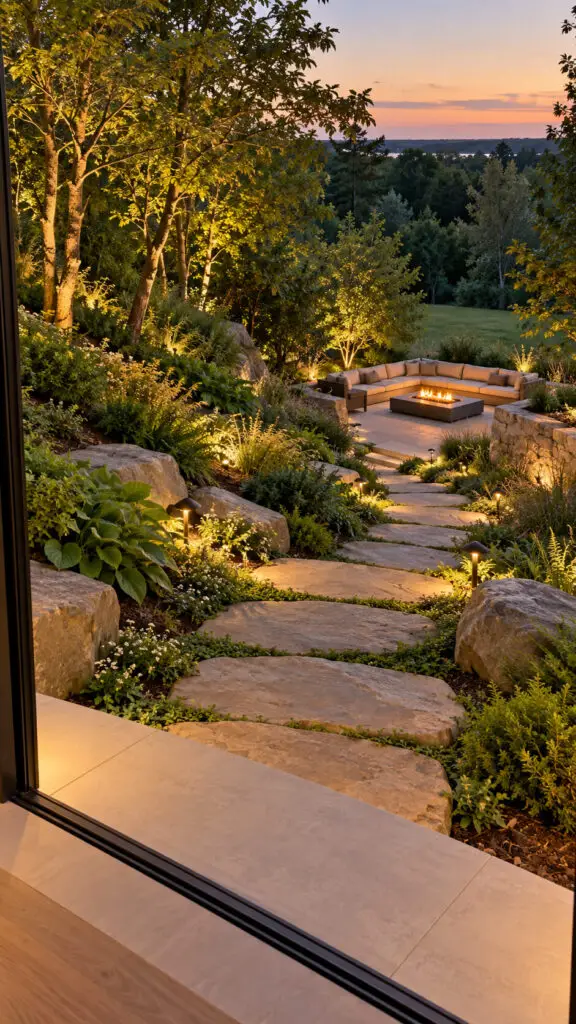
For a softer alternative to a formal staircase, create a stepping-stone route through a gently sloped planting area.
Set each stone securely and maintain comfortable spacing so the path feels natural but remains practical.
Surround the stones with low groundcovers, moss-like plants, or compact perennials suited to the site.
The finished walkway can feel wonderfully garden-like and informal.
23. Turn the Slope Into a Garden Retreat
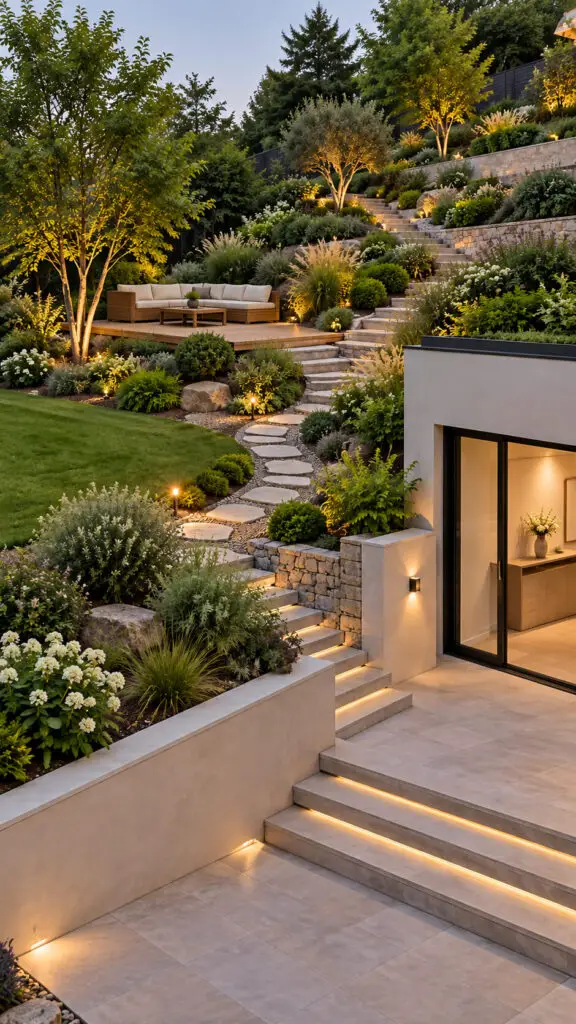
Make the entire hillside feel intentional by combining several complementary elements into one cohesive retreat.
Use terraces for planting, a small seating area for relaxation, winding paths for movement, and strategically positioned trees or shrubs for privacy.
Keep materials and plant colors coordinated so the different features feel connected.
With thoughtful planning, even a difficult slope can become the most memorable part of the backyard.