21 Winter Garden Ideas to Transform Your Outdoor Space

I used to think gardens were only beautiful when everything was green and blooming.
Then winter came along and turned my once-lively garden into a quiet, chilly space!
But who says your garden has to look dull just because the temperature drops?
With a few clever changes, cozy touches, and the right plants, you can create a winter garden that feels just as charming as any other season.
These winter garden ideas will help you add color, warmth, and beauty to your outdoor space, even on the coldest days.
So, let’s explore how to make your garden shine this winter!
1. Create a Cozy Outdoor Seating Area

Who says garden furniture has to hibernate when temperatures drop?
Create a cozy seating area with weather-resistant armchairs, a sturdy wooden bench, and thick outdoor cushions in warm, seasonal colors.
Add fleece throws to keep everyone comfortable during chilly afternoons.
Position the seating near a sheltered wall or under a covered patio, and you’ll have an inviting spot for morning coffee, even when the air feels frosty.
2. Add Evergreen Plants for Year-Round Color

When summer flowers disappear, evergreens step in to keep your garden looking alive.
Boxwood, juniper, holly, and dwarf conifers provide structure, rich green foliage, and visual interest throughout winter.
Combine plants of different heights and shapes to avoid a flat, monotonous appearance.
Place them in borders, decorative containers, or near your entrance for a garden that stays attractive even when everything else looks ready for a nap.
3. Install a Fire Pit for Warm Winter Evenings

A fire pit can transform a cold backyard into the perfect gathering place.
Choose a wood-burning or gas model that suits your garden’s size and local fire-safety requirements.
Arrange comfortable chairs around it, leaving sufficient clearance from buildings, fences, and overhanging branches.
Add a basket of blankets nearby, and you’ll have an inviting setting for toasted treats, relaxed conversations, and evenings spent enjoying the outdoors without rushing back inside.
4. Brighten the Garden With Outdoor Lighting

Winter days are shorter, which makes thoughtful lighting especially important.
String warm-white lights across a pergola, wrap suitable outdoor lights around tree trunks, or install solar-powered lanterns along pathways.
Uplighting ornamental grasses and evergreen shrubs can create beautiful shadows after dark.
Choose fixtures rated for outdoor use and position them carefully to avoid glare.
The goal is a softly illuminated garden that feels magical, not like a stadium hosting a midnight match.
5. Grow Winter-Flowering Plants
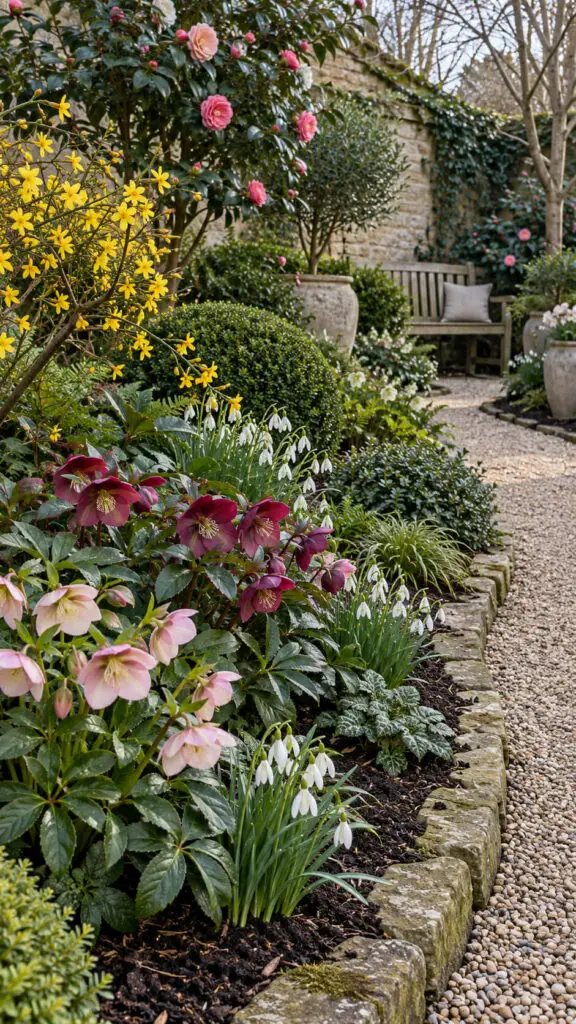
Winter doesn’t have to mean a garden without flowers.
Hellebores, winter jasmine, snowdrops, and certain camellias can provide beautiful seasonal blooms, depending on your climate and variety.
Plant them where you’ll notice their flowers from windows, doorways, or frequently used paths.
Combine different flowering periods for a longer display, and check each plant’s hardiness and soil requirements before planting.
Even a handful of blossoms can make a gray winter morning feel brighter.
6. Dress Up Containers With Seasonal Plantings

Decorative pots make winter gardening flexible and surprisingly stylish.
Fill sturdy containers with dwarf conifers, evergreen grasses, ornamental cabbage, or hardy flowering plants suited to your region.
Add height with upright branches and soften the arrangement with trailing foliage.
Choose frost-resistant pots in stone, terracotta, or dark finishes for extra character.
Group containers in odd numbers near entrances or patios, creating a layered display that looks intentional rather than like leftover summer plants.
7. Build a Simple Winter Greenhouse
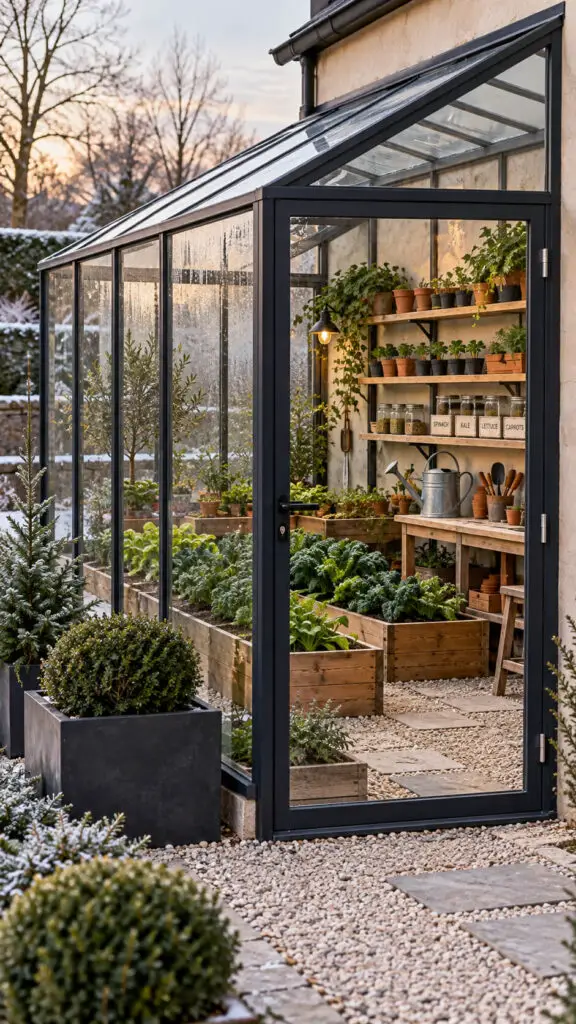
A greenhouse extends your growing season and provides a protected home for tender plants, seedlings, and winter vegetables.
If space is limited, a compact lean-to greenhouse or portable cold frame may be enough.
Position it where it receives suitable sunlight, and provide ventilation on warmer days to prevent excessive humidity.
In colder climates, consider insulation and appropriate heating.
With a little planning, you can keep gardening while the weather outside insists on being difficult.
8. Plant Winter Vegetables and Hardy Herbs
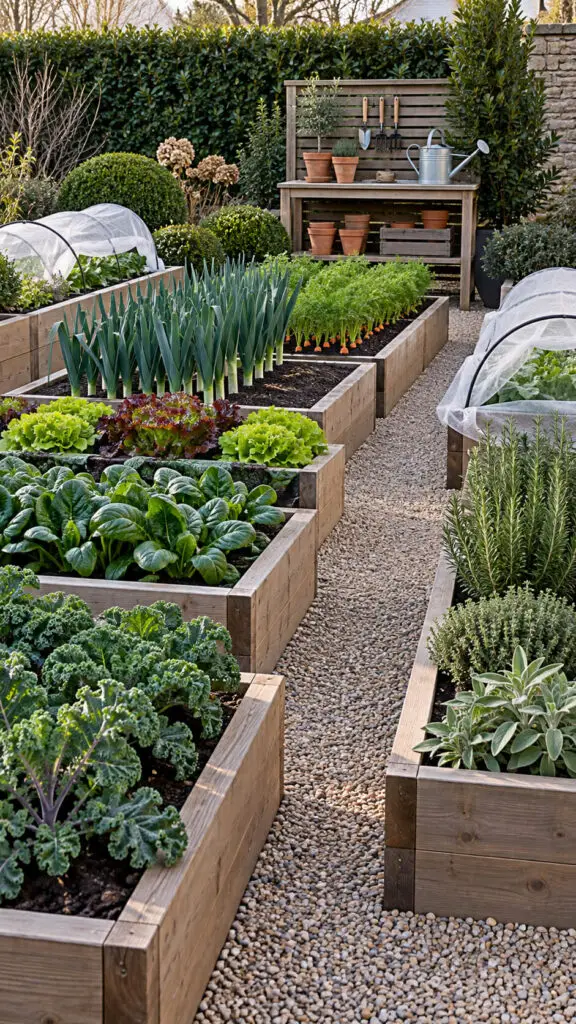
A productive winter garden can be just as beautiful as a decorative one.
Depending on your climate, grow kale, spinach, carrots, leeks, or winter-hardy lettuce in raised beds or containers.
Rosemary, thyme, and sage can also provide useful greenery and fresh flavor where conditions suit them.
Protect vulnerable crops with fleece or a cold frame when necessary.
Harvesting something fresh for dinner makes those chilly trips into the garden feel wonderfully worthwhile.
9. Create a Mulched Garden Bed
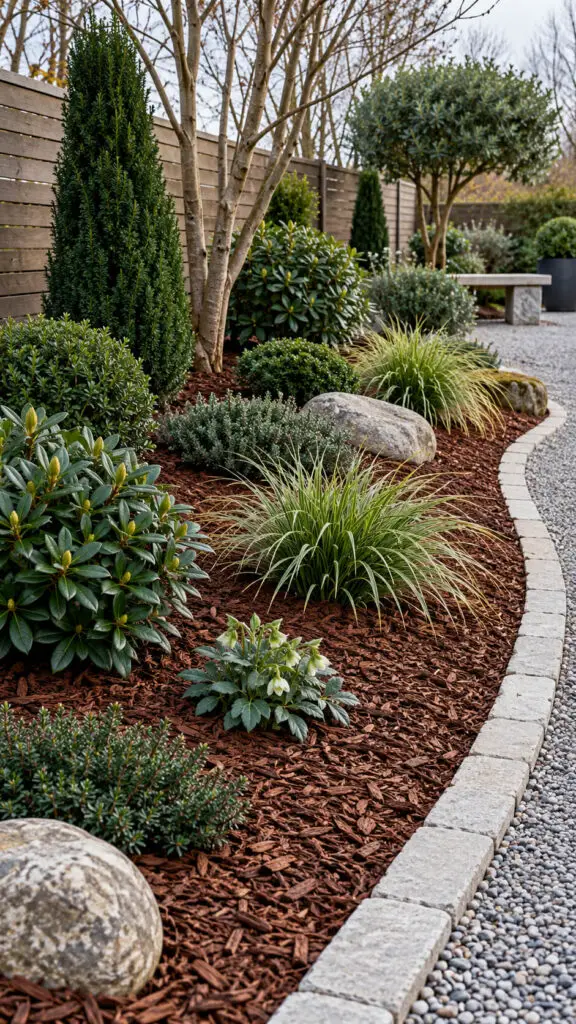
Mulching is one of the simplest ways to protect your garden during winter.
Apply a layer of organic mulch, such as shredded bark, compost, or leaf mold, to help moderate soil temperatures, conserve moisture, and suppress weeds.
Keep mulch a little away from plant stems and tree trunks to reduce the risk of rot.
As the material gradually breaks down, it can also improve soil structure, giving your plants a helpful head start for spring.
10. Decorate With Natural Winter Materials
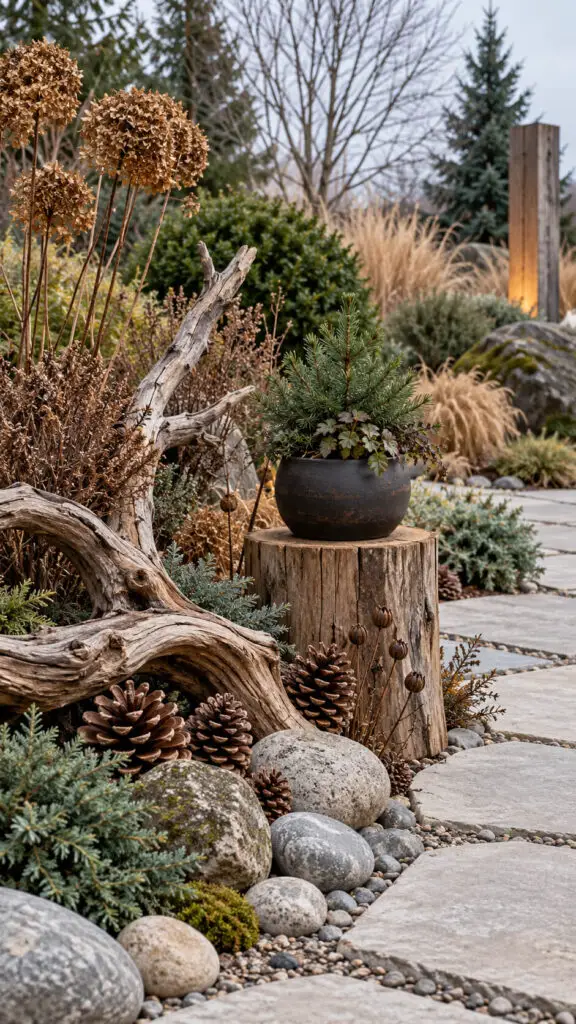
Bring a little woodland charm into your garden with natural materials.
Arrange fallen branches, pinecones, seed heads, and interesting stones around containers or beneath shrubs.
A rustic wooden log used as a plant stand can add height and texture without introducing another plastic accessory.
Keep the arrangement simple and let the natural shapes do the decorating.
Avoid collecting protected plants or disturbing wildlife habitats, and choose durable pieces that can withstand your local winter weather.
11. Add a Pergola or Covered Garden Structure

A pergola or covered seating structure gives your winter garden definition and makes outdoor space more usable.
Consider a timber pergola, a roofed patio, or a simple garden shelter, depending on your budget and climate.
Add outdoor curtains where appropriate to soften the structure and provide some protection from wind.
In snowy or windy regions, ensure the design is engineered for local conditions.
A well-planned shelter can make your garden feel like an extra room.
12. Introduce Ornamental Grasses for Texture
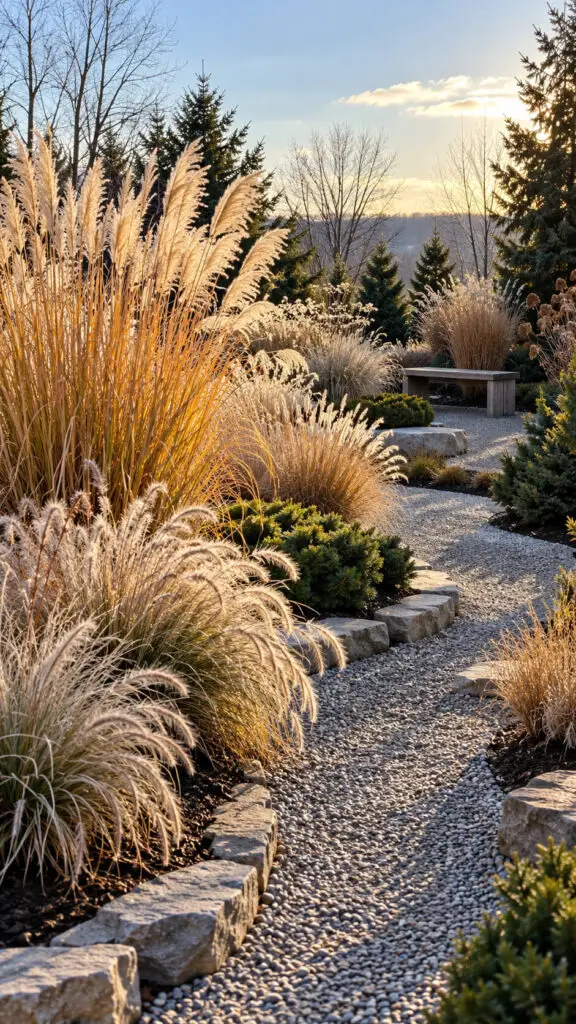
Ornamental grasses bring movement and texture to a winter landscape, especially when their seed heads catch the low afternoon light.
Choose hardy varieties suited to your soil and climate, and plant them in groups for a natural, flowing effect.
Their golden, bronze, or silvery tones can complement evergreen shrubs beautifully.
Many grasses benefit from being left standing until late winter or early spring, providing visual interest and potential shelter for wildlife while the rest of the garden rests.
13. Make a Wildlife-Friendly Winter Garden
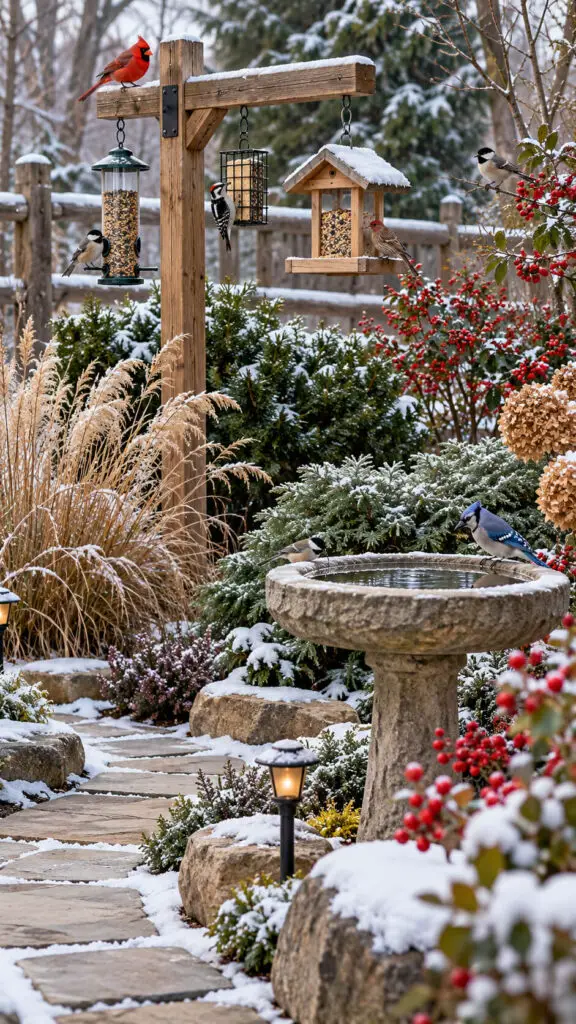
Winter can be challenging for birds and other garden visitors, so create a space that offers food, water, and shelter.
Plant berry-producing shrubs, leave some seed heads standing, and provide a clean birdbath with fresh water when conditions allow.
Clean feeders regularly and position them away from places where predators can hide.
Avoid pesticides and retain suitable habitat wherever practical.
A wildlife-friendly garden brings life and movement to the colder months without requiring elaborate decorations.
14. Use Warm Colors in Garden Accessories
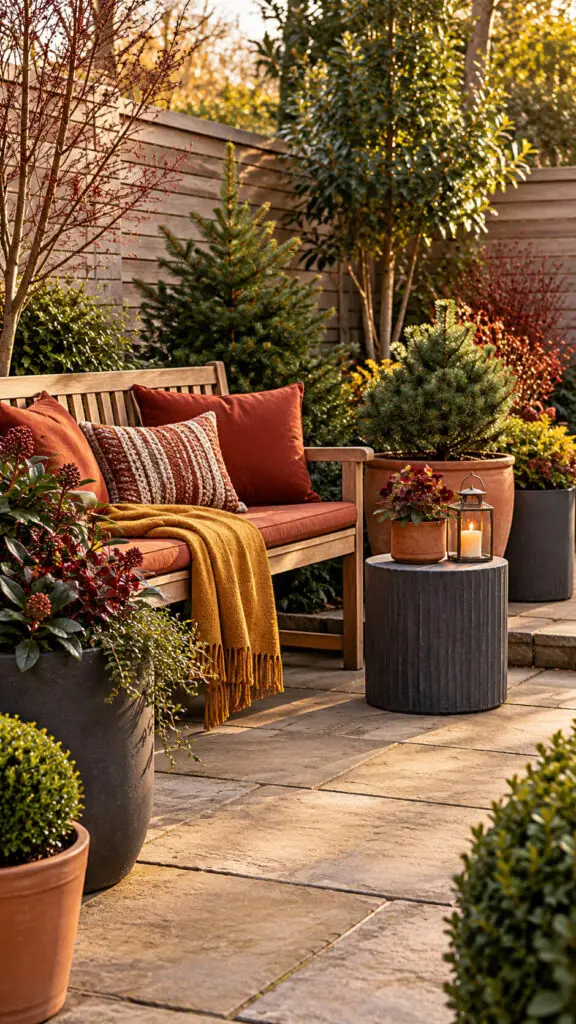
Warm colors can make a winter garden feel welcoming even when the plants are mostly green or dormant.
Introduce rust, terracotta, burgundy, mustard, or deep ochre through outdoor cushions, ceramic pots, lanterns, and weather-resistant planters.
These shades work particularly well against evergreen foliage and natural timber.
You don’t need to replace everything, either; a few carefully chosen accents can refresh your space.
Think of them as the garden’s equivalent of a favorite winter sweater.
15. Build Raised Beds for Better Winter Gardening
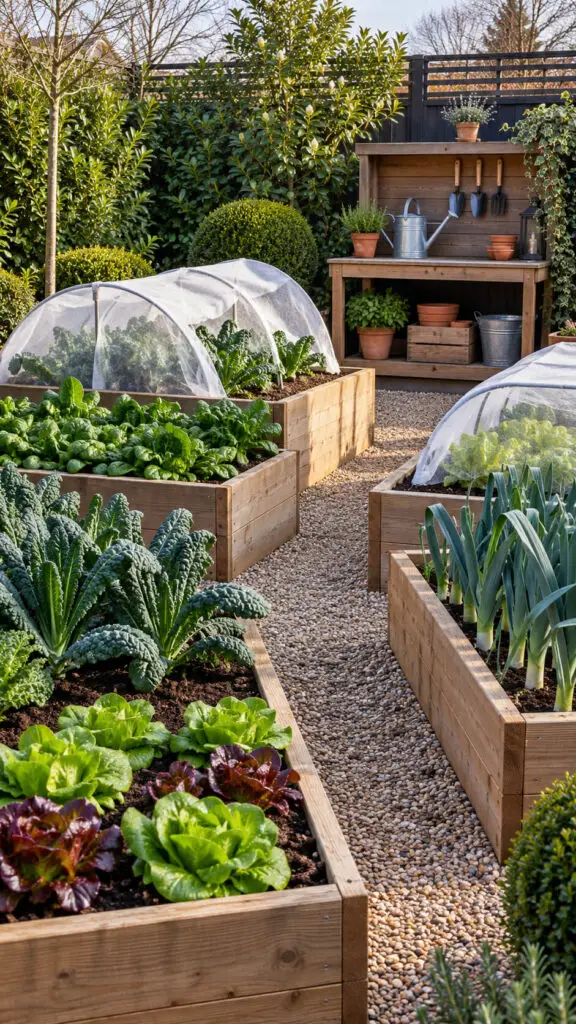
Raised beds offer practical advantages during winter, particularly where soil becomes waterlogged or difficult to work.
They can improve drainage when constructed and filled appropriately, while making planting and harvesting more comfortable.
Choose rot-resistant materials and ensure the beds suit the crops you intend to grow.
In colder regions, cover them with hoops and horticultural fleece to protect suitable vegetables.
Even when the beds are resting, neat edges and a thoughtful layout keep the garden looking organized.
16. Create a Beautiful Garden Pathway
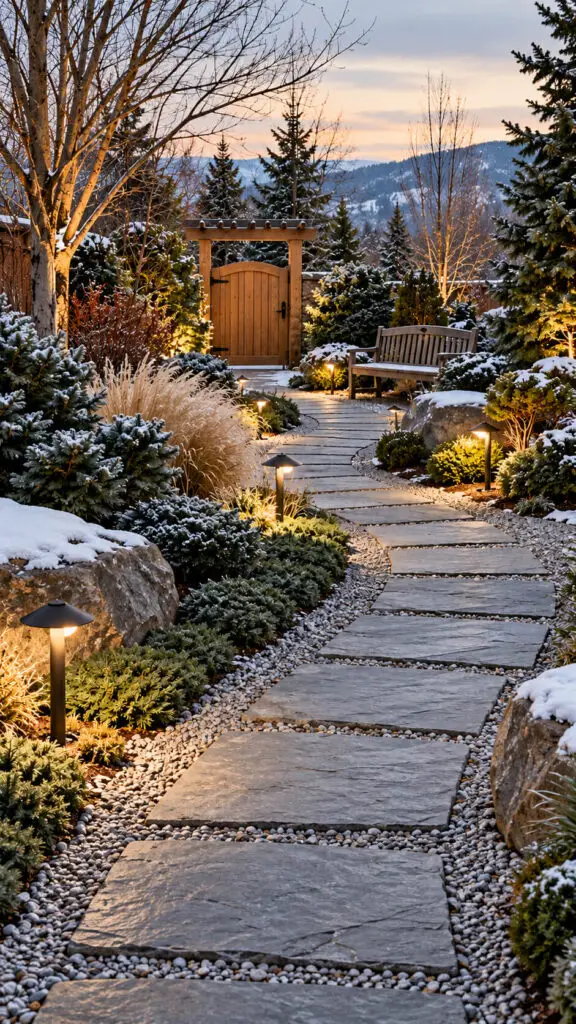
A well-designed pathway makes a winter garden easier to navigate and gives it structure when flower borders are quiet.
Consider gravel, brick, stone pavers, or textured stepping stones that suit your garden’s style and drainage needs.
Keep routes stable and reasonably slip-resistant, especially in areas prone to frost or rain.
Edge the path with evergreen ground cover or low-growing shrubs for definition.
A clear route through the garden invites you to explore instead of admiring it only through a window.
17. Hang Outdoor Lanterns for Seasonal Charm
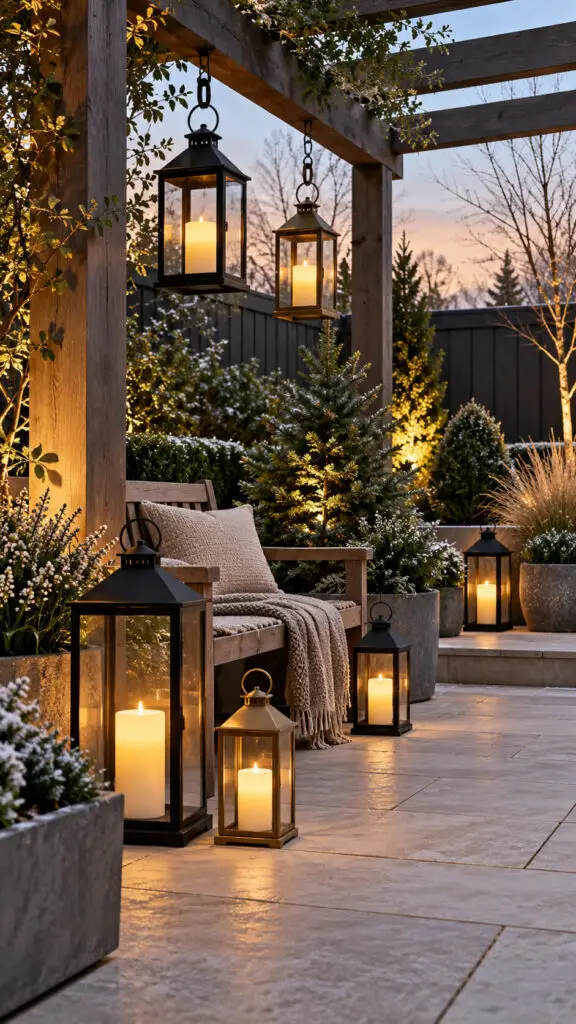
Lanterns add a gentle glow and decorative interest to patios, porches, and sheltered corners.
Choose weather-resistant designs in black metal, aged brass finishes, or natural woven materials specifically rated for outdoor use.
Battery-operated LED candles are a convenient option when you want the atmosphere of candlelight without an exposed flame.
Cluster lanterns at different heights for a relaxed look, but keep walkways clear and avoid placing decorations where strong winds could knock them over.
18. Add a Water Feature With Winter Appeal

A water feature can bring soothing sound and movement to a winter garden, provided it suits the local climate.
In mild areas, a small fountain or shallow pond can remain a focal point throughout the season.
Where freezing temperatures are common, follow the manufacturer’s winterizing instructions, protect pumps, and prevent damage from expanding ice.
Surround the feature with stones, evergreen plants, or ornamental grasses to create a natural composition that remains attractive even when the water is switched off.
19. Prune and Tidy the Garden Thoughtfully
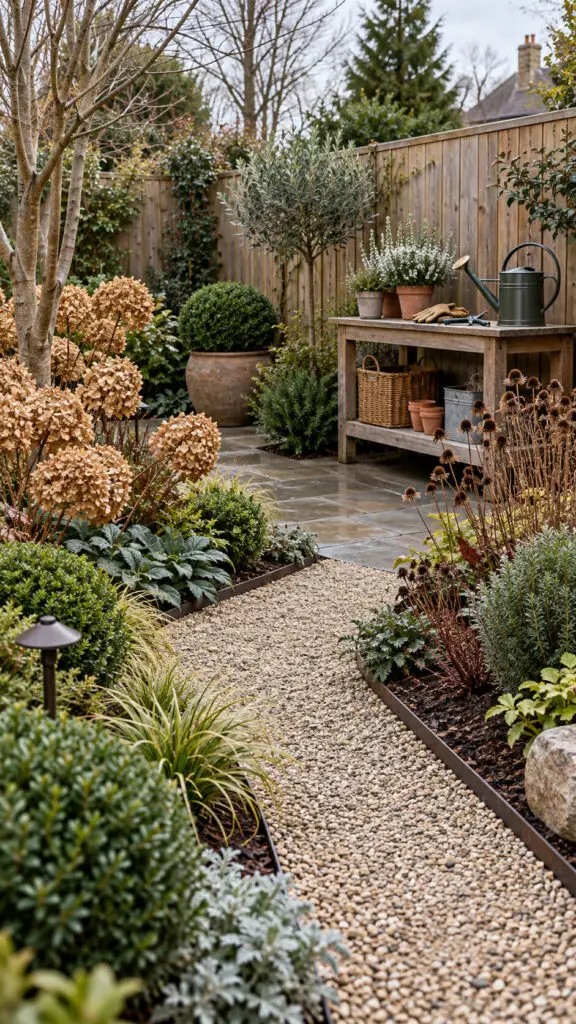
Winter is a useful time to assess the garden, but resist the urge to cut everything back at once.
Remove damaged or diseased material where appropriate, clear slippery debris from paths, and check shrubs for crossing or broken branches.
Many plants benefit from pruning at different times, so research each variety before reaching for the shears.
Leave healthy seed heads and suitable stems for wildlife where practical.
A little thoughtful maintenance creates order without stripping the garden of its winter character.
20. Add a Compact Outdoor Dining Area

A small outdoor dining space can make even a modest winter garden feel special.
Choose a bistro table and weather-resistant chairs that fit comfortably without blocking access.
Place them near the house or beneath a sheltered area to reduce exposure to wind.
Add outdoor-safe cushions and a lantern for atmosphere, bringing soft furnishings indoors when they’re not in use.
On milder days, this little setup is ideal for a leisurely lunch or a warm drink in the fresh air.
21. Plan Ahead for a Spectacular Spring Garden
One of the best winter garden ideas is to use the quieter months to prepare for the season ahead.
Plant suitable spring-flowering bulbs before the ground freezes, order seeds, improve compacted soil when conditions allow, and sketch out new borders or container combinations.
Clean and repair gardening tools so they’re ready when growth resumes.
Winter planning may not deliver instant flowers, but it rewards you with a more organized, colorful garden when spring finally arrives.